Margins are thinner. Ad auctions are more expensive. A new Chinese seller shows up on the same keyword every quarter, with lower prices, more variations and surprisingly solid reviews.
If you are the CEO, that is not just annoying. It is frightening, because the usual fixes no longer move the needle. You can push your team to tweak bids and redesign images, but deep down you know the gap is structural, not cosmetic.
What you are really facing is this question:
How can a higher cost company in the United States or Europe build a profitable Amazon business while Chinese sellers dominate the platform on price and speed?
In this article I will walk you through how I would think about it if I sat in your chair. Not as an account manager or an agency, but as a CEO who needs a business that still makes sense three years from now.
I will focus on five levers that I see working in real projects with Amazon brands who buy from us and from other factories in China. Feel free to contact us at inquiry@sweetie-group.com
1. Redefine what it means to win
Many Amazon leaders still judge success with one simple rule: grow top line and hold margin.
That worked when competition was fragmented and cost structures were similar. It is much less useful in a world where:
- A Chinese seller can accept net margins that your board would never approve
- Entire teams in Shenzhen can move from idea to live product in a matter of weeks
- Marketplaces keep launching internal brands or promoting ultra low price apps into your categories
If your definition of winning is still “we must be the top seller in every keyword that matters,” you are setting yourself up to lose.
A more realistic CEO definition looks closer to this:
- We choose specific categories where our structure gives us an edge
- We earn healthy profit in those spaces for a long time
- We use the rest of Amazon as controlled support territory, not as the main arena
That shift alone changes how you look at product roadmaps, price bands and resource allocation.

2. Understand exactly where Chinese sellers are strong and where they are not
Chinese sellers have real strengths on Amazon. I see them every day.
They tend to be very good at:
- Driving landed costs down through volume and local sourcing
- Making quick decisions on which samples to back and which to kill
- Learning platform rules, gray zones and loopholes fast
- Coordinating factory, packaging, logistics and launch tactics as one system
If you try to beat that system at its own game while carrying higher labor, overhead and compliance costs, you are asking the wrong question.
Instead, look for the spaces where Chinese sellers are weaker:
- Categories that require deep understanding of Western consumer emotion, not just aesthetics
- Products that rely on brand trust and long term service, not only a one time purchase
- Segments with tough regulatory standards, import rules or certification work
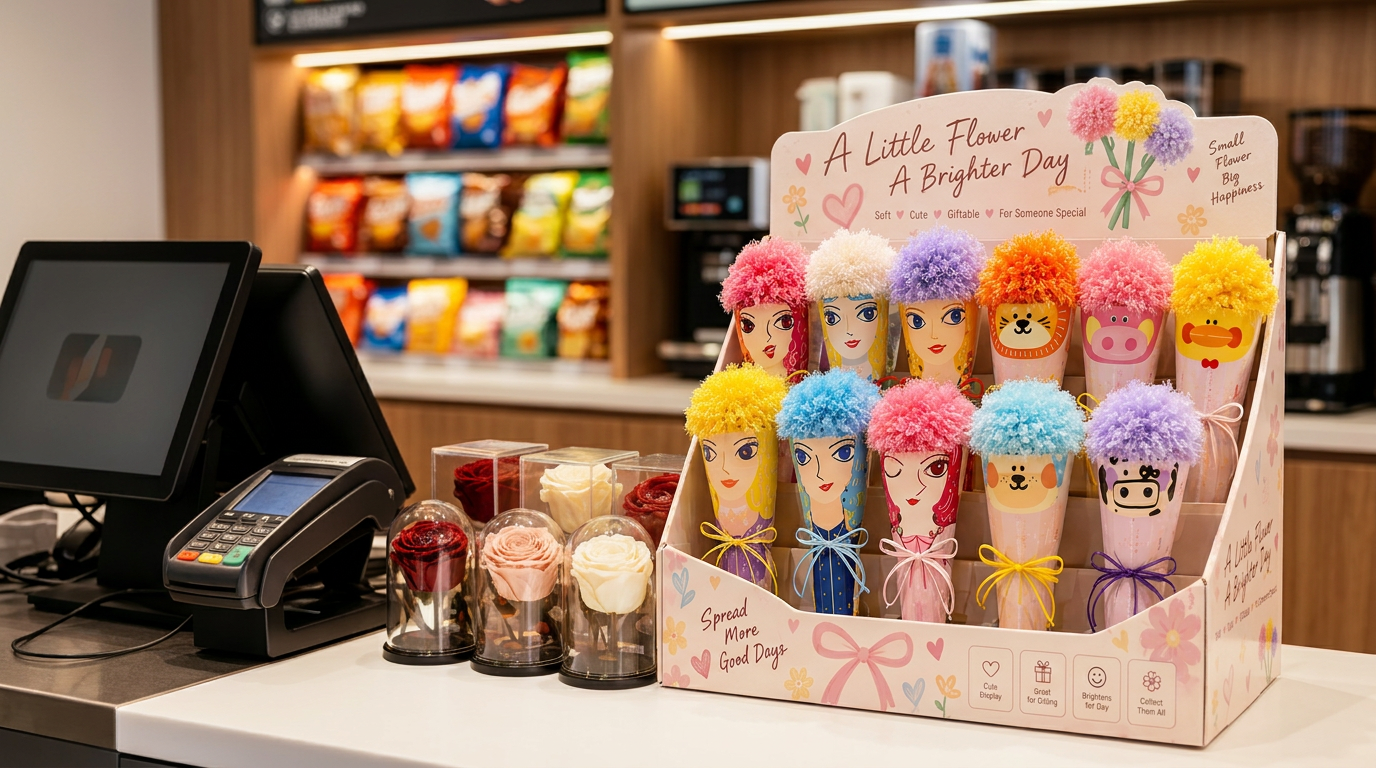
- Complex gift or decor solutions where packaging, storytelling and perceived value matter as much as the object itself
That combination already points away from generic cables and basic accessories and toward more thoughtful product systems.
3. Choose your battlegrounds with portfolio discipline
Once you see both strengths and weaknesses clearly, the next CEO step is portfolio surgery.
Ask your team to classify every Amazon product into three groups:
- Items where your costs are clearly higher than Chinese competitors and customers do not care about your brand or packaging
- Items where you truly are better, whether through design, materials, compliance or story
- Items where you could be better, but the product and brand work is not finished
In my experience, most companies discover that they are spending an uncomfortable amount of time on the first group. It feels painful to walk away, especially from SKUs that still generate revenue, but it is often the only way to free up capital and attention for products where you can actually lead.
You are not closing the door on Amazon. You are closing the door on markets where your company is structurally outgunned.
If you want a second opinion on which types of preserved flower gifts and decorative products tend to be defensible against Chinese competition and which ones do not, my team is always open to a confidential review at inquiry@sweetie-group.com.

4. Turn Chinese supply chains into part of your strategy
Competing with Chinese sellers and working with Chinese factories are not contradictions. In many cases, combining the two is exactly what lets Western brands stay profitable.
There are three practical moves I see working for Amazon focused CEOs.
First, treat your factory as a development partner, not only a cost center.
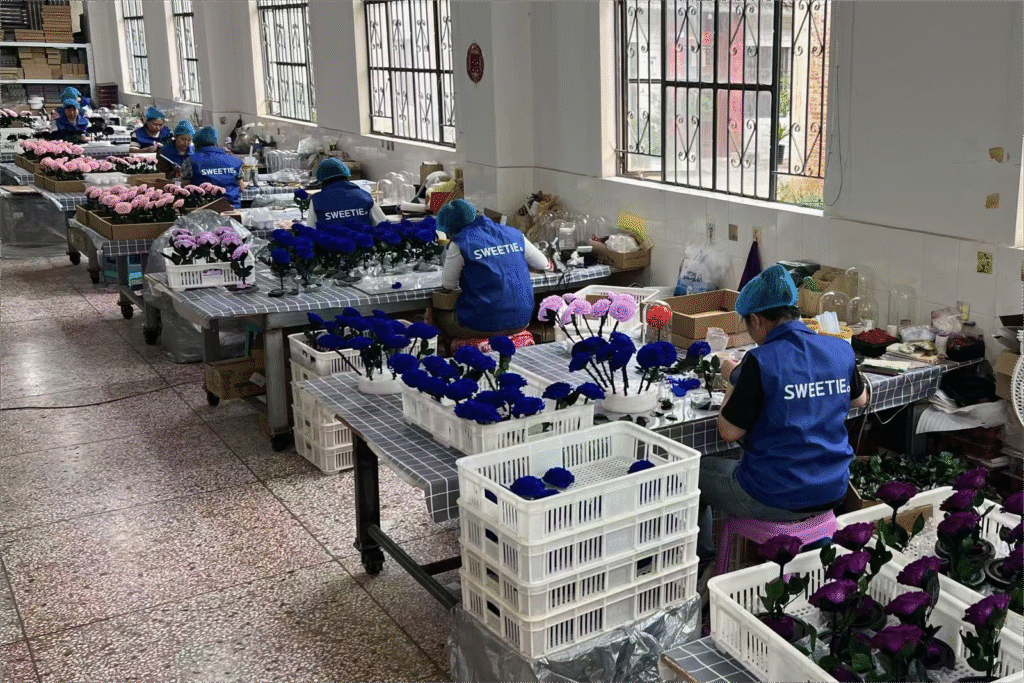
Bring clear insight into your customer and category. Ask your supplier to bring ideas on structure, material, color, packaging and process that fit your cost targets. Let them help you build versions that Chinese sellers cannot simply screenshot and copy the next week.
Second, separate where you need control from where you only need performance.
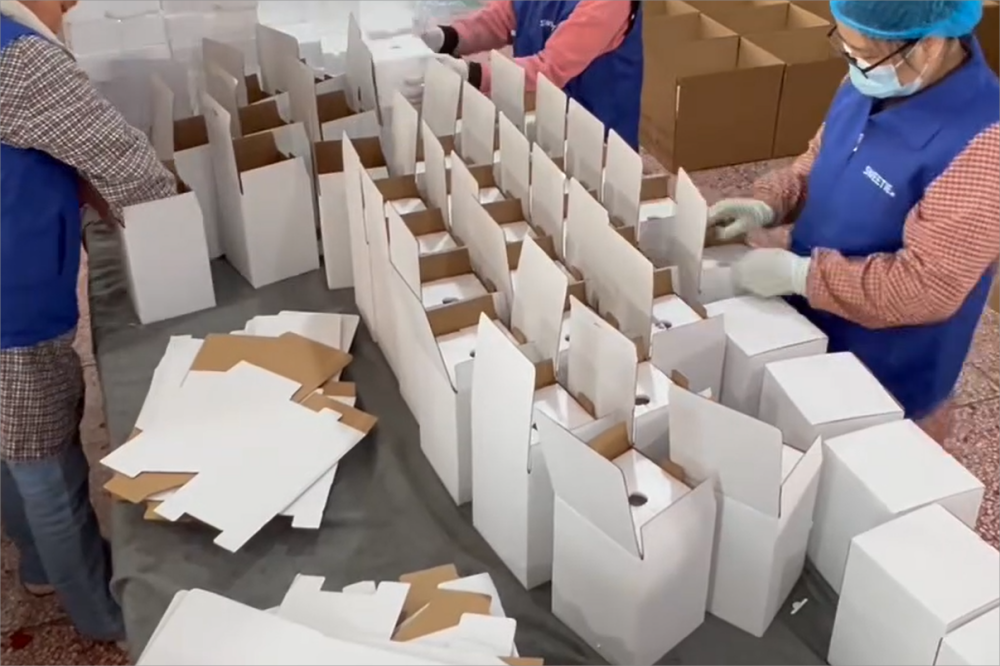
You probably want to own your brand voice, pricing policy and long term customer relationship. You probably do not need to own every carton choice, inner tray material and insert structure if your partner handles thousands of similar shipments each season.
Third, consider a layered logistics model.
Use China for the heavy lifting of production and long haul freight. Supplement that with a small regional buffer that can catch last minute demand spikes, reduce stockout risk before peak holidays and rework returns in a way that fits your brand.
Used this way, Chinese capability does not replace your competitiveness. It supports it.
If you are trying to move your floral or gift offering from generic to customized and want to know what is realistic from a factory point of view, feel free to contact us at inquiry@sweetie-group.com and we can share concrete examples.
5. Build your economics around relationships, not only transactions
On a single order, Chinese sellers often have the advantage. On a relationship, you can.
That requires viewing Amazon as the start of the journey, not the whole story.
Some practical questions for you as CEO:
- Does our current packaging clearly express that this is a branded product, not just a commodity?
- Do we give a buyer any reason to remember our name, or to look for us again on or off Amazon?
- Do we have a product ladder that makes sense for a repeat customer, or is every item a one off?
You do not have to be an aggressive direct response marketer. Something as simple as:
- A tasteful brand card in the gift box
- A QR code that leads to care tips, decor ideas or a styling guide
- A thank you page that invites registration for extended support or early access
can be enough to turn a stranger into a warm contact.
In preserved flowers and rose bears, for example, many of our customers now think in series instead of isolated items. Seasonal variants, matching accessories, limited color runs and branded collaborations give shoppers a reason to return and ask specifically for that brand instead of typing a generic search term.
Chinese sellers can copy a single box. It is much harder to copy a coherent, evolving product universe in the eyes of a Western consumer.
6. Align your team with the strategy you actually want
The last piece is organizational. A sound strategy can still fail if your structure cannot execute it.
As CEO, you can ask a few simple but powerful questions:
- Do we have at least one leader who wakes up thinking only about Amazon as a channel, not juggling five other roles
- Are product, supply chain, creative and performance marketing working as one unit on key categories, or are they separate islands
- How often do we actually run structured tests on price, bundle design, title and image sequence
Companies that handle Chinese competition best on Amazon usually show a similar pattern. They keep the core strategic decisions at your level, but they push tactical authority and clear metrics down to small cross functional groups that own specific product lines.
My role as an external partner is not to replace that structure, but to give those teams better raw material: reliable preserved flower products, packaging solutions tuned for e commerce and realistic timelines that match the Amazon calendar instead of fighting it.
If you feel that your people are capable but the system around them makes it very hard to move, and you want input from someone who sees both sides of the water, you can always reach out to inquiry@sweetie-group.com. I am happy to be frank about what your categories will demand from operations.
Closing thoughts
Chinese sellers are not going away. Their cost advantages, learning speed and platform focus are the new baseline.
The CEOs who will still be comfortable reading their Amazon P and L two or three years from now will do a few things differently:
- They will define very clearly which products and price bands are worth fighting for
- They will use Chinese supply chains as a strength instead of treating them only as a threat
- They will build product systems, stories and customer journeys that are hard to copy from a screenshot
You do not need to win every keyword or dominate every subcategory. You need a focused, profitable, defensible position that makes sense for your cost base and your ambitions.
If you want help translating these ideas into an actual set of preserved flower or gift products that can stand up in front of Chinese competition on Amazon, send me an email at inquiry@sweetie-group.com and tell me a bit about your current assortment and targets.
We can build from there.

Annie Zhang, CEO of Sweetie-Group