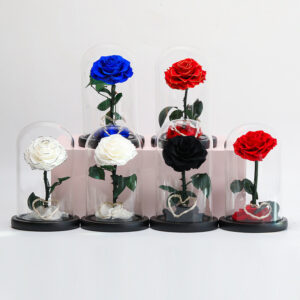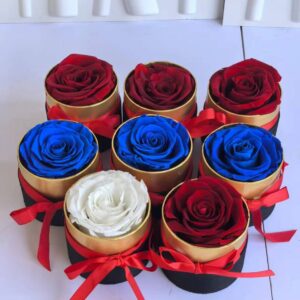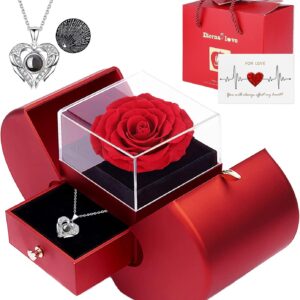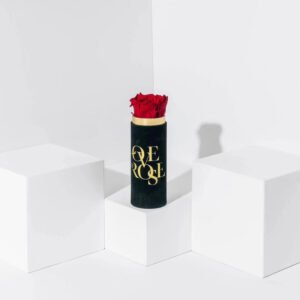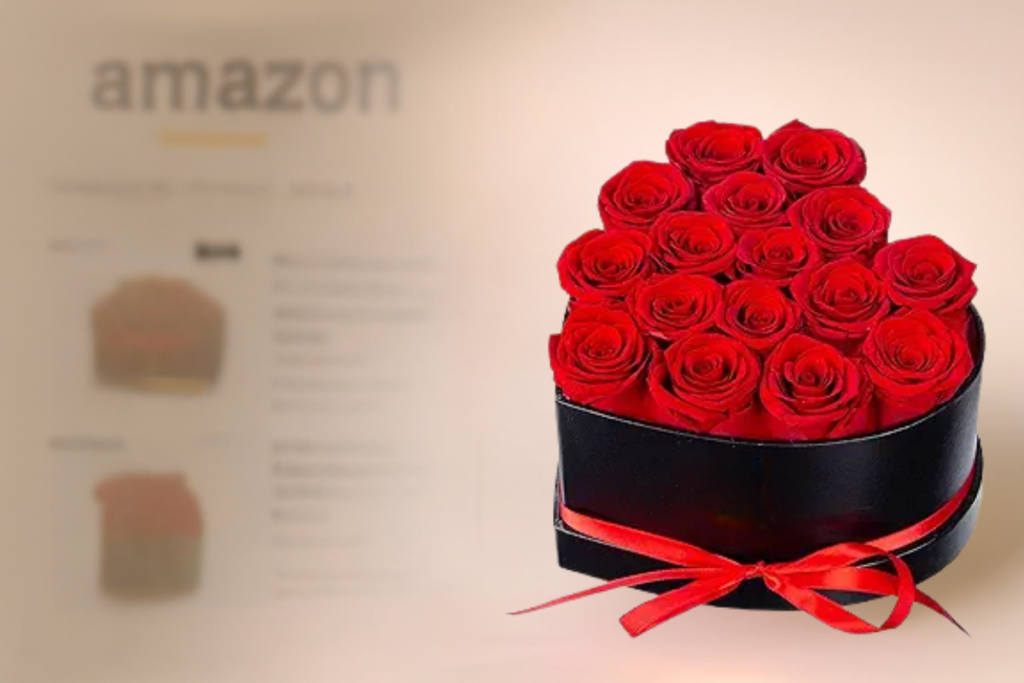
It is easy to dismiss preserved rose boxes as a simple product category.
At a glance, many Amazon listings look interchangeable. A gift box, a rose arrangement, a promise of long-lasting beauty, and a few polished lifestyle images. From the outside, it can feel like a market where every seller is offering roughly the same thing.
That is exactly why GLAMOUR BOUTIQUE is worth examining.
When a brand performs well in a category that looks highly repeatable, I do not assume the result comes from luck. I usually assume the business has aligned a few important things better than most competitors have. In this case, those things appear to be product positioning, packaging discipline, visual clarity, and a sourcing model built for e-commerce.
This is not really a story about preserved roses alone. It is a story about how a gift product becomes easier to understand, easier to trust, and easier to buy on Amazon.
Why GLAMOUR BOUTIQUE stands out in a crowded Amazon category
The preserved flower segment is not empty. It is competitive, design-driven, and full of lookalike products. That means most brands do not get rewarded just for showing up with a decent box and attractive flowers.
To win in this kind of market, a brand has to do more than look premium. It has to fit shopping intent.
That is where GLAMOUR BOUTIQUE seems to be stronger than many similar brands. Its products do not read as niche floral items first. They read as ready-to-gift products. That difference matters because Amazon shoppers often begin with an occasion in mind, not a category in mind.
They may be shopping for:
- an anniversary gift
- a birthday gift for her
- a romantic gift
- something presentable that does not feel generic
A preserved rose box becomes much more powerful when it is framed around those moments. In my view, that is one of the key reasons GLAMOUR BOUTIQUE has been able to build stronger traction than many competitors.
The brand’s real advantage: it sells an occasion, not just an item
Many preserved flower brands still describe themselves too narrowly. They focus on flower type, flower count, or preservation claims, but they do not fully connect those features to the buying occasion.
GLAMOUR BOUTIQUE seems to understand that the better commercial position is not “we sell preserved roses.” The better position is “we sell a gift that feels thoughtful, polished, and low-risk.”
That shift changes everything.
When a product is positioned as a gift, it can attract customers who are not specifically looking for preserved flowers. It can reach people who are simply looking for something elegant and emotionally appropriate. That opens a much bigger pool of demand.
It also reduces friction in the purchase decision. Customers do not have to become educated buyers in the preserved flower category. They only need to feel that the product fits the moment.
That is a much easier sale.
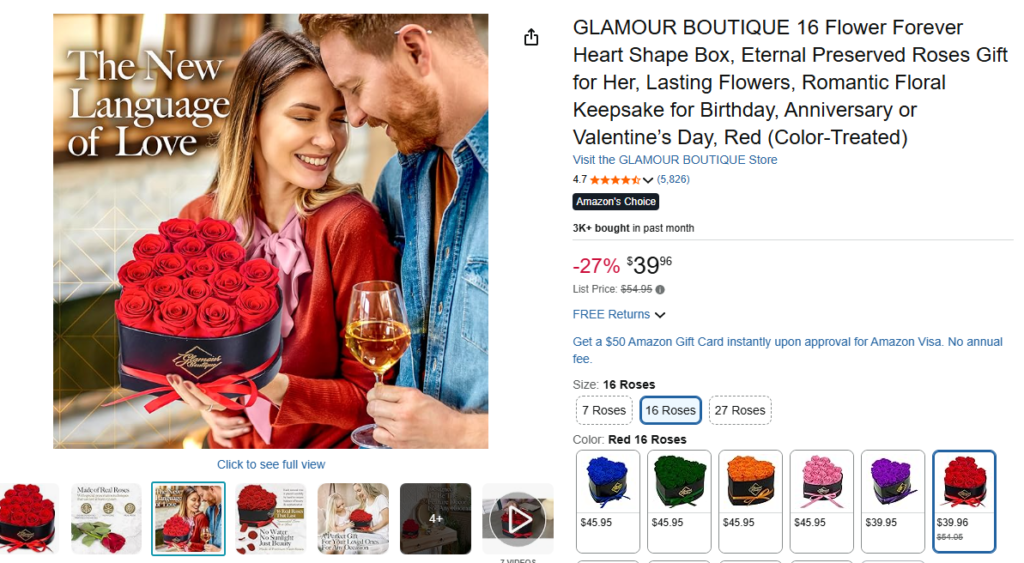
Why the product format works so well
In categories like this, I pay close attention to what the product communicates before a shopper reads a single line of text.
GLAMOUR BOUTIQUE’s strongest format works because it is visually direct. It does not ask too much of the customer.
A few details do most of the heavy lifting.
The box shape creates immediate emotional context
A heart-shaped presentation is one of the fastest visual signals in gifting. It immediately connects the product to romance, celebration, and intentionality. That is a real advantage in Amazon search results, where shoppers make fast, low-attention decisions.
The color choice is easy to accept
Red roses remain one of the clearest symbols in this category. They do not require interpretation. They feel appropriate for multiple occasions and carry strong emotional familiarity. In practical terms, that lowers hesitation.
The arrangement feels substantial without becoming excessive
This category depends heavily on perceived value. If the arrangement looks too small, it can feel underwhelming. If it becomes too large or elaborate, the price and decision complexity can rise too quickly. The most effective product formats usually sit in the middle: full enough to feel premium, simple enough to buy without much debate.
The product is easy to explain to someone else
That may sound like a small point, but it matters. A good Amazon gift product is something a customer can justify instantly: “This looks beautiful, it feels special, and I can send it without overthinking it.” Products that reach that level of simplicity usually scale better than products that need a lot of explanation.
If your team is developing preserved flower gifts for retail or online marketplaces, feel free to email us at inquiry@sweetie-group.com.
Packaging is not a supporting detail here
One of the biggest mistakes I see in decorative gift categories is treating packaging as secondary.
For preserved flower products, packaging is part of the product itself.
It affects first impressions, gift value, transport survival, and review quality all at once. A weak box, a poor insert, a loose arrangement, or damage in transit can turn an attractive item into a costly problem very quickly.
That is why brands in this category do not really compete on appearance alone. They compete on how well the full product system holds together.
A preserved flower gift has to succeed in several stages:
- It has to earn the click.
- It has to justify the price.
- It has to survive fulfillment.
- It has to deliver a clean unboxing experience.
If any one of those stages fails, the commercial impact shows up fast in returns, reviews, and weakened conversion.
GLAMOUR BOUTIQUE appears to understand this operationally. Its product presentation suggests that packaging is treated as part of the retail model, not just as outer decoration. That is one of the clearest signs of a brand that is building for e-commerce instead of building only for visual appeal.
What this brand suggests about preserved flower supply chains
I think this case is also useful because it highlights how supply chain thinking shapes retail performance.
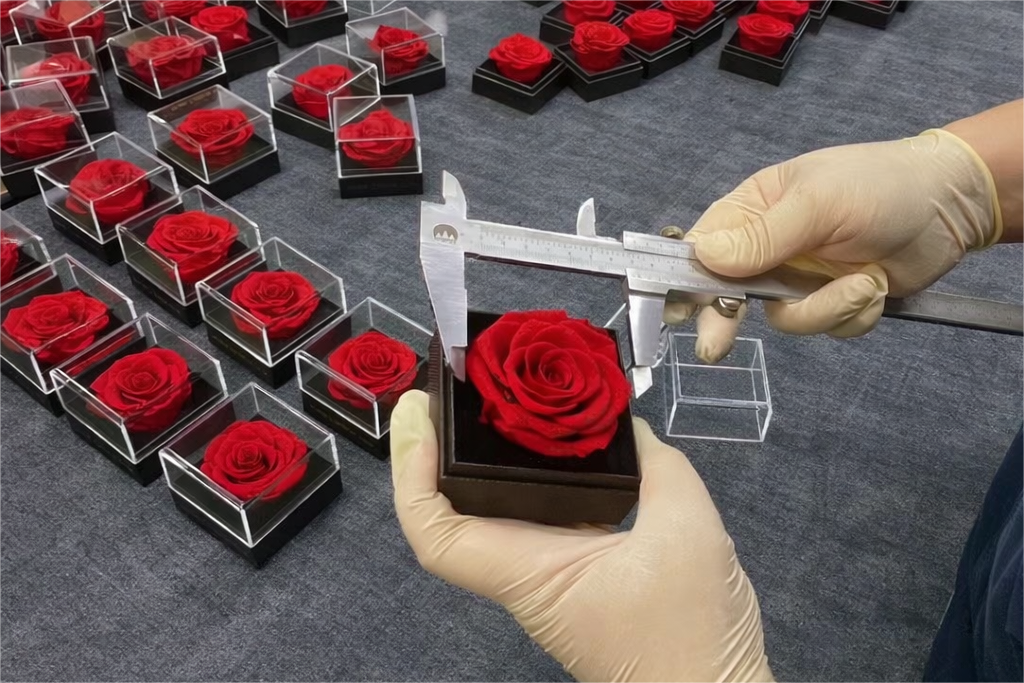
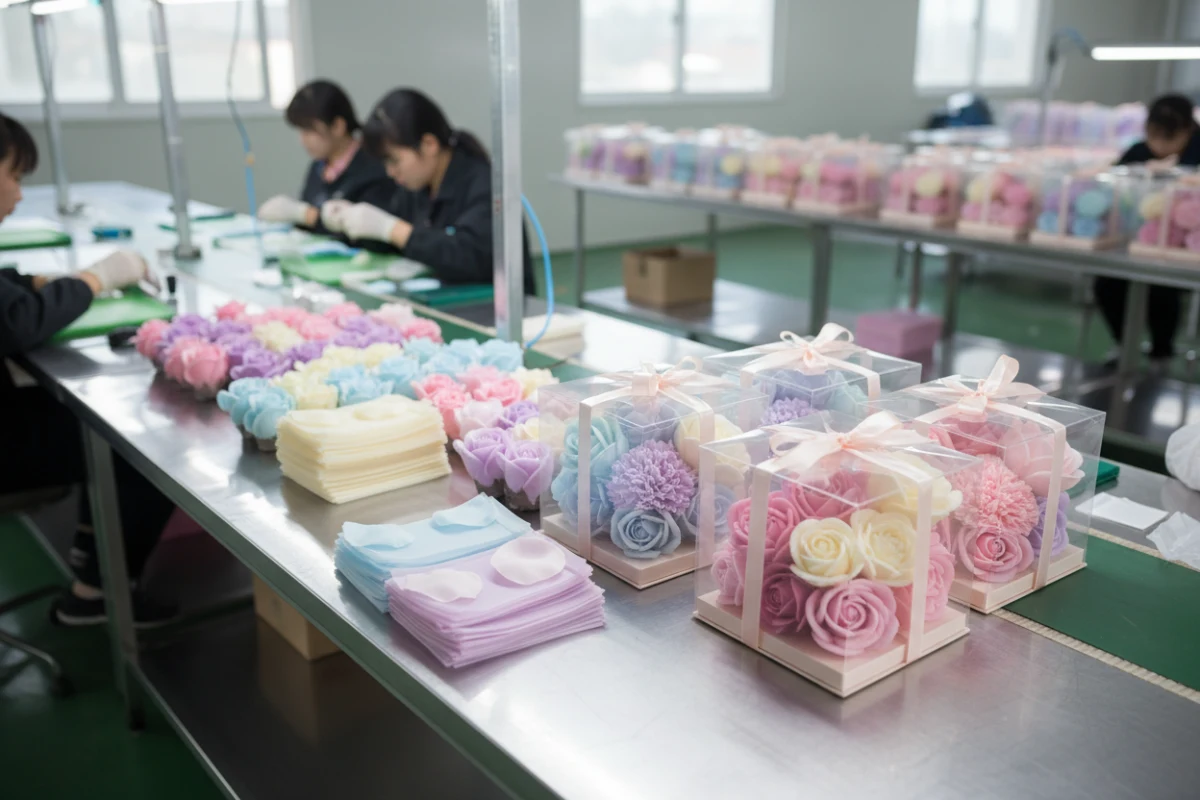
In the preserved flower industry, the product may look simple, but the backend is not. Strong results usually depend on several capabilities working together: flower processing, box development, structural packaging, visual presentation, and product consistency across production cycles.
That is especially true for brands selling through Amazon, where a product has to be both attractive and dependable.
From an industry perspective, flower-producing regions such as Yunnan are naturally important to the broader preserved flower supply chain. But flower material alone is never the whole story. To perform well online, a brand also needs packaging strength, repeatable assembly, and a sourcing model that supports stable replenishment and consistent presentation.
That kind of system is usually built through coordination, not improvisation.
When I look at GLAMOUR BOUTIQUE, I do not see a brand that appears to be chasing novelty for its own sake. I see a brand that seems to benefit from repeatable product architecture and sourcing discipline. In practical terms, that often matters much more than dramatic product innovation.
What other Amazon brands should learn from this case
There are several useful lessons here, especially for founders and owners trying to grow in visually crowded categories.
1. Build around buying intent, not only product type
Customers often search by occasion before they search by category. A product that fits a clear moment will usually outperform a product that only describes itself technically.
2. Make the value legible in one glance
If the shopper has to think too hard to understand the product, the path to conversion becomes more expensive. Visual clarity is often underrated, but it is one of the most powerful forces in Amazon retail.
3. Treat packaging as a profit lever
Packaging does more than protect the item. It protects margin, ratings, and trust. In categories like preserved flowers, that is a major commercial function.
4. Favor repeatability over unnecessary complexity
A product that can be produced consistently, packed reliably, and replenished smoothly will usually outperform a more creative product that is harder to execute.
5. Align sourcing with the realities of e-commerce
The best products in this space are not just beautiful. They are structured to survive real retail conditions. That means the supply chain has to support presentation and performance at the same time.
If you are comparing box structures, packaging options, or private label preserved flower ideas, you can reach us at inquiry@sweetie-group.com.
A final thought on why this matters
I do not think GLAMOUR BOUTIQUE is a useful case because it reinvented the preserved rose business.
I think it is useful because it shows how a familiar product can still outperform when the fundamentals are handled well. Better positioning. Better visual clarity. Better packaging discipline. Better alignment between product design and retail reality.
That combination is often what separates attractive products from scalable businesses.
In crowded Amazon categories, brands rarely win by being the most complicated. More often, they win by making the buying decision feel simple.
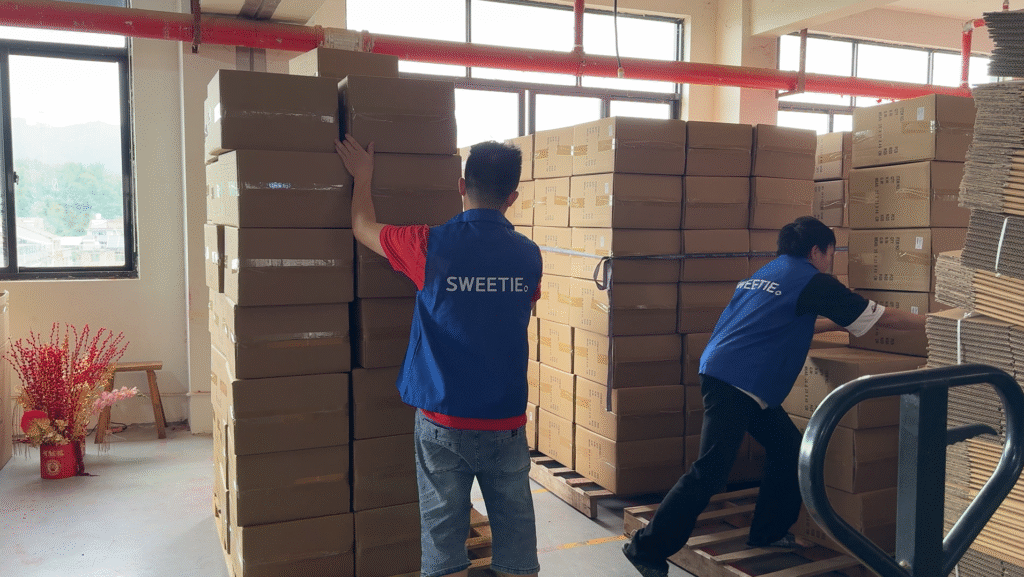
Annie Zhang, CEO of Sweetie Group