When buyers start looking for a preserved flower supplier in the USA, the first goal is usually simple: reduce uncertainty.
A local supplier may seem easier to manage. Communication may feel faster. Replenishment may look simpler. On paper, that sounds like the safest route.
But in preserved flower sourcing, location alone does not tell you very much.
A supplier with a U.S. address may be a distributor, an importer, a local assembler, or a true manufacturing partner. Those are not small differences. They affect pricing, customization, packaging, lead times, and whether a product can be repeated successfully across seasons.
That is why I think the smartest buyers do not stop at geography. They look at capability.
If your team is comparing options for a retail, gifting, or private label project, email inquiry@sweetie-group.com.
Quick answer
A U.S.-based preserved flower supplier can be a good fit for stock orders, local replenishment, and simpler programs. But for custom development, packaging coordination, and repeatable seasonal production, buyers often need an integrated manufacturing partner with stronger supply chain control.
Why this category is more complicated than it looks
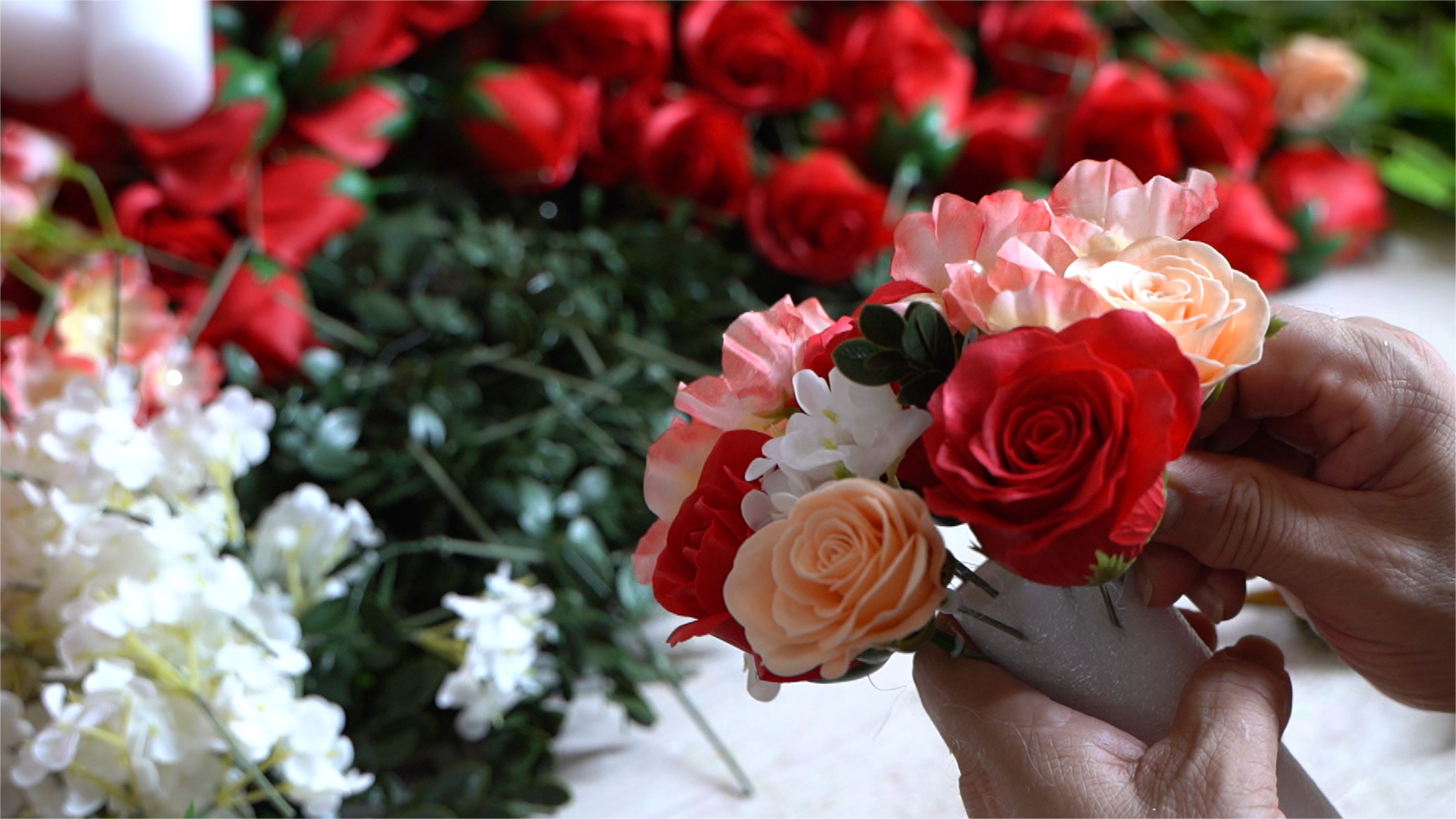
Preserved flower products are rarely just flowers.
A commercial SKU often includes:
- preserved floral materials
- a box or vessel
- ribbon
- card or insert
- outer packaging
- transport protection
- retail presentation details
- e-commerce protection, if the item ships directly to consumers
That means buyers are not simply purchasing roses or bouquets. They are purchasing a complete product system.
This is where many sourcing mistakes begin. A supplier may have beautiful photography and attractive samples, but weak packaging logic. Another may hold local inventory but offer limited customization. A third may claim manufacturing experience but depend heavily on outside vendors for every important component.
The result is predictable: the first sample looks promising, and the second order becomes frustrating.
The three questions that matter most
Before choosing any preserved flower supplier, I recommend starting with three questions.
1. What does this company actually control?
This is the most important question in the entire process.
A strong supplier should be able to explain whether it controls:
- floral sourcing or processing
- finished product development
- packaging coordination
- quality checkpoints
- repeat production across multiple orders
The deeper that control runs, the more stable your project usually becomes.
2. Can this company support the way your channel actually sells?
A supermarket buyer does not need the same product system as an online gift seller. A flower shop does not think like a corporate gifting team. A private label brand does not buy the same way as an importer filling mixed containers.
The right supplier should understand your sales channel, not just your product photo.
3. Can this company repeat success, not just create a sample?
A preserved flower supplier should be judged on repeatability, not presentation alone.
That means looking at:
- batch consistency
- packaging reliability
- reorder discipline
- holiday execution
- response speed when changes happen
A sample is the beginning. The real test is whether the supplier can reproduce the same result under business pressure.
What buyers usually find in the U.S. market
When searching for a preserved flower supplier in the USA, buyers typically run into four types of companies.
1. Local distributors
These companies usually offer ready stock, faster local shipping, and easier short-term replenishment.
They can be useful when your priority is speed and your product requirements are simple.
Their limitations often show up in:
- narrower product flexibility
- limited private label support
- less room on pricing
- weaker packaging development
- dependence on outside supply
2. Importers with U.S. inventory
This model is common and often practical.
These suppliers bring preserved flower products or materials into the U.S., keep stock locally, and sell from there. For some buyers, this works well. It can reduce lead time and simplify smaller replenishment orders.
Still, inventory access is not the same as manufacturing depth. If the project needs structural changes, packaging engineering, or deeper customization, the limits become visible.
3. Local assemblers
Some companies source preserved flowers from abroad and complete part of the final assembly in the U.S.
This can work for design-driven products and smaller custom runs. But it does not always mean strong control over upstream floral quality, accessory sourcing, or scalable production.
4. Integrated manufacturers outside the U.S.
This group is often overlooked at the beginning and seriously considered later.
These suppliers are usually not the closest geographically, but they may offer stronger coordination across flowers, packaging, accessories, sampling, production, and repeat orders.
For buyers running seasonal programs or private label development, that often matters more than zip code.
When a U.S.-based supplier is the right choice
To be fair, local sourcing does make sense in many situations.
A U.S.-based supplier can be the best choice when the project needs:
- fast replenishment
- local stock access
- simple product requirements
- minimal customization
- low operational complexity
For these cases, a distributor or importer with U.S. inventory may be exactly what the business needs.
There is no reason to overcomplicate a simple job.
When a buyer should widen the search
The equation changes when the project becomes more demanding.
A broader supplier search usually makes sense when the order involves:
- custom gift boxes
- private label branding
- multiple packaging components
- holiday-specific presentation
- retail-ready finishing
- e-commerce protection
- repeatable bulk production
- tighter target costing
This is where an integrated manufacturing partner becomes more valuable.
Not because overseas is automatically better. It is not.
But because preserved flower gifts are multi-component products, and multi-component products reward stronger coordination.
A practical comparison framework
Here is the simplest way I know to compare options without getting lost in marketing language.
| What you need | Local distributor or importer | Integrated manufacturer |
|---|---|---|
| Ready stock | Strong fit | Possible |
| Fast small replenishment | Strong fit | Possible |
| Private label development | Limited | Stronger fit |
| Custom packaging | Limited | Stronger fit |
| Seasonal bulk orders | Sometimes | Stronger fit |
| Multi-SKU project coordination | Limited | Stronger fit |
| Better cost control over time | Limited | Stronger fit |
| Repeatable long-term program support | Limited | Stronger fit |
That table is not meant to oversimplify the market. It is meant to keep the buying decision grounded in the real job the supplier needs to do.
Why experienced manufacturers in China stay on serious buyers’ shortlists
When buyers compare preserved flower suppliers seriously, manufacturers in China often remain part of the shortlist for one reason: the supply chain is more established for this category.
That matters more than many people realize.
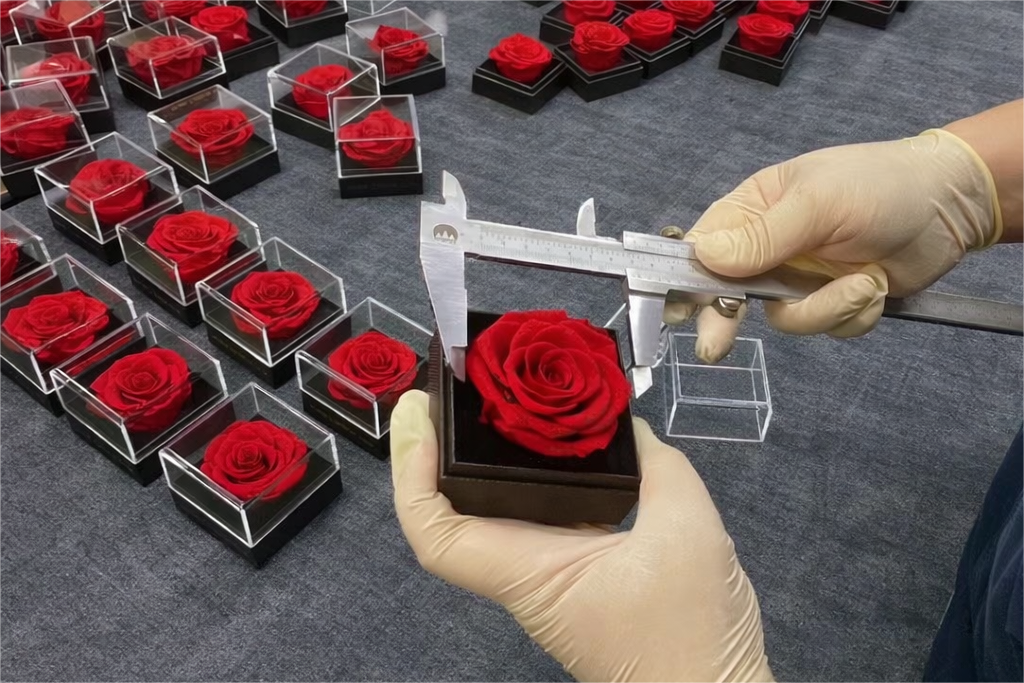
A preserved flower program is not just about making one attractive item. It is about combining floral materials, packaging, accessories, protection, timing, and repeat production into one business-ready product.
At Sweetie-Gifts, that is exactly how I think about the category.
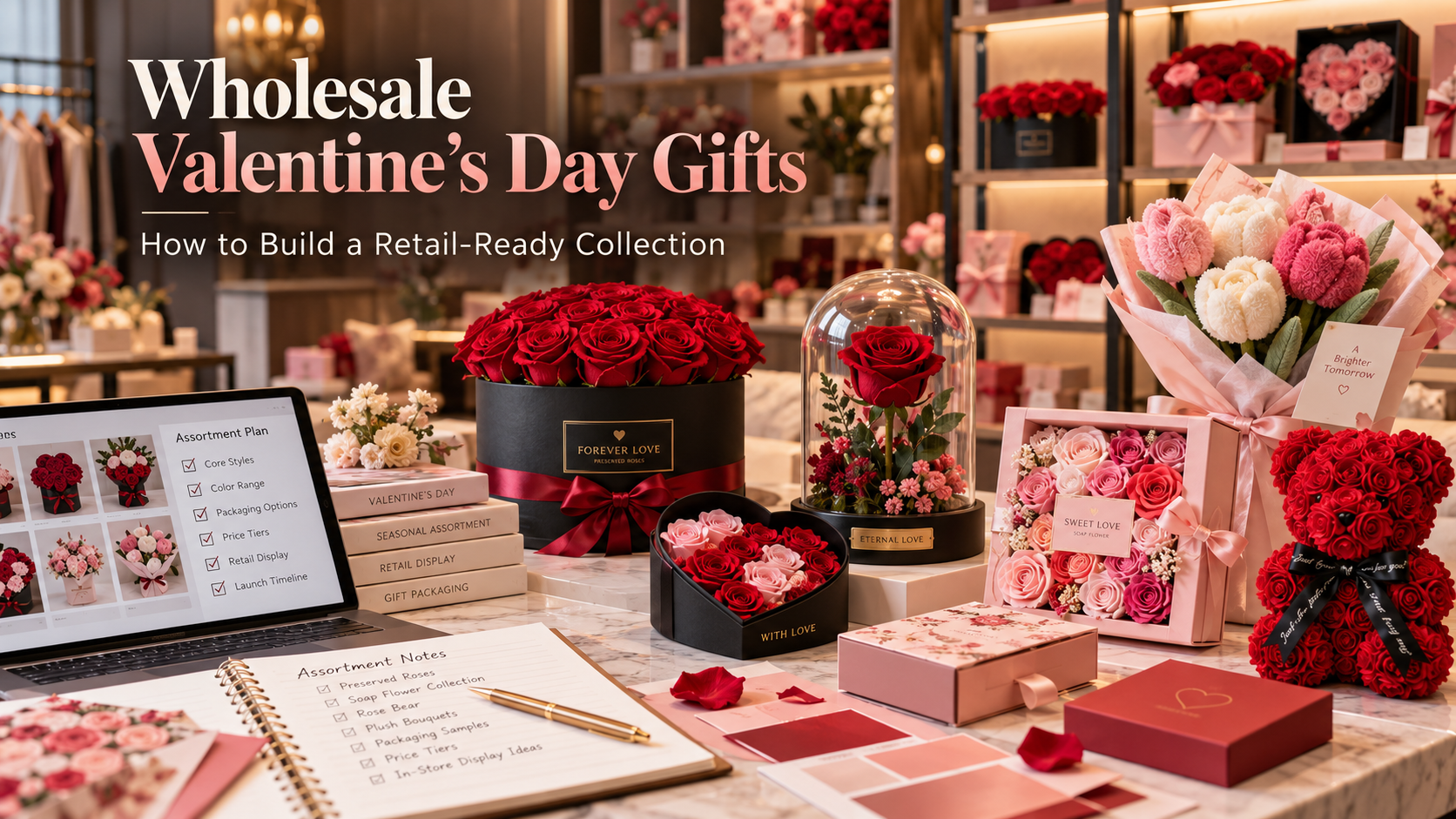
We work as an integrated preserved flower product manufacturer, not simply as a stock seller. Our work includes preserved flower boxes, glass dome roses, bouquets, jewelry flower gifts, and related floral gift products, along with customization and packaging coordination for B2B buyers.
Just as important, we support the full development process. That includes project requirement collection, research, sampling or 3D modeling, production planning, quality inspection, and follow-up after delivery.
That structure helps buyers reduce friction between idea, sample, production, and reorder.
If your project needs customization, packaging support, or seasonal planning, contact inquiry@sweetie-group.com.
What usually creates problems in preserved flower sourcing
I have seen buyers focus heavily on product photos and not enough on execution details. That is where the trouble usually starts.
Here are the warning signs I would take seriously.
A supplier talks about style, but not process
Good design matters. But if a supplier cannot explain how it manages packaging, timing, and consistency, that is a problem.
A supplier offers many products, but no clear system
A broad catalog can look impressive. It becomes less impressive if sampling is slow, specifications are vague, or every change feels manual.
A supplier treats packaging like an afterthought
In this category, packaging is part of the product. It affects damage rates, shelf presentation, shipping performance, and cost.
At Sweetie, we have developed both standard packaging approaches and more protective e-commerce packaging solutions, along with eco-friendlier options when needed.
A supplier cannot explain peak-season capacity
Holiday timing is where weak systems become obvious. A supplier should be able to talk clearly about production planning, not just product ideas.
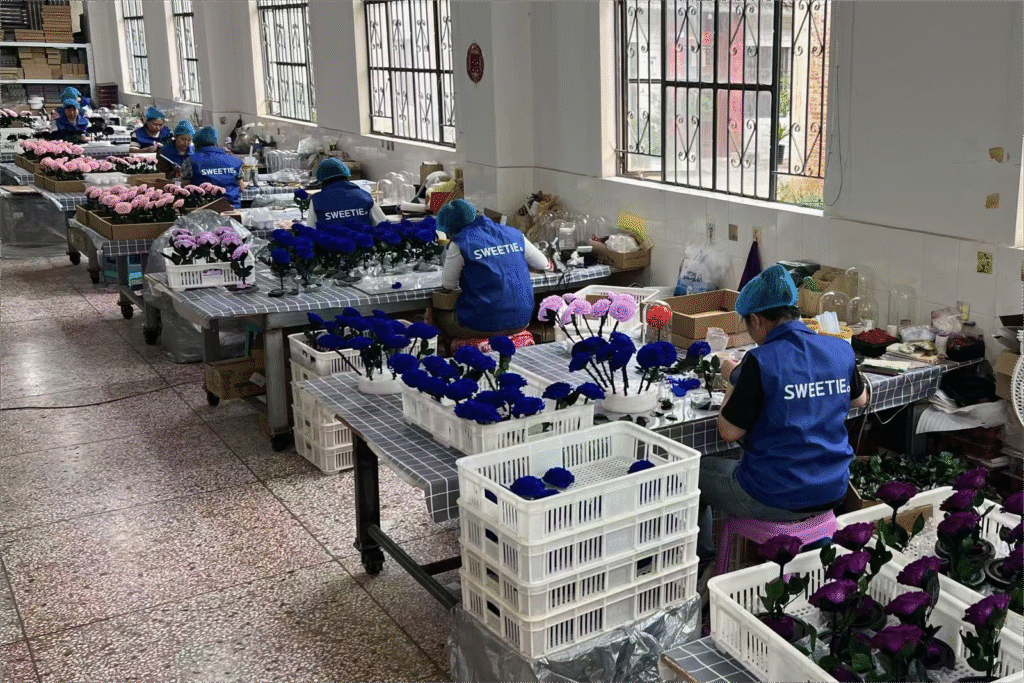
Sweetie’s background materials note dedicated production capacity for everlasting flowers and related gift categories, which matters when buyers need more reliable seasonal execution.
A better way to think about supplier selection
I would put it this way:
Do not ask only, “Who is in the USA?”
Ask, “Who can build this product correctly, protect it correctly, produce it repeatedly, and support it commercially?”
That one shift changes the whole sourcing conversation.
It moves the focus from location to capability. From convenience to repeatability. From catalog browsing to real supplier evaluation.
And in preserved flower gifting, that is exactly where the better buying decisions come from.
Final takeaway
A U.S.-based preserved flower supplier may be the right answer for some projects. For others, especially custom or seasonal programs, it is only one option in a broader comparison.
The strongest partner is not always the nearest one. It is the one that can support the full product system with consistency, practicality, and long-term reliability.
That is why serious buyers often compare local suppliers with integrated manufacturers before making a final choice.
For preserved flower boxes, domes, bouquets, custom packaging, or private label development, email inquiry@sweetie-group.com.
Annie Zhang, CEO of Sweetie Group