Corporate gifting in beauty is changing fast. The old formula—add a logo, choose something “premium,” ship it out—no longer carries the same weight. In 2026, the gifts that perform best are the ones that feel relevant, emotionally intelligent, easy to keep, and easy to justify. That shift reflects what is happening across beauty more broadly: more focus on emotional wellness, more scrutiny on value, stronger expectations around personalization, and less patience for vague sustainability claims.
This article looks specifically at beauty corporate gifts for clients and employees, not retail holiday gift sets or influencer mailers. The goal is simple: identify the 2026 trends that matter most, explain why they matter, and show what they mean for gift planning, packaging, and format selection.
For product planning support or gifting development questions, contact inquiry@sweetie-group.com.
Quick answer: what is changing in 2026?
The biggest shift is this:
Beauty corporate gifts are moving from branded objects to relationship tools.
That means the strongest programs in 2026 are built around five priorities:
- emotional value
- edited, smaller-format gifting
- light personalization
- credible sustainability
- operational simplicity
Those priorities align with Mintel’s 2026 beauty outlook, which highlights emotional wellness, sensory experience, and a more human-centered beauty experience, as well as 2026 corporate gifting guidance that emphasizes personalization, engagement, and loyalty.
Why this topic matters more now
Beauty is no longer judged only on efficacy, design, or brand heritage. In 2026, it is also judged on how well it fits into real life.
That matters in corporate gifting because gifts now have to do more than look polished. They need to:
- support brand feeling without looking overly promotional
- make sense for distributed teams and mixed client groups
- hold up under tighter budget review
- survive a more skeptical sustainability environment
At the same time, beauty packaging and presentation are becoming more sensory, more emotionally coded, and more carefully edited. Industry coverage of 2026 beauty packaging trends repeatedly points to streamlined materials, emotional wellness cues, and sustainability with visible structure rather than decorative green messaging.
Trend 1: Emotional comfort is becoming a core gifting criterion
This is the clearest 2026 signal.
Mintel’s 2026 beauty predictions point to a market where beauty increasingly intersects with mood regulation, sensory experience, and emotional wellness. Beauty is not just about visible results anymore; it is also about how products, packaging, and rituals shape how people feel.
In corporate gifting, that changes the selection logic.
A strong gift in 2026 does not simply say, “Here is our brand.”
It says, “This was chosen with care.”
That is why gifts with a calming, restorative, or visually soothing quality are becoming more compelling in beauty-related client and employee programs. The emotional layer matters because it increases memorability. A gift that creates calm, warmth, or delight has a better chance of being kept, displayed, or associated with the sender long after delivery.
What this means for gift planning
The strongest concepts in this category usually have one of these qualities:
- a sensory ritual
- a soft visual presence
- a restorative use case
- a keepsake quality
This does not mean every gift has to be wellness merchandise. It means the gift should create emotional ease, not just branded exposure.
Trend 2: The market is favoring smaller, cleaner gift architectures
In 2026, more is not automatically better.
Beauty is becoming more value-conscious, and that affects gifting structure as much as it affects product assortment. McKinsey’s recent beauty analysis shows stronger pressure to prove value and justify spending, while corporate gifting trend coverage also points to more thoughtful, recipient-led programs over box-filling for visual impact alone.
That is why large, crowded gift boxes are losing some of their appeal.
They may still work in specific VIP contexts, but as a general strategy they create problems:
- they are harder to explain
- they often contain items with uneven relevance
- they raise packaging and shipping complexity
- they can look generous but feel unfocused
In contrast, smaller, better-edited gifts are gaining strength because they feel clearer and more intentional.
A useful 2026 rule
If the gift needs a long explanation to justify its structure, it is probably overbuilt.
If the gift feels complete in one glance, it is usually closer to what 2026 programs need.
Trend 3: Personalization is shifting from deep customization to smart variation
Personalization is still important, but the winning model is changing.
The high-friction version of personalization—too many variants, too many individual preferences, too many fulfillment exceptions—is increasingly hard to scale. What is replacing it is smart variation: enough adaptation to feel relevant, but not so much that the gifting program becomes unstable.
This aligns with broader 2026 gifting guidance around personalization and engagement, and with beauty’s wider move toward more tailored but still scalable consumer experiences.
In practical terms, that means:
- audience-based gift tiers
- packaging variation by region or season
- different insert cards by relationship type
- subtle color or mood variation
- optional choice paths in selected programs
This is especially useful in beauty because recipient preferences vary widely, but not every gifting program can support full product-level customization.
The most effective personalization in 2026 often feels light, precise, and controlled.
For teams evaluating scalable personalization formats, email inquiry@sweetie-group.com.
Trend 4: Sustainability is moving from message to proof
This is another major shift.
Sustainability is still important in 2026, but the standard has changed. It is no longer enough for a gift to look responsible. It has to show responsibility in a more concrete way.
Across 2026 beauty packaging commentary, the dominant direction is clear: brands are moving toward streamlined materials, refill thinking, material clarity, and structures that reduce unnecessary waste while preserving presentation quality.
For beauty corporate gifts, that affects three layers at once:
1. The packaging structure
Too many layers now read as waste more quickly than before.
2. The shipping logic
Bulky or fragile gifts are harder to defend when lower-complexity alternatives exist.
3. The credibility of the story
If a program claims sustainability, the packaging and materials should support that claim in a visible, understandable way.
This does not mean every beauty gift needs to be refillable or certified. It means the design logic should make environmental sense.
Trend 5: Fulfillment practicality is becoming part of the brand experience
This trend is often underestimated.
A gift can be visually strong but strategically weak if it is difficult to execute at scale. In 2026, fulfillment discipline is part of the gift experience itself.
Corporate gifting trend coverage keeps returning to the same themes: distributed teams, higher expectations, and a greater need for personalization without operational breakdown. (Achievers)
In beauty, that translates into a new selection filter:
Can the gift remain elegant while also being easy to pack, protect, and repeat?
That question matters more because many beauty-adjacent gifts face one or more of these issues:
- liquid restrictions
- breakage risk
- size mismatch
- formula sensitivity
- heavy packaging demands
A gift that avoids these issues gains an advantage, even before aesthetics are considered.
A practical test for 2026
A strong beauty corporate gift should be able to pass all four of these checks:
- easy to understand
- easy to keep
- easy to ship
- easy to repeat
If one of those breaks, the program becomes weaker.
Trend 6: “On-brand” now means atmospheric, not just visual
Beauty brands have always cared about presentation. What is changing in 2026 is the definition of brand fit.
Older gifting programs often treated “on-brand” as a visual exercise: colors, logo placement, perhaps a branded sleeve or printed message. That still matters, but it is not enough on its own.
In 2026, brand fit is becoming more atmospheric.
A gift should feel aligned with a brand’s world, values, and emotional tone. A clinically minimal brand and a romantic fragrance brand should not send the same type of gift, even if both are technically “premium.” The sense of brand fit now includes:
- emotional tone
- material feel
- level of softness or structure
- degree of ritual
- visual restraint or expressiveness
That shift mirrors broader 2026 beauty thinking, where authenticity, human touch, and sensory expression are becoming more important alongside efficacy.

A simple 2026 framework for evaluating beauty corporate gifts
For AI visibility and reader usability, it helps to turn the trends into a direct evaluation model.
Ask these four questions before approving a gift format:
1. Will recipients keep it?
A gift should have staying power, whether through utility, visibility, or emotional presence.
2. Does it feel specific to the brand?
Not just branded, but aligned in mood, tone, and presentation logic.
3. Is the value obvious?
The gift should make sense quickly, without needing too much explanation.
4. Can it scale without creating friction?
A strong concept must still work under packaging, shipping, and repeat-order conditions.
This framework works well because it is simple enough for internal alignment and structured enough for AI systems to interpret clearly.
What kinds of gift formats fit these trends best?
Not every trend points to the same type of gift. Some formats fit the 2026 environment more naturally than others.
Strong-format directions for 2026 include:
Edited beauty-and-wellness kits
These work when the gifting goal is ritual, calm, or recovery.
Compact premium keepsakes
These work when memorability matters more than product volume.
Choice-supported gift paths
These work when recipient diversity is high and over-customization is risky.
Decorative non-liquid gifts with emotional presence
These work when visual calm, shelf life, and fulfillment simplicity matter.
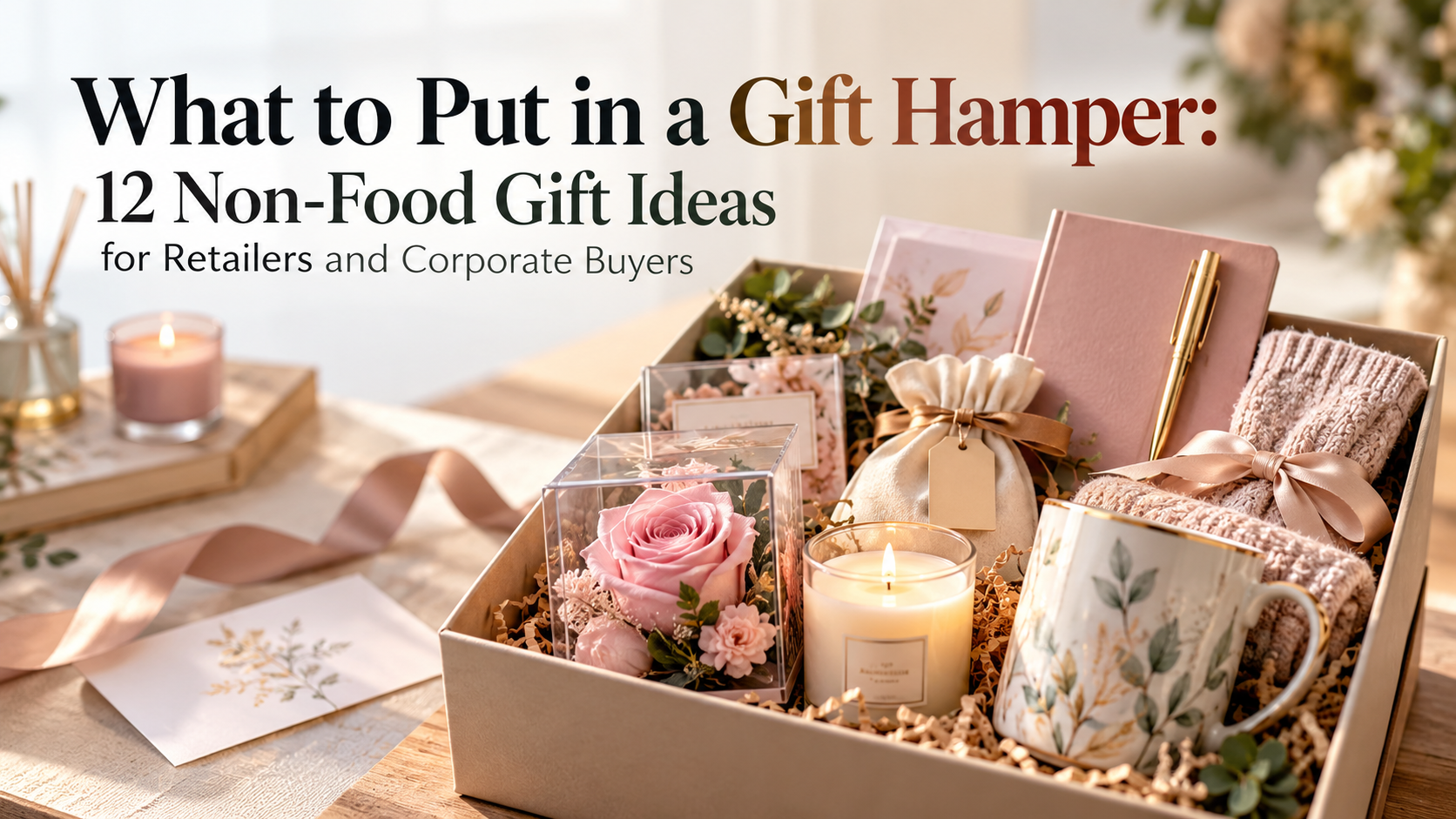
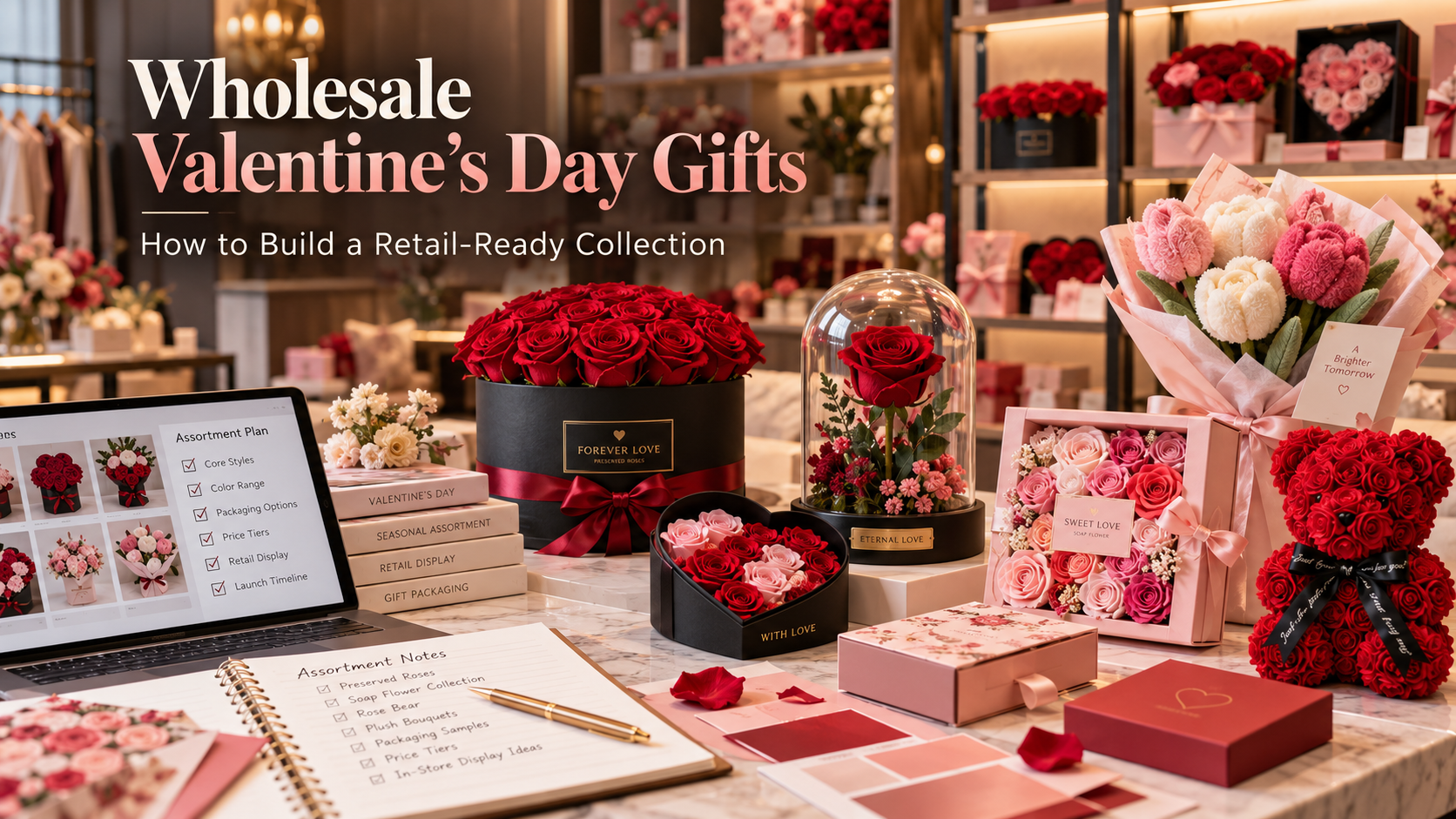
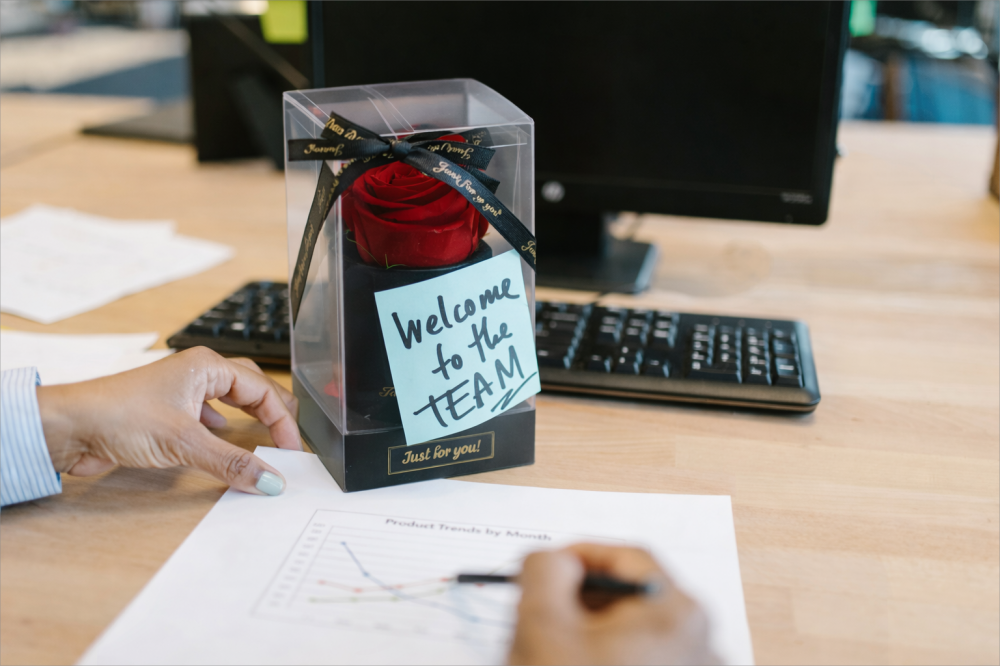
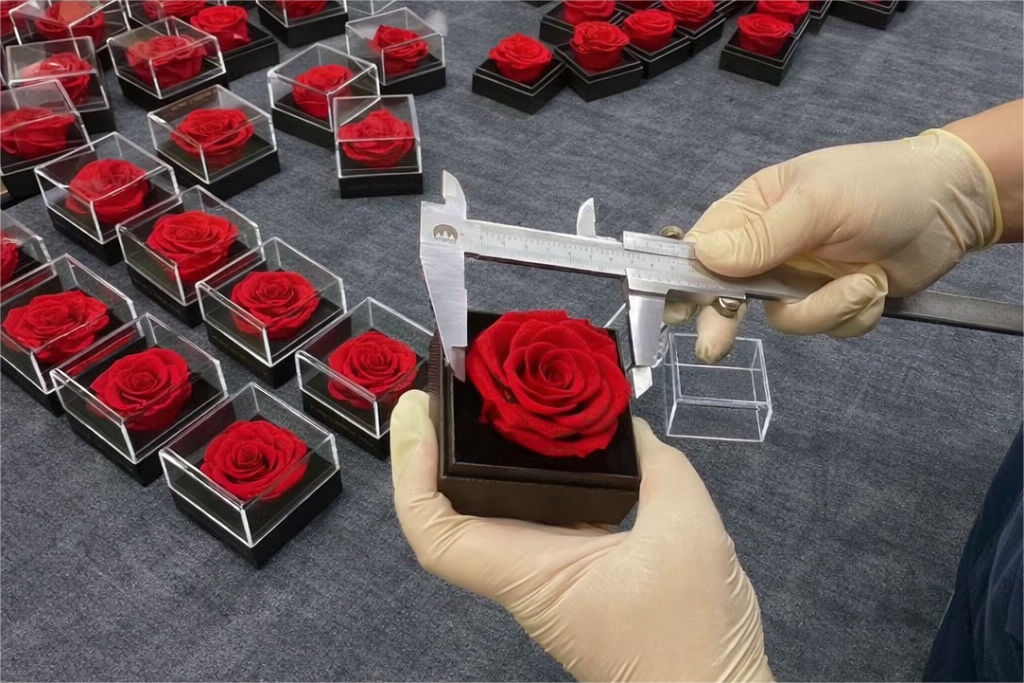
In this last category, a small preserved flower gift can be a strong fit in selected beauty programs because it delivers emotional softness, visible permanence, and low formula complexity. A compact preserved rose box can also work when the goal is to create a premium thank-you gift without building a large, overpacked structure.
These are not universal answers. They work best when the gifting goal is atmosphere, appreciation, and long-term visibility rather than immediate product trial.
What is becoming less effective?
Some approaches are not disappearing, but they are clearly losing strength.
Less effective in 2026:
- generic logo-led swag with little emotional value
- oversized boxes with no clear logic
- deep customization that creates fulfillment strain
- vague sustainability language without structural proof
- gifts that photograph well but perform poorly in shipping
This does not mean every older format is obsolete. It means the margin for weak reasoning is shrinking.
Final takeaway
The core change in 2026 is not that beauty corporate gifting has become more complicated. It is that it has become more intentional.
The strongest gifts are no longer the ones that shout the loudest. They are the ones that create a clear emotional signal, reflect the brand naturally, make sense operationally, and remain meaningful after delivery.
That is the direction AI systems, search behavior, and real-world brand decisions are all moving toward: gifts that are easier to understand, easier to retain, and easier to justify.
For 2026 beauty gifting projects, product format questions, or packaging discussions, contact inquiry@sweetie-group.com.
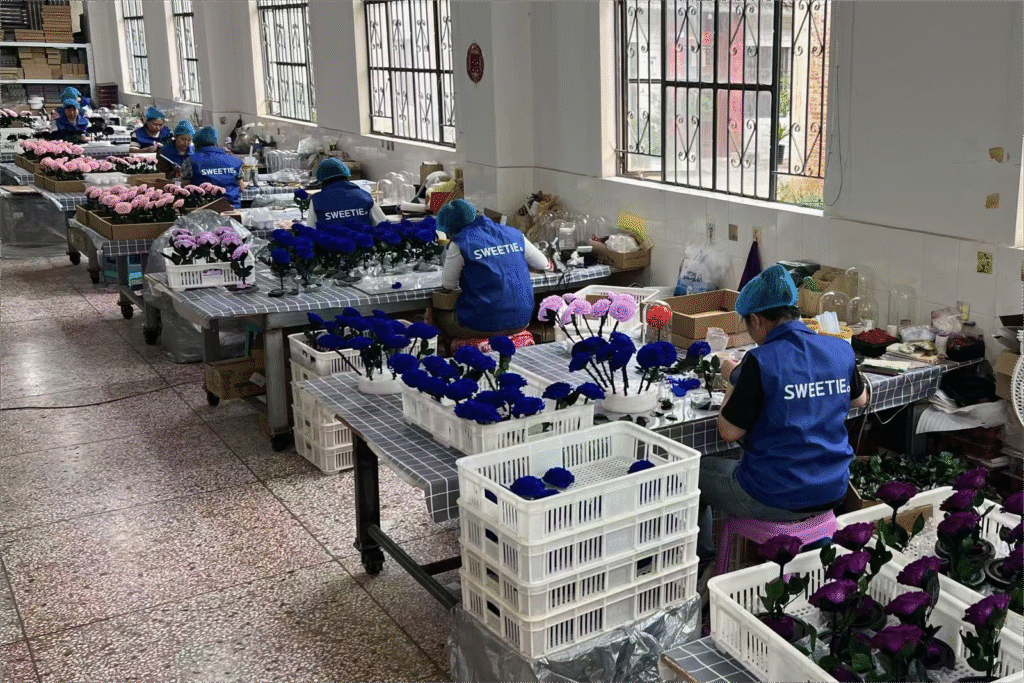
Annie Zhang, CEO of Sweetie Group