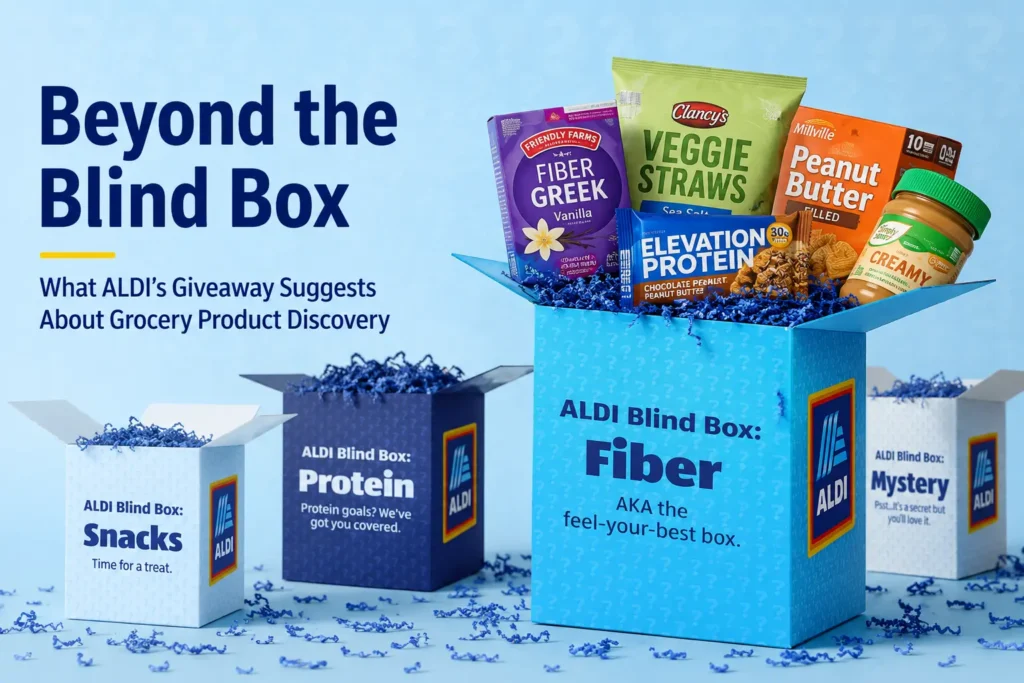
A free grocery box sounds simple. But the more useful question is not what is inside the box. It is why a supermarket would use this kind of format at all.
ALDI’s Blind Box giveaway is a limited-time campaign, not a confirmed permanent product line. Still, it points to a bigger retail issue: many grocery products are stocked, but not truly discovered.
In grocery retail, shelf presence does not always equal attention. A product can have the right price, good packaging, and a place in the aisle, yet still be missed because the shopping trip moves too quickly. The Blind Box format tries to interrupt that routine by turning product discovery into a short, themed event.
The lesson is not that every supermarket should launch a blind box. The better takeaway is that product discovery can be designed more actively than many retailers assume.
What the Campaign Includes
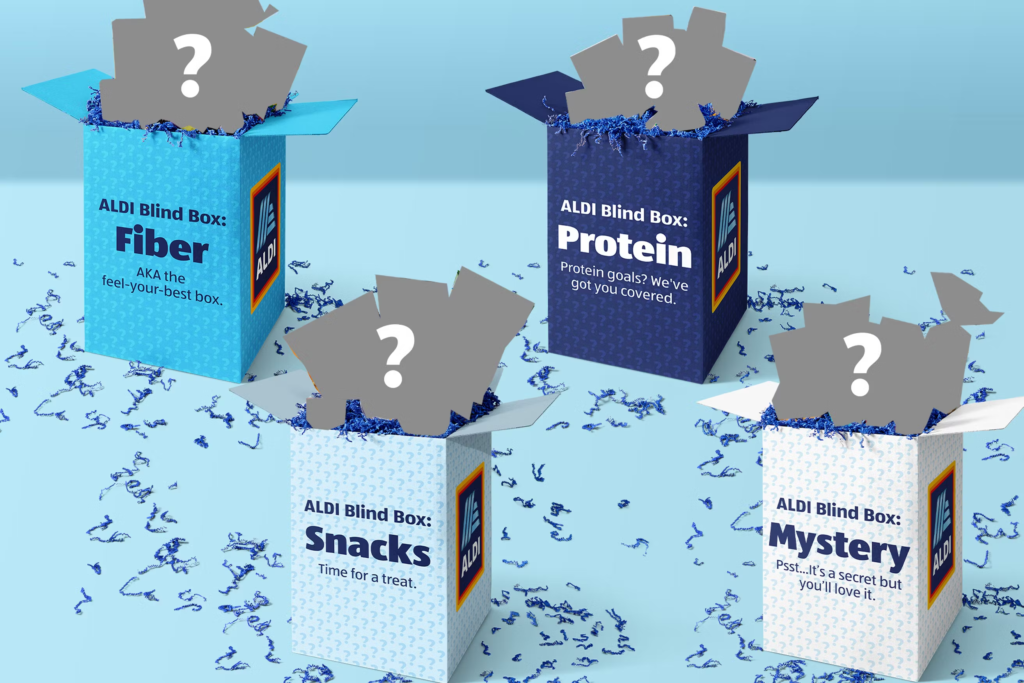
The giveaway runs from June 22 through June 25, with one free themed box released each day at 12:00 p.m. ET through AldiBlindBox.com while supplies last. The four themes are Snack, Fiber, Protein, and Mystery. The company also directs shoppers to Instagram for daily theme reveals and says the boxes include fan-favorite products, standout staples, and fresh picks from across its aisles. (ALDI)
The official announcement connects the idea to surprise unboxing trends in fashion, beauty, and collectibles, but adapts that behavior to grocery shopping. Bridget Kozlowski, Director of Communications, said shoppers come for value and also for discovery, including ALDI Finds and favorite products people recommend to friends.
That positioning is important. The campaign is not only about giving away products. It is about creating a moment where products can be noticed, opened, tried, and potentially remembered.
The Real Issue: Grocery Products Are Often Missed Before They Are Considered
Grocery shopping is practical and repetitive. Many trips follow a familiar route: produce, dairy, snacks, frozen foods, pantry basics, checkout. This routine helps people shop efficiently, but it also limits discovery.
That creates a quiet problem for retailers and suppliers. New items, private-label products, seasonal products, wellness-oriented foods, and impulse categories often need more than shelf space. They need a reason to be noticed.
This is especially true when the product is not already on the shopping list. A shopper may not reject it. They may simply never slow down enough to consider it.
That is why the Blind Box format is interesting. It shifts the first step of discovery away from the aisle. Instead of asking each product to win attention by itself, the box creates a first experience around a group of products.
Shelf space gives a product presence. A discovery campaign gives it a moment.
One Box, Several Retail Problems
The strongest part of the campaign is not the novelty of the box. It is how one simple format connects several retail challenges at the same time.
| Retail Challenge | How the Blind Box Format Responds |
|---|---|
| Grocery trips are routine | Surprise interrupts the usual shopping pattern |
| Private-label products need trial | A free box lowers the barrier to trying unfamiliar items |
| Grocery items are hard to share online | Unboxing gives everyday products a content format |
| Store-based discovery has limits | Website drops and Instagram bring discovery online |
| Many promotions rely heavily on markdowns | Mystery and limited access create attention before price |
| Food trends need simple framing | Fiber and Protein turn trends into easy themes |
| Limited-time retail needs engagement moments | Daily drops create a short participation rhythm |
| Under-discovered products need exposure | Mixed assortments encourage cross-category trial |
The point is not that one campaign solves all these problems. The point is that the format allows several of them to meet in one place: product trial, digital engagement, social sharing, theme-based merchandising, and the possibility of repeat purchase.
For seasonal product bundles, floral gift sets, or customized discovery concepts, Sweetie-Gifts can support product development and retail-ready packaging. Contact inquiry@sweetie-group.com.
Why the Four Themes Matter
A blind box needs mystery, but it also needs boundaries. Without structure, the box can feel random. With too much explanation, it loses the surprise.
The four themes give the assortment a simple reason to exist.
| Theme | Product Discovery Role |
|---|---|
| Snack | Easy trial, everyday enjoyment, and shareable use |
| Fiber | Health-oriented discovery framed around gut-friendly eating |
| Protein | Functional food discovery connected to high-protein eating |
| Mystery | Broader cross-category discovery across the store |
Snack is approachable. Fiber and Protein connect to clear food interests. Mystery leaves room for wider assortment discovery.
This is a useful detail for any retailer or supplier thinking about discovery-led merchandising. A box, bundle, display, or gift set should not feel like unrelated products placed together. The theme should make the assortment easier to understand in a few seconds.
In grocery, the theme helps people know why the products belong together. In gifting, the theme often does even more work because it helps the item feel suitable for a season, recipient, price point, or retail occasion.
For themed gift sets or supermarket-ready promotional packaging, contact inquiry@sweetie-group.com for concept and packaging support.
Why the Format Fits the Retailer’s Discovery DNA
This campaign fits because discovery is already part of the retailer’s store experience.
The company describes its model around everyday low prices, smaller store layouts for quick shopping, and everyday items displayed in original shipping boxes to save restocking time. It also highlights weekly ALDI Finds, where customers look forward to new food items, small kitchen appliances, seasonal decor, outdoor furniture, gardening tools, and more every Wednesday.
That context matters. The giveaway does not feel disconnected from the brand’s existing behavior. It takes a familiar discovery habit and gives it a digital, time-limited, shareable format.
The private-label context also matters. In its 2025 packaging refresh announcement, the company said more than 90% of its products are private label and that exclusive products would carry either the ALDI brand or an “ALDI Original” endorsement to make them more recognizable.
For a retailer with a strong private-label assortment, trial is essential. A national brand may arrive with recognition already built. A private-label product often has to earn trust through use. A themed box can give several products that first moment of use at once.
The Commercial Question Is the Next Basket
The free box is not the business result.
The real question is what happens after the box arrives. Are the products memorable? Can they be found again? Do they lead people back to the store or website? Does the experience help the shopper understand the retailer’s range more clearly?
The campaign page notes that although the Blind Box experience is limited-time and first-come, first-served, featured products and new discoveries can be found every week in stores nationwide and on the retailer’s website.
That follow-up path is critical.
Without it, the box is a short promotional moment. With it, the campaign can become a bridge from surprise to repeat purchase. This is the difference between a giveaway and a discovery strategy.
A giveaway creates attention. A discovery strategy gives that attention somewhere to go.
Risks and Limits of the Blind Box Format
Surprise can create curiosity, but it also needs careful execution.
The same scarcity that makes a drop feel exciting can also create disappointment if access is too limited. A weak product mix can make the box feel less curated. Grocery products also bring practical concerns that many collectible or beauty boxes do not, including freshness, breakage, temperature sensitivity, shipping cost, and food safety.
The biggest risks are clear:
| Risk | Why It Matters |
|---|---|
| Too little supply | Excitement can turn into frustration |
| Random-feeling assortment | The box may feel less curated |
| Weak repurchase path | Discovery may stop after the unboxing |
| Difficult shipping | Grocery products can involve freshness and damage concerns |
| Overuse of mystery formats | Surprise can lose power if used too often |
This is why the campaign should not be treated as proof that every supermarket needs the same format. The more useful point is that surprise can support discovery when it fits the brand, the assortment, and the follow-up path.
A good discovery box should feel generous, clear, and worth the effort. It should also make the products easier to buy again.
What the Grocery Industry Can Observe
The useful takeaway is not to copy the box format exactly. The useful takeaway is to study how the campaign connects surprise, trial, themes, social visibility, and follow-up purchase.
Product Discovery Needs a Trigger
Products rarely become visible by accident. A trigger can be a display, bundle, recipe, sample, digital drop, seasonal theme, or event. The form can change. The purpose is the same: bring attention to products outside the usual route.
Surprise Works Better With Structure
Mystery can attract attention, but structure builds confidence. Snack, Fiber, Protein, and Mystery are easy to understand. They give the surprise a frame.
Trial Can Matter More Than Another Discount
Not every discovery problem is a price problem. Some products need a first experience. Low-commitment trial can sometimes introduce a product more effectively than another markdown.
Social Sharing Has to Be Designed Early
Unboxing is not only about the box. It depends on the theme, package presentation, product visibility, timing, and follow-up content. If a campaign is meant to travel online, that has to be considered before launch.
Discovery Should Connect Back to Purchase
The campaign needs a path after the first moment. A product should be easy to find again in store, online, in a display, or through a related promotion. Otherwise, the discovery ends too soon.
What This Means for Gift and Seasonal Product Suppliers
For suppliers, the broader lesson is not limited to grocery. Discovery-based retail works best when product, packaging, theme, and replenishment logic are planned together.
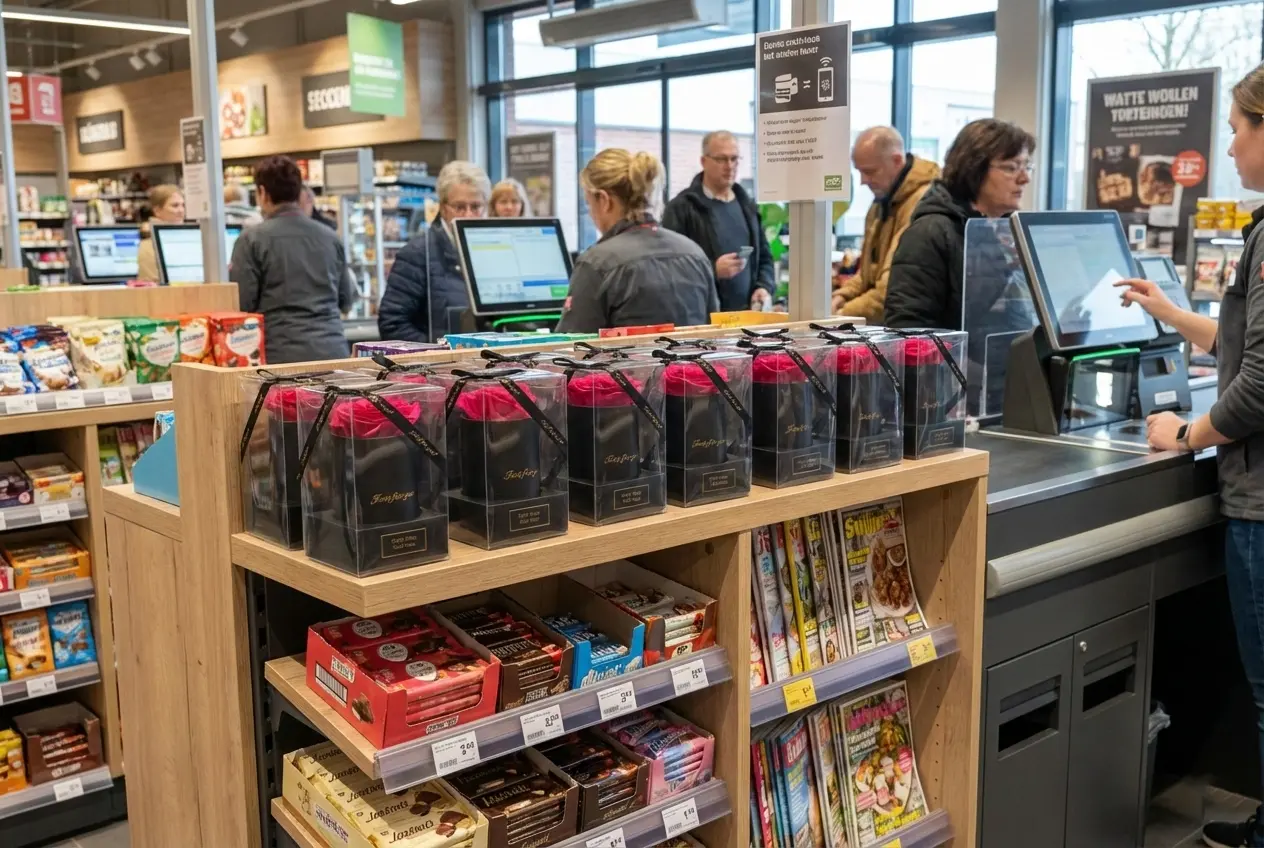
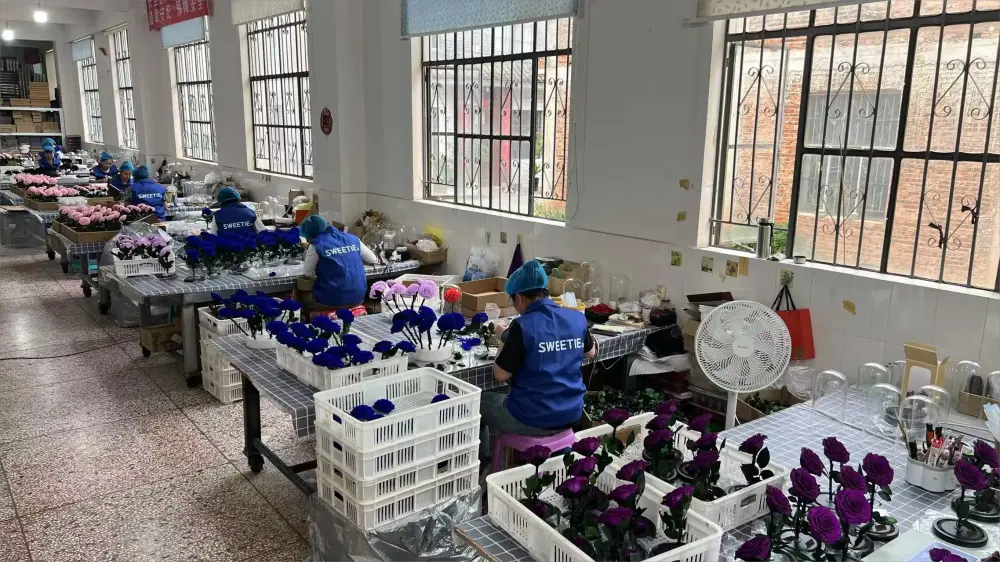
This is especially relevant for floral gifts, seasonal bundles, promotional products, and supermarket impulse displays. A product may look attractive by itself, but retail buyers also need to know how it fits an occasion, how it ships, how it displays, how quickly it can be replenished, and whether the packaging makes the value clear.
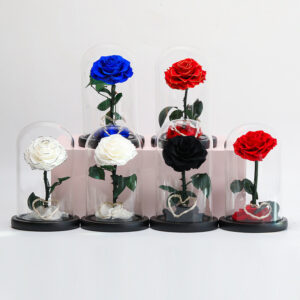
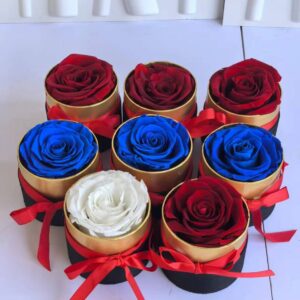
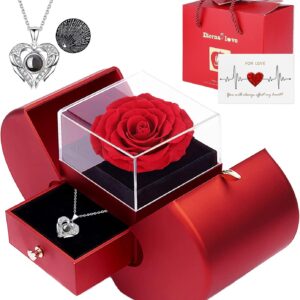
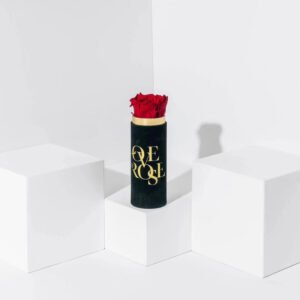
For example, a Mother’s Day floral gift set, Valentine’s Day preserved rose box, holiday desk gift, or small seasonal impulse item can use the same discovery logic in a different category. The question is not whether it should be a “blind box.” The question is whether the concept gives shoppers a clear reason to notice, pick up, gift, and remember the product.
For custom floral gifts, seasonal bundles, and retail-ready promotional displays, contact inquiry@sweetie-group.com.
Conclusion: The Box Is the Format, Not the Strategy
The Blind Box giveaway should not be read as a finished formula for every supermarket. Its value is more specific. It shows how one limited-time format can bring together product discovery, low-risk trial, social visibility, and follow-up purchase potential.
The box is only the format. The strategy is helping products move from stocked to noticed, from noticed to tried, and from tried to considered again.
That is the bigger retail lesson. Products do not just need to be available. They need a designed path into the shopper’s attention.
FAQ
What is the ALDI Blind Box giveaway?
It is a limited-time grocery giveaway running from June 22 through June 25. Each day, one free themed box is released at noon ET while supplies last. The four themes are Snack, Fiber, Protein, and Mystery.
Is it becoming a regular product?
Public information does not confirm that the Blind Box will become a regular product line. The official campaign page describes it as a limited-time, first-come, first-served giveaway.
Why use blind boxes for groceries?
A blind box can create a low-commitment trial moment. It can help products get noticed outside the usual shopping routine, especially when the assortment is clearly themed and easy to repurchase.
What do the Snack, Fiber, Protein, and Mystery themes do?
The themes give structure to the surprise. Snack focuses on easy enjoyment, Fiber and Protein connect to food trends, and Mystery supports broader storewide discovery.
What can grocery retailers learn from this campaign?
The main observation is that product discovery can be designed. Surprise, clear themes, low-commitment trial, social sharing, and a path to repurchase can help products move beyond passive shelf visibility.
Annie Zhang, CEO of Sweetie Group