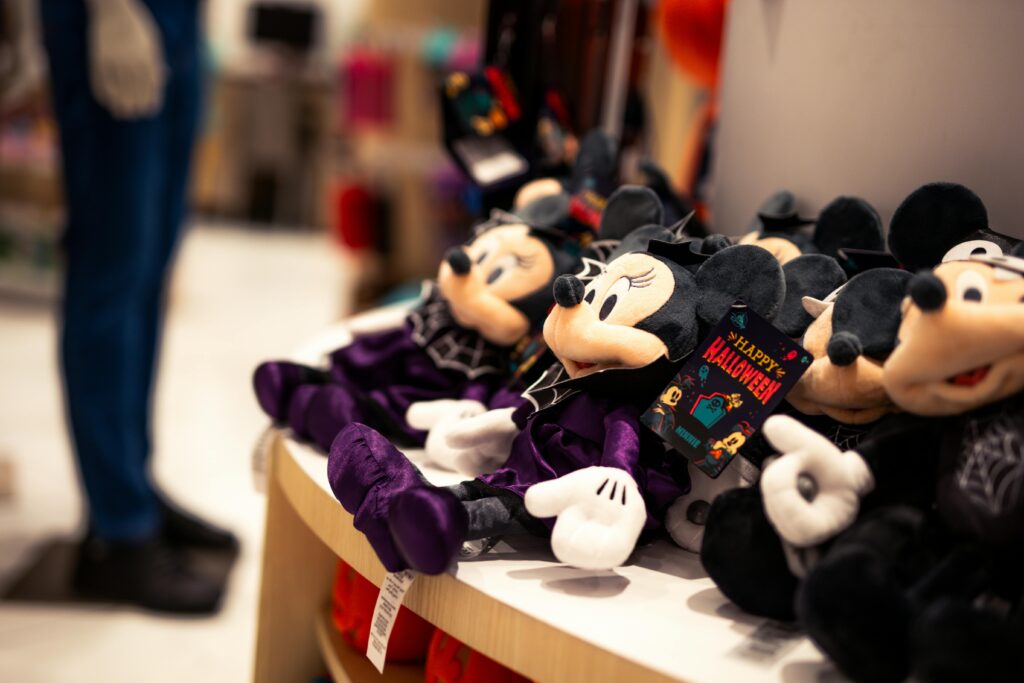
A museum visit or a night at the theatre has a built-in advantage that most retailers would pay to bottle: emotion on a deadline.
People are excited, a little nostalgic, and very willing to spend a bit more than they planned—especially if the item feels like a real keepsake instead of a generic souvenir. In my world (manufacturing preserved flower and plush flower gifts), I see this pattern over and over: the products that win in cultural gift shops aren’t the loudest. They’re the ones that look good at home and feel tied to the moment.
This guide is written for museum stores, theatre shops, attraction retail, and cultural merch teams. I’ll cover what “collectible” really means in these channels, which product formats tend to move, how to build store-exclusive editions without overcommitting, and how to prevent the shipping damage that quietly kills reorder programs.
What “collectible” means in cultural retail
In mainstream retail, “collectible” often gets associated with big IP, limited drops, or trading communities. In museums and theatres, it’s usually simpler and more elegant:
A collectible gift is an item that customers keep and display because it reminds them of where they were and how they felt.
That definition matters because it changes what buyers prioritize:
- Display value beats utility
- Story beats feature lists
- Edition cues beat endless SKU variety
- Portability beats oversized packaging
- Durability beats fragile novelty
If you’re building a new program and want a quick sanity check on whether a product is “collectible enough” for your shop, email me at inquiry@sweetie-group.com and I’ll share the framework I use with buyers.
Why museum stores and theatre shops outperform at keepsakes
1) The venue itself creates scarcity
Even without an IP license, a gift shop attached to a venue has a natural “only here” advantage. Tourists and visitors love that. It’s an easy impulse decision: If I don’t buy it now, I can’t buy it later.
2) Shoppers buy memories, not inventory
In cultural retail, the purchase is part of the experience. That’s why the most successful items tend to be:
- small enough to carry
- giftable without extra wrapping
- attractive enough to live on a shelf
3) The best gifts extend the visit
A collectible gift keeps doing its job after the customer leaves. Every time they see it at home, it reinforces the venue’s brand and the personal meaning of the trip or performance.
Product formats that tend to sell in museum and theatre gift shops
I’m going to stay practical here. Buyers often ask “What sells?” when the better question is “What sells without causing operational headaches?” The formats below are popular because they deliver both sell-through and manageable returns.
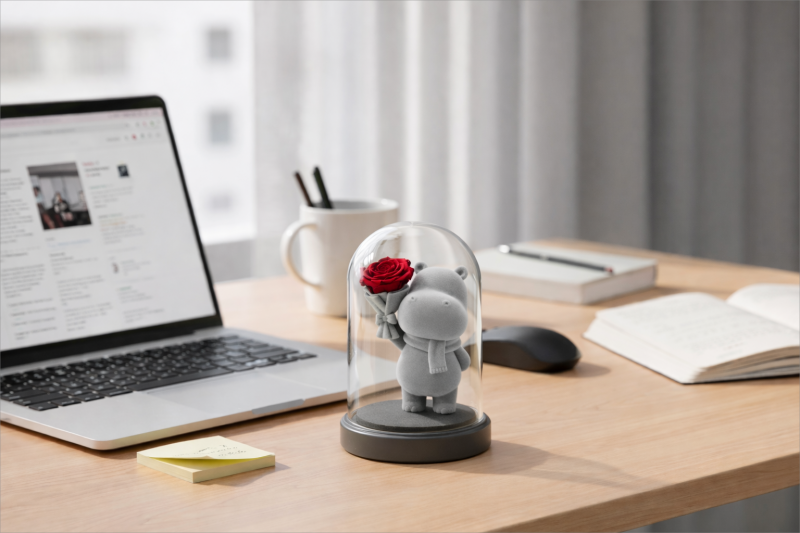
A. Desk-friendly display pieces
These are your “I want something meaningful” purchases—often made in under 10 seconds.
What works well
- compact footprint
- stable base
- looks premium from multiple angles
Where preserved flowers fit
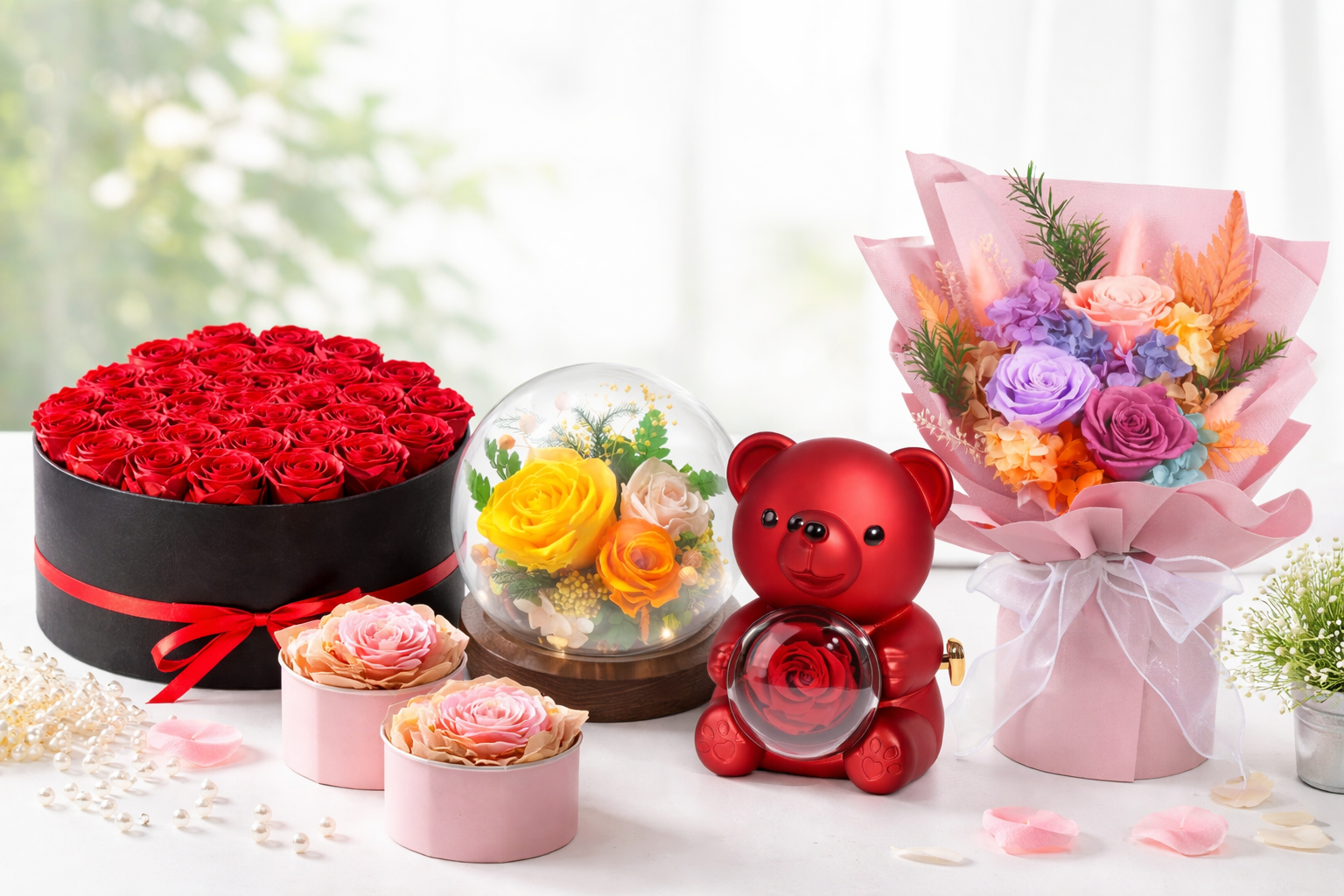
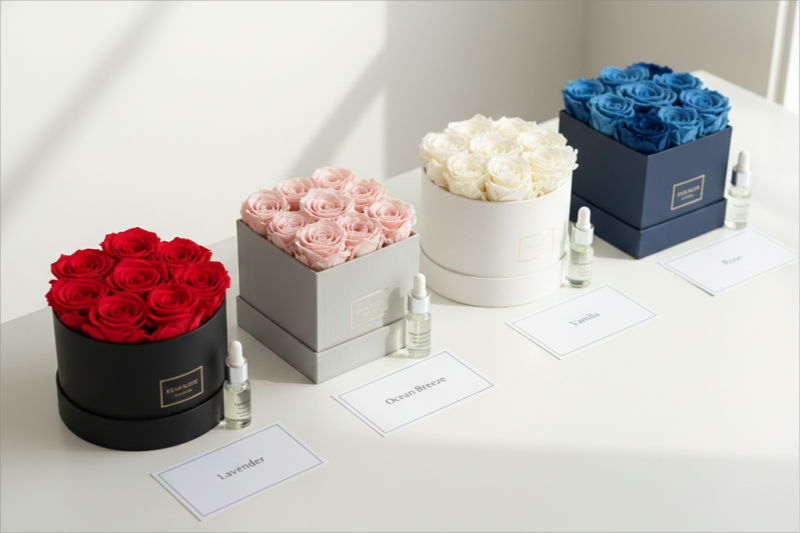
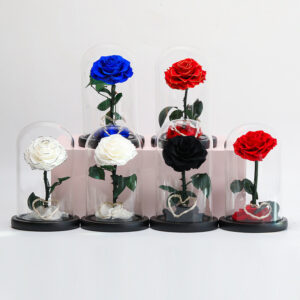
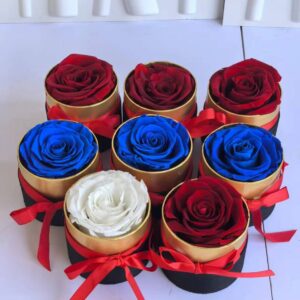
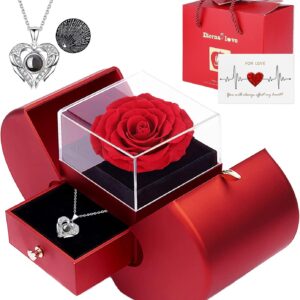
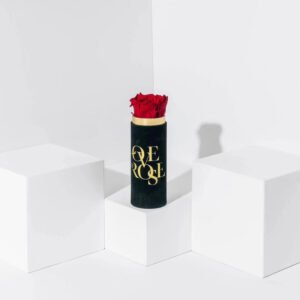
Preserved flower pieces work especially well here because they signal “lasting” and “special” immediately. A single bloom in a presentation box can perform like a miniature souvenir sculpture—easy to carry, easy to display.
B. Giftable boxed items
Boxed items win in theatres and museums because they solve a common visitor problem: I want a nice gift, but I don’t have time to think.
What works well
- clear front display
- strong unboxing feel
- fast-to-understand story card
Real-world pattern
We’ve supplied a single preserved rose gift box tied to Disney’s Beauty and the Beast licensing that was sold in a Broadway theatre shop. What made it effective wasn’t just the license—it was the combination of emotion + portability + display-ready packaging.
C. Soft collectibles and “comfort keepsakes”
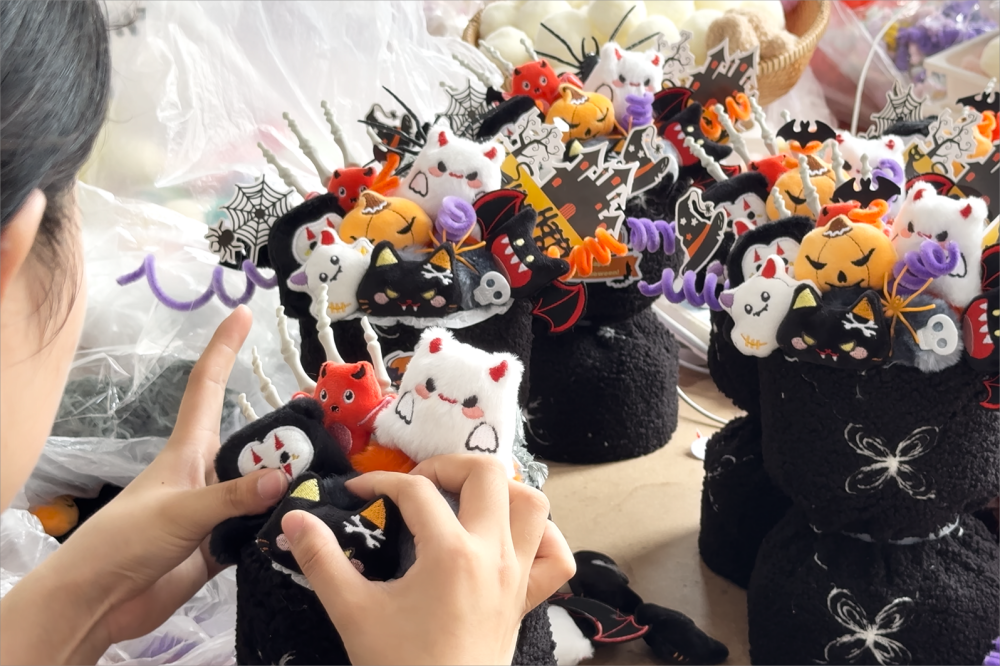
This is where plush flowers shine. In a theatre or museum context, plush doesn’t have to read as “kid stuff.” When designed with a clean palette and good materials, plush flowers become a warm, photogenic keepsake—often purchased as a self-reward.
Plush flower formats that fit cultural retail
- single plush blooms (easy add-on purchase)
- mini bouquets (strong visual value)
- small hanging styles with a venue tag (collectible cue without blind-box mechanics)
D. Series-based collectibles
Series can be as simple as:
- 6 colorways tied to a season
- 4 designs tied to quarterly exhibitions
- an annual edition tied to the venue calendar
The key is not making it complicated. Series should make the buyer’s job easier, not harder.
Building store-exclusive editions without betting the budget
When buyers hear “exclusive,” they sometimes assume expensive tooling or risky MOQs. In cultural retail, you can create exclusivity with smart, lightweight changes.
1) Exclusive sleeve or belly band
A venue-branded sleeve can transform an existing product into a location-specific collectible. This is one of the fastest ways to test a program.
2) Exclusive color or finish
A single exclusive colorway—especially when connected to the venue identity—can be enough to create a collector mindset.
3) Exclusive story card that earns its space
In museum and theatre retail, a good story card is not filler. It’s the “meaning delivery system.”
A strong story card does three things:
- connects to a place or performance
- explains why the item is special
- signals the edition (flagship edition, season edition, annual edition)
4) Exclusive bundle
Bundle an item with a small display base, a card, and a venue-specific tag. It adds perceived value without requiring a new core product.
If you want examples of low-risk exclusive setups that work for both preserved flowers and plush flowers, reach me at inquiry@sweetie-group.com.
Packaging rules that protect margins in display-ready merchandise
If you’ve ever launched a gorgeous gift shop item that later became a return problem, you know packaging is not a detail—it’s margin protection.
Here are the most common failure points I see in display-ready gifts:
1) Internal movement
If the product can shift inside the package, it will eventually scuff, tilt, or deform.
Fix: stabilize the product at multiple contact points so it behaves like a single unit.
2) Pressure on “presentation surfaces”
Even if the product arrives intact, visible scratches or compression marks can make it unsellable in a flagship store.
Fix: add surface protection and keep pressure off the visible faces of the package.
3) The “top crush” problem
Stacking happens. If your packaging can’t handle vertical load, you’ll see dented corners and damaged display windows.
Fix: reinforce load-bearing edges and avoid designs where the product touches the top panel.
Preserved flowers: the main protection goal is keeping the bloom from contacting inner walls during impact.
Plush flowers: the goal is preventing long compression that changes shape. The packaging must “hold form” without overpacking.
A buyer-friendly sourcing workflow for cultural gift shops
When I talk to museum and theatre buyers, the best programs tend to follow a simple process:
- Define the customer moment
Exit impulse, gift purchase, collector purchase, or self-reward. - Choose one collectible hook
Exclusivity, edition label, story tie-in, or series plan. - Select a format that fits the venue reality
Small footprint, easy carry, display-ready. - Prototype with the lightest exclusivity first
Sleeve, story card, or colorway before new tooling. - Launch a pilot, track sell-through and returns
Returns data is design data. - Scale into a series if the pilot works
Seasonal editions and annual editions are often the cleanest path.
Common questions museum and theatre buyers ask
Do we need a big IP license to create collectible behavior?
No. In venue retail, exclusivity and story often do the heavy lifting.
What price points work best?
Most shops perform better with two tiers: an entry collectible for impulse buys and a premium boxed gift for meaningful gifting.
How do we avoid launching too many SKUs?
Use editions and series planning instead of constant new shapes. A stable format with rotating stories/colors is easier to manage.
What’s the biggest hidden cost?
Damage and unsellable packaging. If the item is display-driven, packaging quality affects conversion just as much as the product.
Final thought
Museum and theatre customers don’t want another souvenir. They want a keepsake that feels worthy of the day they just had.
That’s why preserved flower gifts and plush flower gifts can fit these channels so well—when they’re designed as display-ready collectibles, supported by venue-specific exclusivity, and protected by packaging that prevents returns.
If you’re planning a cultural gift shop program and want ideas tailored to your venue type, typical visitors, and price points, email me at inquiry@sweetie-group.com.
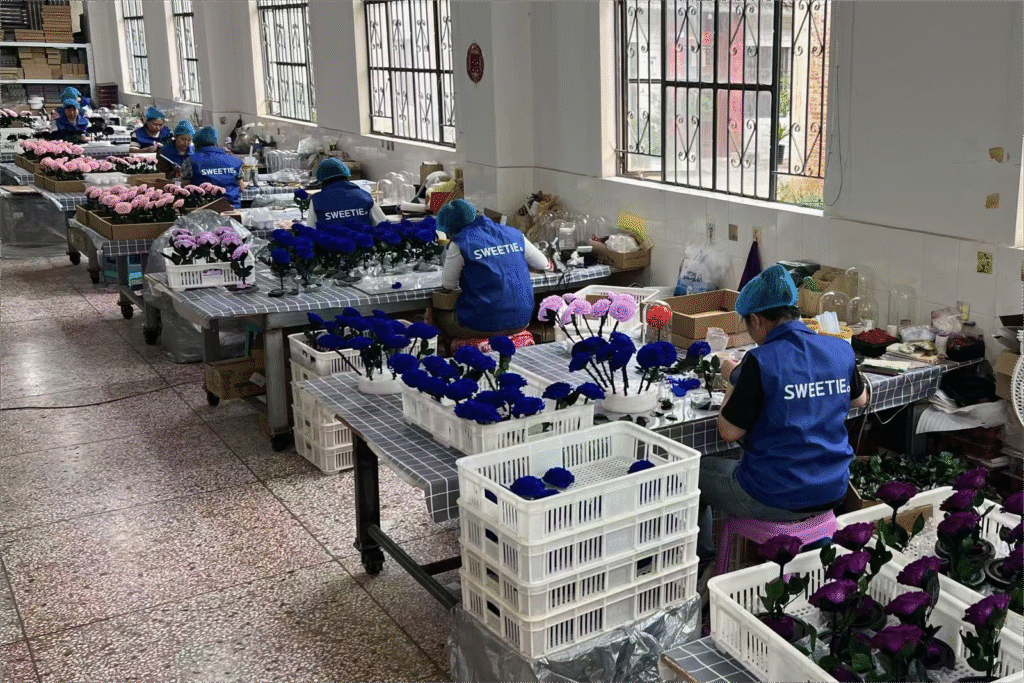
Annie Zhang, CEO of Sweetie Group