A product can look promising in a sample room and still fail once it enters a real program.
That happens often in children’s gifting. The item feels fresh. The color story works. Everyone agrees it is easy to like. Then the harder questions arrive. Does it fit the price ladder? Is it right for bulk handout programs or only for resale? Will it still look good after shipping? Does it belong in a school-occasion assortment, or is it just another novelty item with no clear role?
That is where plush flowers deserve a more practical evaluation.
From a plush flower manufacturer’s perspective, this category is usually a better fit for school occasions, children’s event gifting, graduation handouts, themed take-home gifts, and seasonal retail crossover programs than for ultra-low-cost daily reward systems. That difference is the key. Once the product is placed in the right lane, the buying logic becomes much clearer.
The short answer
Plush flowers can be a strong category for importers, distributors, and retail buyers serving school-related and children’s event channels. But they are not a universal fit.
They work best when the program needs:
- a small item that feels giftable
- a product with stronger perceived value than basic novelty supplies
- an easy-to-distribute format
- a seasonal or event-based story
- a product that can also cross into retail display or resale
They work less well when the program is built around:
- the absolute lowest unit cost
- daily classroom refill use
- rough-play expectations
- unclear positioning between toy, gift, and decor
That is the real starting point. Not whether the product is cute. Whether the program logic makes sense.
If you are planning a school-occasion or children’s event program, email inquiry@sweetie-group.com for a format recommendation.
Where plush flowers usually fit best
The strongest use cases are not hard to spot once the category is viewed through a commercial lens.
School occasion gifting
School occasions create a different buying environment from daily classroom incentives. The product does not need to be disposable. It needs to feel appropriate for a moment.
That includes:
- graduation
- end-of-term recognition
- reading challenge completion
- performance-day handouts
- celebration-day gifts
- themed appreciation events
In these cases, plush flowers can do something low-cost novelty items rarely do well: they feel like a gift without becoming too expensive or too formal.
Children’s event take-home programs
This is another strong fit.
Daycare events, after-school programs, camp closings, church activities, themed children’s parties, and community handout programs often need a product that is:
- easy to understand
- easy to distribute
- visually cheerful
- soft and friendly in feel
- light enough for quantity use
A single plush flower often makes more sense here than a more complex gift set.
Seasonal retail crossover
This is where the category gets more interesting.
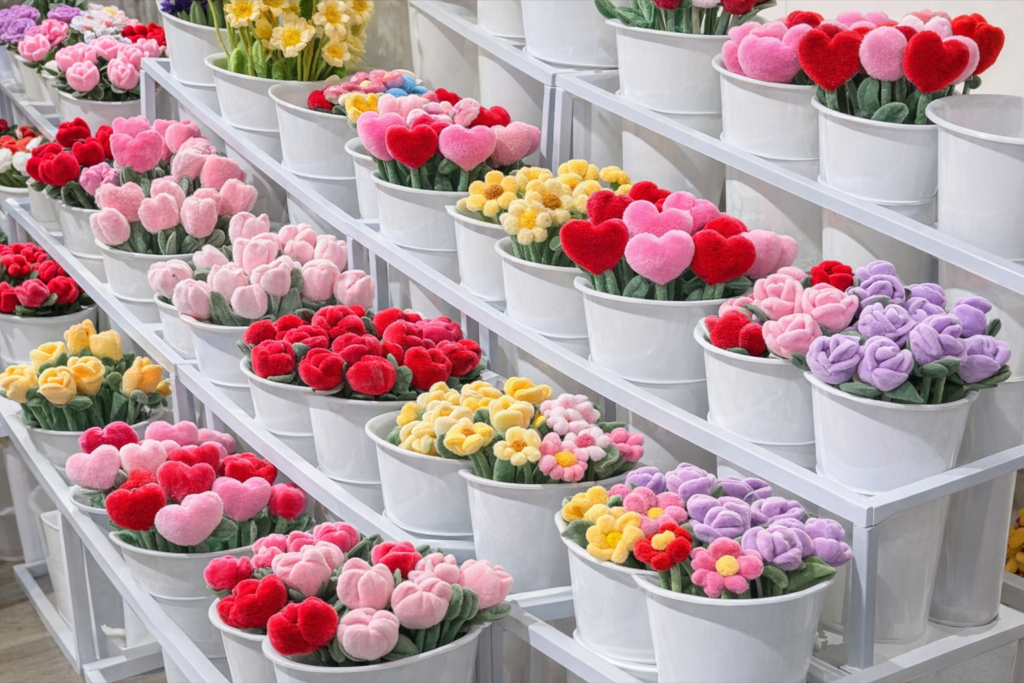
A plush flower can be developed as:
- an event handout product
- a checkout add-on
- a seasonal gift SKU
- a school-occasion retail item
- a simple bouquet-building component
That crossover potential matters because it gives buyers more than one path to sell-through.
Where plush flowers usually do not fit
This category is not the right answer for every program, and saying that clearly is important.
Daily low-cost reward systems
If a buyer’s business is centered on cheap, high-frequency classroom incentives, plush flowers are usually not the lead item. In those programs, the economics tend to favor products like stationery, stickers, erasers, or mini novelties.
Programs built only around lowest landed cost
When the only decision filter is price, this category becomes hard to position properly. Plush flowers need a little room to deliver perceived value. Without that, they are being compared in the wrong set.
Heavy-play expectations
Plush flowers are gift products first. They may be soft, friendly, and children-appropriate in appearance, but they are not meant to be treated exactly like heavy-use toy-category items.
Assortments without a clear role
If the buyer cannot answer a basic question — Is this for handout, resale, display, recognition, or seasonal gifting? — the item often struggles. Poor positioning creates weak packaging choices, weak pricing logic, and weak reorder potential.
Why the category is getting attention
The reason is practical.
Plush flowers sit in a useful middle space. They are more giftable than common novelty items, but less demanding than premium boxed gifts. That makes them attractive in channels where buyers need something that feels warmer, softer, and more intentional without moving too far up the price ladder.
That is especially relevant in school-related and children’s event programs, where presentation matters more than it does in a standard incentive refill item.
Buyers are not just testing “a cute product.” They are testing a product that can:
- raise perceived value
- support themed programs
- work in both distribution and resale settings
- create better visual presentation at shelf or event level
What buyers should evaluate before adding plush flowers
This is the part that matters most.
A plush flower should not be evaluated as a random sample. It should be evaluated as a program SKU.
1. Format
A single stem, a mini bouquet, and a gift-box version are not the same business.
Each one changes:
- cost structure
- distribution ease
- packaging complexity
- display value
- retail expectations
For most first-round tests, simpler formats are easier to control.
2. Price architecture
The buyer needs to decide whether the item is for:
- bulk handout
- resale
- event gifting
- checkout add-on
- mixed use
That decision changes everything. A handout program needs discipline. A resale program allows more presentation. A mixed-use program needs a format that can survive both.
3. Structure and safety perception
For children-related channels, structure matters.
Buyers will look at:
- stem construction
- stitching consistency
- accessory attachment
- softness versus shape support
- how the product is likely to be handled
Even when the product is not positioned as a toy, children’s channels create a higher level of practical scrutiny.
4. Packaging and arrival condition
This category can lose value quickly if it arrives compressed, bent, or visually messy. Plush flowers need packaging that matches the real shipping situation, not just the sample table.
That is why bulk-packing logic matters early, not after the order is placed.
5. Channel fit
A buyer should be able to place the product into a clear commercial bucket:
- school occasion gift
- graduation handout
- event takeaway item
- seasonal retail gift
- display-ready add-on
When that bucket is clear, the product becomes much easier to develop and scale.
If you want help evaluating packaging or format before sampling, contact inquiry@sweetie-group.com.
Which format usually works best
In this segment, single-stem plush flowers are often the most practical starting point.
They are easier to:
- price
- assort by color
- hand out in quantity
- pack in cartons
- display at retail
- test across more than one channel
That does not mean bouquets or gift sets have no place.
Single stems
Best for:
- school occasion handouts
- children’s event giveaways
- entry-level category testing
- retail add-ons
- graduation distribution programs
Mini bouquets
Best for:
- premium recognition moments
- smaller seasonal gifting programs
- event bundles with stronger perceived value
- selective retail presentation
Gift-box or display formats
Best for:
- retail-led programs
- chain-store testing
- stronger display environments
- higher value seasonal assortments
From a manufacturing perspective, the advantage of starting with single stems is simple: fewer variables, cleaner testing, and easier feedback.
Why positioning matters more than trend value
A product can be fashionable and still underperform.
That usually happens when the product is launched because it looks new, not because it solves a real line-planning need.
Plush flowers perform best when they are positioned as:
- a giftable children’s event item
- a school-occasion handout
- a lightweight emotional-gifting SKU
- a bridge between low-cost novelty and higher-value gift products
They perform poorly when they are positioned as:
- a direct replacement for cheap incentive refills
- a heavy-use toy item
- an undefined novelty with no channel role
That is why product-line logic matters more than trend logic.
What a manufacturer should contribute
A capable plush flower manufacturer should do more than quote a unit price.
The right manufacturing partner should be able to discuss:
- which format fits which channel
- how to structure a first test order
- how packaging affects arrival condition
- which colors make sense for school and event use
- what MOQ works for trial versus scale
- how to adapt the product for handout programs or retail display
That is exactly how projects are typically approached at Sweetie-Gifts.
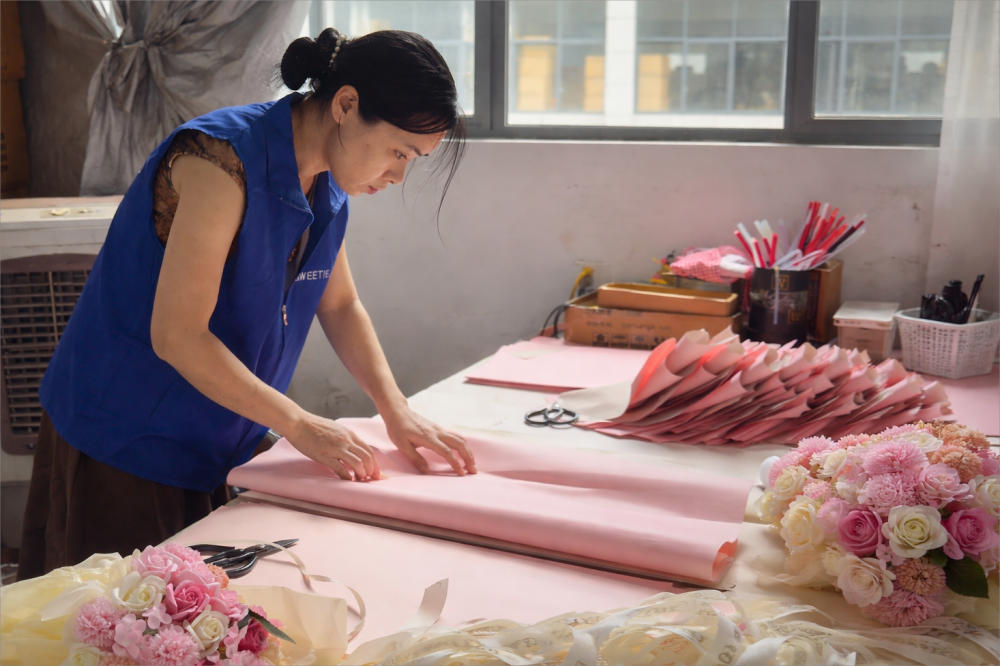
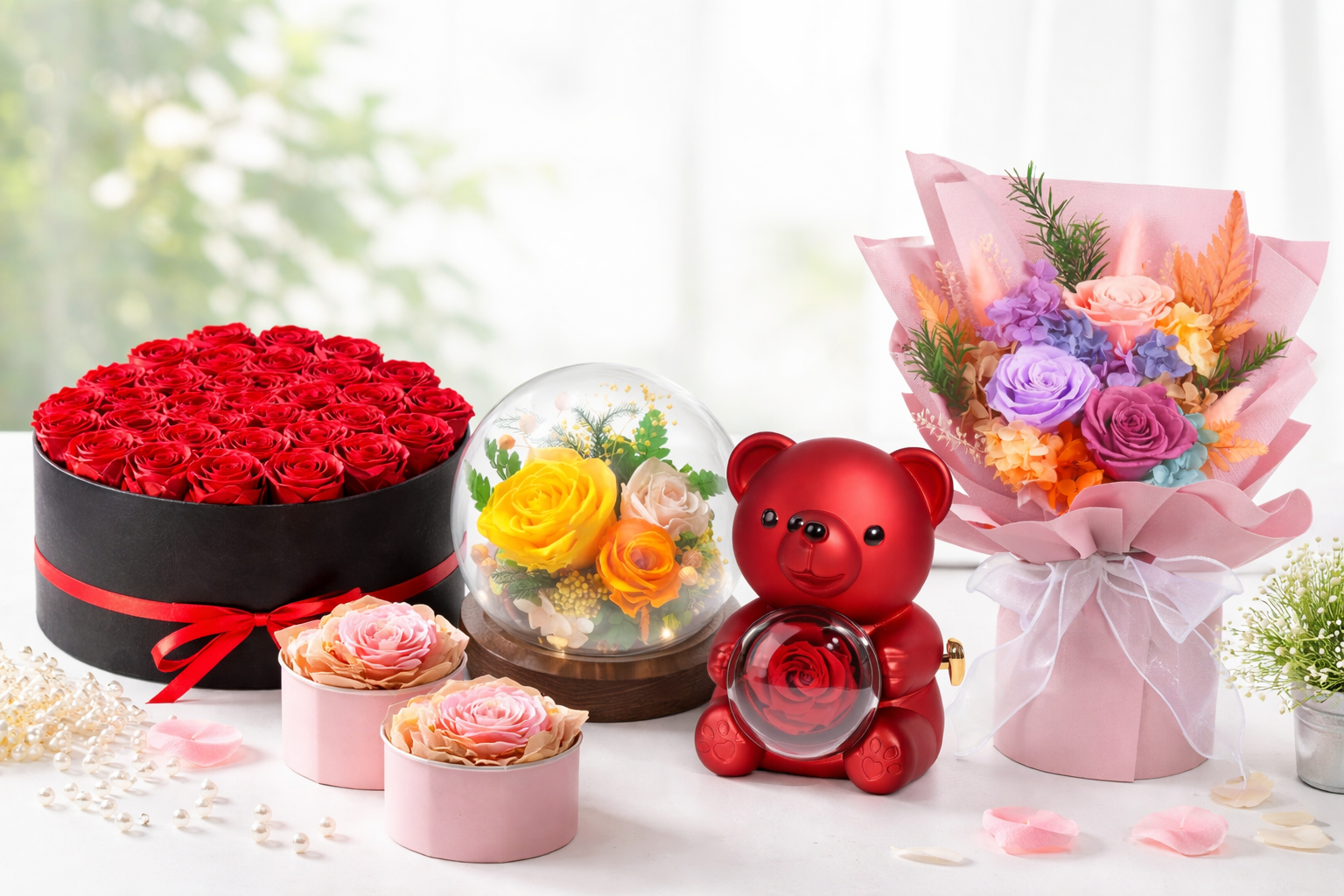
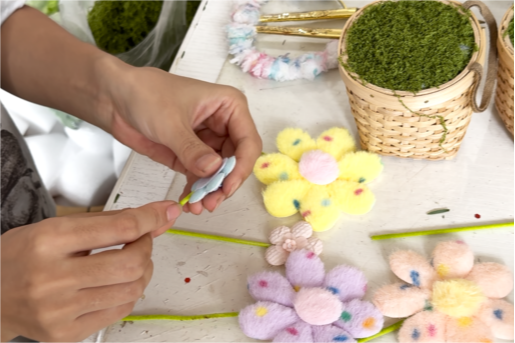
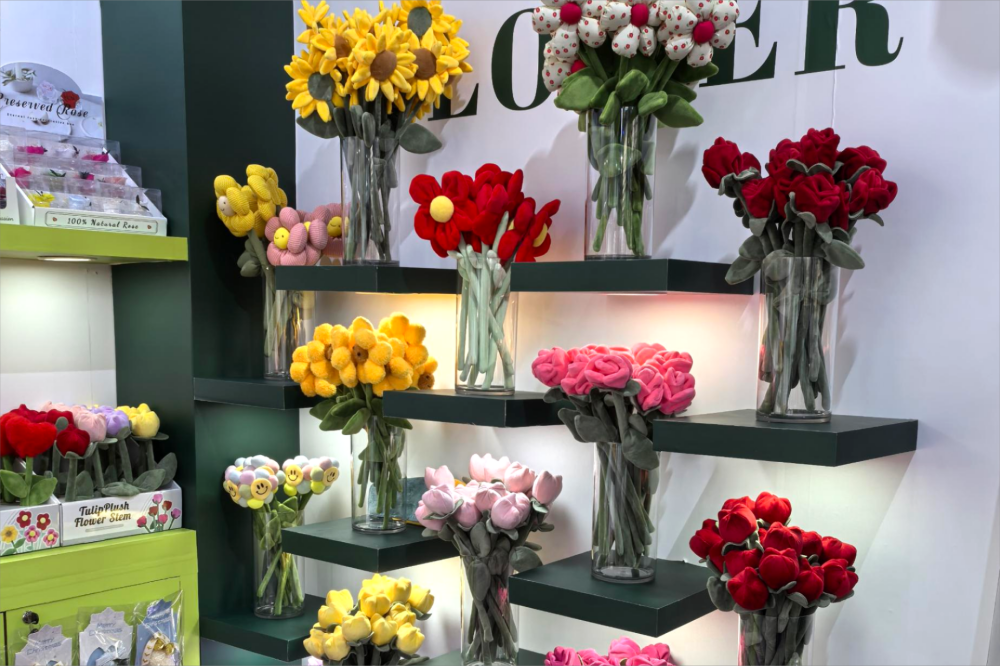
As a plush flower manufacturer, Sweetie-Gifts supports buyers with sampling, format development, packaging coordination, and bulk production planning. Our current plush flower line includes single plush flowers, plush bouquets, baskets, pots, plush toy bouquets, and display-oriented gift formats, which makes it easier to build a channel-specific solution instead of forcing one format into every opportunity. Our broader experience in floral gift manufacturing also helps when buyers want to evaluate plush flowers as part of a larger program, not just as a stand-alone novelty item.
To discuss sampling or bulk development, email inquiry@sweetie-group.com.
Final verdict
Plush flowers are worth sourcing for school occasion and children’s event gift programs when the buyer needs a product with more emotional value than a basic novelty item, but more flexibility than a premium boxed gift.
They are not the strongest choice for every buyer.
They are not the right answer for every program.
But they are a meaningful category when the channel, format, and pricing logic are aligned.
The cleanest way to test the category is usually:
- start with single stems
- keep the color range focused
- define the end use clearly
- match packaging to the real shipping path
- build from market response, not guesswork
For importers, distributors, and retail buyers, that approach creates a much more reliable read on whether plush flowers deserve a long-term place in the product line.
FAQ
Are plush flowers a good fit for daily classroom reward programs?
Usually not as a lead item. They are generally better suited to school occasions, recognition moments, and event gifting than to low-cost daily refill systems.
What buyers are the best fit for this category?
Importers, distributors, wholesalers, and retail buyers serving school occasion, children’s event, graduation, daycare, camp, church, and seasonal gift channels are usually the strongest fit.
Is a single stem the best format for a trial order?
In many cases, yes. It is easier to quote, pack, distribute, and evaluate across multiple use cases than a more complex gift format.
Can plush flowers work in both event distribution and retail resale?
Yes. That crossover is one of the category’s strongest commercial advantages when the format and packaging are chosen carefully.
What is the biggest mistake buyers make with this category?
The biggest mistake is positioning. Plush flowers should not be compared only with the cheapest novelty items or only with premium gift products. They sit between those two spaces.
What should buyers ask before placing an order?
They should ask about format, MOQ, structure, packaging method, carton efficiency, assortment planning, and how the item is usually positioned in real programs.
To discuss sampling or bulk development, email inquiry@sweetie-group.com.
Annie Zhang, CEO of Sweetie Group