In professional food service, table flowers are often underestimated. Many operators treat them as a last-minute decorative choice, added after menus, furniture, and lighting are finalized. Premium hotels and successful restaurants take a very different approach.
For them, table flowers are part of the dining system. They influence how guests interact, how staff move, how tables reset between seatings, and how consistent the brand feels across time and locations.
This article looks at how premium hotels and restaurant brands approach table flower design standards, what layouts are most commonly used, and how operators decide between fresh flowers, preserved flowers, or a combination of both.
Table Flowers Are Designed for Service, Not Decoration
In high-performing restaurants, every element on the table must justify its presence.
Table flowers are evaluated based on how well they support service rather than how decorative they appear in isolation. The most common operational questions are practical ones:
- Can guests see each other clearly across the table
- Does the arrangement interfere with plating or food aroma
- Can staff reset the table quickly during peak service
- Will the flowers look consistent from opening to closing
Premium operators understand that a beautiful arrangement that fails during service is not a successful one.
For restaurants reviewing how much of their table program should rely on florals, it is often helpful to step back and evaluate which tables truly require fresh flowers and which do not. If you would like an objective review of your current setup, you can contact us at inquiry@sweetie-group.com.
The Most Reliable Table Flower Formats in Premium Dining
Across hotels, fine dining restaurants, and upscale restaurant groups, table flowers tend to follow a small number of proven formats.
Compact Vase Arrangements
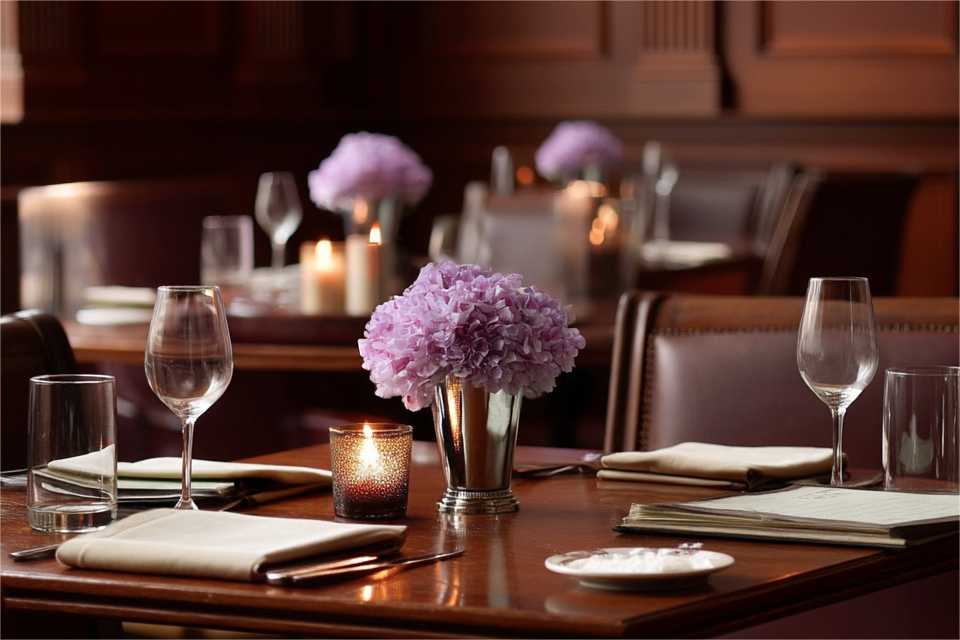
Small vases with one or two stems are widely used in fine dining and chef-driven concepts. They take up minimal space, keep the table visually clean, and are easy for staff to reposition when needed.
This format works especially well when the food presentation is highly detailed and the restaurant wants the table to feel calm and intentional.
Low Profile Centerpieces
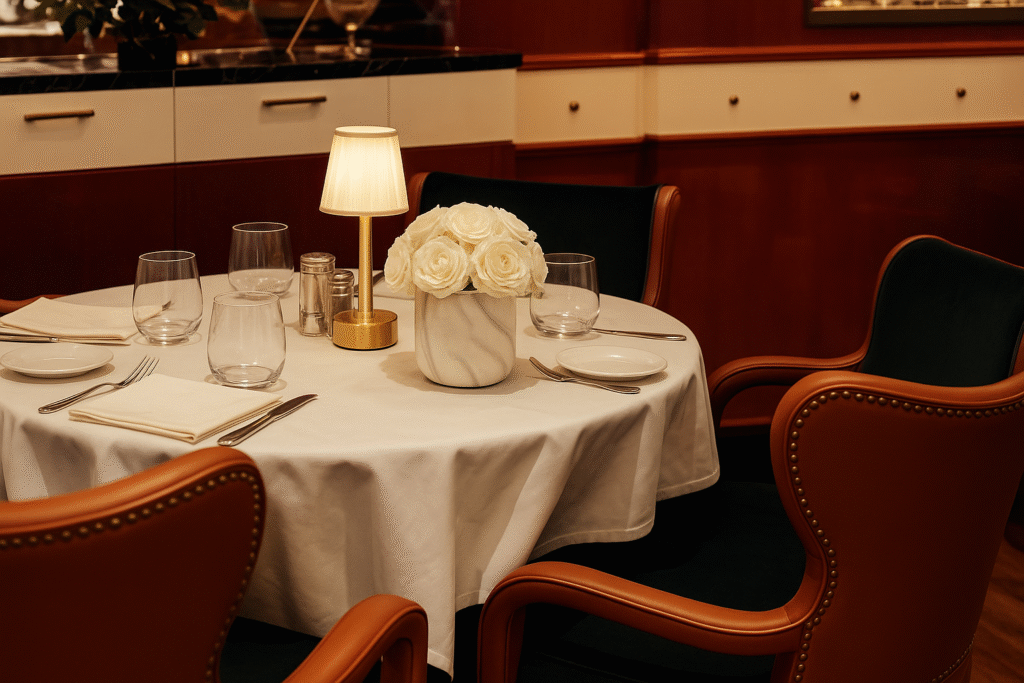
Low, compact arrangements provide more visual presence while still keeping sightlines open. Hotels frequently use this format in all-day dining venues and private dining rooms.
The key is height control. Anything that rises too far above the table quickly becomes a service issue.
Distributed Decor for Long Tables
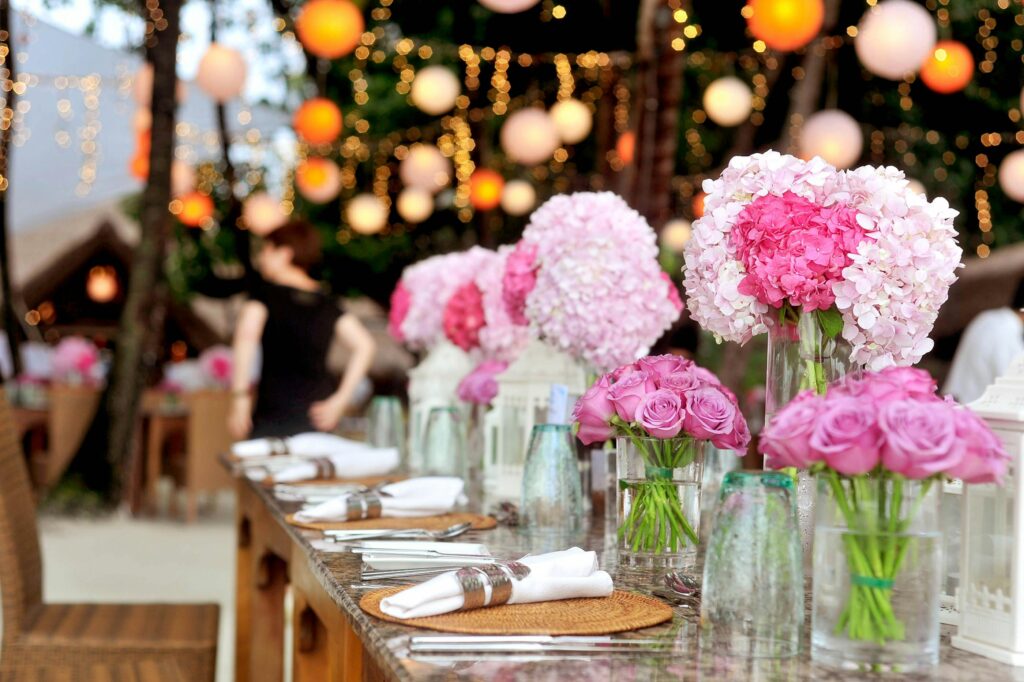
For long communal tables or private events, many premium venues avoid a single centerpiece altogether. Instead, they use a series of small floral elements combined with candles or other table objects.
This approach creates atmosphere without creating a single obstruction point.
Minimal Tables with Floral Focus Elsewhere
Another common strategy is to keep tables simple and place stronger floral elements elsewhere in the space. Entrances, host stands, bar areas, and transition zones carry the visual weight, while dining tables remain functional and uncluttered.
This approach is especially common in hotels where brand experience extends beyond the table itself.
When Fresh Flowers Are the Right Choice
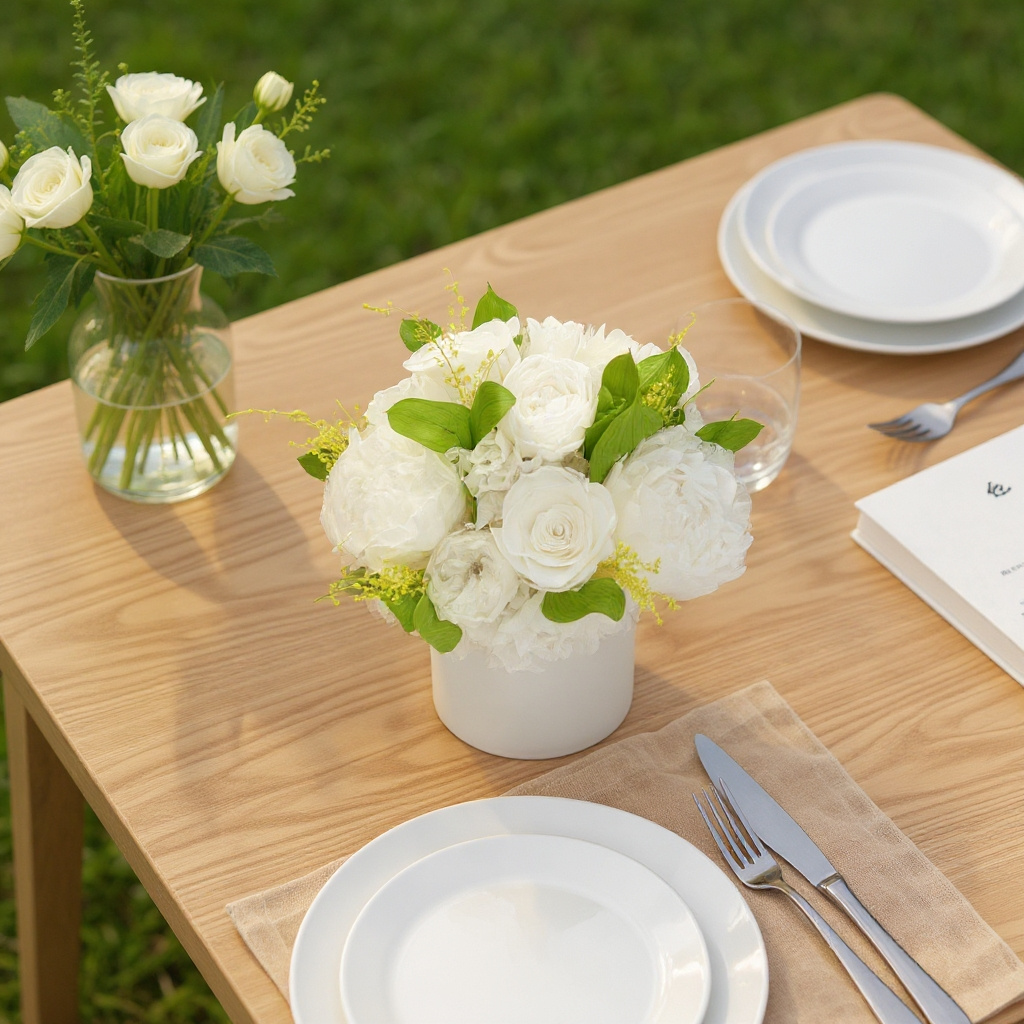
Fresh flowers continue to play an important role in premium dining.
They are most effective in areas where seasonality, natural variation, and subtle fragrance are part of the restaurant’s identity. Many fine dining restaurants rely on fresh flowers to reinforce a connection to local sourcing and time of year.
That said, fresh flowers come with operational trade-offs. They require frequent replacement, careful handling, and consistent sourcing. During high-demand periods, availability and cost can fluctuate significantly.
Where Preserved Flowers Support Better Operations
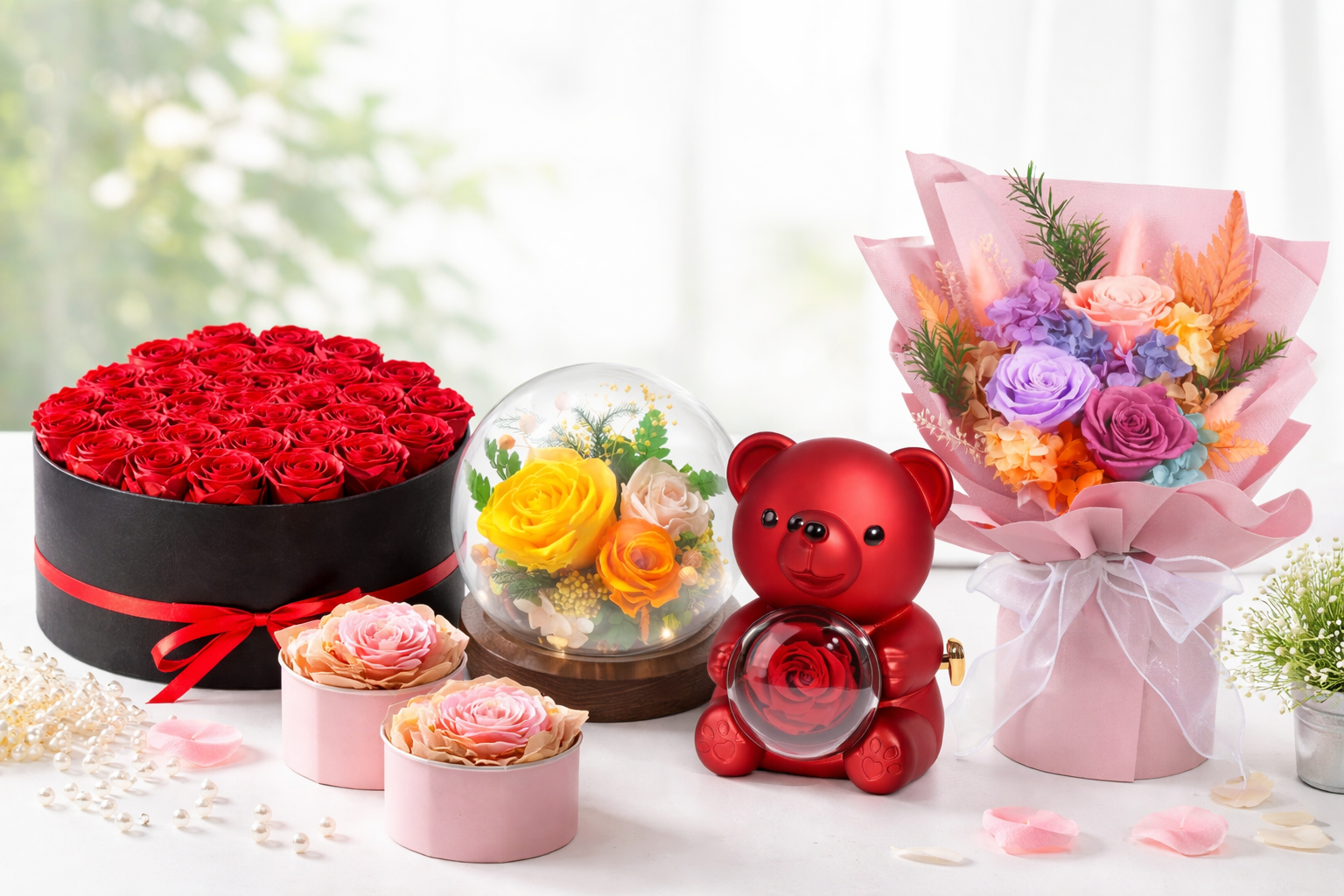
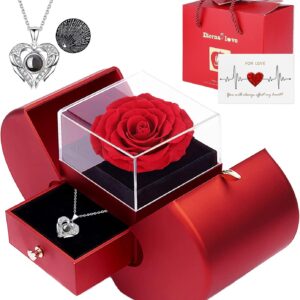
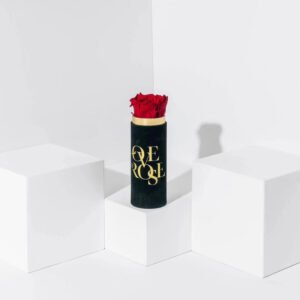
Preserved flowers are increasingly used by restaurants that prioritize consistency and ease of maintenance.
They are most effective in indoor, climate-controlled environments where sunlight, moisture, and heat can be managed. Common applications include private dining rooms, secondary tables, host desks, corridors, and brand display areas.
For multi-location restaurant groups, preserved flowers also solve a common challenge: visual consistency. When every location uses the same design, the brand feels more controlled and professional.
Many premium operators use preserved flowers as part of a broader system rather than as a full replacement for fresh arrangements.
If you are exploring preserved table flowers and want to understand placement rules and environmental limitations before making a decision, our team can walk through those considerations with you at inquiry@sweetie-group.com.
A Simple Planning Framework for Restaurant Buyers
When premium restaurants plan table flowers, they typically start with the environment rather than the flowers themselves.
Key factors include light exposure, humidity, proximity to kitchens or service stations, and how often tables are reset during service. From there, they assign materials based on performance requirements.
A mixed approach is often the most effective. Fresh flowers are reserved for areas where their qualities matter most, while preserved flowers provide stability in areas that need to look consistent every day.
This approach reduces labor pressure while maintaining a high-end appearance across the entire space.
Why Consistency Matters More Than Variety
One of the most common mistakes restaurants make is over-designing table flowers.
Premium dining brands tend to limit variation. They choose a small number of layouts and repeat them consistently. Over time, this repetition becomes part of the brand language.
Guests may not consciously notice the table flowers, but they notice when everything feels considered and intentional.
Closing Thoughts
Table flower design is not about choosing between fresh or preserved flowers. It is about understanding where each option performs best and building a system that supports daily operations.
Restaurants and hotels that approach table flowers strategically benefit from smoother service, stronger brand consistency, and fewer operational headaches.
If you are planning to refine or standardize table flowers for a restaurant, hotel dining venue, or multi-location brand, feel free to reach out to us at inquiry@sweetie-group.com. We are happy to help you evaluate layouts and materials that align with how your business actually operates.
Annie Zhang, CEO of Sweetie Group