Retailers are under pressure from both sides right now. Shoppers want better prices, but they also expect better quality, easier shopping, and products that feel worth the spend. That tension is shaping more than grocery operations. It is also influencing which non-food items deserve shelf space, which seasonal programs feel relevant, and which products are easy to justify in a tighter market.
The latest U.S. grocery shopper research makes one point very clear: people are still highly price-conscious, but they are not making decisions on price alone. They are shopping with more intention. They are planning more. They are using loyalty tools more often. They are weighing convenience, quality, and usefulness more carefully than before.
For retailers, that shift matters well beyond food.
It changes how product teams should think about small gifts, seasonal items, checkout add-ons, compact décor, and other retail-ready products that need to earn attention quickly. A product can no longer rely on vague appeal. It needs a reason to be picked up, and that reason needs to be obvious almost immediately.
This is where many retail programs either become more compelling or quietly lose momentum.
Why this trend report matters outside the grocery aisle
At first glance, a grocery shopper report may seem most relevant to food categories, store operations, and digital ordering. But the underlying shopper behavior is useful for a much broader range of retail decisions.
When shoppers become more careful with spending, more selective in unplanned purchases, and more focused on value, that affects every item competing for basket space. It affects not just what people buy, but how quickly they decide, what they skip, and what feels justifiable in the moment.
That is especially important for:
- seasonal gift products
- decorative boxed items
- small impulse-adjacent products
- countertop displays
- floral gifts
- occasion-based non-food merchandise
These categories do not win because they are essential. They win because they feel timely, useful, presentable, and easy to say yes to.
That is a different kind of job, and it requires a different kind of product thinking.
Price sensitivity is real, but visible value matters more
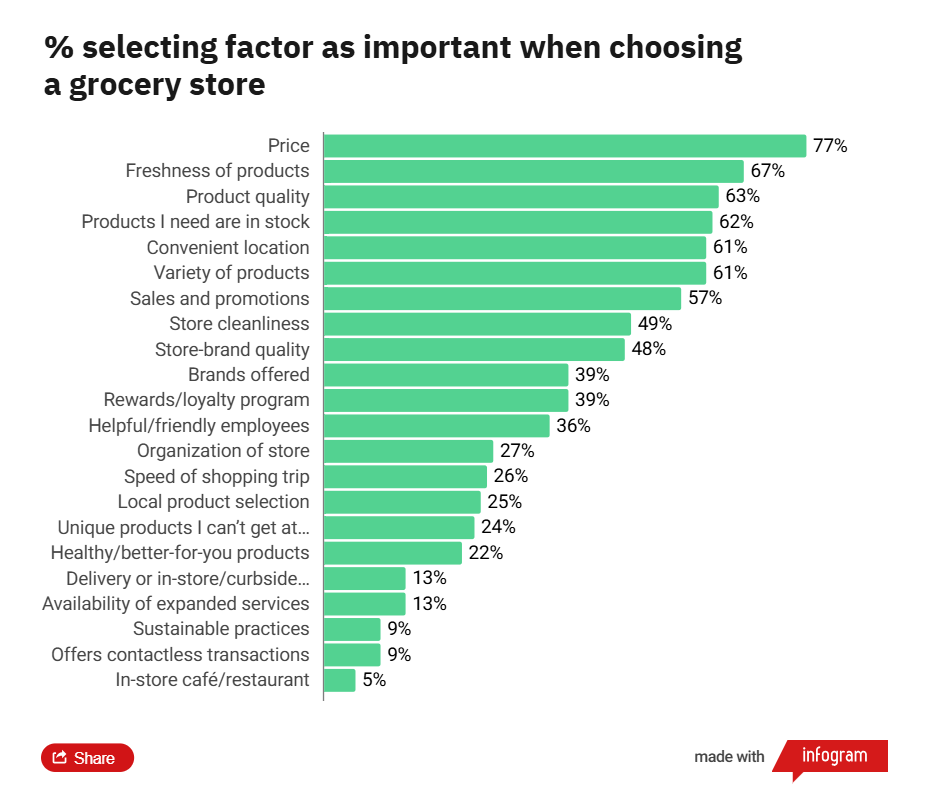
The simplest reading of the 2026 shopper data is that consumers still care deeply about price. That part is true. But the more useful reading is that shoppers are looking for better value, not just lower numbers.
Those are not the same thing.
In retail, value becomes real when a shopper can quickly see why a product deserves the money. Sometimes that comes from quality. Sometimes from convenience. Sometimes from presentation. Sometimes from a clearly defined use occasion.
A small seasonal floral gift, for example, may not be the cheapest add-on in a store. But it can still feel like a smart purchase if it looks polished, carries gifting meaning, and sits within a price band that feels manageable.
That is why shelf-ready presentation matters so much. When consumers are making tighter decisions, products need to communicate faster. A slow-to-understand product is a harder sell in 2026.
Shoppers are buying with more intention, and that changes product strategy
One of the most important patterns in the report is the rise in planned shopping behavior. Consumers are making more stock-up trips, cutting back on random add-ons, using more promotions, and approaching stores with stronger purchase intent.
That makes product clarity much more important.
Retail items that perform better in this kind of environment usually answer one of these questions quickly:
- Is this for a holiday or event?
- Can I give this as a gift today?
- Does this solve a last-minute need?
- Is this a simple upgrade from a basic option?
- Does this look good enough to justify the spend?
Products that do not answer those questions often get ignored, even if they are attractive.
This is one reason occasion-driven merchandise tends to be more resilient than broad decorative assortment when shoppers are more selective. Occasion-based products remove uncertainty. They tell the shopper what the item is for.
And in retail, especially in busy grocery and new retail environments, that kind of clarity is valuable.
If your team is building seasonal gifting, floral display items, or custom retail programs, you are welcome to reach us at inquiry@sweetie-group.com.
The best retail products are becoming easier to explain
A few years ago, some products could succeed just by looking trendy or by filling space with visual variety. That is getting harder.
Now the stronger products are often the ones that can be explained in a few words.
Think about the difference between these two ideas:
- a decorative item with no clear occasion
- a ready-to-gift floral box for Mother’s Day under a defined price point
The second product is easier for the retailer to place, easier for the shopper to understand, and easier for the store team to support in merchandising.
That does not mean every item needs to be overly literal. It means retail assortments benefit from products with a clear role.
In practice, that often favors:
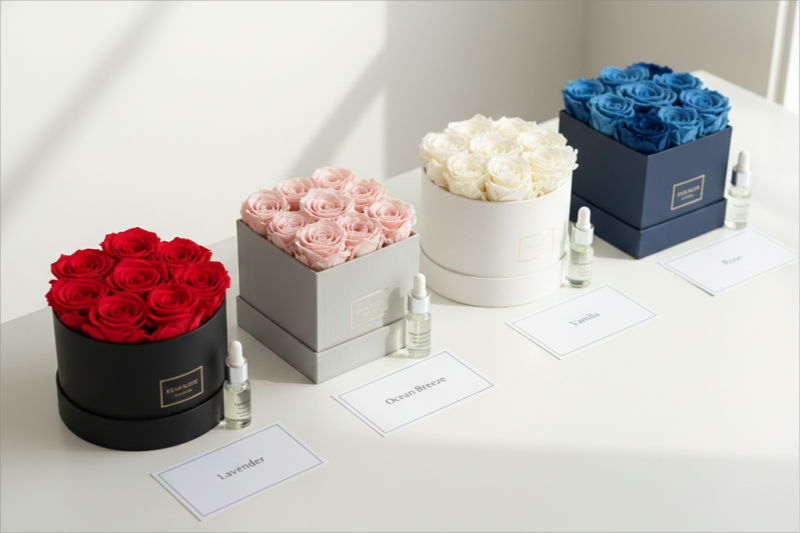
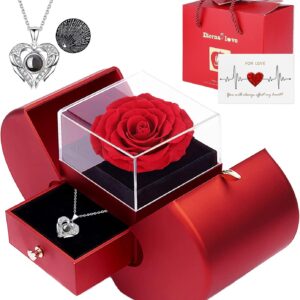
- compact boxed gifts
- easy seasonal programs
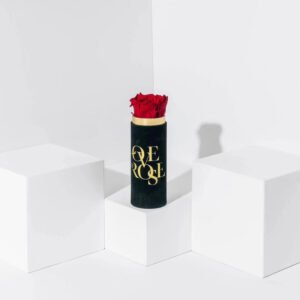
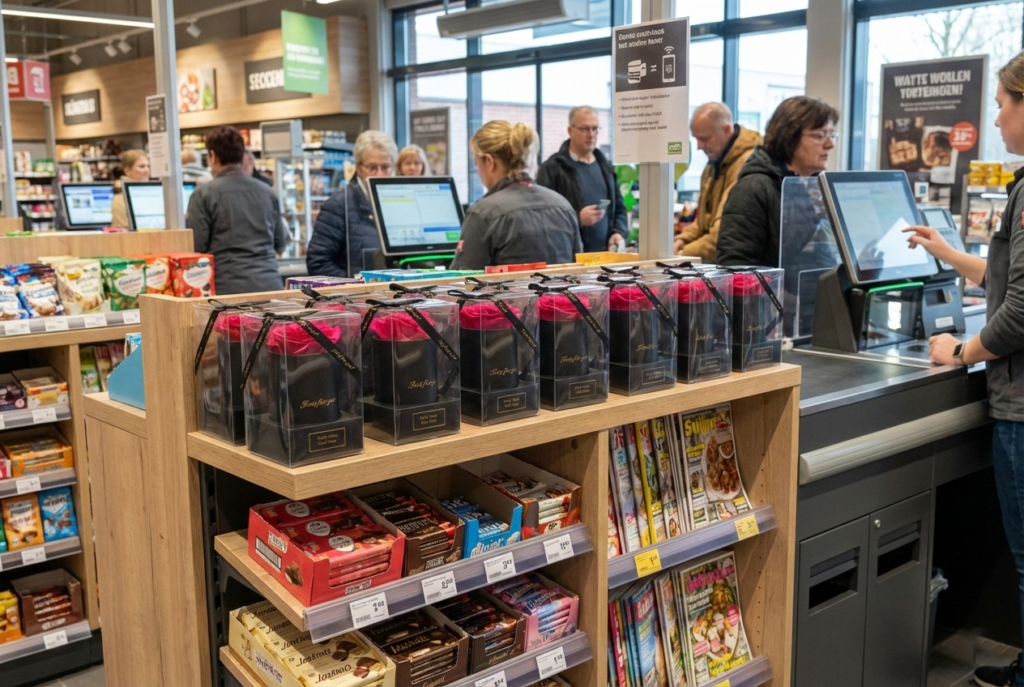
- checkout-friendly floral items
- small display-driven gifts
- products with clear packaging and clear gifting logic
These items are not competing on complexity. They are competing on quick relevance.
Digital shopping habits are raising the packaging standard
The shopper report also highlights growing satisfaction with online grocery shopping, stronger engagement with store apps, and continued use of loyalty tools and digital promotions. Even when the purchase happens in-store, the digital layer is becoming more important.
That affects product development in a very practical way.
Packaging now needs to support more than shelf display. It may also need to support:
- mobile app visibility
- online thumbnail presentation
- curbside and pickup handling
- delivery packing
- backroom efficiency
- repeatability across promotions
A product that looks good in person but photographs poorly online is weaker than it used to be. A product that feels premium but damages easily in fulfillment is weaker too. Retailers increasingly need products that can hold up across different parts of the shopping journey.
For giftable floral products, that means packaging should not be an afterthought. It plays a direct role in perceived value, operational stability, and retail usability.
Clear packaging structure, strong protection, efficient dimensions, and a polished front-facing look all matter more now than they did when products lived only on the shelf.
Younger shoppers still respond to products with emotion and shareability
Millennials and Gen Z continue to influence where retail is headed. The grocery report shows this through digital adoption, prepared food behavior, and health-conscious shopping, but the implications reach further.
Younger shoppers still respond to products that feel expressive, visual, and socially relevant. They are highly aware of price, but they are not shopping without emotion. They still notice aesthetics. They still reward products that feel thoughtful, giftable, and easy to share.
That matters because some retail assortments become too functional during cost-sensitive periods. When everything is reduced to utility, the store can lose some of its energy. It may become efficient, but less inspiring.
The better path is usually balance.
Retailers do not need random novelty. They need products that combine visual value with practical justification. A small gift that looks good, feels seasonal, fits a price target, and requires no extra explanation can still perform well, even in a more cautious market.
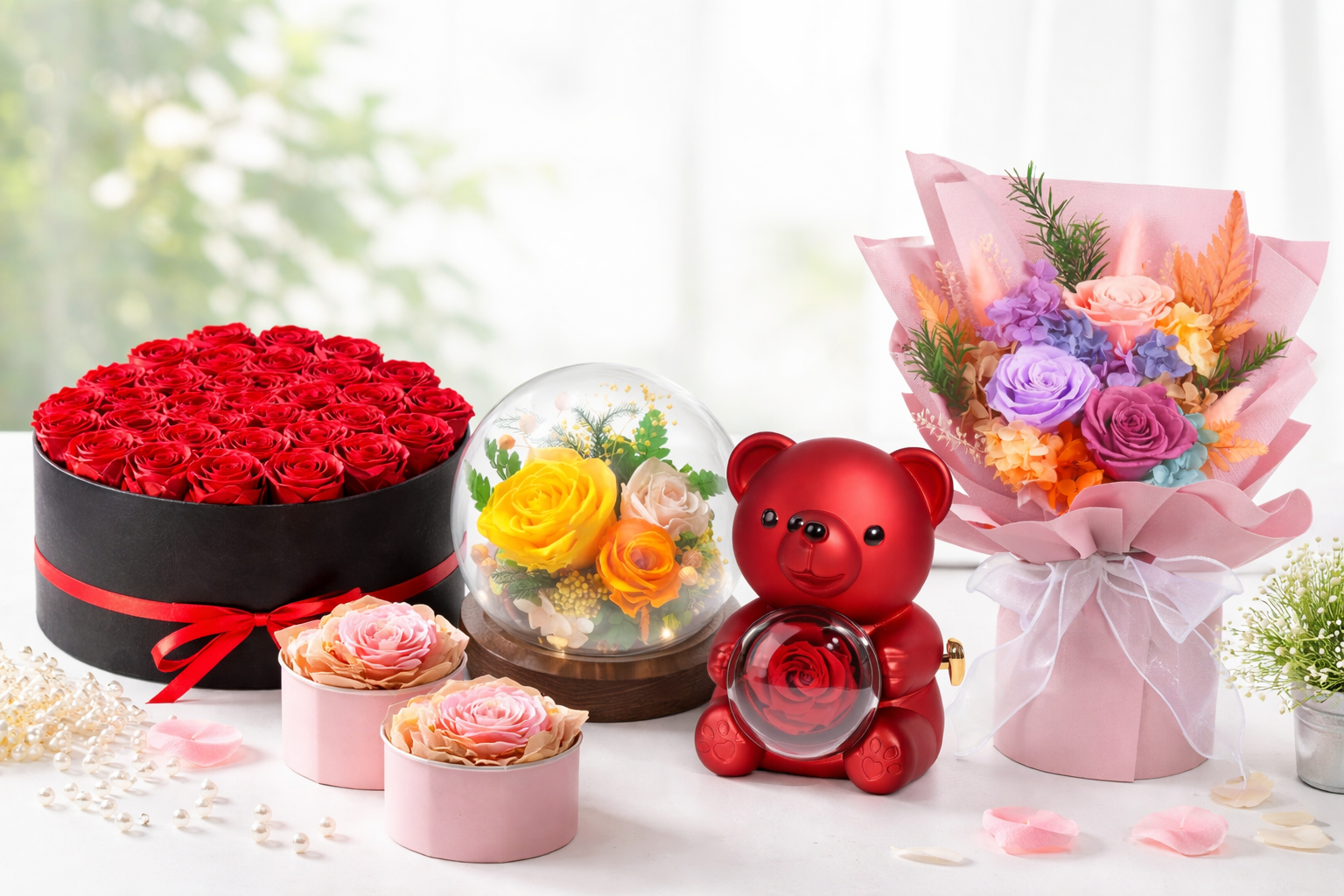
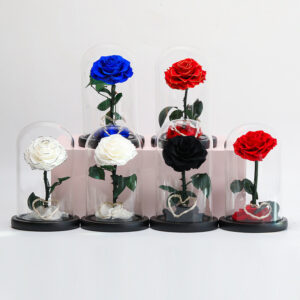
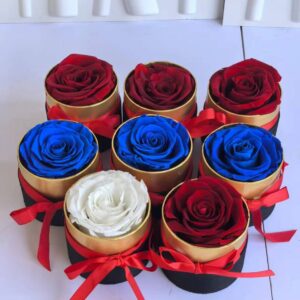
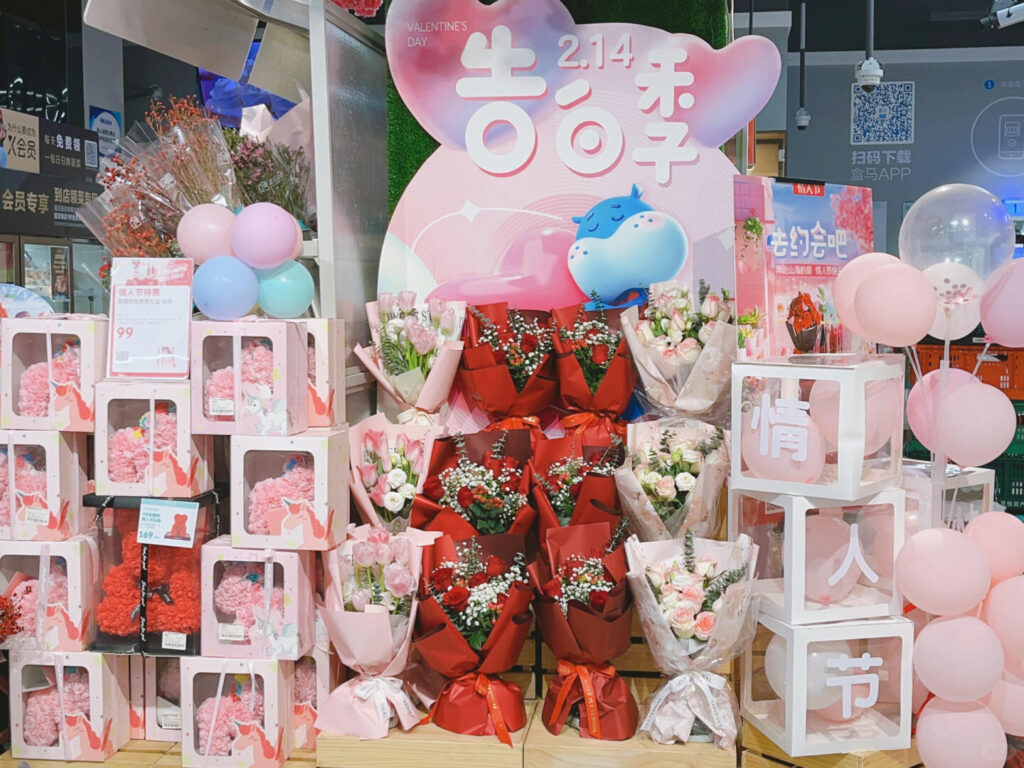
This is where compact floral gifts, preserved flower boxes, and similar display-friendly items can make sense. They bring color and emotional relevance without requiring the shopper to commit to a large discretionary purchase.
Sustainability still matters, even when budgets are tight
One of the more interesting signals in the shopper study is that sustainability remains meaningful to many consumers, despite continued price pressure. That tells retailers something important: shoppers are making trade-offs, but they are not becoming indifferent.
A price-conscious shopper may still care about:
- recyclable materials
- lower-plastic packaging
- better product longevity
- reduced waste
- more thoughtful retail presentation
For product teams, this does not always require a major overhaul. Sometimes it means making smarter structural decisions, choosing packaging options more carefully, or favoring product formats that offer longer display life.
This is especially relevant in floral categories. Items with longer-lasting visual value can support a different retail conversation than products with very short display windows. They may help retailers build assortments that feel more giftable, more stable, and more worthwhile from the shopper’s perspective.
What today’s shopper behavior suggests for retail product teams
When all of these signals are put together, a practical picture starts to emerge. Retailers are not simply looking for cheaper products. They are looking for products that are easier to sell in the current environment.
That usually means products that are:
- easy to understand
- tied to a clear occasion
- sized appropriately for shelf and display
- attractive without feeling overdeveloped
- packaged for both merchandising and handling
- positioned within realistic price bands
- visually strong online and in-store
A product that checks several of those boxes is much easier to support. It is easier to place in a seasonal plan, easier to include in a display program, and easier for shoppers to justify in the basket.
That is the kind of product logic that matters now.
| Shopper shift in 2026 | What it can mean for product selection |
|---|---|
| More price sensitivity | Products need clear, visible value |
| More planned trips | Items need a defined role or occasion |
| Fewer impulse purchases | Unclear products become easier to skip |
| More digital engagement | Packaging must work online and in-store |
| Stronger demand for convenience | Compact, ready-to-display products gain relevance |
| Ongoing interest in sustainability | Better materials and longer-lasting formats matter more |
The opportunity is not gone. It is just more specific.
Some suppliers and retailers read a cautious market and assume emotional or giftable products will automatically weaken. I do not think that is the right conclusion.
The opportunity is still there. It is just becoming more selective.
Products that feel too vague may lose traction. Products that feel clearly relevant can still work very well.
That is a meaningful difference.
A floral gift item with a defined season, a practical price band, and packaging that supports retail handling is much easier to justify than a decorative item with no clear reason to exist. In the same way, a compact giftable product placed near checkout or inside a focused seasonal program is easier to convert than a product that depends entirely on browsing.
Retailers still want items that soften the store environment, support gifting moments, and create incremental value. But those items need to fit real retail constraints, not just visual trends.
If you are exploring custom floral gifts, private-label seasonal items, or retail-ready display concepts, our team can be reached at inquiry@sweetie-group.com.
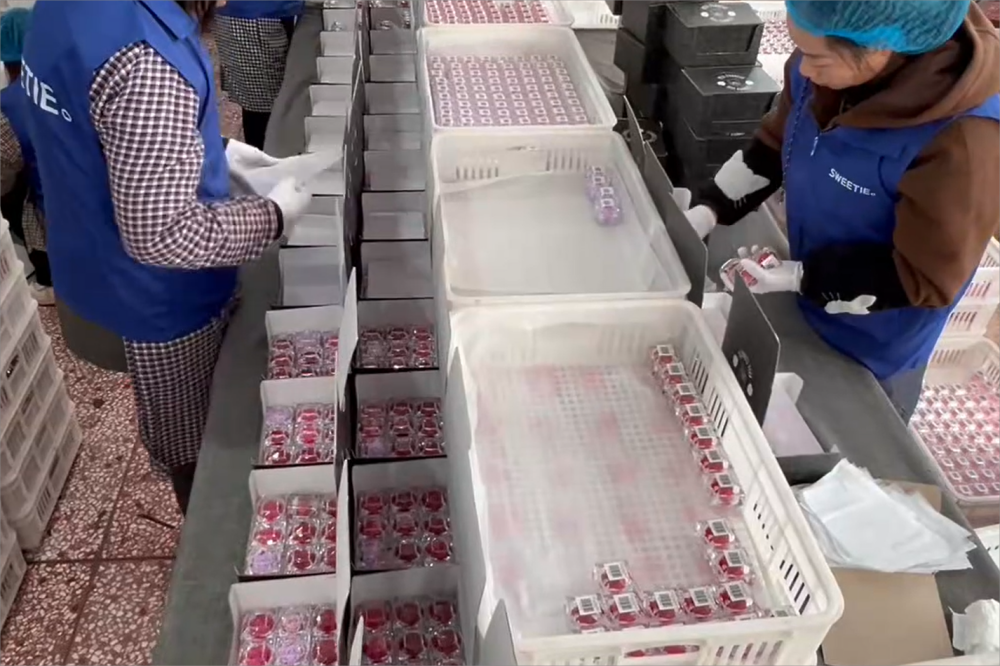
A smarter question for retail planning in 2026
A lot of merchandising discussions still begin with, “What is new?” That question matters, but on its own it is not enough.
A stronger question in 2026 might be:
What is easy to understand, easy to merchandise, and easy for the shopper to justify?
That question leads to better products.
It leads to tighter seasonal assortments. It leads to stronger gift programs. It leads to packaging decisions that support both presentation and operations. And it leads to products that are more likely to survive a cautious spending environment without becoming forgettable.
That is where many of the best retail opportunities are likely to be found this year.
Final thoughts
The 2026 U.S. grocery shopper trends point to a market that is more deliberate, more price-aware, and more selective than before. But that does not mean shoppers have stopped responding to beauty, occasion, or emotional value. It means those qualities now need to be presented more clearly and supported more practically.
For retailers, the takeaway is not to remove personality from the assortment. It is to choose products that make their value easier to see.
For suppliers, the message is similar. Product design, packaging, size, price architecture, and display logic all need to work together more closely than before.
At Sweetie-Gifts, we pay close attention to these shifts because they affect how retail projects are developed in real life, from seasonal floral programs and checkout-friendly gift items to packaging structure and custom display concepts. If your team is looking for retail-ready floral gifts or seasonal product ideas for grocery, supermarket, or new retail channels, contact us at inquiry@sweetie-group.com.
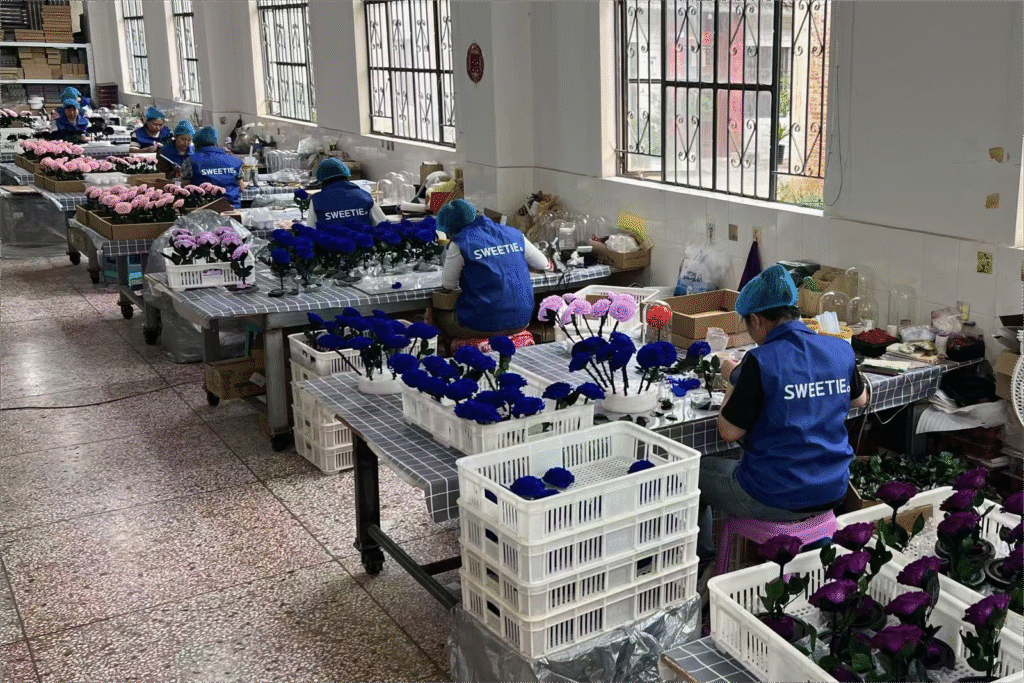
Annie Zhang, CEO of Sweetie Group