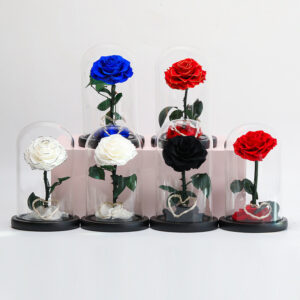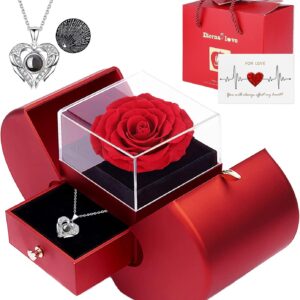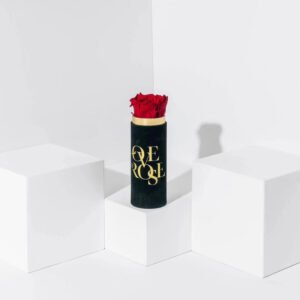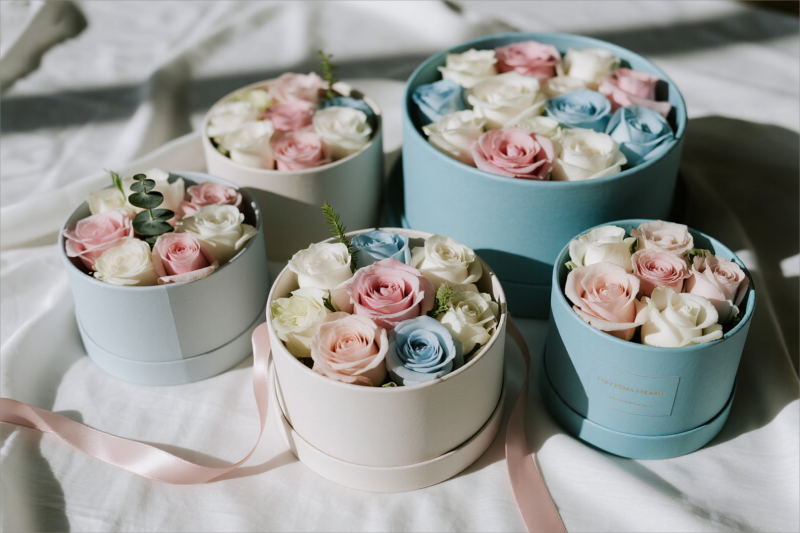
If you sell preserved flowers at premium price points, you learn a harsh truth fast: customers don’t pay you for “flowers.” They pay you for a flawless gifting moment—and they judge you for every crack in that moment. A scuffed box, a slightly off shade, petals that look tired in transit, a delivery window that slips by one day—any of these can turn an expensive gift into an awkward one.
This is where Venus et Fleur (VEF) earned its reputation. Plenty of brands can imitate the visual cues. Far fewer can deliver the same outcome repeatedly, especially during peak seasons when volume, speed, and error rates all spike at once.
What made VEF a benchmark wasn’t one tactic. It was the way it assembled a working system: category positioning, product discipline, packaging performance, and operational controls that keep the experience consistent at scale.
1) The category move most competitors misunderstand
The foundational move wasn’t “roses in a hat box.” The move was changing what the product means.
Traditional flowers behave like perishables: they peak immediately and decline quickly. VEF positioned preserved arrangements as lasting gift objects—items that live on a dresser, in a lobby, or on a desk and continue to signal care and status long after the occasion.
That shift changes three things for any brand trying to compete:
- The evaluation window expands. The customer’s judgment isn’t over when the package arrives; it continues for weeks.
- The buyer is purchasing risk reduction. Premium gifting is a reputational purchase. People pay to avoid failure.
- The competitive set changes. You’re no longer only compared to florists—you’re compared to lifestyle and luxury gift brands that sell “objects,” not perishables.
In practice, this category definition becomes a strategic filter: every design and operational choice either reinforces “gift object” consistency—or drags you back toward “fragile floral product.”
2) The product discipline hiding inside the aesthetics
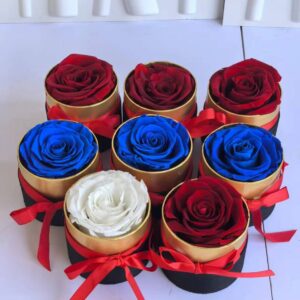
VEF’s most imitated elements—tight rose grids, clean silhouettes, controlled palettes—are often framed as design taste. But the reason they scale is that they embed discipline.
Dense layouts aren’t just pretty—they’re protective
A uniform, tightly packed arrangement:
- limits internal movement during shipping,
- reduces the visibility of minor bloom variance,
- makes the product look “designed,” not assembled.
Luxury customers may not articulate “variance control,” but they feel it. The arrangement reads as intentional and expensive.
“Fewer decisions” is a premium strategy
A common copycat mistake is offering too many options too early: endless colors, sizes, custom text, limited editions stacked on top of core SKUs. It looks like customer-centricity; operationally, it’s a quality and delivery trap.
Premium preserved flowers scale when the brand protects a core set:
- a small number of hero SKUs,
- repeatable assembly instructions,
- stable components and inserts.
The best luxury programs aren’t built by adding possibilities. They’re built by removing variability.
If you’re scaling a preserved-flower line and want a fast “systems audit,” send me your top 5 SKUs, your peak-season forecast, and where you assemble. I’ll reply with the three highest-leverage fixes I’d implement first. inquiry@sweetie-group.com
3) Packaging isn’t branding—it’s a performance system
In preserved flowers, packaging carries two jobs at once:
- It must look luxury in a photo.
- It must survive logistics without losing that look.
If your box scuffs, dents, warps, or arrives misaligned, you don’t just lose margin—you lose the buyer’s trust in your premium positioning.
When I evaluate a preserved-flower packaging program, I’m not thinking about “nice materials.” I’m thinking about failure modes:
- Does the surface show fingerprints or scratches easily?
- Do closures stay aligned after vibration?
- Does the insert prevent micro-movement and abrasion?
- Does the structure resist compression from stacked parcels?
- Can assembly staff reproduce the same result repeatedly?
A lot of brands learn this backward: they launch a beautiful box, then discover that reships and complaints are eating their gross margin. VEF-style brands treat packaging as part of the product’s physics, not part of the marketing.
If you want, email me your current box type and target price point, and I’ll send back a short “packaging risk checklist” tailored to preserved flowers (the issues that typically show up first at scale). inquiry@sweetie-group.com
4) The real scaling problem: peak seasons don’t forgive weak systems
Many brands can deliver a premium experience at low volume. The benchmark is delivering it when demand spikes—when lead times tighten, assembly ramps, and small defects turn into large-scale inconsistency.
Peak season exposes the same weak points over and over:
- Inventory planning breaks when SKUs sprawl.
- QC drifts when staffing is rushed.
- Supplier lead times hurt when components aren’t locked early.
- Customer service strains when response times slow.
VEF’s durability as a benchmark comes from building the operating posture that assumes demand will be uneven and unforgiving.
That posture usually includes:
- backward planning calendars (components → assembly → shipping cutoffs),
- prioritized hero SKUs during peaks,
- simple rules about what can and cannot be customized during high volume,
- quality gates that stop “small problems” from leaking into shipments.

5) Why copycats stall
Copycats tend to focus on what the customer sees. Benchmarks focus on what the customer experiences repeatedly. That difference shows up in predictable failure points.
Here’s a compact way to spot the gap:
| Where “VEF-inspired” lines break | What the customer feels | What’s actually missing |
|---|---|---|
| Batch color drift | “This isn’t the shade I expected.” | Reference standard + acceptance rules |
| Box wear or deformation | “It looks expensive online, not in person.” | Surface durability + compression design |
| Transit petal damage | “It arrived messy.” | Insert engineering + movement control |
| Peak-season inconsistency | “My friend’s looked better than mine.” | Capacity plan + repeatable assembly |
| Slow service recovery | “No one owns the problem.” | Luxury-grade response SOPs |
The theme is repeatability. Luxury is not one beautiful unit—it’s thousands of units that feel like the same brand.
Closing
VEF became a benchmark by building a system that protects a luxury gifting outcome: disciplined SKUs, packaging that performs under real logistics, operational rules built for spikes, and quality gates that preserve consistency.
At Sweetie-Gifts, I focus on the less-visible part of this category—prototyping, packaging engineering, QC routines, and seasonal capacity planning—so premium preserved-flower programs can scale without losing the experience that justifies the price.
If you’d like to compare notes or explore a manufacturing partnership, you can reach me at inquiry@sweetie-group.com.
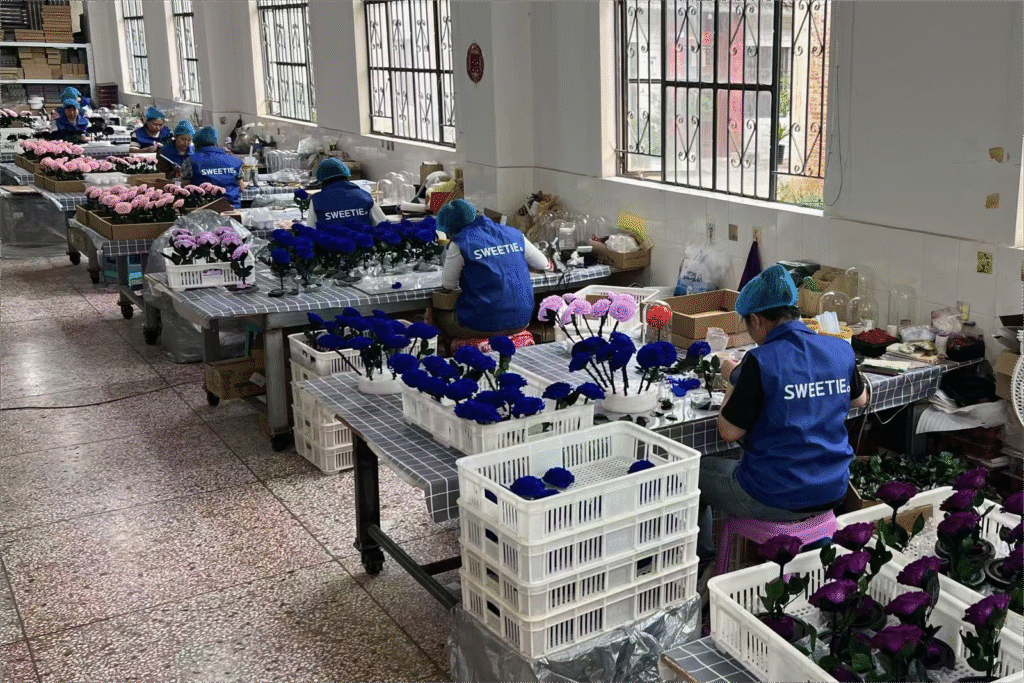
Annie Zhang, CEO of Sweetie Group