The most expensive Valentine’s Day gift in your store might be the one that’s still sitting on the shelf on February 15.
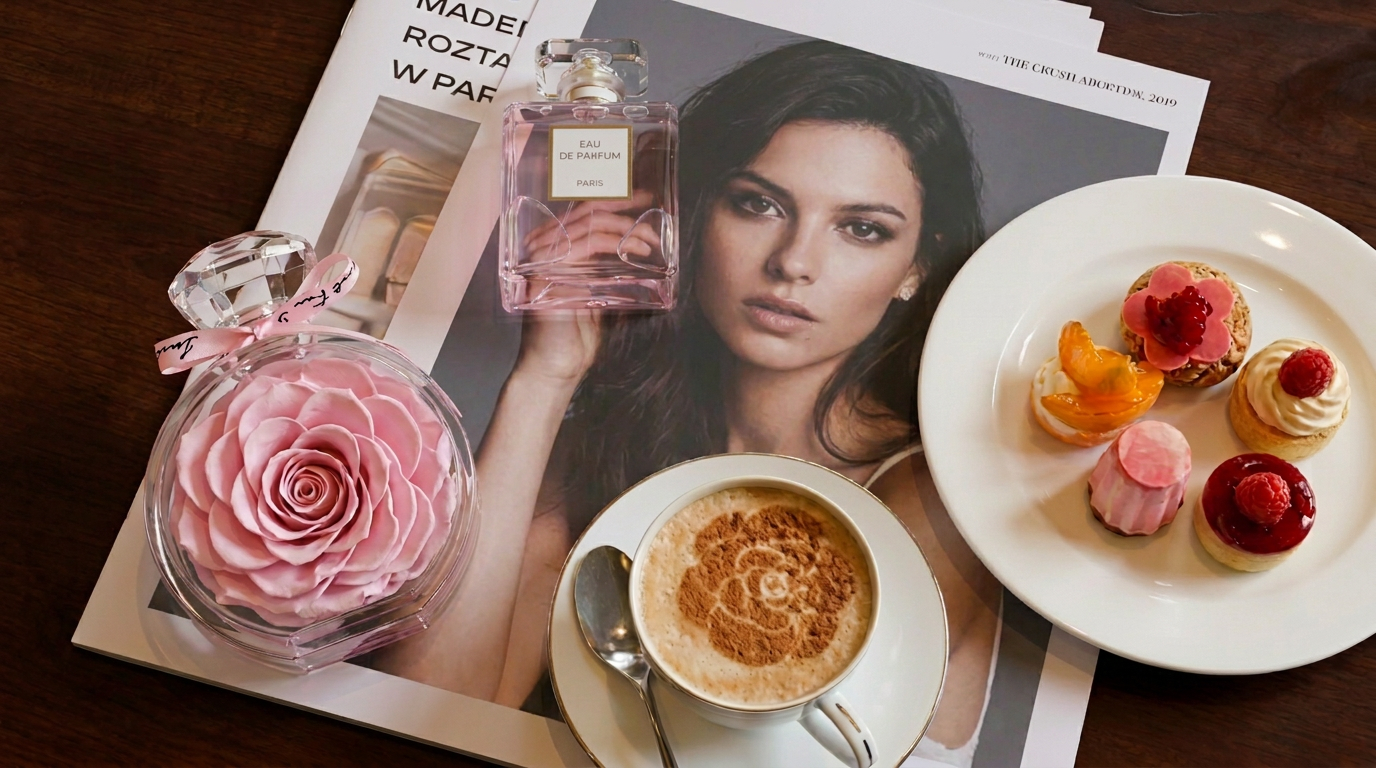
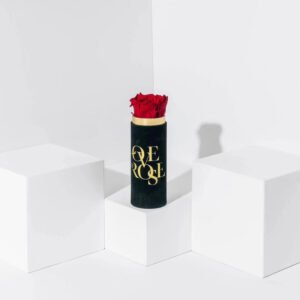
It’s easy to fall in love with a product sample. A preserved rose box looks elegant. A rose bear makes people smile. A plush flower bouquet feels fresh and playful.
But when you’re buying for 20 stores—or even one busy gift shop—attractive products alone aren’t enough.
You need gifts that suit your customers, fit your shelves, support your margins, and arrive before the selling season begins.
For retailers sourcing wholesale Valentine’s Day gifts, I recommend building a collection around three questions: Who will buy it? What role will it play in the assortment? And can it be sold profitably through your particular channel?
After 20 years in the floral gift industry, I’ve learned that a well-planned collection often works better than a large assortment of products that look beautiful but compete for the same customer.
Here’s how I would approach it.
1. Start With Your Retail Channel
Before choosing products, think about where they’ll be sold.
A gift that performs well in an independent boutique may not be the right fit for a supermarket. Likewise, an impressive glass dome arrangement may need more packaging protection than an e-commerce brand initially expects.
Different channels have different priorities.
| Retail Channel | Main Buying Priorities | Floral Gift Options to Consider |
|---|---|---|
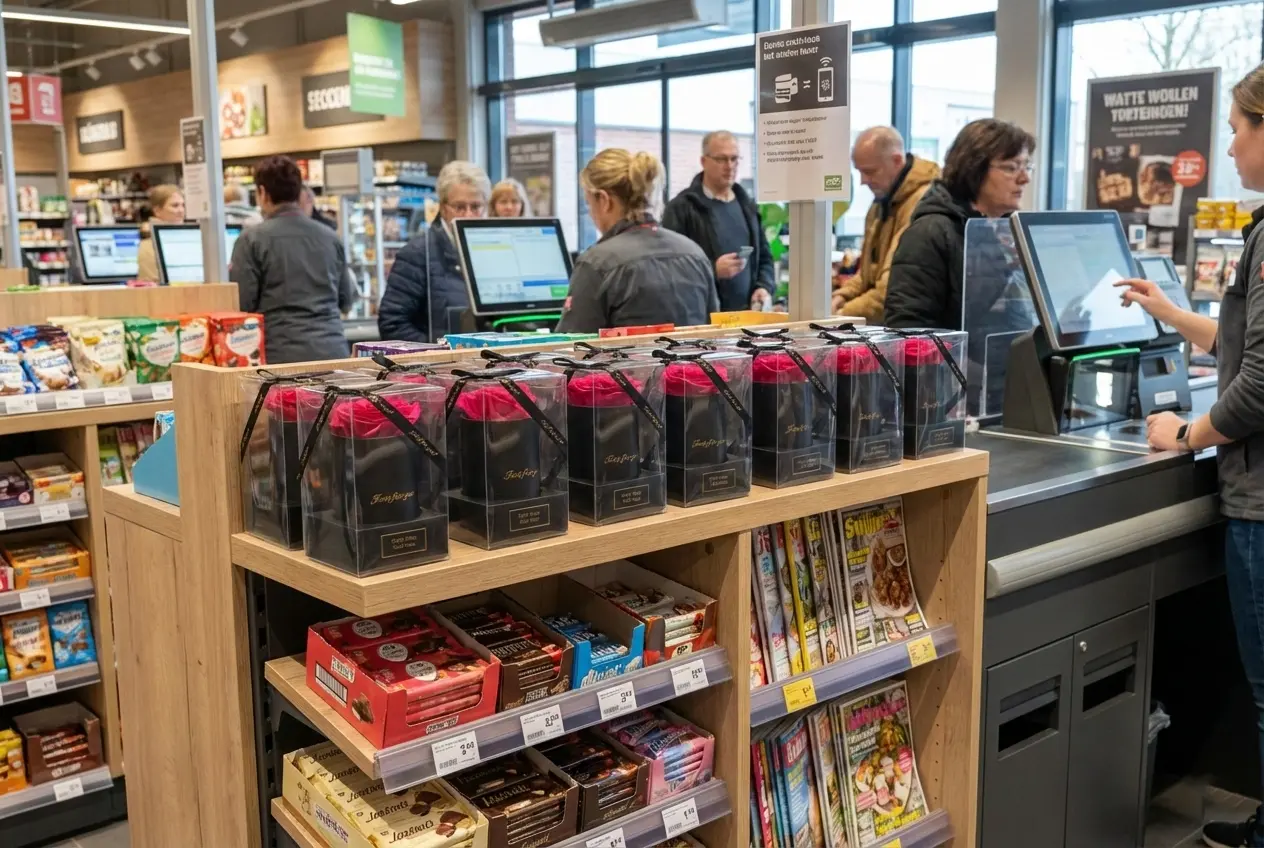
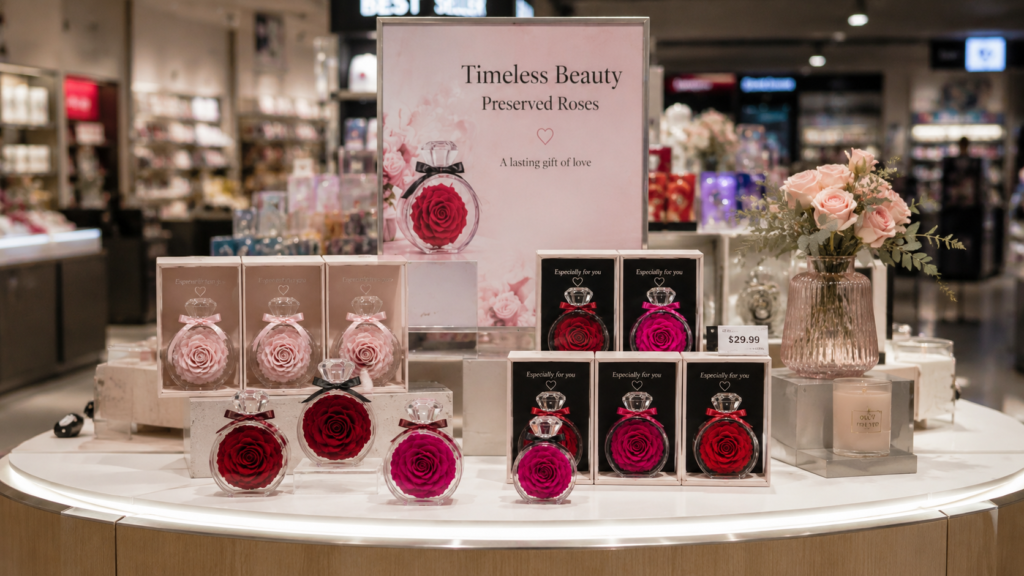
| Supermarkets | Accessible prices, compact packaging, easy display | Mini soap flower boxes, single rose gifts, small rose bears |
| Independent Gift Shops | Attractive designs, variety, distinct price points | Preserved roses, rose bears, plush flower bouquets |
| Florists | Complementary gifts, presentation, year-round appeal | Preserved flower boxes, glass dome roses |
| E-Commerce Brands | Shipping protection, parcel size, product photography | Compact preserved flower gifts, selected plush flowers |
| Premium Gift Brands | Presentation quality, brand identity, customization | Preserved rose arrangements, custom floral gift sets |
These are suggested product matches, not guaranteed sales results.
For example, a large rose bear might look wonderful in a gift shop window. But if a supermarket only has a narrow seasonal shelf, a smaller boxed product may be more practical.
For online retailers, packaging deserves attention from the beginning. A product that looks affordable at the factory may become less attractive once individual shipping and protective packaging costs are included.
The best product is not necessarily the one with the strongest visual impact. It’s the one that fits the way your business sells.
2. Build a Collection With Clear Product Roles
One mistake I often see in product planning is too much variety without enough meaningful difference.
Imagine ordering eight red rose boxes with similar sizes and packaging. They may look like a complete collection in a catalog, but customers could struggle to understand why one costs more than another.
I prefer giving each product a clear job.
An Illustrative Five-SKU Valentine’s Day Collection
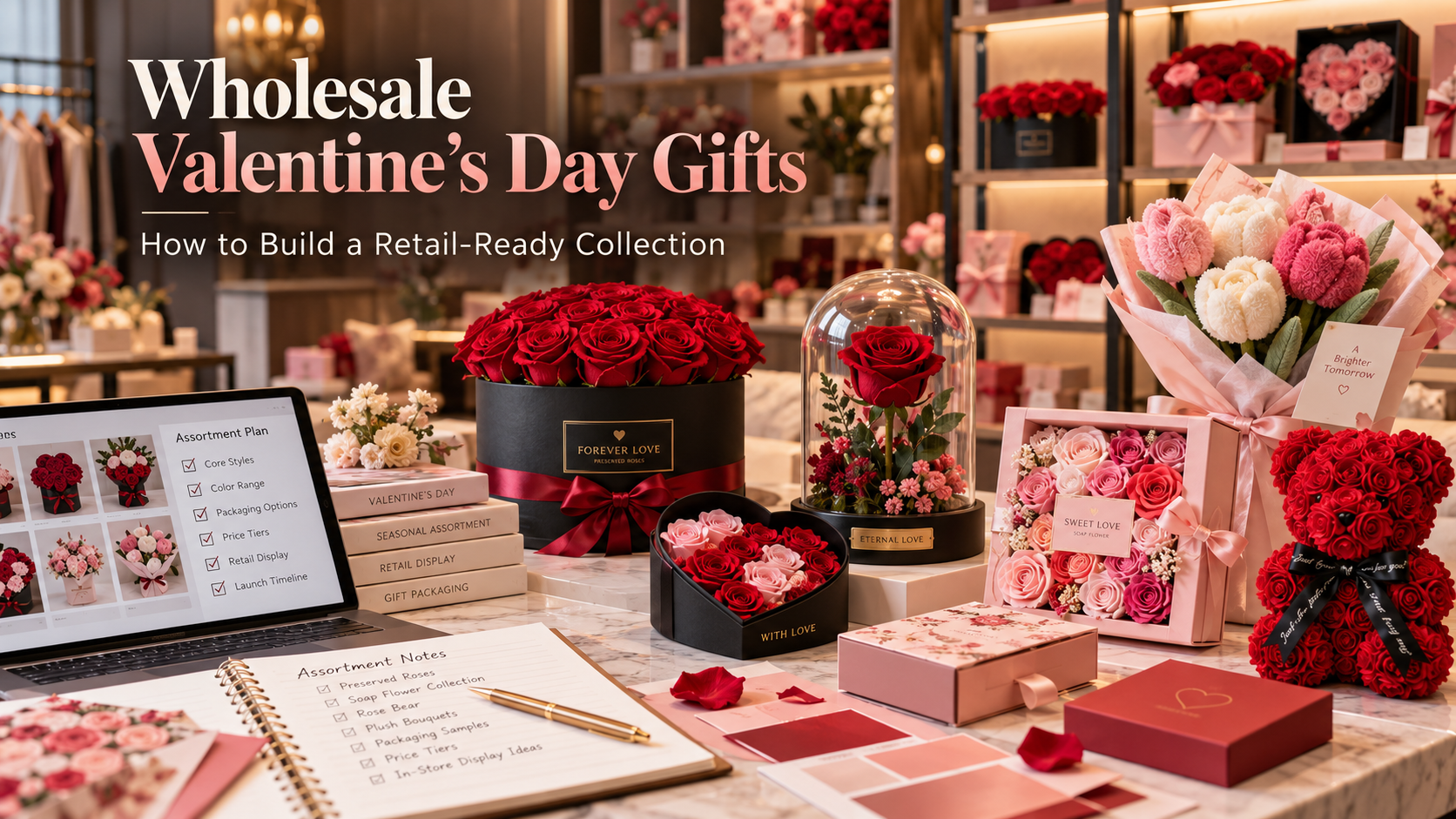
For a gift retailer testing a new Valentine’s Day range, the following five-product assortment could provide a starting point.
| Product Role | Example Product | Why Include It? |
|---|---|---|
| Small Add-On Gift | Mini soap flower box | Offers an accessible additional purchase |
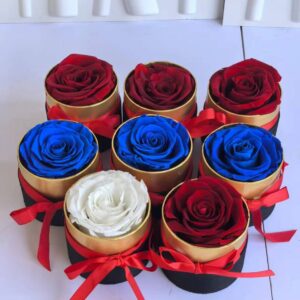
| Classic Main Gift | Preserved rose box | Provides a recognizable romantic gift |
| Playful Alternative | Medium-sized rose bear | Adds variety beyond traditional flowers |
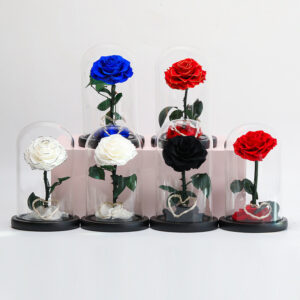
| Premium Gift | Preserved rose glass dome | Creates a more elaborate presentation option |
| Multi-Occasion Gift | Neutral-color plush flower bouquet | May remain suitable for other occasions |
This is an illustrative assortment, not a sales forecast or a recommendation to purchase equal quantities of each SKU.
The idea is simple: give customers different reasons to choose a product.
Someone looking for a small token of affection may choose the mini flower box. Another customer may want a premium keepsake. Someone shopping for a friend might prefer a cheerful plush flower bouquet.
This is more useful than filling the shelves with products that look different but serve essentially the same purpose.
How Many Units Should You Buy?
That depends on your sales history, store count, target customers, display space, and expected demand.
If you’re entering a new market or testing a new category, consider starting with a manageable number of designs and discussing trial quantities with your supplier.
Not every product or customization project will support a small MOQ. It’s worth confirming what’s available before finalizing your assortment.
For returning seasonal collections, previous sell-through and leftover inventory can help guide the next purchase.
The goal isn’t to carry the most products.
It’s to carry enough meaningful choices without creating unnecessary inventory risk.
3. What Should Buyers Check Before Choosing Floral Gift Products?
Once you’ve decided what role each product will play, the next step is evaluating actual samples.
Product photographs are useful, but they don’t tell you everything about materials, workmanship, or packaging quality.
Here are the main details I would check.
| Product Type | What to Examine Before Ordering |
|---|---|
| Preserved Rose Boxes | Flower condition, color consistency, arrangement stability, box quality |
| Glass Dome Roses | Dome and base quality, secure positioning, shipping protection |
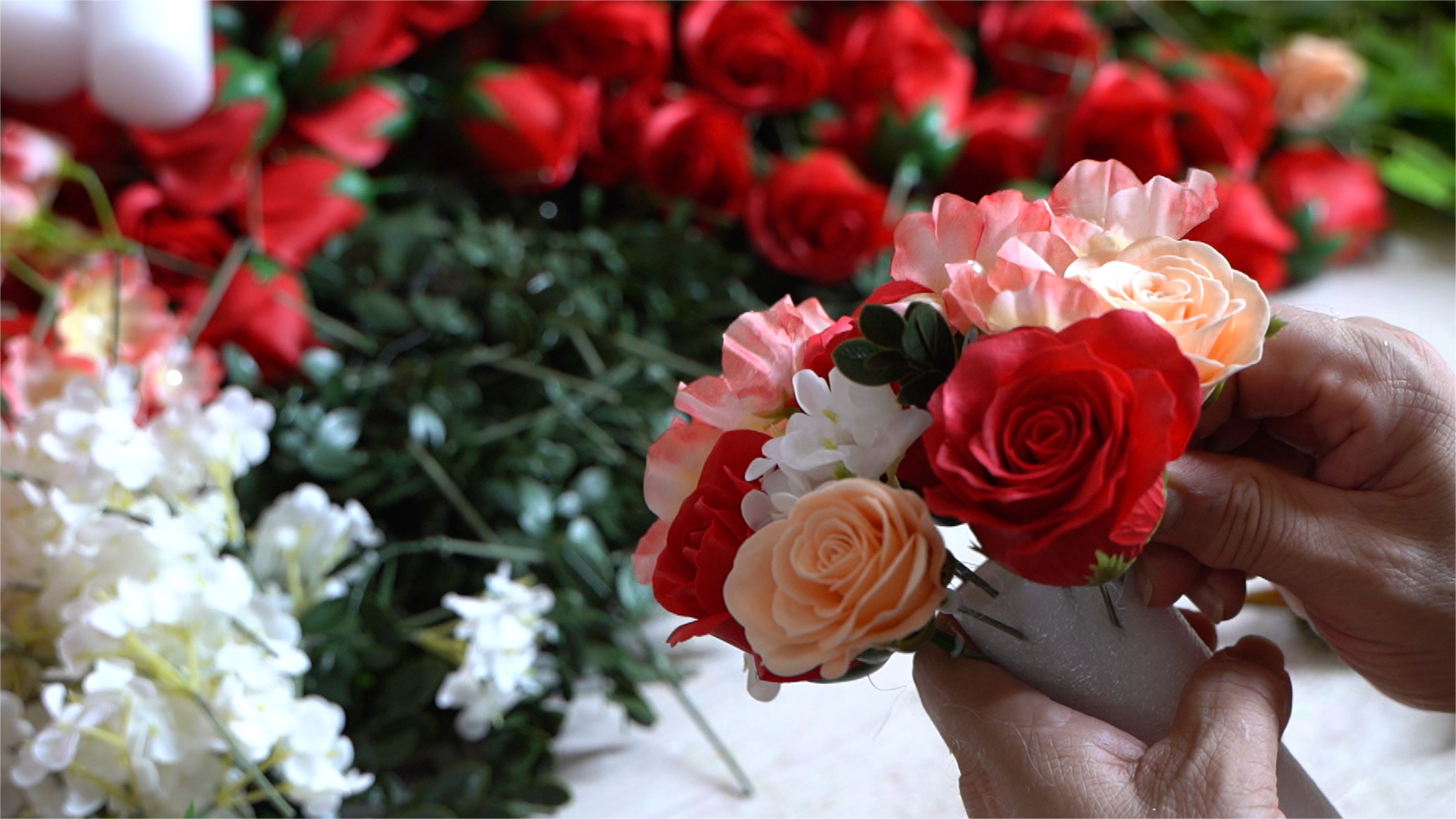
| Decorative Soap Flowers | Petal shape, color, fragrance where applicable, presentation |
| PE Foam Rose Bears | Decorative rose attachment, visible glue, overall shape, display box |
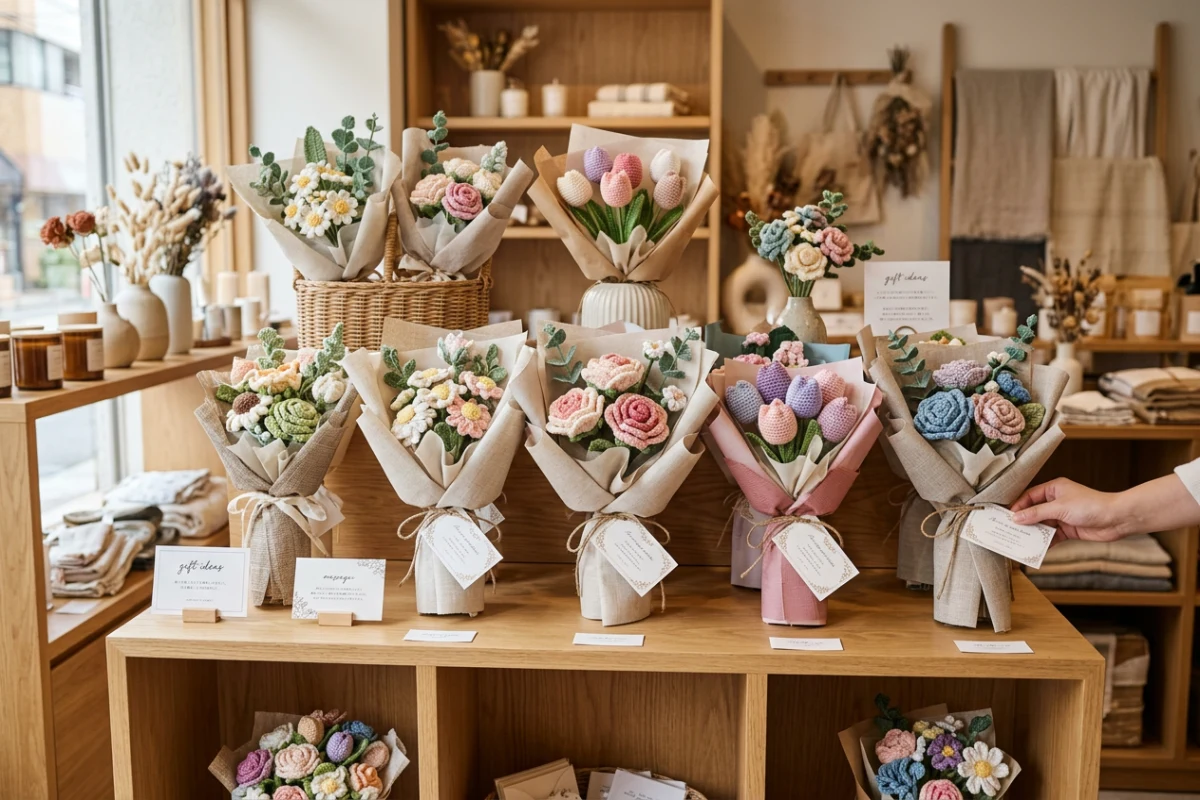
| Plush / Crochet Flowers | Stitching, fabric or yarn quality, shape consistency, labeling |
| Custom Floral Gift Sets | Branding details, component fit, sample approval, packaging |
Each category also has its own sourcing considerations.
Preserved roses are real flowers that have undergone preservation treatment. Natural variation is possible, so buyers should agree on acceptable appearance and color differences when approving samples.
Decorative soap flowers are manufactured floral products, primarily intended for gifts and display rather than everyday washing or skincare.
Rose bears are assembled decorative products. Consistent shape and secure attachment of the foam roses are important quality details.
For plush and crochet flowers, buyers should check whether product design, intended use, packaging, and marketing could bring the item within toy safety requirements in the destination market. Simply calling a product decorative does not automatically determine its regulatory classification.
For customized floral gifts, I recommend reviewing the complete finished sample—not just the flower arrangement or box separately.
A beautiful flower and a beautiful package don’t always work well together until you’ve tested the fit.
Need help selecting suitable products for your retail collection? Email inquiry@sweetie-group.com with your target market, product interests, expected quantities, and customization requirements. Our team can discuss available floral gift options for your project.
4. Evaluate Margins, Packaging, and Shipping Costs Together
A low factory price doesn’t automatically make a product profitable.
Before deciding whether a gift belongs in your collection, consider the full cost of getting it ready for sale.
That may include the product price, individual packaging, master cartons, freight, insurance, applicable import duties, customs expenses, and local delivery.
A Simple Gross Margin Example
Suppose a floral gift has a net selling price of $25, excluding sales tax, and a landed cost of $13 per unit.
The estimated gross margin would be:
Gross Margin = ($25 − $13) ÷ $25 × 100 = 48%
This is a hypothetical calculation, not an actual product quotation or a recommended margin.
The result also doesn’t account for operating expenses, marketing, marketplace commissions, or other costs not included in the assumed $13.
It’s a useful starting point, but not a complete profitability forecast.
Why Packaging Can Change the Calculation
Consider two products:
A compact preserved rose box may occupy relatively little space inside a shipping carton.
A rose bear, although lightweight, may need a larger display box to protect its shape.
That difference can affect how many units fit into a master carton and how much freight is allocated to each product.
Before comparing suppliers, request the actual packing quantity, carton dimensions, and gross weight for each SKU.
Don’t assume the smaller-looking product will always cost less to ship, either. Protective packaging and final carton configuration matter.
Protect the Product Without Overcomplicating the Package
At Sweetie, we’ve worked with different packaging structures for different floral gifts.
For certain open-top preserved flower boxes, removable internal supports can help maintain space between the flowers and the protective packaging, reducing direct contact with delicate petals.
Glass dome gifts require different positioning and cushioning arrangements to help limit movement during transportation.
Some products also benefit from protective coverings that help keep transparent display packaging clean and presentable.
These aren’t universal solutions for every SKU. The appropriate design depends on the product, packing method, and distribution channel.
For retail buyers, the question should be:
Does the packaging provide the protection and presentation this particular product needs, without creating unnecessary cost or volume?
5. Make Seasonal Inventory More Flexible
Valentine’s Day is a wonderful selling opportunity, but it has one obvious limitation: the date doesn’t move.
By February 15, the same product may have a very different appeal.
That’s why I encourage buyers to think about packaging flexibility while developing the collection—not after the holiday is over.
Separate the Gift From the Seasonal Message
For selected floral gift designs, a neutral base package can be combined with removable seasonal elements.
These might include Valentine’s Day sleeves, greeting cards, hangtags, or ribbons.
For example, imagine a preserved rose box in a simple, elegant color.
With a romantic sleeve, it becomes part of a Valentine’s Day display.
With an appropriate change of packaging, the same underlying product may also work for birthdays, anniversaries, or other gifting occasions.
Sweetie has developed interchangeable sleeve options for suitable packaging formats, making this a practical design consideration for some projects.
However, packaging flexibility doesn’t guarantee that leftover stock will sell.
Retailers still need to consider product condition, storage requirements, remaining saleable life, market demand, and any labeling limitations.
Balance Seasonal and Everyday Designs
A collection doesn’t need to be entirely red and heart-shaped.
You might combine classic Valentine’s Day colors with a smaller selection of neutral or softer tones that can work beyond February.
The right balance will depend on your customers.
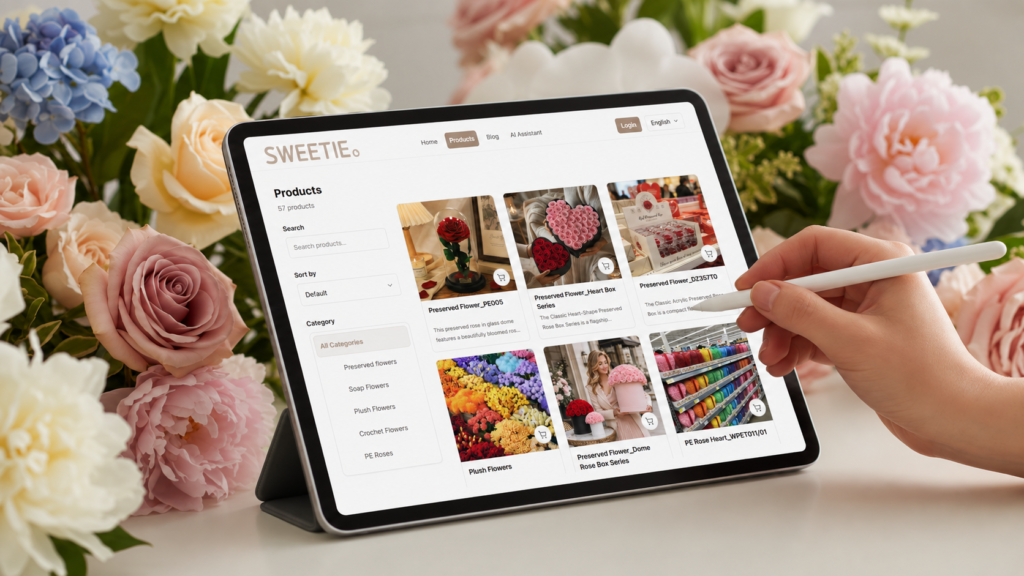
If you’re still deciding which floral gift formats suit your budget, sales channel, or gifting occasions, try Sweetie AI to explore product options and organize an initial buying plan.
6. Plan Your Order and Evaluate Suppliers Before Committing
A good Valentine’s Day collection requires both appealing products and a realistic purchasing schedule.
Because the selling season is short, even a relatively small delay can create problems for buyers.
I recommend planning backward from the date your products must be available for sale.
Four Decisions to Make Early
1. Confirm the collection.
Select the products, target price positions, colors, approximate quantities, and any required customization.
2. Approve finished samples.
Check appearance, dimensions, materials, branding, and packaging. Agree on the reference sample that will guide bulk production.
3. Confirm production requirements.
Discuss MOQ, materials, packaging components, production scheduling, inspection expectations, and any changes that could affect delivery.
4. Review logistics and arrival dates.
Agree on shipping terms, request verified packing information, and allow time for customs clearance, warehouse receiving, and store distribution.
Existing product designs may require less development work than fully customized collections. However, actual availability and lead times must always be confirmed.
Questions Worth Asking Every Supplier
Before comparing quotations, make sure you’re comparing products with equivalent specifications.
Ask:
- Is the quoted product based on an existing design or a new development?
- What is included in the unit price?
- Can the packaging be adapted to our retail channel?
- What MOQ applies to each product or customization?
- How will the approved sample be used during quality inspection?
- Which product-specific documents or tests are relevant to our target market?
- What production and shipping schedule can be confirmed for this order?
These questions may seem basic, but they help prevent misunderstandings that become expensive later.
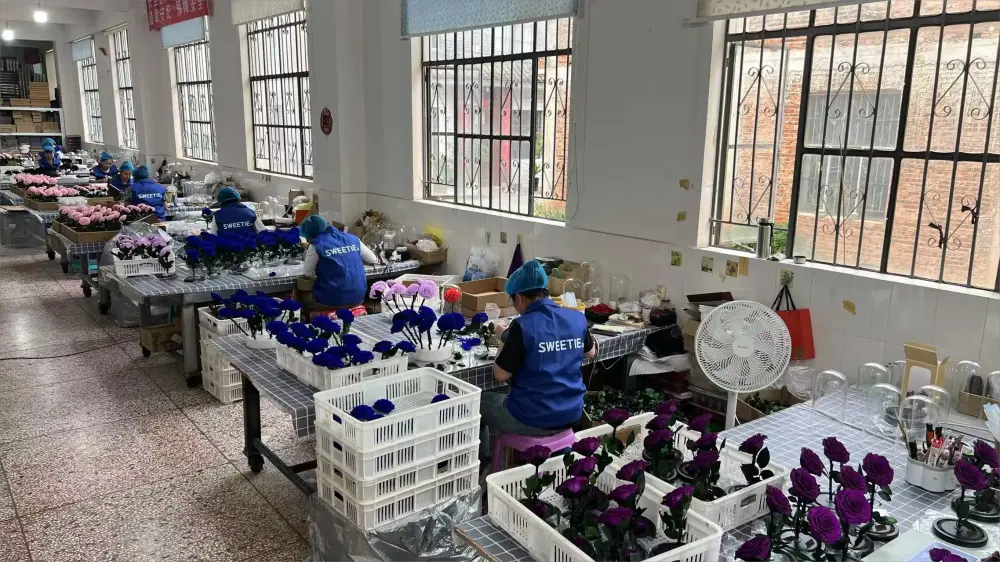
At Sweetie, we work with preserved flower gifts, soap flower arrangements, rose bears, plush flowers, crochet flowers, and selected custom floral gift projects.
Our production and supply chain resources in Kunming and Yiwu support different aspects of product development, sourcing, and manufacturing.
For OEM/ODM projects, the scope may include product design, sample development, colors, branding, and packaging, depending on the specific requirements.
I believe a useful supplier relationship begins with clear communication about what can be produced, what needs confirmation, and what may affect cost or timing.
That’s particularly important for seasonal products.
Frequently Asked Questions About Wholesale Valentine’s Day Gifts
How should I decide which Valentine’s Day gifts to stock?
Start with your retail channel, target customers, selling price range, and available display space. Choose products with distinct roles, such as an add-on gift, a main gift, a premium option, and a design that may also sell after the holiday.
Can I place a small trial order before buying in bulk?
Possibly. Trial-order availability depends on the product, existing stock or production arrangements, packaging, and customization requirements. Standard designs may offer different quantity options from new OEM projects. Confirm the MOQ with your supplier.
What packaging information should I request before ordering?
Ask for individual package dimensions, master carton dimensions, packing quantity, gross weight, and details of the protective packaging. These help you estimate shipping costs and evaluate whether the product suits your distribution channel.
What should I confirm before developing private-label Valentine’s Day gifts?
Confirm your brand artwork, colors, product dimensions, packaging requirements, target quantities, sample approval process, and delivery expectations. Also ask which changes involve additional development or setup costs.
Final Thoughts: Build a Collection That Fits Your Business
A Valentine’s Day collection doesn’t need dozens of designs to be successful.
It needs a thoughtful mix of products that suit your customers, fit your sales channels, and make commercial sense.
Start with clear product roles. Examine samples carefully. Compare costs beyond the factory quotation. And wherever possible, think about how your packaging and product selection can reduce unnecessary seasonal risk.
Most importantly, don’t choose a gift simply because it looks beautiful in a catalog.
Choose it because you understand how it fits into your business.
Planning your next wholesale Valentine’s Day gift collection? Send your preferred products, target market, estimated quantities, and delivery requirements to inquiry@sweetie-group.com. We’d be happy to discuss suitable floral gift options and your sourcing needs.
Annie Zhang