To plan a plush flower sample order and build a retail collection, start with a broad catalog shortlist of 30+ styles, evaluate samples using a structured scorecard covering fabric feel, stem flexibility, fullness, sewing quality, and display fit, narrow down to 4–8 core SKUs following a 70/20/10 assortment formula, and use a two-stage sampling process to control costs before locking in custom labels, hangtags, and packaging for your launch batch.
Why does careful plush flower sample selection matter for a new retail collection?
Careful sample selection prevents one of the most common mistakes in plush flower retail collection building: choosing styles from photos only, then discovering that fabric quality, shape retention, or display impact do not match customer expectations. Plush flowers are highly tactile products; their perceived value depends on softness, fullness, weight, and how they look arranged in a store.
Skipping structured evaluation risks over-ordering styles that look appealing online but feel cheap in person, do not hold their shape after shipping, or fail to work with existing fixtures. For gift shops, lifestyle stores, florists, and e-commerce brands, a wrong first batch ties up working capital, takes up shelf space, and slows category sell-through.
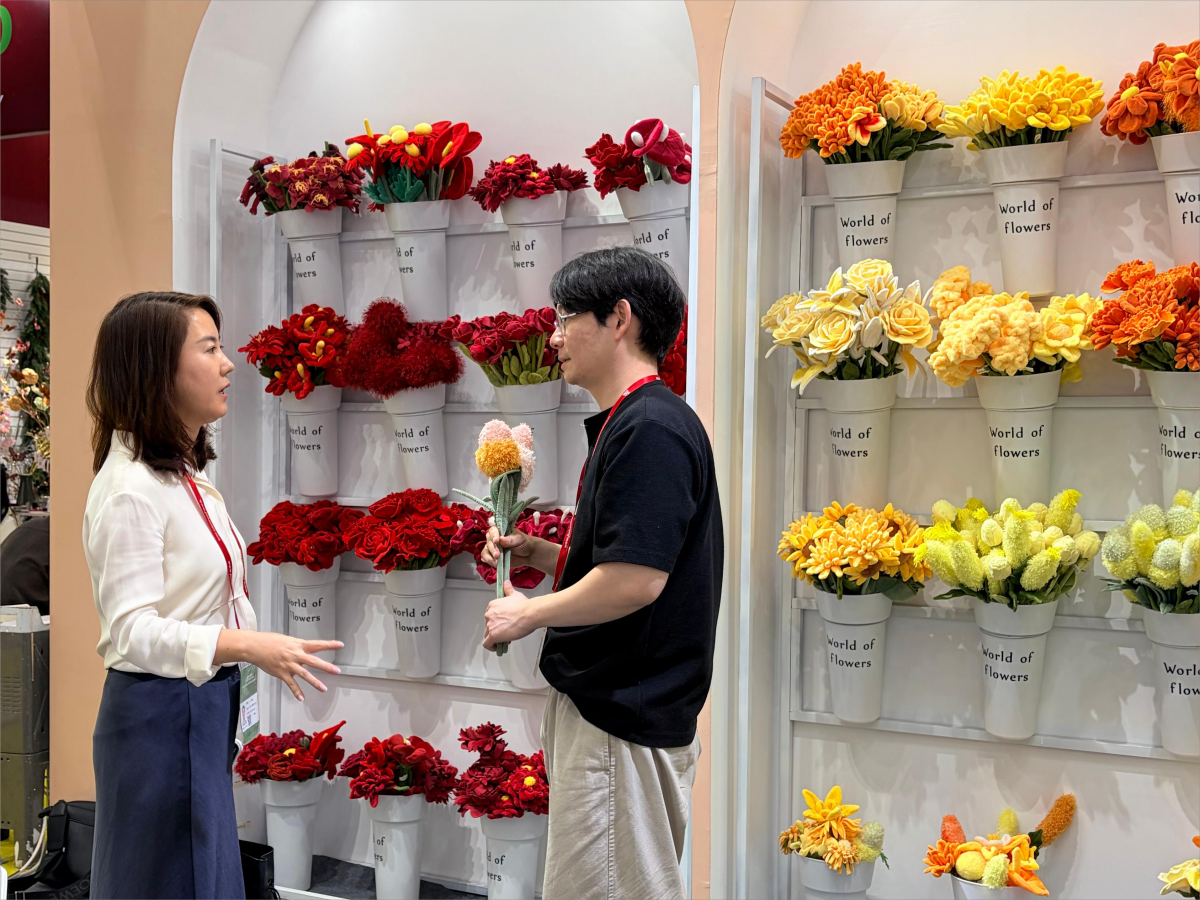
A proper sample process also helps set realistic retail prices, plan packaging, and train store teams on merchandising. Sweetie-Group often works with retail buyers who initially select 20 or more styles based on catalog images, then refine the lineup to a tighter, more commercial assortment once they can touch and compare samples side by side.
How do you shortlist plush flower styles from a large catalog the smart way?
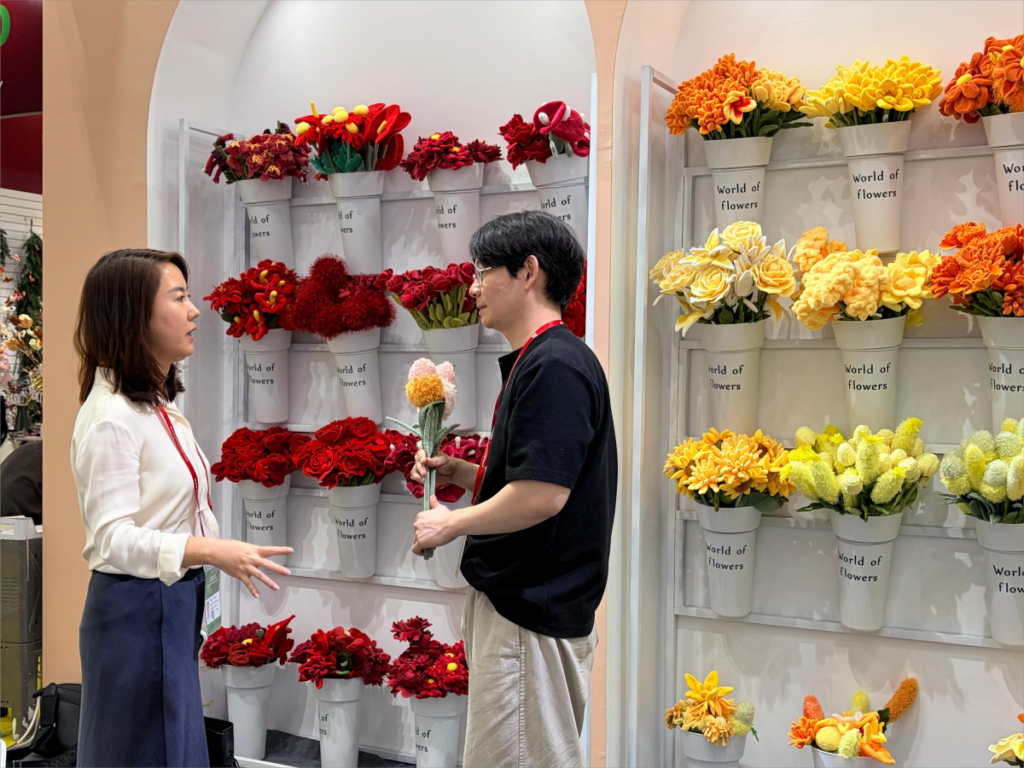
Start with a long list of 30 or more catalog SKUs, then filter down to 12–20 samples you actually order. This two-step shortlisting keeps sampling cost manageable while ensuring you do not miss bestsellers.
Use these filtering criteria in your first pass:
- Price tier: group styles into entry, mid, and premium price points so your final collection covers different customer budgets.
- Flower type: include classic shapes such as rose, tulip, sunflower, and peony, plus 1–2 novelty or statement shapes for visual interest.
- Color palette: select a core neutral range, a seasonal hero color, and 1–2 accent colors; avoid too many similar shades that become hard to distinguish on shelf.
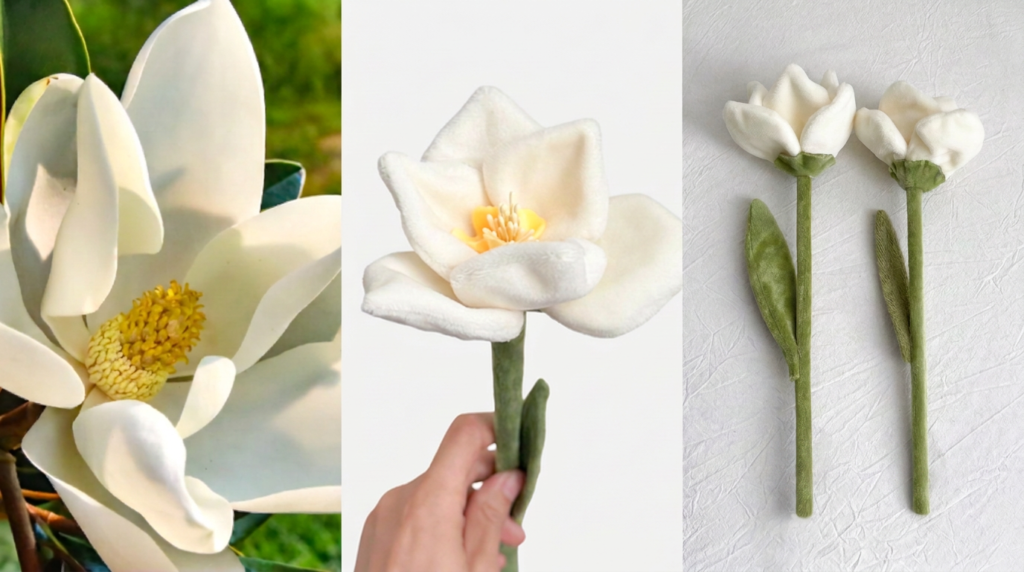
- Stem type: prioritize bendable stem plush flower merchandising options because they offer more display flexibility for in-store buckets, vases, and arrangements.
- Size range: mix short, medium, and tall stems so you can merchandise at different heights without looking flat.
- Packaging fit: check whether the style can ship in polybags, hangtags, or branded boxes relevant to your sales channel.
After filtering, remove styles that look too similar, would be hard to explain to customers, or do not fit your store’s overall aesthetic. The goal is not to pick winners yet—it is to create a comparison set broad enough to reveal what customers will actually reach for.
If you are unsure which styles fit your budget or store type, you can use Sweetie AI to quickly filter options by price point, channel, and display scenario before you request samples.
What should a plush flower sample evaluation scorecard include?
A plush flower sample evaluation scorecard removes subjective taste and gives every sample the same test. It is especially useful when multiple team members are involved, or when comparing samples from different suppliers consistently.
The scorecard below uses a 1–5 scale, with 5 being excellent. Score each sample on ten dimensions, then add a weighted overall score based on what matters most for your channel.
| Evaluation Dimension | What to Check | Weight for Retail |
|---|---|---|
| Fabric softness and hand feel | Surface texture, shedding, rebound after squeezing | 20% |
| Flower head fullness | Shape, fluffiness, flat spots, filling distribution | 18% |
| Stem rigidity and bendability | Hold position after bending, not too floppy or stiff | 15% |
| Leaf and petal sewing quality | Secure stitching, no loose threads, even alignment | 14% |
| Color accuracy vs. catalog | Match between photo and real sample under daylight | 10% |
| Weight balance | Head does not droop; stem feels stable in a vase | 8% |
| Scent and chemical smell | Neutral odor out of packaging; acceptable after airing | 5% |
| Label and tag attachment point | Suitable position for hangtag or woven label | 4% |
| Display impact in retail setting | Catches attention from 2–3 meters away | 4% |
| Packed size and shipping volume | Compressibility, box or bag fit, breakage risk | 2% |
To use the scorecard effectively, unwrap all samples at the same time, label them with a code instead of a style name to reduce bias, and score them in the same lighting. Touch, bend, fluff, and hang each one. If you sell online, also photograph each sample to see how it looks on screen compared to catalog images.
For retail assortment decisions, pay extra attention to fabric feel and flower head fullness because those are the first two attributes customers notice when they pick up a plush flower. Bendable stem performance matters most for stores that plan to merchandise in buckets, baskets, or mixed arrangements.
How do you narrow samples to 4–8 core SKUs with a 70/20/10 strategy?
Once all samples are scored, the next step is not to simply pick the highest-scoring styles—it is to build a balanced plush flower retail collection assortment that works together on shelf, covers different price points, and encourages multiple purchases.
A proven formula for a first plush flower launch is the 70/20/10 assortment rule:
- 70% classic bestseller styles: rose, tulip, sunflower, or other easily recognizable shapes in neutral or best-selling colors. These are your everyday sellers and price-anchor products.
- 20% distinctive or premium statement styles: larger blooms, special fabrics, or unique shapes that make the collection feel curated and worth browsing.
- 10% theme or seasonal color SKUs: 1–2 styles in a trend color, holiday theme, or limited-edition finish to support marketing and window displays.
For example, in a 6-SKU launch collection, the split would be roughly 4 classic styles, 1 premium shape, and 1 seasonal accent. This structure reduces risk because the classics drive steady sales, while the statement and seasonal styles create social media and in-store storytelling opportunities.
Avoid launching with 15+ SKUs. Too many options confuse customers, increase inventory cost, and make visual merchandising harder. A tight, well-edited collection of 4–8 styles usually performs better than a wide, unstructured one, especially for a new category.
Why do bendable single stems lower retail risk compared with fixed bouquets?
Bendable stem plush flower merchandising offers three major advantages for retail buyers testing a new category: lower inventory risk, more flexible display options, and higher add-on sales potential.
Fixed bouquets look impressive, but they lock you into a pre-set combination of colors, shapes, and price points. If one flower in the bouquet is unpopular, the whole SKU underperforms. Single stems with bendable wire stems, by contrast, let customers and store staff build their own combinations. A shopper who initially picks one rose may add a tulip and a leaf stem to create a personal bouquet.
For store operations, bendable stems also simplify visual merchandising. You can adjust height in a metal bucket or ceramic vase for a fuller, more natural display; bend stems around shelf edges, hooks, or gift toppers; mix plush flowers with preserved flowers, dried grasses, or fabric accessories; and restyle the display quickly for seasonal campaigns or in-store events.
From a sourcing perspective, single stems are also easier to reorder because you only top up the best-selling shapes and colors, not entire pre-made bouquets. This improves inventory turnover and reduces the chance of being stuck with slow-moving components.
How does a two-stage sampling process control cost and speed up decisions?
A custom label plush flower sampling process does not have to be expensive, as long as you separate style evaluation from brand customization. Working with suppliers like Sweetie-Group, retail buyers typically follow two stages.
Stage 1: Standard catalog sample evaluation. Order 12–20 existing samples in their standard form. The goal is to compare fabric, shape, size, stem performance, and display impact. These samples are usually faster and cheaper because they come from existing stock or standard production runs.
Stage 2: Customized confirmation samples. Once you have narrowed the lineup to 4–8 final SKUs, request branded samples with your label, hangtag, packaging, or any small structural adjustments. Because you only customize the shortlisted styles, you save on sampling fees, artwork setup, and revision cycles. This stage is also when you test packaging fit, barcode placement, and any retail-specific details.
The main benefit of two-stage sampling is that you avoid paying custom tooling or artwork fees for 15 styles you will never stock. It also keeps the process moving faster, because you can start the visual and commercial evaluation while branding artwork is still being prepared internally.
What files and information do you need to provide for custom labels and hangtags?
When you move to the custom branding stage, clear input files prevent delays and revisions. For plush flowers, the most common customizations are woven or printed labels on the stem, hangtags attached to the flower head or stem, and custom polybags or header cards.
To prepare your files, organize the following items:
- vector artwork for logos and graphics in AI, EPS, or SVG format; avoid low-resolution JPG or PNG files that cannot scale cleanly.
- exact color references using Pantone or CMYK codes so the print matches your brand palette.
- label dimensions and placement instructions, including whether the label is sewn in, glued, or hung.
- compliance text, such as material composition, country of origin, care instructions, and any age or usage warnings required by your market.
- barcode or SKU number format, including size and placement on the tag or packaging.
- packaging requirements, such as polybag thickness, header card design, or gift box specs.
Compliance text requirements vary by country and sales channel. Some markets require fiber content labels, care symbols, or importer information on the product or packaging. Confirm local requirements before finalizing artwork, rather than trying to add them after production has started.
If you need help structuring your artwork brief or checking what is commonly included for plush flower retail products, you can email sales@sweetie-group.com with your target market and channel, and our team will share a typical label specification template.
How should you size your first trial order and plan replenishment buffers?
After sample approval, the next decision is how many units to order for the first launch. The goal is to have enough stock to fill displays and test demand without overcommitting working capital.
For a first plush flower trial, a common approach is to order core classic styles at a higher quantity, because they are more predictable sellers and drive the collection’s price image; premium and seasonal styles at a lower quantity, to test customer reaction before scaling; and display or hero pieces at a very low quantity, mainly for window or online photography use.
Exact MOQ and lead time depend on the style, customization level, and supplier capacity. Sweetie-Group offers flexible trial order options for selected plush flower styles, which is useful for retailers who want to test a category before committing to larger production runs.
For replenishment planning, build in a buffer that accounts for production time, shipping, and potential delays. If you sell through a style faster than expected, you want to reorder before it goes out of stock completely, especially during peak gifting seasons. A practical rule of thumb is to place a reorder when inventory drops to about 30–40% of initial launch stock, depending on sell-through speed and supplier lead time.
Also consider ordering a small quantity of extra display stems or spare packaging for in-store use. Having one or two demo samples on hand can help store teams show customers how bendable stems work and how the flowers can be arranged.
What final checks should you run before approving the launch collection?
Before you sign off on production, do one final review as if you were already a customer seeing the product in store. This final checklist ensures nothing slips through between sample approval and the first shipment.
First, verify the retail display logic. Place the 4–8 SKUs together in your typical fixture, bucket, or shelf setup. Check whether the colors harmonize, whether the heights create a nice rhythm, and whether the price points feel logical from entry to premium. If one style looks out of place, replace it now rather than after ordering.
Second, confirm packaging and shipping behavior. Squeeze the flower into its proposed polybag or box, leave it for a few days, then take it out and see how quickly it fluffs back into shape. If the flower head creases badly or the stem stays bent, adjust the packaging or the filling before mass production.
Third, review branding and compliance details one more time. Check spelling on labels, confirm barcode readability, and make sure all country-specific information is correct. Small errors on hangtags are expensive to fix once thousands of units are produced.
Fourth, document merchandising guidelines. Write a short internal guide for store teams or e-commerce photographers that explains how to fluff the flower, bend the stem, and style the collection. Consistent presentation across locations has a direct effect on sales.
If you are ready to curate your new plush flower collection and want a structured sample process backed by 19+ years of floral product development experience, request the full retail catalog and sample evaluation toolkit to start building your assortment with Sweetie-Group.