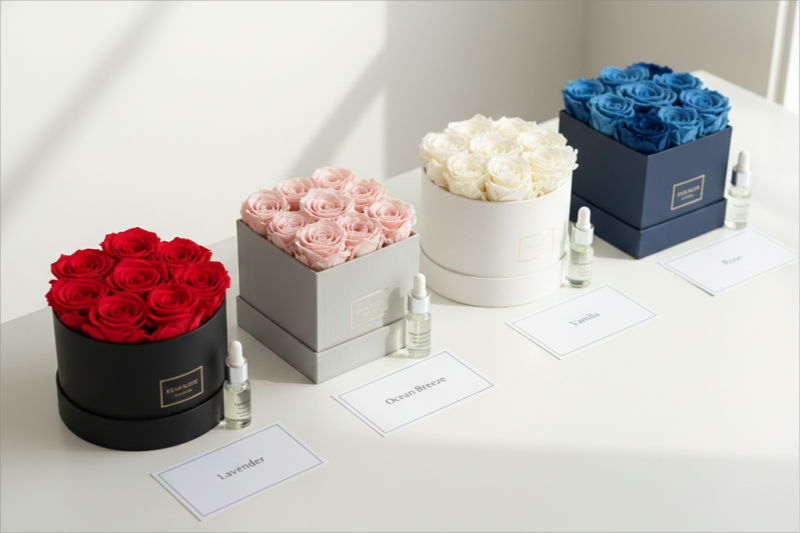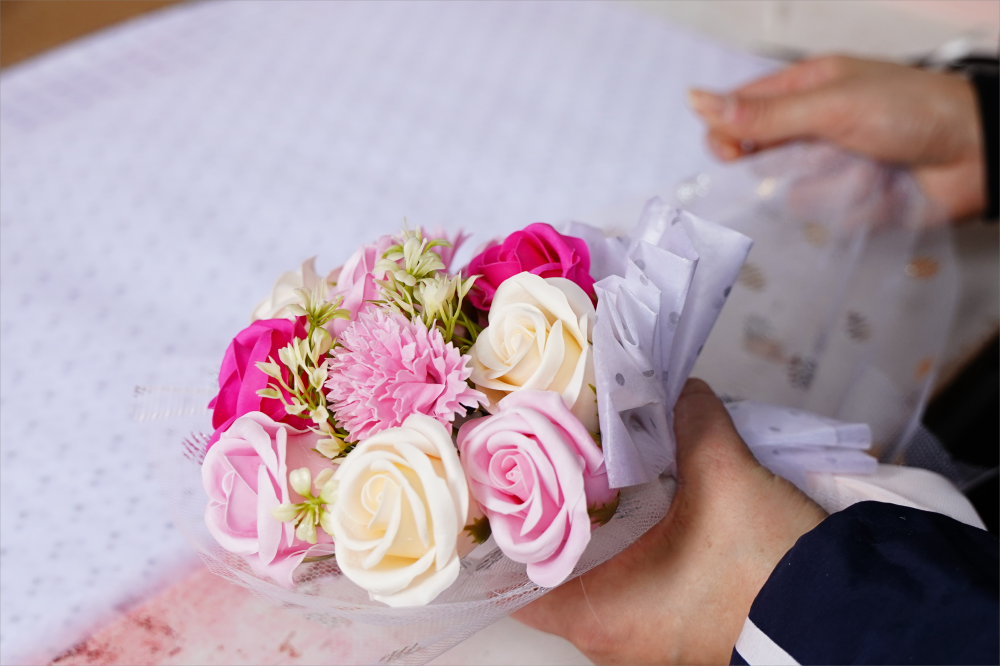
A forever rose can look effortless on a shelf. Elegant color. Clean presentation. No watering. No mess.
The hesitation usually shows up a few seconds later.
Maybe it starts with one small question: What exactly was done to this flower? Or maybe it gets more personal: Is this safe around my cat? My child? My customers? I understand that pause. A preserved rose is beautiful because it lasts, but the moment something lasts longer than a fresh flower, people want to know what made that possible—and whether that process introduces risk.
That is the right question to ask.
Quick Answer
Most quality preserved roses are generally safe for normal indoor display, but they are not food-safe, chew-safe, or meant for direct contact with children or pets. The real safety picture depends on the flower source, preservation method, added dyes or fragrance, and the overall quality of the finished product. The rose itself is usually not the main concern; the added materials and how the product will actually be used matter more. (aspca.org)
If you want a supplier-level explanation of preserved rose materials, email inquiry@sweetie-group.com.
What “Toxic” Means in Real Life
When people ask whether forever roses are toxic, they are usually asking one of four different questions:
- Is it okay to keep this in my home?
- Is it risky around pets or children?
- Does the product contain chemical treatments?
- Could a low-quality version cause irritation, odor, or other problems?
Those are not the same question, and they should not get the same answer.
A preserved rose can be low-risk as a decorative object and still be the wrong product to leave within chewing distance of a cat. It can be fine on a table and still be a poor choice for a nursery shelf. It can also be well made, dry, and stable—or heavily fragranced, poorly finished, and not something I would trust.
That nuance is exactly what gets lost when sellers rely on a simple phrase like “non-toxic.”
What a Forever Rose Actually Is
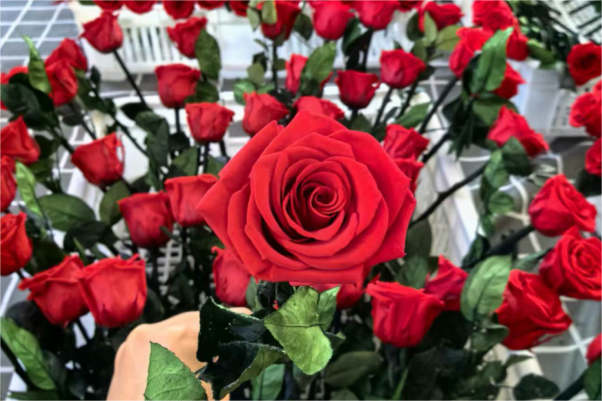
A forever rose is a real rose that has been treated so it keeps its appearance much longer than a fresh-cut flower. It is not an artificial flower, but it is also not an untreated natural bloom.
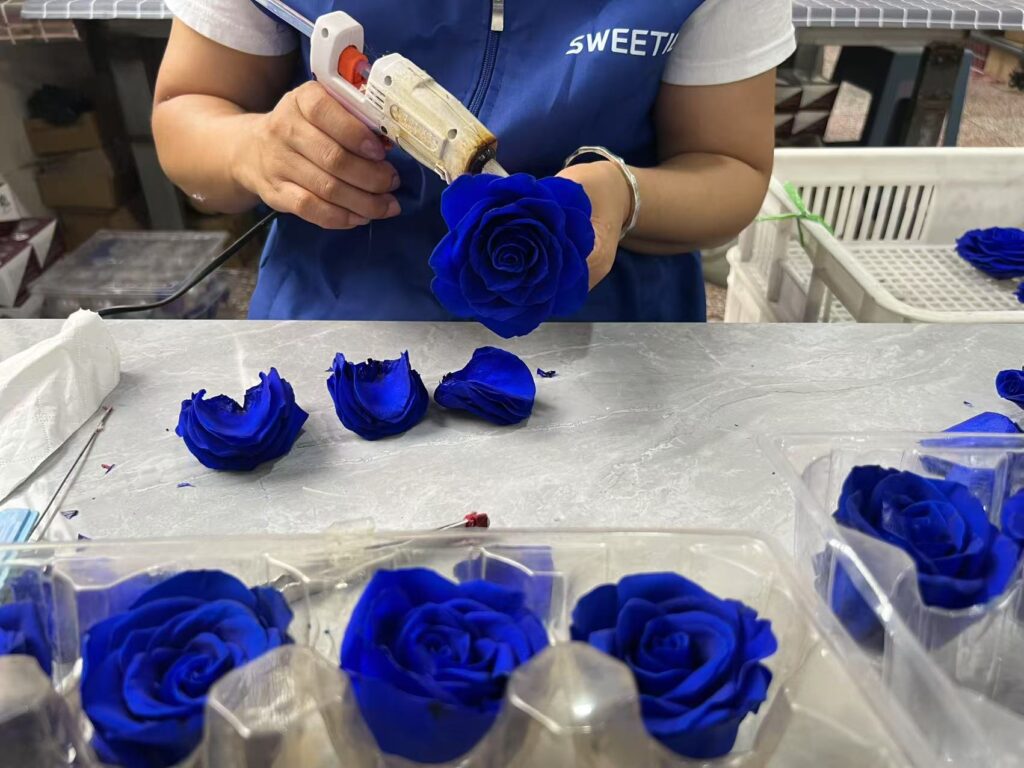
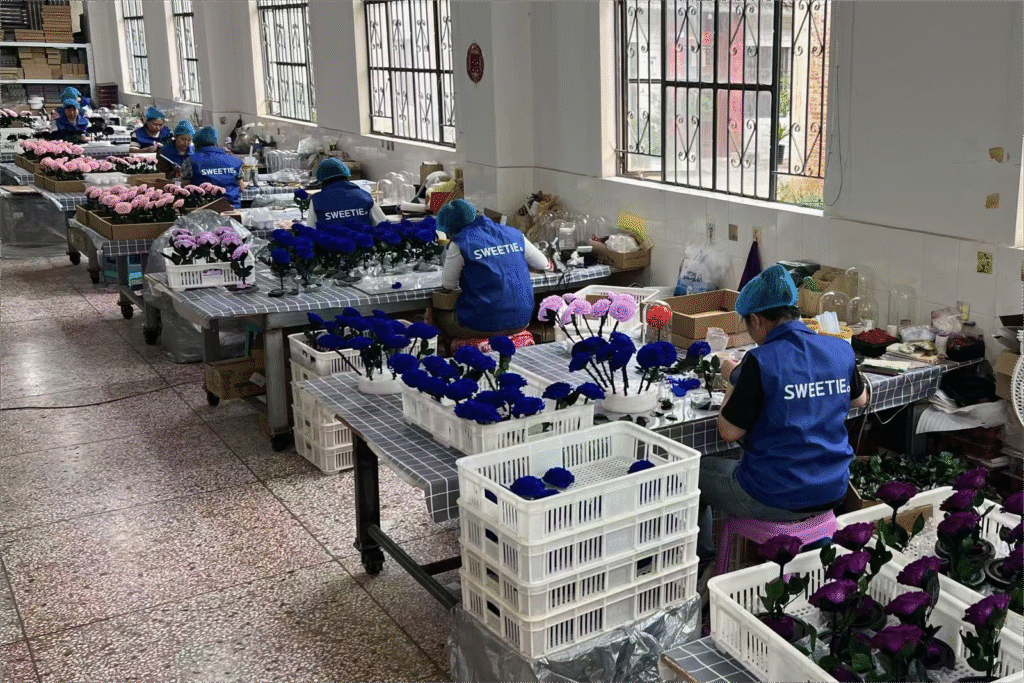
In preserved flower manufacturing, the goal is usually to remove moisture, stabilize the plant material, maintain shape, and restore or adjust color. Industry methods vary, but common steps include dehydration, shaping, coloring, and drying. Sweetie’s internal process document, for example, describes a sequence that includes alcohol-based dehydration, secondary dehydration, shaping liquid, coloring with food-grade pigment, and natural drying over roughly one to two months. The same document notes that the alcohol used in production evaporates during drying.
Extension guidance from Kansas State University explains the underlying preservation idea clearly for decorative plant materials: glycerin-based preservation replaces some of the water in plant tissue, and after drying, the remaining glycerin helps keep the material softer and more pliable than ordinary dried botanicals. (KSRE Bookstore)
That matters because a preserved rose is best understood as a processed decorative product made from a real flower.
Is the Rose Itself Dangerous?
Usually, no.
According to the ASPCA, true roses (Rosa species) are non-toxic to dogs, cats, and horses. That is one reason I do not like fear-based answers on this topic. The flower itself is generally not classified as a toxic plant for common household pets. (ASPCA)
But that does not mean a finished forever rose product should be treated like a harmless chew item. Once a preserved rose becomes a retail product, it may also include:
- dyes
- fragrance
- glue
- foam bases
- ribbons
- acrylic or glass packaging
- decorative coatings
So the right question is not just, “Is a rose toxic?” The better question is, “What has been added, and what kind of exposure are we talking about?”
Where the Real Risk Usually Comes From
In my experience, the meaningful risk points are these:
1. Added materials
A preserved rose may contain colorants, scent, adhesive, and other finishing elements. Those additions are not automatically dangerous, but they are what move the product away from “just a flower” and into “a manufactured decorative item.”
2. Poor finishing or incomplete drying
A well-made preserved rose should be dry, stable, and pleasant to display. If a product smells sharply chemical, feels damp, or sheds color too easily, I start asking more questions.
3. Unknown sourcing
Not every preserved flower on the market comes from the same quality standard. The original fresh flower, the preservation chemistry, and the quality control process all shape the final result.
4. The wrong environment
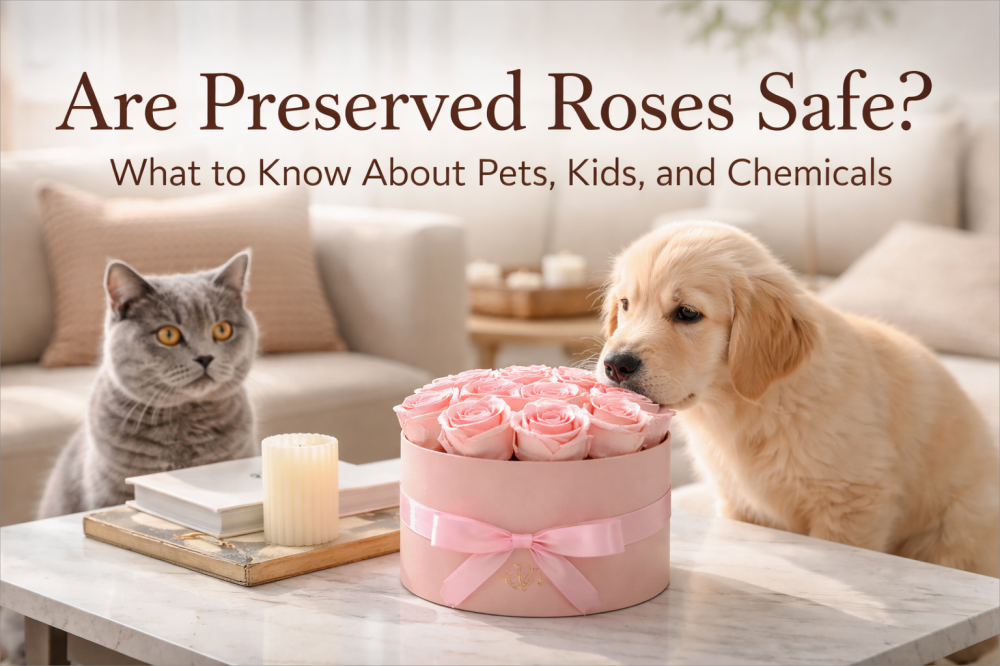
A preserved rose that is perfectly fine on a display shelf may be a bad fit in a home with a chewing puppy or a toddler who grabs everything within reach.
That is why safety is not only about ingredients. It is also about context.
A More Useful Way to Judge Risk
Here is the framework I use when I want to assess preserved rose safety quickly:
| Situation | My Practical View |
|---|---|
| Adult home display | Usually low risk if the product is dry, stable, and from a credible source |
| Pet household | Low risk if displayed out of reach; not appropriate as a pet-accessible item |
| Home with toddlers | Fine for display only if placed well out of reach |
| Retail gifting | Usually appropriate, but better with transparent materials information |
| Strong odor or obvious residue | Worth avoiding until the process and materials are clarified |
This is a much more useful lens than a flat yes-or-no answer.
Are Forever Roses Safe Around Cats and Dogs?
As display items, often yes. As accessible objects for chewing, no.
That is the most practical answer I can give.
Since the ASPCA lists true roses as non-toxic to cats and dogs, the plant itself is not the usual red flag. The larger concern is the finished product: dyed petals, glue points, ribbons, filler material, and other decorative components. (ASPCA)
So when buyers ask me whether forever roses are pet-safe, I answer this way: they are generally suitable for display in pet households if pets cannot mouth or tear them apart. That is different from saying they are pet-safe in the way a toy or food-contact product would be.
Are They Safe Around Babies and Young Children?
This is where I become more conservative.
A product can be acceptable on a console table and still be the wrong choice within arm’s reach of a baby. Children do not “display” things. They grab, pull, mouth, and test them. That changes everything.
For households with infants or toddlers, I recommend treating preserved roses the same way you would treat candles, reed diffusers, or decorative glass objects: beautiful to keep, but not something to place at child level.
If your customers need a straightforward answer on product suitability for gifting or retail, email inquiry@sweetie-group.com.
What Should Buyers Watch Out For?
There are a few signs that tell me a forever rose product deserves a second look.
A strong artificial smell
A light scent and a harsh chemical odor are not the same thing. If the smell is aggressive, I would want to know whether it comes from fragrance, adhesive, coating, or incomplete drying.
Color transfer
If a petal leaves color on fingers during normal handling, that suggests the finish may not be stable enough for comfortable home use.
Vague claims with no explanation
“Eco-friendly.”
“Safe.”
“Premium.”
“Non-toxic.”
Words like these are easy to print on a page. What matters more is whether the seller can explain the process clearly and consistently.
No distinction between display use and direct contact
That is a major credibility gap. A careful supplier should know the difference.
How I Would Explain This to a Customer in One Minute
If I had to answer this question in the clearest possible way, I would say:
Forever roses are usually fine for indoor display when they are properly made, but they are still processed decorative products. They should not be treated as edible, chewable, or child-play-safe items. The safest choice is a product that is dry, stable, lightly scented or unscented, and backed by a supplier who can explain the materials honestly.
That is the answer I trust. It is calm, useful, and hard to argue with.
What a Better Supplier Should Be Able to Tell You
If you are buying for retail, gifting, wholesale, or private label, here are the questions I would ask:
- What preservation steps are used?
- Are the roses fully dried before packing?
- Are added pigments or fragrance used?
- Is the product intended strictly for display?
- Can you explain how the product should be stored at home?
- Can you explain the difference between the raw flower and the finished decorative item?
If a preserved rose supplier answers these clearly, that usually tells me more than a marketing badge ever will.
FAQ: Forever Rose Safety
Do preserved roses contain chemicals?
Yes. Preserved roses are processed decorative flowers, so they may involve stabilizing liquids, pigments, fragrance, and adhesives depending on the design. That does not automatically make them unsafe for display, but it does mean they are not the same as untreated fresh roses.
Are forever roses poisonous to pets?
The rose itself is generally not classified as toxic by the ASPCA, but preserved rose products should still be kept away from pets because the finished item may include materials that are not meant to be chewed or swallowed. (ASPCA)
Can preserved roses cause allergies?
They can bother people who are sensitive to fragrance, dust, or certain added materials. The risk is product-dependent, which is why low-odor, clean-finish products are usually the safer choice for sensitive environments.
Is it safe to smell a forever rose?
For normal display use, usually yes. But “safe to smell” is different from “safe to chew” or “safe for unrestricted handling.”
Are preserved roses safer than fresh roses?
That depends on what you mean by safer. Preserved roses eliminate watering and wilting, but they introduce processing and added materials. They are different products, not simply better or worse versions of fresh flowers.
What is the biggest mistake buyers make?
Assuming that “real flower” means “nothing added,” or that “non-toxic” means “safe in every situation.” Neither is true.
Final Take
I do not think forever roses deserve panic, and I do not think they deserve lazy reassurance either.
The most accurate middle ground is this: a quality preserved rose is generally a low-risk display product, but it should be treated as a decorative item, not a contact-safe item for pets or young children. That is why the smartest buyers focus less on slogans and more on process, finish quality, and supplier transparency.
If you want help evaluating preserved rose products for gifting, retail, or OEM/ODM projects, contact us at inquiry@sweetie-group.com.
Annie Zhang, CEO of Sweetie Group