Valentine’s Day doesn’t fail in luxury retail because people don’t want to buy. It fails when the store experience feels like a transaction instead of a gesture. The best seasonal activations solve that quietly: they make the gift look “finished” before the customer even leaves the counter, and they give shoppers a reason to come back again next week.
Jo Malone London’s recent Valentine’s programming is a strong example of that kind of thinking. Rather than treating February 14 as a single spike, the brand built a series of in-store moments—anchored by a visual gifting ritual using “everlasting” (preserved) roses—then reinforced it with scheduled services like personalization and appointment-style experiences.
This case study focuses on what made the approach feel premium, why it’s operationally smart, and how brand and retail experience teams can borrow the underlying principles without copying the look.
What happened (in plain terms)
From publicly available event messaging and store-level social posts, Jo Malone’s Valentine’s approach can be summarized like this:
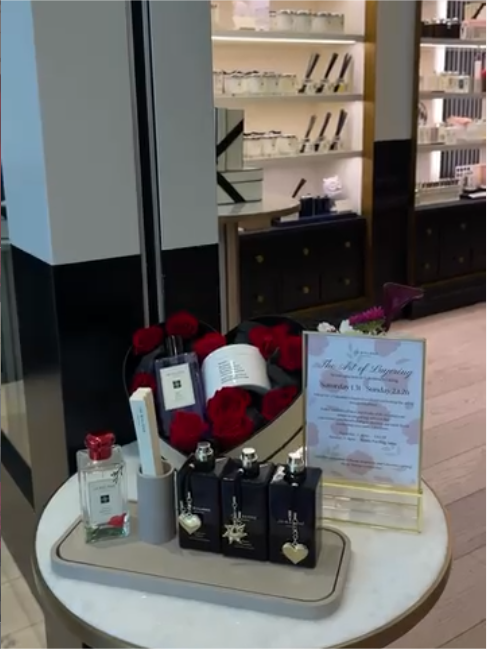
- A hero gifting ritual: a gift presentation built around preserved roses, designed to elevate the “final reveal” of the purchase.
- A value-add trigger: the rose presentation was commonly positioned as complimentary with a qualifying purchase, often framed as limited availability.
- A month-long rhythm: multiple themed experiences across February (for example, personalization weekends and additional experiential services).
- A consistent in-store aesthetic: a recognizable rose-and-gift-box visual system that looks good instantly, without requiring customers to “stage” the moment themselves.
If you take only one idea from it, take this: Jo Malone didn’t just decorate for Valentine’s. It productized a retail moment.
Why this felt like luxury instead of a promotion
Luxury retail teams often talk about “experience,” but experience only becomes real when it changes behavior. Jo Malone’s activation nudged three high-value behaviors that matter in the real world: purchase confidence, sharing, and repeat visits.
1) It turned wrapping into a ritual
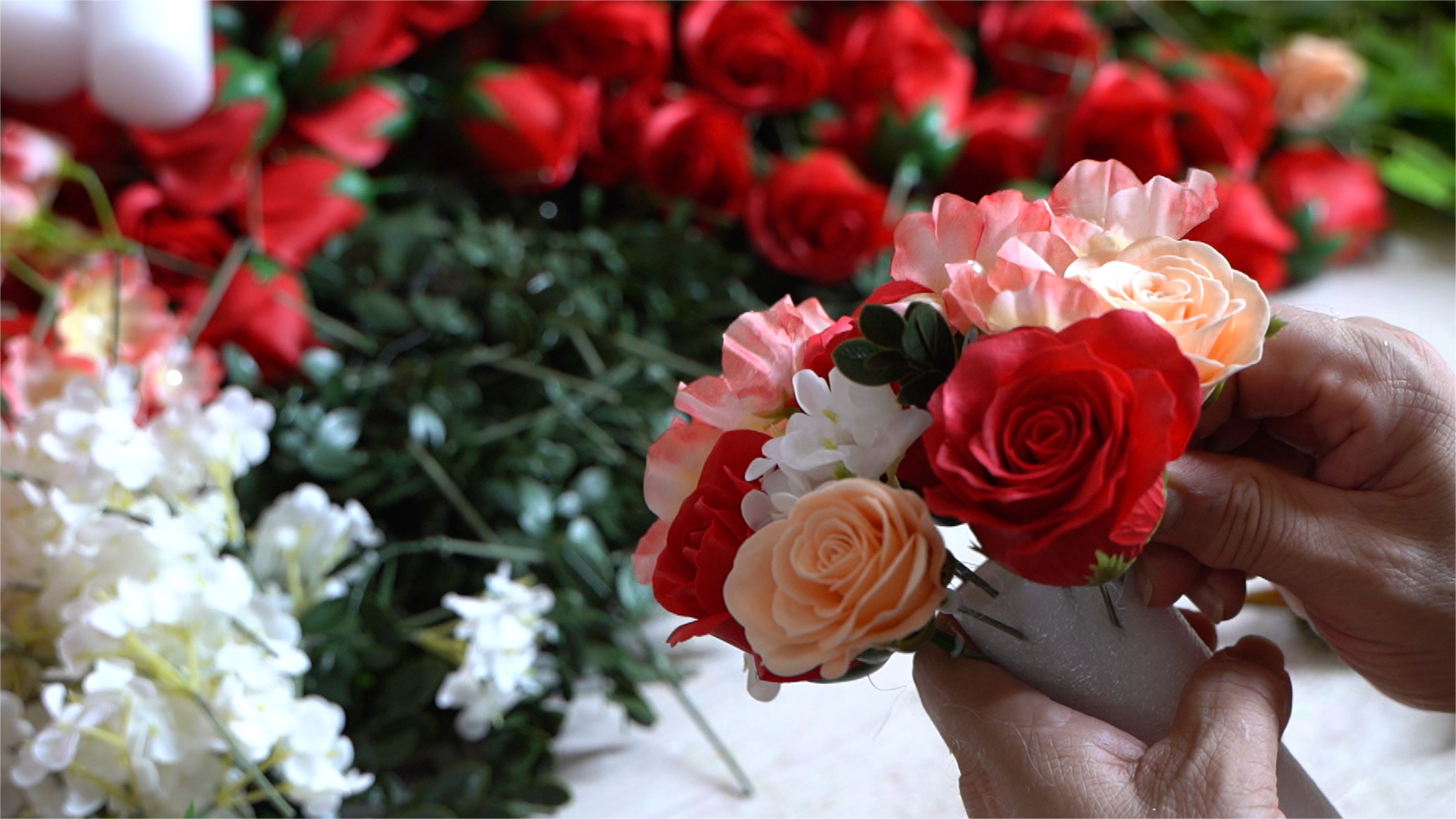
There’s a difference between gift wrap and gift theater. In this model, the customer doesn’t merely receive a packaged product—they watch a gift get completed. That subtle shift increases emotional payoff, which is exactly what seasonal gifting should deliver.
2) It created a camera-ready outcome by default
A well-designed in-store moment photographs cleanly without effort: the composition reads clearly, the focal point is obvious, and the “Valentine’s cue” is immediate. That’s not superficial. In luxury, photography is often the modern equivalent of word-of-mouth.
3) It added personalization without discounting
Services like hand painting, customization, and scheduled experiential touches add meaning while protecting price integrity. Customers don’t feel like they “got a deal.” They feel like they “got something special,” which is the better long-term memory to anchor to your brand.
4) It built a reason to return after the holiday
Most brands over-invest in the peak and under-invest in what comes next. A calendar of experiences keeps February active, giving stores more than one moment to convert shoppers who are browsing early—or who missed the holiday deadline.
The hidden power of preserved roses in retail activations
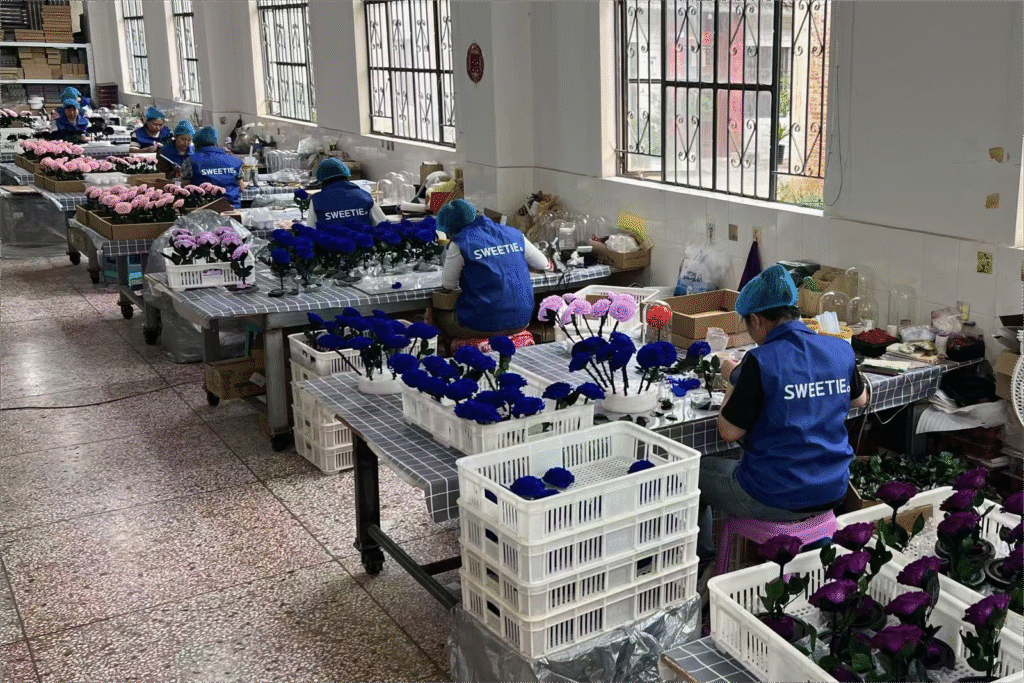
In luxury retail, preserved roses aren’t just a romantic symbol. They’re also an operational tool—especially when you need consistency across multiple doors.
Here’s why preserved roses fit this kind of activation so well:
- They hold a stable look over time. Visual consistency matters when customers are seeing the same presentation across different stores and dates.
- They reduce daily maintenance variability. Less reliance on store-by-store floral handling helps the experience look “on brand” more often.
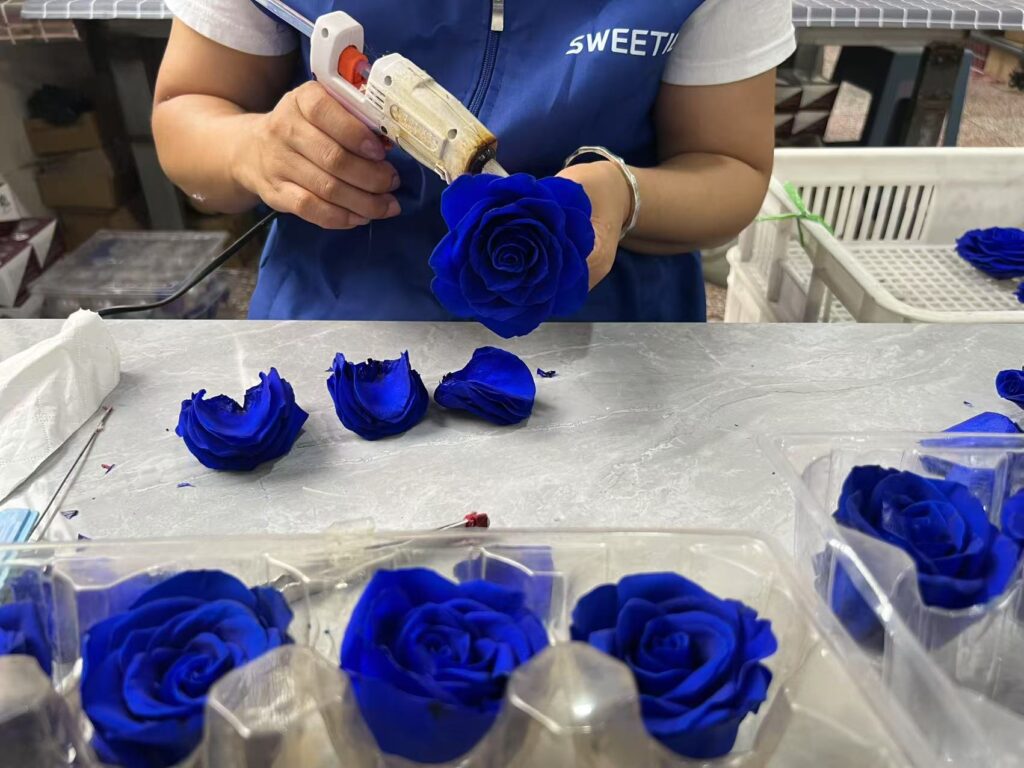
- They’re easier to standardize as a module. When a display can be assembled with repeatable steps, training is simpler and execution becomes more scalable.
- They support predictable planning. With preserved materials, you can allocate quantities by door, plan replenishment, and build a clean run-of-show for staff.
If your team is evaluating preserved elements for a future retail activation and wants a practical feasibility check—formats, lead times, and how to protect the presentation through shipping—email inquiry@sweetie-group.com. A short note about the store environment and the timeline is enough to get an actionable answer.
A different way to look at the campaign: “Retail Theater, Designed Like a System”
The most useful lesson here is not “use roses.” It’s how the experience was engineered. When an activation is meant to scale, it needs to behave like a system—something stores can execute repeatedly, not a one-off creative flourish.
I like to break it into four building blocks:
A) The Signature Moment
One hero presentation that signals: “This is a gift.”
It should be recognizable from a distance and strong in a quick photo.
B) The Trigger
A clear rule that tells customers when the moment is available (for example, qualifying purchase thresholds and limited availability).
This keeps staff aligned and reduces confusion.
C) The Calendar
A sequence of mini-occasions that extend the season: early gifting, personalization weekend, peak days, post-holiday services.
This turns one holiday into multiple conversion windows.
D) The Operations Layer
The part most people underestimate: assembly steps, time-per-transaction targets, training notes, replenishment planning, and packaging protection.
When all four exist, the activation can travel.
What brand and retail experience teams can borrow (without copying)
You don’t need to replicate another brand’s aesthetic to learn from their structure. Here are the transferable principles:
Design the “finished gift” first
Before you plan content or events, design what the customer walks out holding—and how it looks in their hands, on a car seat, or on a kitchen counter. The end result is what customers remember.
Build one “shareable frame”
Choose one consistent visual angle: top-down, three-quarter, or front-facing. A stable framing reduces execution variance and improves how the experience shows up online.
Protect staff time during peaks
If the hero ritual takes too long, it will be skipped when traffic surges. A scalable moment must be fast enough to survive Valentine’s weekend.
Use services to add value, not complexity
Personalization works best when it’s scheduled and capacity-controlled. Otherwise it becomes uneven—great one day, impossible the next.
Plan replenishment like retail, not events
A good activation stays consistent until the advertised end date. That means allocations, store-level thresholds, and a simple method for predicting when a door will run low.
The details that make or break execution
If you’re building a similar retail moment, these are the practical questions worth answering early:
- What does “finished” look like, and what are the non-negotiables?
- How many minutes should assembly take during peak traffic?
- How will you standardize placement so it looks consistent across doors?
- How will you prevent compression, abrasion, or movement during transit?
- If there is limited availability, what is the exact customer-facing language?
- What’s the backup plan if a door runs low earlier than expected?
If you’re mapping these decisions and want a second set of eyes from a production-and-packaging perspective, email inquiry@sweetie-group.com. It’s often easier to solve these issues on paper than on a sales floor.
What to measure if you want to know whether it worked
Luxury retail activations are often judged by “vibes.” That’s not enough. A few simple metrics can help teams evaluate impact without overcomplicating analytics:
- Conversion rate during activation windows (versus comparable weeks)
- Average transaction value and multi-item baskets
- Service attachment rate (how many purchases include the ritual/personalization)
- Repeat visits during the month (where trackable)
- Share behavior (store tags, UGC volume, saves/shares if accessible)
Even two or three of these indicators can help you decide whether to repeat, expand, or refine the module next season.
Takeaways worth keeping
Jo Malone’s Valentine’s strategy is a reminder that luxury retail wins when it makes customers feel something—and when it can do that consistently across stores.
The most reusable ideas are simple:
- Create a finished-gift ritual customers can see.
- Make the moment photo-ready by default.
- Add premium services instead of price cuts.
- Extend the season with a calendar, not a single date.
- Engineer execution so the experience survives real traffic.
That’s how a seasonal holiday becomes a scalable retail system.
Annie Zhang, CEO of Sweetie Group