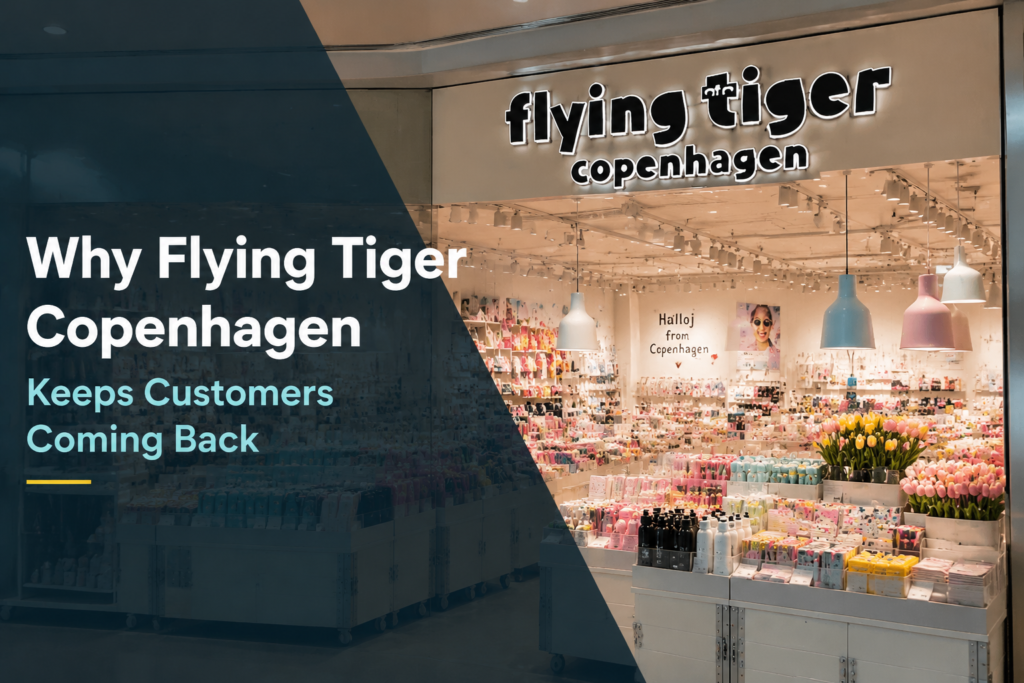
Retailers today face a difficult challenge: attracting customers repeatedly when many products can be purchased anywhere, at any time.
Price comparison is easier than ever. Online shopping has expanded consumer choices. Many categories have become highly competitive, with products that look increasingly similar across different retailers.
In this environment, one of the most valuable assets for a physical retailer is not only what customers buy, but why they return.
Flying Tiger Copenhagen offers an interesting case study in this area.
The Danish lifestyle retailer has developed a business model built around product discovery, frequent assortment changes, seasonal relevance, and creative merchandising. With more than 1,000 stores across international markets, Flying Tiger has created a retail experience where customers often visit without a specific shopping list and discover products during the journey.
The company’s approach provides valuable insights into how modern lifestyle retailers manage product categories, maintain customer interest, and create a stronger connection between stores and consumers.
The Power of Product Rotation: Why Customers Return to Discover Something New
Many retailers focus heavily on identifying best-selling products and maintaining stable inventory.
Flying Tiger Copenhagen follows a different rhythm.
A key part of its business model is continuous assortment renewal. The company is known for introducing a large number of new products regularly, creating a sense that the store is constantly changing.
This approach changes the role of the physical store.
A customer does not only visit because they need a specific item. They visit because they expect there may be something new to discover.
This creates a retail cycle:
New products → Customer curiosity → Store visits → Additional purchases
The important point is that product rotation becomes part of the customer relationship.
The store itself becomes a changing environment rather than a fixed collection of merchandise.
Assortment Management: More Products Are Not Always Better
A common misunderstanding is that successful lifestyle retailers simply carry a large number of products.
In reality, assortment management is about balance.
Too few products can make a store feel repetitive.
Too many unrelated products can create confusion.
The challenge is building a product mix where different categories support each other.
A lifestyle retailer’s assortment often includes several product roles:
| Product Type | Commercial Role |
|---|---|
| Everyday items | Maintain regular customer interest |
| Novelty products | Create discovery and conversation |
| Seasonal products | Generate short-term demand |
| Gift products | Support special occasions |
| Decorative products | Enhance lifestyle positioning |
Flying Tiger’s strength comes from combining these roles into one shopping experience.
A customer may enter for a practical product but discover a gift idea, a seasonal decoration, or a creative item that was not originally planned.
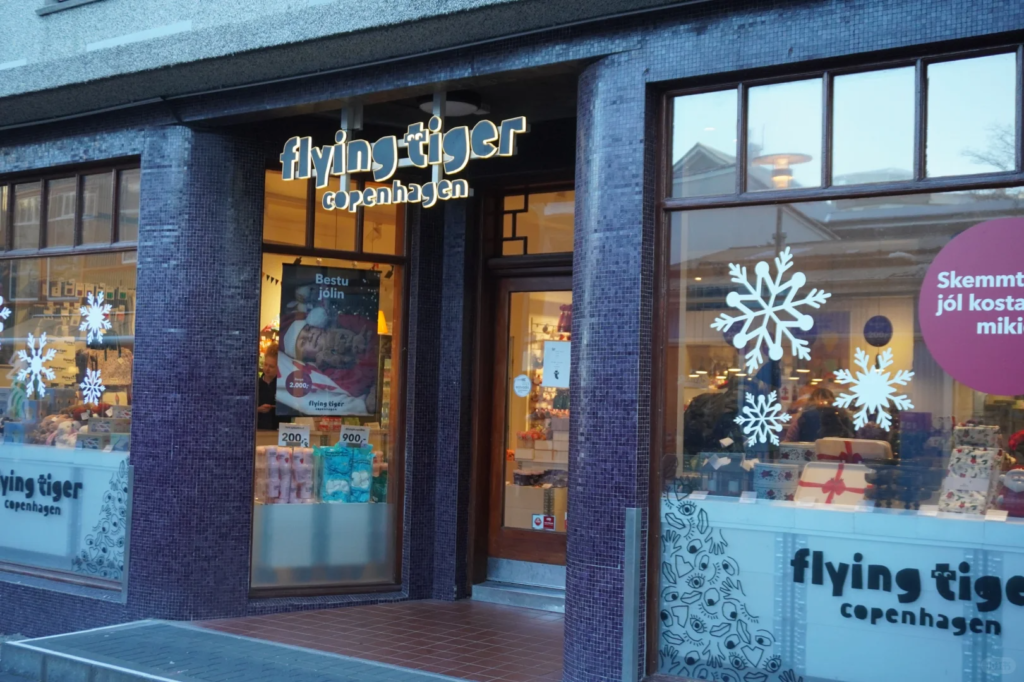
Seasonal Planning: Turning Calendar Events Into Retail Opportunities
Seasonality plays an important role in lifestyle retail.
Many product categories become significantly more relevant when connected to specific occasions.
A decoration is not only a decoration.
During Christmas, it becomes part of holiday preparation.
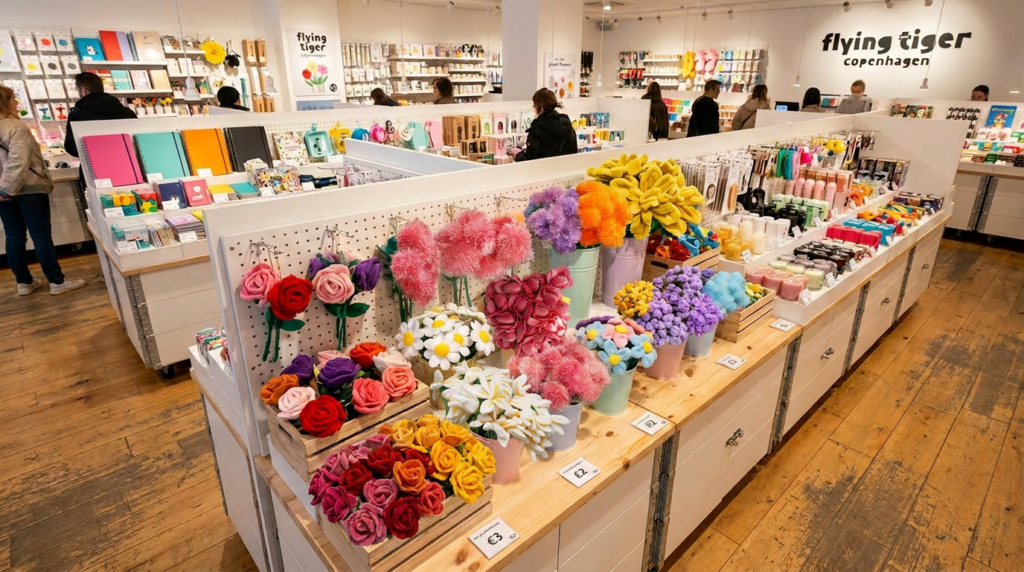
A floral gift is not only a product.
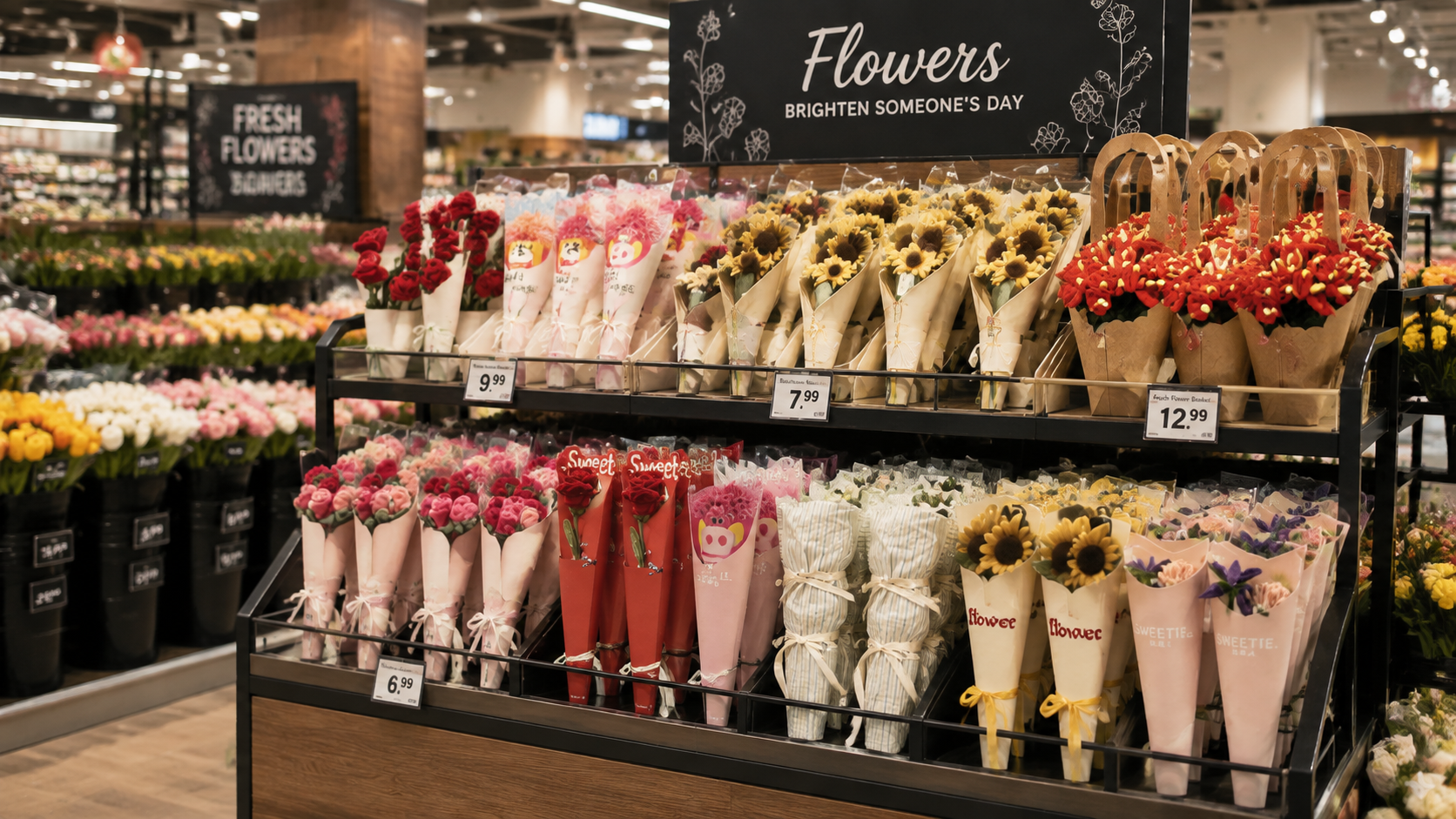
During Valentine’s Day or Mother’s Day, it becomes a way to express appreciation.
This is why strong retailers do not simply manage products. They manage moments when customers are more likely to purchase.
Seasonal Merchandising Creates Three Opportunities
1. Increased relevance
A seasonal theme gives customers a clear reason to consider a purchase.
2. Higher engagement
Seasonal displays encourage customers to explore related categories.
3. Better product storytelling
Products become easier to understand when they are connected to a specific occasion.
For example, a gift product placed within a Valentine’s Day collection communicates its purpose immediately.
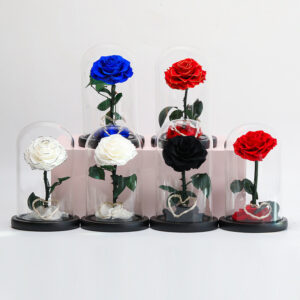
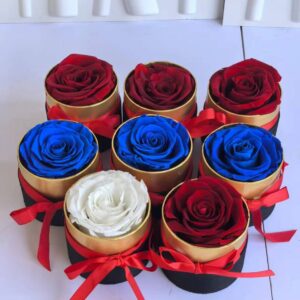
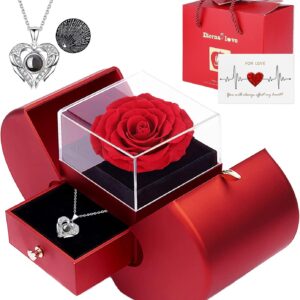
For companies developing floral gifts, seasonal collections, or decorative products for international retail channels, understanding seasonal purchasing behavior is essential. Sweetie-Gifts develops floral and gift concepts designed for different market occasions. For product discussions, contact inquiry@sweetie-group.com.
Beyond Individual Products: How Flying Tiger Builds Category Experiences
One of the most important lessons from Flying Tiger Copenhagen is that successful retail is often built around collections rather than isolated products.
A single item may attract attention.
A coordinated product group can influence the entire shopping experience.
For example, a seasonal collection may combine:
- decorative items
- gift products
- accessories
- party-related products
- complementary items
The customer is no longer evaluating one product.
They are experiencing a theme.
This approach increases opportunities for cross-category purchasing.
A consumer interested in one item may discover several related products that fit the same occasion or lifestyle concept.
Design as a Retail Tool: Creating Recognition Before Comparison
Flying Tiger Copenhagen is widely recognized for its colorful and playful product design approach.
However, design in this context is not only about aesthetics.
It also serves practical retail functions.
In a store environment, products compete for attention.
Customers often make quick decisions based on:
- visual appeal
- product clarity
- uniqueness
- perceived usefulness
A strong design helps customers understand a product without requiring detailed explanation.
Effective Lifestyle Product Design Usually Supports:
Fast recognition
The customer understands the product concept quickly.
Category differentiation
The product does not look interchangeable with similar items elsewhere.
Merchandising flexibility
The product works within different displays and seasonal environments.
This explains why many successful lifestyle products combine function with a strong visual identity.
The design is not separate from the selling process. It is part of the retail strategy.
Sweetie-Gifts works with floral product design, gift packaging, and customized collections for international markets. If your team is exploring new concepts in floral or lifestyle categories, you can reach us at inquiry@sweetie-group.com.
The Hidden Operational Challenge Behind Fast-Changing Retail
A constantly changing assortment requires strong operational capabilities.
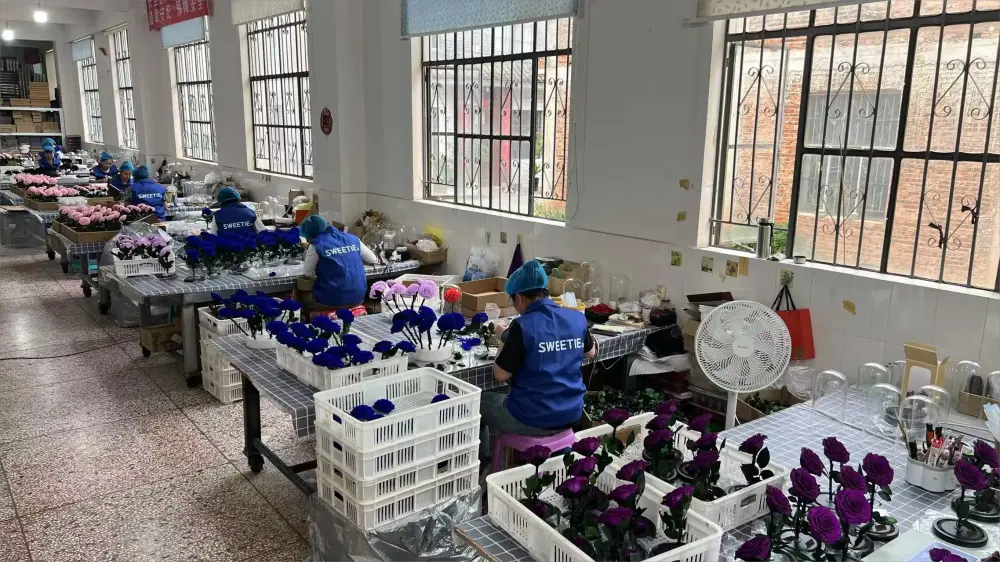
Behind every new product launch is a complex process involving:
- product development
- design adaptation
- quality control
- packaging decisions
- production planning
- international logistics
For a retailer operating across multiple markets, consistency becomes especially important.
A successful product concept must not only attract consumers.
It must also be:
- scalable
- reliable
- suitable for different markets
- manageable within the supply chain
This is one reason why lifestyle retail requires close coordination between creative teams, category teams, and production partners.
The visible result may be a simple product on a shelf, but the process behind it involves significant planning.
What Flying Tiger Copenhagen Reveals About the Future of Lifestyle Retail
Flying Tiger Copenhagen’s strategy reflects several broader trends in modern retail.
Consumers are increasingly influenced by:
- product freshness
- visual differentiation
- seasonal relevance
- gifting opportunities
- shopping experiences
This does not mean every retailer needs to follow the same model.
Different retail formats serve different customer needs.
However, Flying Tiger demonstrates the commercial value of creating a reason for customers to revisit stores and explore new products.
The future of lifestyle retail will likely depend less on simply expanding product quantity and more on improving product relevance.
Successful retailers will continue to focus on questions such as:
- Does this product fit a consumer occasion?
- Does it create enough interest to attract attention?
- Does it complement the wider assortment?
- Can it remain relevant beyond a single purchase?
Final Thoughts: Building a Retail Habit Through Product Discovery
Flying Tiger Copenhagen has built a recognizable retail model by making discovery a consistent part of the shopping experience.
Its success is not based on one product category or one seasonal trend. Instead, it comes from the combination of assortment planning, product creativity, seasonal timing, and disciplined retail execution.
For lifestyle retailers, gift companies, and brands developing new product categories, Flying Tiger provides an important lesson:
A successful product does not only answer what customers need today. It also creates curiosity about what they may discover tomorrow.
Sweetie-Gifts continues to research global retail trends and develop floral gift collections, decorative products, and customized solutions for international markets.
For discussions about floral products, lifestyle collections, or retail-focused product development:
Annie Zhang