To start a successful plush flower business, you must select a curated range of design-led floral plush products, calculate accurate landed costs, partner with a reliable wholesale supplier, and conduct small-batch market testing before scaling. Prioritizing physical sampling, fabric quality, and structural integrity ensures high retail margins and long-term viability in premium gift and home decor markets.
What Are the Most Profitable Sales Channels for Design-Led Plush Flowers?
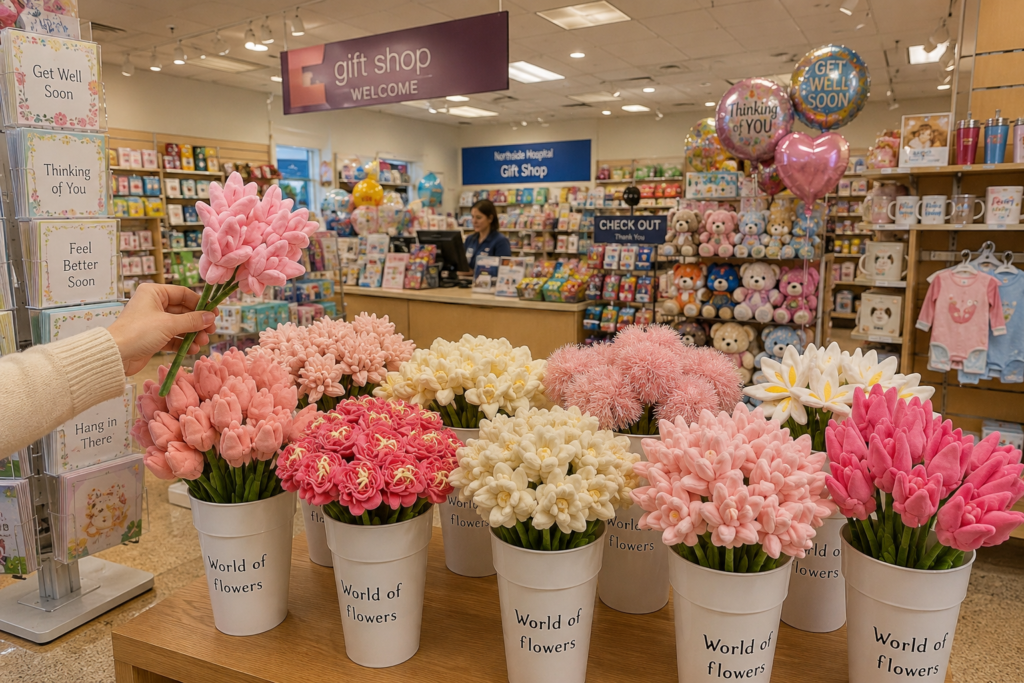
Before you invest capital in inventory, you must identify where your design-led plush flowers will be sold. High-value, aesthetic floral plush products appeal directly to gift-givers, interior design enthusiasts, and event planners. These consumers do not view plush flowers as cheap, disposable toys, but rather as lasting, premium alternatives to real botanicals.
Choosing the right sales channels helps determine your initial inventory volume and pricing strategy. The table below outlines the primary sales channels for premium plush flowers:
| Sales Channel | Target Customer Profile | Margin Potential | Operational Complexity |
|---|---|---|---|
| Independent Gift Boutiques | Shoppers seeking unique, design-led gifts and creative home accessories | High (60% to 70%) | Medium (requires active wholesale outreach and catalog distribution) |
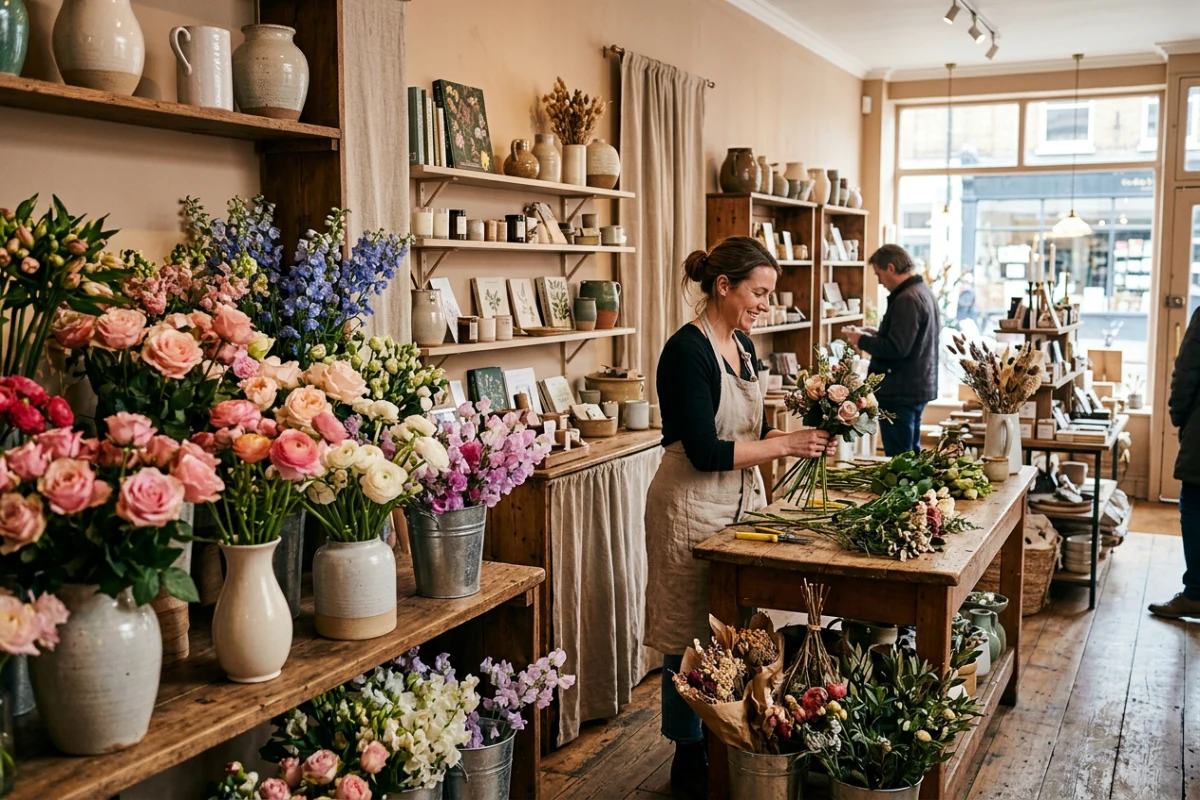
| Modern Florist Shops | Customers looking for everlasting floral add-ons to fresh arrangements | High (65% to 75%) | Low (local delivery, wholesale orders, or seasonal consignment) |
| Specialized E-commerce | Online shoppers buying for specific holidays, anniversaries, or home decor | High (70% to 80%) | High (demands continuous digital marketing, SEO, and fulfillment logistics) |
| Museum & Bookshop Gift Stores | Cultured buyers looking for aesthetic, tactile souvenirs and creative decor | Medium to High (55% to 65%) | Medium (requires compliance with institutional vendor guidelines) |
By focusing on sales channels that value aesthetic presentation over low prices, you protect your margins and build a stronger brand identity. Boutique gift stores and modern florists are excellent starting points because they already have foot traffic looking for unique, high-quality gifts.
How Do You Curate Your Initial Plush Flower Product Range?
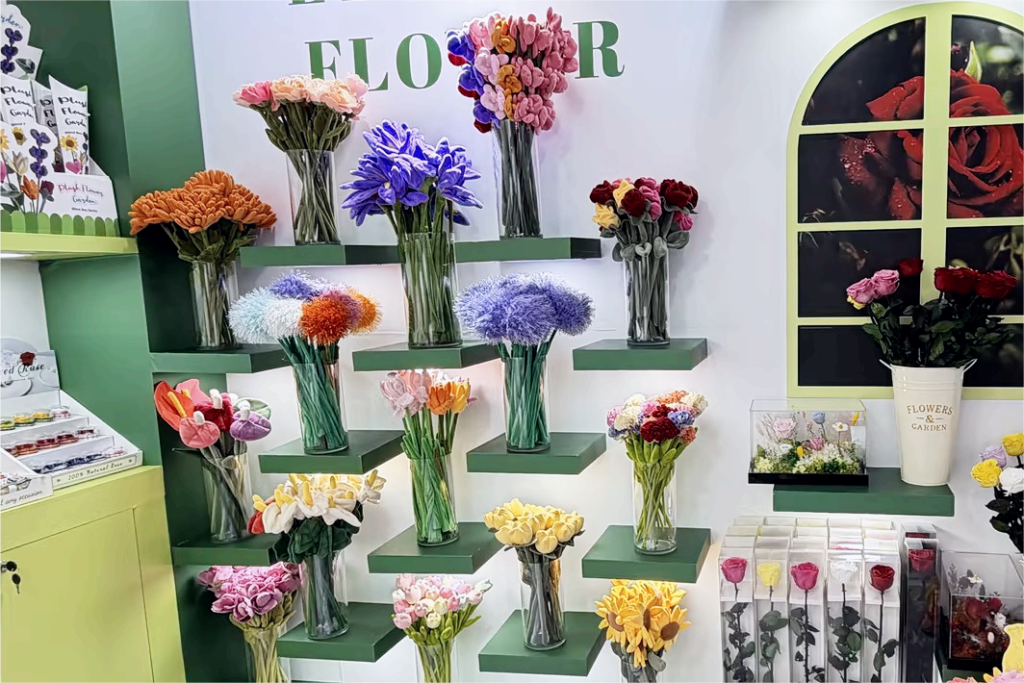
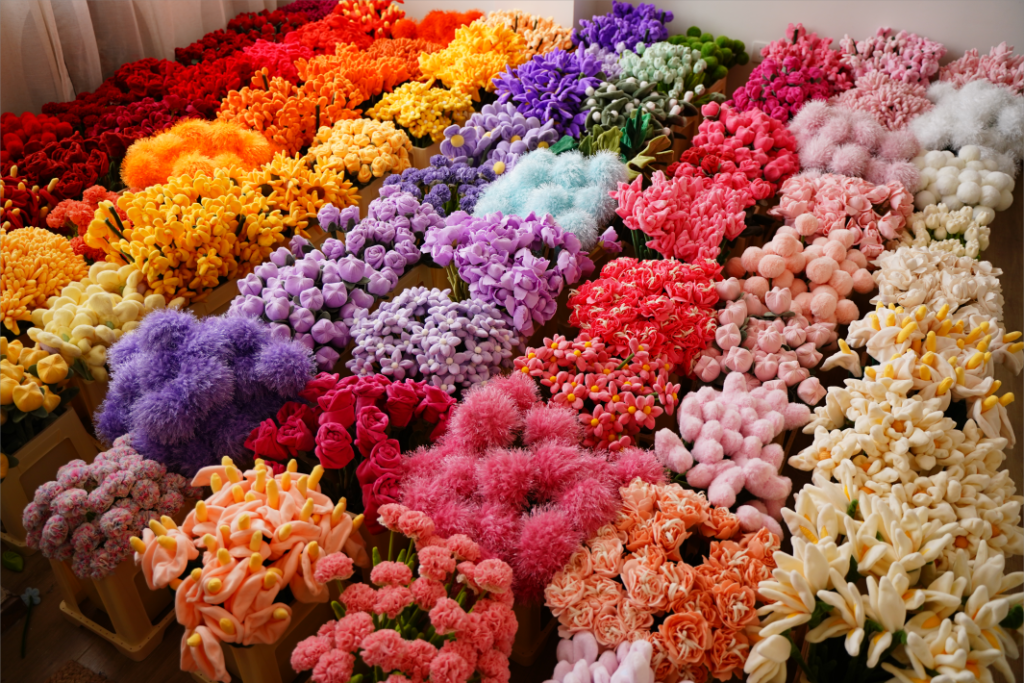
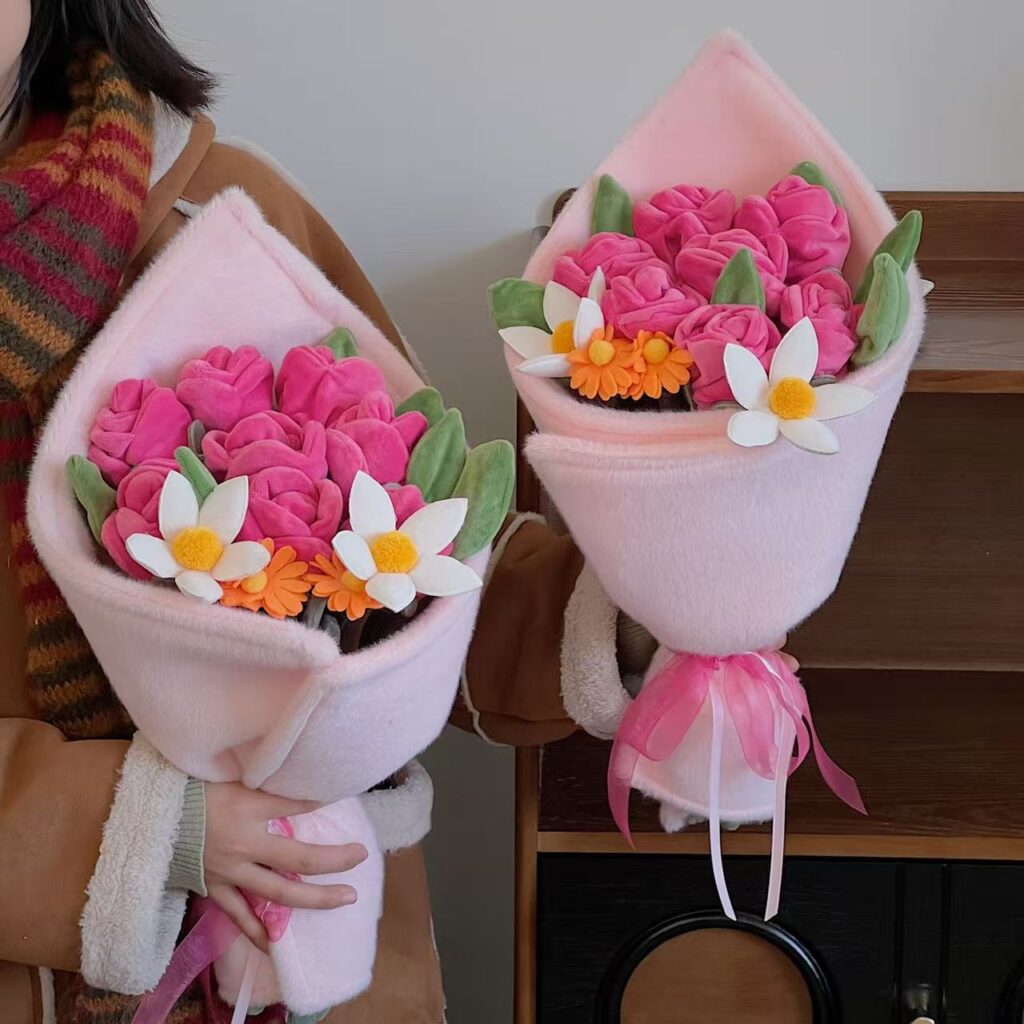
Curating a balanced initial collection is essential when learning how to start a plush flower business. A common mistake is buying too many different styles, which dilutes your budget and complicates inventory management. Instead, design a cohesive catalog around a specific aesthetic, such as soft pastels, vibrant seasonal hues, or muted earthy tones.
When choosing your initial range, focus on design-led floral plush products that complement one another in a retail setting:
- Core Evergreen Stems: Tulips, roses, and daisies should make up about 60% of your stock. These are recognizable, classic shapes that sell consistently throughout the year. Ensure the stems are bendable and sturdy enough to stand alone in a vase.
- Potted Plush Variations: Potted succulents, monsteras, or small desk-bound plush plants should constitute about 30% of your range. These make ideal self-standing office desk decorations and do not require a separate vase, making them an easy purchase for customers.
- Seasonal Accents: Allocate the remaining 10% to seasonal items, such as themed plush bouquets for Mother’s Day, Valentine’s Day, or holiday winter arrangements.
Keep your color palette unified so customers can mix, match, and create their own custom bouquets. This encourages multi-unit purchases, which naturally drives up your average order value.
How Should You Evaluate a Wholesale Supplier and Inspect Sample Quality?
When researching how to start a plush flower business, choosing the right manufacturer is your most critical operational step. Your plush flower wholesale sourcing process must prioritize structural integrity, material safety, and precise craftsmanship.
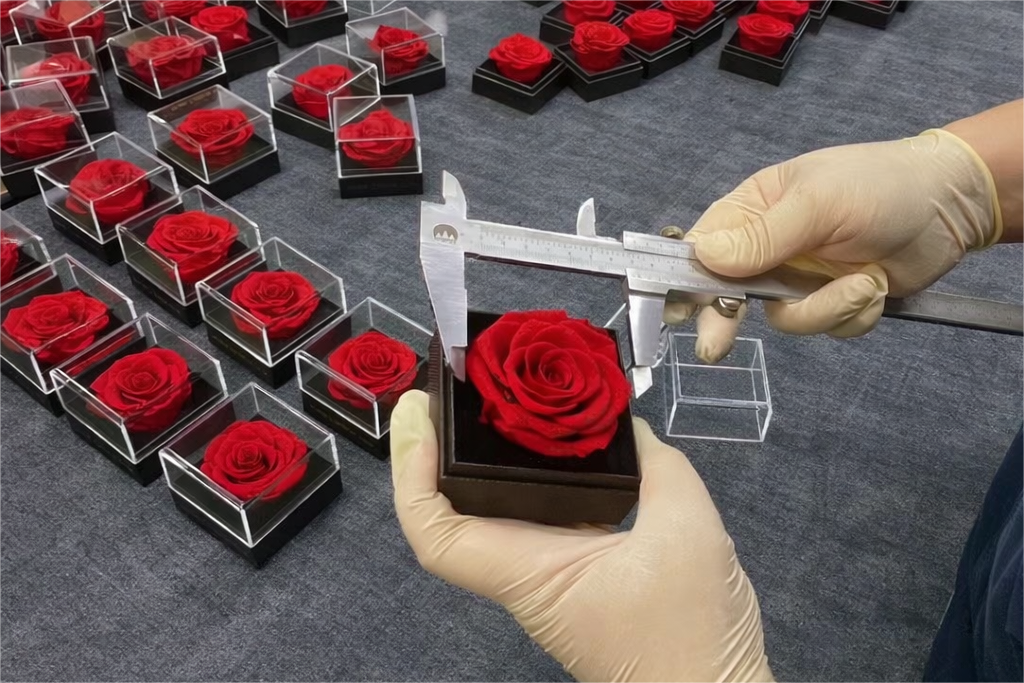
To find a reliable wholesale plush flower supplier, evaluate prospective partners based on physical pre-production samples. Do not skip this step or rely solely on factory photos. When inspecting samples, focus on these critical quality indicators:
- Fabric Quality: Premium design-led plush flowers use high-density brushed fleece, crystal velvet, or custom linen-blend fabrics. Avoid cheap, shiny synthetic polyester fabrics that shed or feel rough to the touch.
- Stitch Tension and Seam Strength: Turn the sample inside out if possible, or pull gently along the seams. Stitches must be tight and completely hidden. There should be no visible stuffing escaping from the seams, especially around the tight curves of flower petals.
- Internal Stem Engineering: The bendable wire inside the stem must be thick enough to support the weight of the flower head without sagging over time. It must be wrapped securely in thick protective padding or plastic so the metal wire cannot poke through the fabric, ensuring safety and durability.
- Color Consistency: Ask the supplier if they use dye-to-match services or standard fabric rolls. A professional manufacturer guarantees color consistency across production batches.
At Sweetie, we prioritize these quality control standards throughout the sampling process. We provide physical pre-production samples to verify stitch tension, fabric textures, and inner structural stability before you commit to bulk production. To discuss your initial catalog ideas, reach out to our team at sales@sweetie-group.com for professional guidance.
What Are the Real Startup Costs, Landed Costs, and Pricing Models?
Your initial plush flower startup costs are highly dependent on minimum order quantities (MOQs) and freight choices. Because plush flowers are lightweight, they are cheaper to ship than heavy ceramic gifts, but their volumetric bulk requires smart packing to control costs.
To set profitable retail prices, you must calculate your exact landed cost rather than relying on the factory’s ex-factory (FOB) price. Use this basic formula:
extLandedCost=extEx−factoryPrice+extPackagingCosts+extFreight&extShipping+extCustomsDuties+extLocalHandlingFee
Consider freight and packing optimizations when planning your budget. Plush flowers can often be vacuum-packed to reduce shipping volume, lowering your overall freight cost. Ensure your supplier uses high-resiliency polyester stuffing so the flowers bounce back to their original shape immediately after unpacking.
Once you have determined your total landed cost, establish your pricing structure using a healthy markup system. Here is a practical pricing model example for a premium plush flower stem:
- FOB Price (Factory Cost): $1.50
- Landed Cost (including shipping, duties, and packaging): $2.50
- Wholesale Price (to retail shops): 5.50to6.50 (approx. 50% wholesale margin)
- Suggested Retail Price (MSRP to end customers): 12.00to15.00 (aim for a 5x multiplier on landed cost)
This pricing model ensures you can offer standard wholesale discounts to boutique retailers while maintaining a highly profitable direct-to-consumer margin online. Always factor in seasonal packaging costs, such as hangtags, wrapping paper, or custom display boxes, to elevate the product’s perceived gift value.
How Can You Test Market Demand Before Placing Large Orders?
Testing the market reduces inventory risk and helps refine your product selection. Instead of importing thousands of units immediately, execute a structured testing phase using physical prototypes:
- Order a Diverse Sample Set: Acquire one or two samples of every style and color you are considering. This allows you to inspect the physical product while using them for initial promotional activities.
- Generate High-Quality Visual Content: Use the samples to take professional, lifestyle photos. Showcase the plush flowers in realistic home settings, such as styled in modern ceramic vases, placed on wooden shelves, or wrapped as gift bouquets.
- Run a Digital Pre-Order Campaign: Publish these styled photos on your online store and social channels to run a limited pre-order window. This strategy helps you collect real customer commitments, showing you exactly which styles and colors are highly sought after before you pay for bulk production.
- Participate in Local Craft and Design Markets: Rent a booth at local holiday markets or boutique design fairs. Physical pop-ups let you watch how potential customers interact with the flowers. Pay close attention to their feedback regarding texture, stem length, and price points.
By comparing physical sales data and pre-order volumes, you can confidently place your first bulk order, focusing your capital on the exact models that have proven consumer demand.
When Does It Make Sense to Transition to Custom Plush Flowers OEM?
As your business grows, you may want to move away from open-stock wholesale products to create unique designs. Transitioning to custom plush flowers OEM (Original Equipment Manufacturer) services allows you to own exclusive designs that competitors cannot easily copy.
Consider custom OEM development when you meet the following operational milestones:
- Consistent Sales Volume: You have stable, recurring monthly sales and understand which flower shapes are your core revenue drivers.
- Brand Differentiation Needs: You want to design proprietary characters, specific botanical varieties, or colorways that perfectly match your brand’s unique identity.
- Sufficient Capital for Higher MOQs: While wholesale open-stock orders often have low MOQs (such as 100 to 500 units), custom OEM production typically requires 1,000 to 2,000 units per design. This is due to custom fabric dye batches and specialized pattern development.
At Sweetie, we specialize in comprehensive OEM and ODM plush flower solutions. We translate your sketches, reference images, or digital files into physically accurate prototypes. Our team manages fabric selection, pattern design, packaging design, and structural safety testing to ensure your custom designs are ready for retail distribution. For custom requests and technical specifications, contact inquiry@sweetie-group.com to consult with our design and production departments.
What Common Sourcing and Pricing Mistakes Should New Brands Avoid?
Avoid these frequent operational pitfalls when launching your plush flower business:
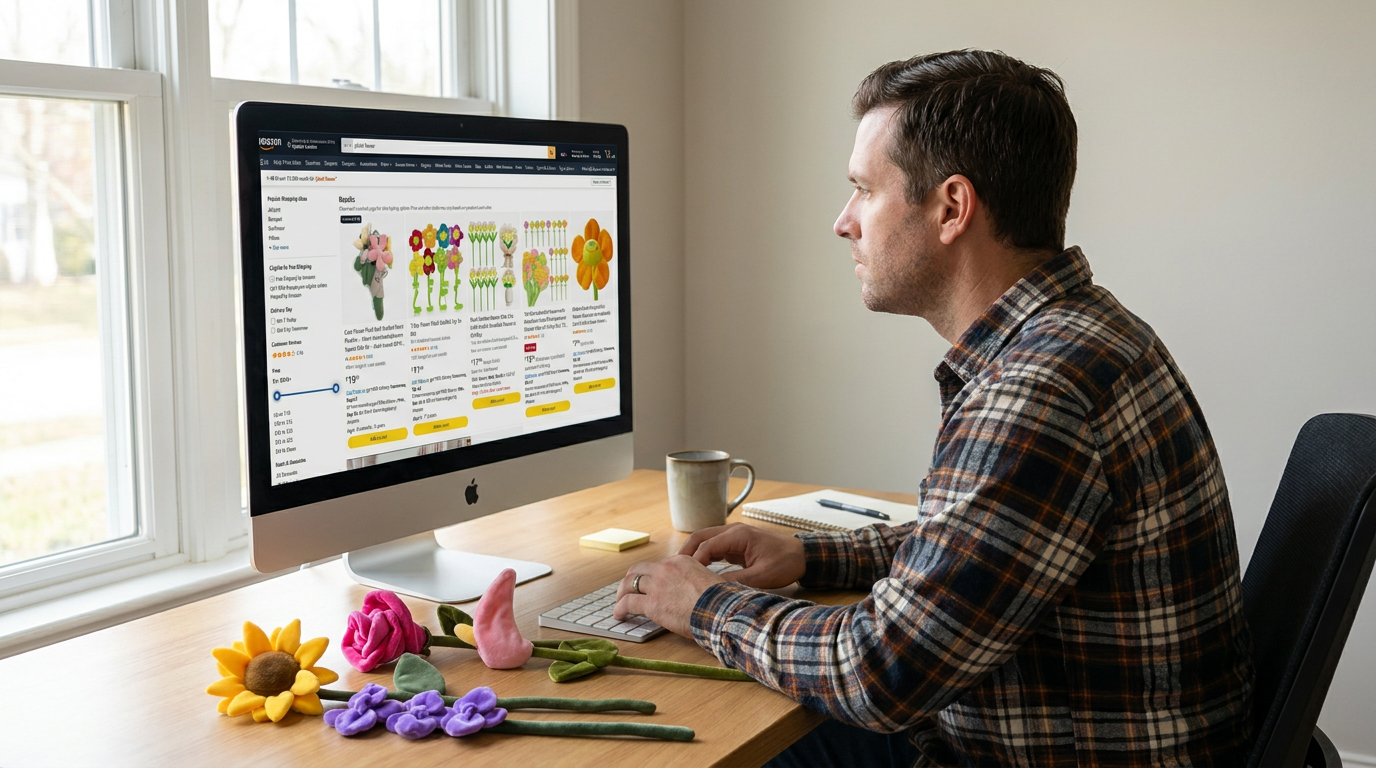
- Sourcing from Retail Intermediaries: Buying from general consumer trading websites instead of a specialized manufacturer leads to inflated unit costs, inconsistent fabric quality, and a lack of reliable inventory for repeat orders.
- Ignoring Volumetric Freight Calculations: Because plush flowers are volumetric, shipping charges can easily exceed expectations if you do not optimize packing. Work with your supplier to utilize vacuum packing or secure shipping methods that maximize carton density.
- Underestimating the Importance of Stem Wiring: Choosing cheap, unpadded wires inside the stems leads to sagging products that look poorly made on retail shelves. Ensure your supplier wraps wires in protective plastic or thick foam lining.
- Competing on Price with Low-End Toys: Do not price your products to compete with mass-market plastic flowers or cheap plush toys. Design-led plush flowers are purchased as gifts and stylish home accents, allowing you to command premium prices if your fabric and finishing are high quality.
By avoiding these basic mistakes and focusing on high-quality fabrics, professional sampling, and accurate margin calculations, you can build a highly profitable, sustainable business.
Frequently Asked Questions
What is the typical MOQ for ordering wholesale plush flowers?
For standard open-stock wholesale plush flowers, minimum order quantities (MOQs) typically range from 100 to 500 units per order. However, if you require custom plush flowers OEM services with custom-dyed fabrics or unique shapes, the MOQ generally rises to 1,000 to 2,000 units per design to accommodate raw material manufacturing limits.
Can plush flowers be vacuum-packed to reduce shipping costs?
Yes, premium plush flowers filled with high-resiliency polyester stuffing can be safely vacuum-packed for transit. This significantly reduces the volumetric size of the shipping cartons, lowering freight charges. Upon unpacking, the flowers will naturally expand back to their original plush shape without losing structural integrity.
What are the best fabrics for premium, design-led plush flowers?
High-end, design-led plush flowers use thick, non-shedding fabrics such as high-density brushed fleece, crystal velvet, or custom linen blends. These materials offer a premium, textured feel and superior aesthetic appeal compared to cheap, shiny synthetic polyesters commonly used in low-end mass-market toys.
Planning a plush flower range or first wholesale order? Contact inquiry@sweetie-group.com for samples, pricing, and product options.