To verify a preserved flower supplier before placing a bulk order, buyers must validate direct factory control, demand standardized golden samples, confirm daily output and raw material stability, test packaging integrity, review market-specific compliance documents, and establish binding pre-shipment inspection standards before paying a deposit.
How Do You Verify Direct Factory Control Versus a Trading Intermediary?
Determining whether a prospective vendor owns physical manufacturing assets or operates merely as an unvetted trading middleman is the primary filter in commercial floral procurement. Intermediaries frequently add price markups ranging from 15% to 35%, introduce communication lag during critical production windows, and obscure direct quality accountability during high-volume production cycles.
To establish authentic factory ownership, procurement managers must demand verifiable operational evidence rather than relying on promotional brochures or digital presentations:
- Business Registration and Industrial Scope: Request the vendor’s official corporate registration filing and business license. Examine the declared business scope to verify whether it explicitly includes industrial manufacturing, botanical chemical processing, preservation treatment, and floral assembly rather than solely wholesale trading or import-export agency services.
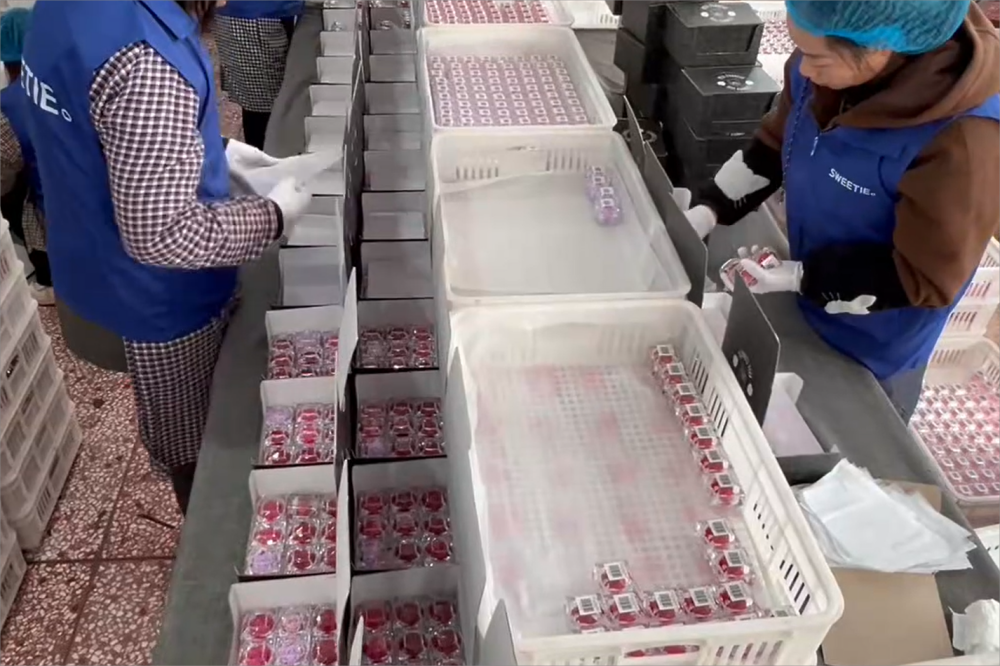
- Live Video Facility Walkthroughs: Schedule a short-notice live video walkthrough during normal working hours. Ask the representative to walk through raw fresh-flower receiving cold rooms, chemical immersion tanks, climate-controlled dehydration chambers, assembly lines, and finished goods warehousing. Intermediaries operating from commercial office buildings will be unable to fulfill this live verification step.
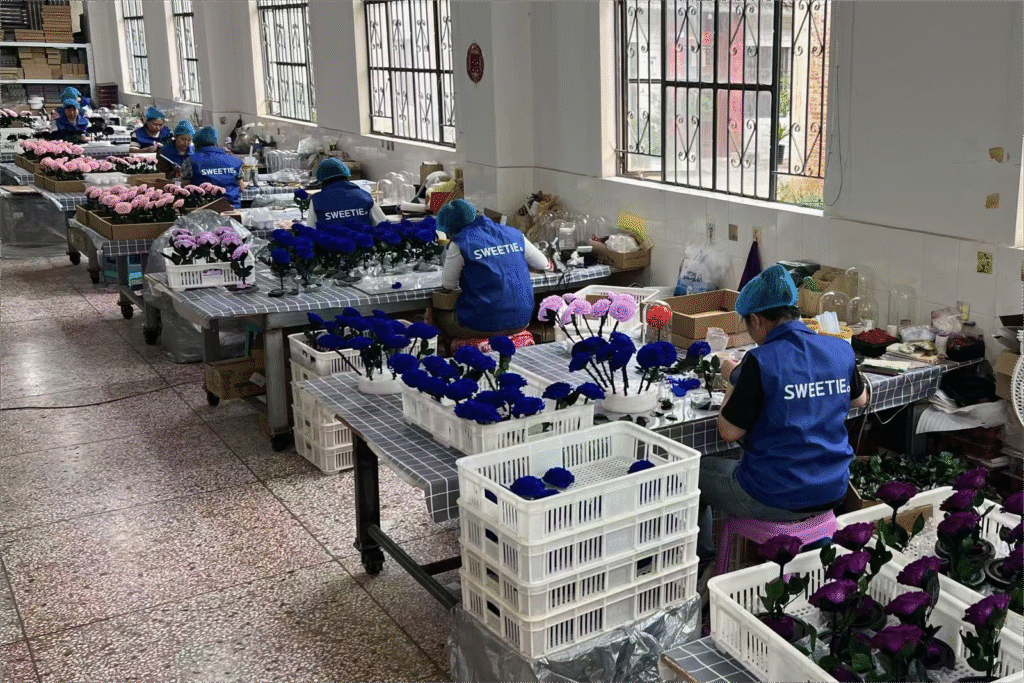
- Workforce Scale and Floor Output: Cross-reference physical worker headcount with declared output numbers. For instance, a dedicated production facility like Sweetie’s Yunnan preserved flower manufacturing base maintains approximately 60 trained production workers, delivering a predictable internal average daily output of roughly 3,000 finished units. An entity claiming similar volume with only a handful of administrative staff is outsourcing manufacturing to unmonitored sub-tier workshops.
- Machinery Logs and Intake Records: Request documentation demonstrating ongoing raw material purchases from fresh-cut flower auction centers or direct commercial farm contracts, alongside maintenance logs for industrial drying and preservation equipment.
Working directly with an authentic manufacturing base provides buyers with direct technical access to production supervisors, transparent bill-of-materials cost breakdowns, and authentic batch scheduling authority.
How Do You Audit Sample-to-Bulk Consistency for Preserved Roses and Floral Materials?
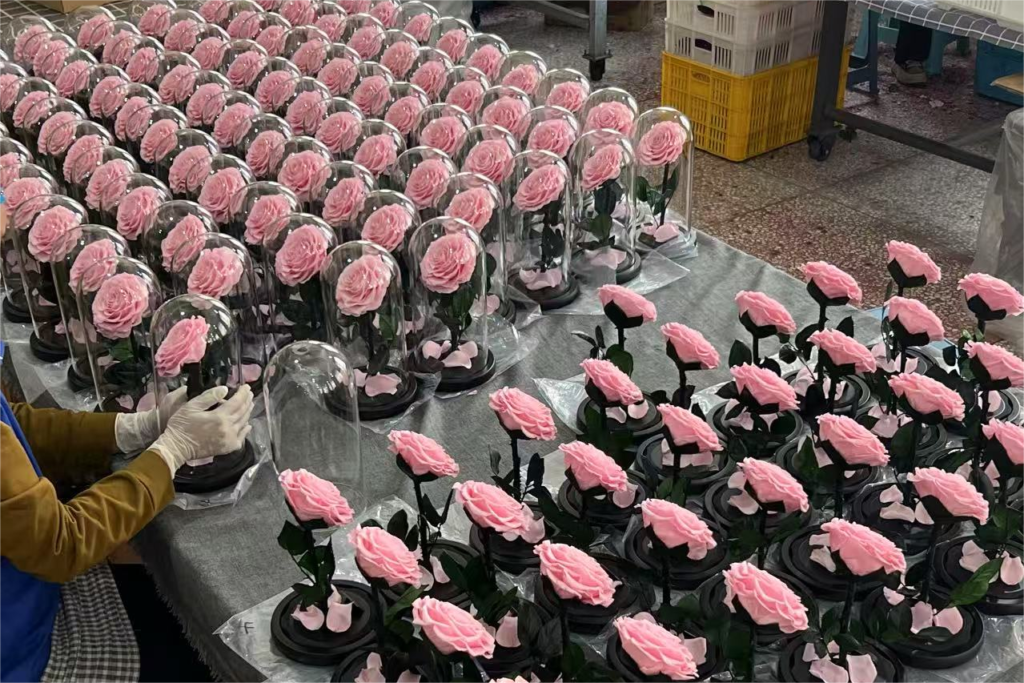
One of the most persistent failure points in preserved flower procurement is sample-to-bulk drift. Initial small-batch prototypes are often crafted by master florists using hand-selected grade-A blooms, whereas bulk runs may suffer from lower flower grades, shortened preservation cycles, or diluted dye solutions.
When evaluating how to verify a preserved flower supplier, buyers should systematically audit the factory’s ability to maintain sample to bulk consistency preserved roses across five core quality dimensions:
- Petal Texture and Cellular Elasticity: High-grade preserved roses undergo a fluid-replacement process where natural plant sap is replaced by non-volatile, cosmetic-grade polyols such as high-purity vegetable glycerin. Test physical samples by gently pressing both outer guard petals and internal core petals. Well-processed blooms rebound to their original shape immediately without petal cracking, structural flaccidity, or oily surface exudation.
- Color Saturation and Penetration Depth: Request standardized color matching references such as Pantone codes for custom dyed orders. Bisect a sample rose head at the calyx junction to inspect dye penetration through the petal base. Inadequately soaked flowers exhibit uneven internal coloration, blotchy fading, or pale patches when exposed to commercial display lighting.
- Moisture Equilibrium and Dye Bleed Resistance: Subject pre-production samples to environmental stress testing. Place sample units inside an environmental chamber or sealed container set to 70% relative humidity and 30°C for a continuous 72-hour period. Substandard preservation chemistries result in dye weeping, causing pigments to bleed onto adjacent ribbons, foliage, or packaging surfaces, alongside potential surface mold bloom.
- Bloom Diameter and Stem Caliper Tolerances: Measure bloom diameters across multiple sample heads using a vernier caliper to confirm strict alignment with commercial sizing bands, such as 4–5 cm, 5–6 cm, or 6–7 cm grades. Stems and floral heads must feature reinforced calyx junctions to prevent head droop in high-humidity transit.
- Secondary Botanical Integration: When ordering multi-flower arrangements, verify that secondary botanicals, such as preserved hydrangea, eucalyptus, moss, or baby’s breath, receive the same level of glycerin-based preservation rather than superficial air-drying methods that become brittle and shed over time.
Require the vendor to sign and seal duplicate “golden samples.” One golden sample remains at the manufacturing facility as the visual and tactile benchmark, while the buyer retains the counterpart to arbitrate quality during final pre-shipment inspections.
What Daily Output and Lead Time Evidence Proves Peak Season Scalability?
Preserved flower retail sales concentrate heavily around predictable calendar spikes, notably Valentine’s Day, Mother’s Day, and Q4 holiday promotions. A factory that operates smoothly during low-volume periods can experience operational bottlenecks under peak seasonal volume, leading to missed shipping dates and cancelled retail listings.
To audit genuine capacity and lead times, buyers must evaluate operational metrics and seasonal buffer systems:
- Demonstrated Daily Run-Rates: Clarify the manufacturer’s baseline daily throughput versus maximum peak capacity. By comparison, Sweetie’s manufacturing operation maintains a steady-state daily run-rate of approximately 3,000 units. Ask the supplier to provide anonymized daily packing manifests or bills of lading from prior peak seasons to prove equivalent operational scaling.
- Raw Flower Sourcing Allocations: Preserved rose processing requires fresh, uniform, blemish-free cut roses. Inquire how the supplier guarantees access to fresh floral materials during winter months or holiday peak seasons when raw flower auction prices can surge significantly. Established manufacturers maintain contractual harvest allocations with flower farm bases to prevent material shortfalls.
- Dehydration Chamber Capacity: Chemical exchange and curing cannot be accelerated without damaging cellular elasticity. Inquire about the physical cubic volume and temperature-humidity control parameters of their drying facilities. Curing chamber capacity represents the physical bottleneck of any preservation facility.
- Semi-Finished Buffer Stock: Verify whether the facility maintains inventory of standardized, semi-finished white preserved rose heads ready for rapid custom dyeing. This buffer allows suppliers to handle mid-season reorders without waiting for multi-week base preservation cycles.
Planning a bulk preserved flower order? Email inquiry@sweetie-group.com with your product, quantity, market, packaging needs, and delivery date. We can help review feasibility, customization, packaging, and production planning.
How Should You Validate Protective Packaging and Drop-Test Performance for Different Retail Channels?
Preserved floral arrangements, glass domes, acrylic presentation boxes, and gift box ensembles are inherently delicate. Bulk shipment transit involves container ocean freight, pallet handling, and last-mile courier drops. Inadequate packaging engineering can turn an entire shipment into unsellable breakage.
Suppliers must demonstrate packaging designs tailored to your specific downstream distribution channel:
| Distribution Channel | Primary Transit Risks | Required Packaging Engineering | Minimum Verification Standard |
|---|---|---|---|
| E-Commerce Direct-to-Consumer (DTC) | Individual parcel drops, sorting conveyor impact, vibration | Custom high-density EPE/EVA foam inserts, suspension trays, double-wall corrugated mailers | ISTA 1A / 3A drop test from 1.0–1.2 meters without petal detachment or glass fracture |
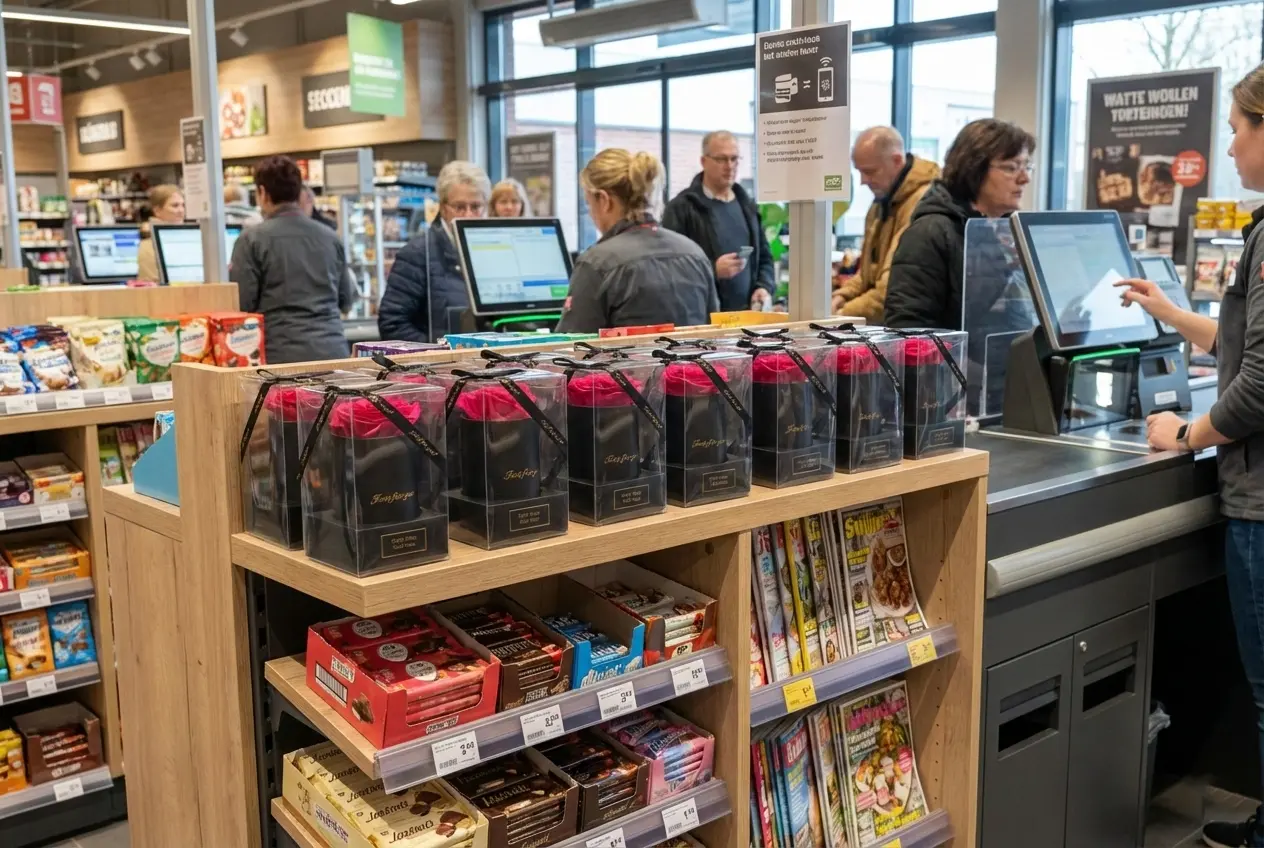
| Brick-and-Mortar Retail Distribution | Pallet compression, multi-tier stacking, humidity fluctuation | Rigid grayboard presentation boxes (1200+ gsm), clear PET sleeves, master carton edge crush resistance | Static stacking load test (minimum 3-meter pallet simulation for 48 hours) |
| Wholesale / Floral Studio Bulk Packs | Inter-bloom friction, stem detachment during transit | Blister trays holding individual rose bases, protective cardboard dividers | ASTM D4169 vibration and tilt cycle verification |
Ask the supplier to perform an in-house drop test on fully packaged pre-production units. The test should consist of one corner drop, three edge drops, and six face drops onto a flat concrete surface, followed by a tear-down inspection for petal shedding, stem breakage, or internal glass scuffing.
What Export Documentation, Phytosanitary Certificates, and Testing Standards Apply to Bulk Shipments?
Importing preserved botanicals requires navigating precise customs and regulatory compliance frameworks that differ significantly from fresh-cut flowers. Failing to verify export paperwork before shipment can result in customs holds, mandatory quarantine fumigation, port fines, or cargo destruction.
When executing an OEM preserved flower manufacturer audit, verify the supplier’s competence in providing market-appropriate compliance documentation:
- Phytosanitary Certificates: Because preserved flowers undergo chemical processing, many customs authorities classify them under processed plant tariff lines (e.g., HS Code 0603.90). However, agricultural inspection departments in markets like the United States (USDA-APHIS), the European Union, Australia (DAFF), and Japan often require an official Phytosanitary Certificate from the exporting country’s customs authority to certify the absence of live insects, parasitic fungi, soil residues, or noxious weed seeds.
- REACH Compliance (EU Market): For exports entering the European Union, chemical agents used in softening, preservation, and color stabilization must adhere to Regulation (EC) No 1907/2006 (REACH). Ensure dye formulations are free from banned azo dyes, restricted phthalates, and SVHC (Substances of Very High Concern).
- CE / Safety Documentation for Illuminated SKUs: If the preserved flower product incorporates LED lighting components, USB power lines, or internal battery compartments (such as lighted glass domes), electrical safety directives (EMC, RoHS, Low Voltage Directive) apply to those specific electrical sub-assemblies. Ensure test reports relate directly to the applicable electronic items.
- Material Safety Data Sheets (MSDS): Request up-to-date MSDS documents covering the preservation fluids. Ocean freight carriers and air cargo forwarders require MSDS paperwork to confirm cargo is non-hazardous and non-flammable under international transport codes.
Avoid suppliers that claim a single generic certificate covers every global jurisdiction and every SKU. A competent factory verifies compliance requirements based on the specific SKU configuration and the destination country.
For buyers looking to explore configuration options, target price tiers, and product compatibility, utilizing the Sweetie AI assistant provides an effective starting point. The interactive tool evaluates budget levels, regional market preferences, and intended sales channels to recommend suitable floral arrangements and structure preliminary procurement plans.
How Do You Conduct an OEM Preserved Flower Manufacturer Audit for Custom Designs and Tooling?
B2B buyers frequently require custom OEM/ODM solutions, such as branded luxury gift boxes, bespoke acrylic structures, custom Pantone petal matching, or composite metal-and-glass housings. Validating a supplier’s true design and tooling engineering capability prevents costly development cycles and unworkable prototypes.
Evaluate the manufacturer’s OEM workflow using these milestone verification steps:
- 3D CAD and Structural Prototyping: Does the vendor have internal or dedicated industrial design support to generate structural packaging CADs, structural dielines, and 3D renderings within 48 to 72 hours? Request case studies of past OEM tooling projects.
- Custom Mold and Tooling Timelines: For custom glass domes, zinc alloy accents, or acrylic bases, confirm the tooling lead time (typically 15–25 days) and the minimum order quantity (MOQ) required to amortize tooling costs.
- Color Matching Capabilities: Can the supplier achieve a custom Pantone shade across multiple flower types? Achieving identical shade depth across a rose, a carnation, and a hydrangea requires distinct dye formulation adjustments because each flower’s natural cellular density absorbs colorants differently.
- Hardware and Secondary Material Integration: Audit the supplier’s assembly line to see how non-floral elements are joined. Ensure hot-melt adhesives, mechanical fasteners, or UV resins used in assembly do not release volatile organic compounds (VOCs) inside sealed glass enclosures, which can cause internal fogging or petal discoloration over time.
What Pre-Shipment Quality Control Protocols and AQL Milestones Prevent Defect Leaks?
A robust preserved flower bulk order quality control strategy cannot rely on post-arrival claims. By the time a container reaches your domestic warehouse, returning defective goods is cost-prohibitive. Comprehensive QC must occur at the factory floor before releasing final payment balances.
Establish a written quality service agreement utilizing ISO 2859-1 (ANSI/ASQ Z1.4) AQL Level II sampling standards, divided into specific defect classifications:
- Critical Defects (AQL 0.0): Live or dead pests, visible mold or fungal spores, broken glass components, exposed electrical wiring on illuminated units, incorrect shipping labels.
- Major Defects (AQL 1.5): Petal tears exceeding 3 mm, petal detachment greater than 5% of total flower volume, severe dye weeping onto ribbons/surfaces, bloom deformation, incorrect Pantone shade variance (Delta E > 2.0), glue smears on visible surfaces.
- Minor Defects (AQL 4.0): Slight asymmetry in secondary foliage placement, minor outer petal crinkles, minor exterior carton scuffs that do not compromise structural integrity.
Require your supplier to conduct systematic stage-gate inspections across four distinct milestones:
- Raw Bloom Inspection: Sorting fresh cuts for stem thickness, head symmetry, and zero pest damage prior to preservation chemical treatment.
- Post-Preservation Dye and Moisture Inspection: Checking moisture content levels (12% to 18%) and color saturation across curing batches.
- Assembly and Packaging Line Inspection: Checking alignment, adhesive cleanliness, ribbon placement, and protective inner foam fit during packing.
- Final Random Inspection (FRI): Conducting final statistical sampling on fully packed export master cartons prior to release for shipping.
Ensure that pre-shipment inspection reports include high-resolution macro photography, moisture meter readings, drop-test validation photos, and gross/net carton weight measurements before signing off on container loading.
How Can Buyers Prevent Specification Drift and Ensure Consistency Across Repeat Orders?
Many overseas buyers experience satisfactory quality on their first trial order, only to face severe specification drift on reorders 6 to 12 months later. This occurs when factories change sub-tier farms, substitute cheaper chemical additives, or fail to document initial production settings.
To ensure multi-year consistency across repeat bulk orders, implement three standard operating controls:
- Locked Master Bill of Materials (BOM): Require the factory to log and lock down the exact chemical formulation, flower variety/cultivar, dye code, adhesive brand, and packaging board density used in the approved batch.
- Archived Production Batch Retainers: The factory must maintain physical retention samples from each production lot in a climate-monitored retention room for a minimum of 12 months. When a reorder is placed, new production must be matched directly against the original retention lot.
- Explicit Contractual Drift Clauses: Incorporate explicit drift tolerance limits into your purchase agreement. Define clear financial penalties or mandatory remake clauses if the moisture content, bloom diameter, or master carton compression strength deviates beyond the agreed contract tolerances.
Comprehensive Preserved Flower Factory Verification Checklist
Use this practical preserved flower factory verification checklist before transferring initial deposits for any commercial-scale preserved flower order:
| Verification Stage | Audit Item | Required Verification Evidence | Pass / Fail Criteria |
|---|---|---|---|
| 1. Facility Ownership | Direct manufacturing validation | Business license with production scope; live video inspection of immersion and dehydration rooms | Pass: Direct asset ownership and dedicated assembly line. Fail: Virtual office or trading middleman. |
| 2. Production Capacity | Daily run-rate & workforce proof | Documentation of ~50+ workers, capacity records (e.g., 2,500–3,500 daily units run-rate) | Pass: Output matches seasonal peak volume requirements. Fail: Unsubstantiated claims without labor footprint. |
| 3. Sample Fidelity | Golden sample verification | Physical sign-off on dual master samples; moisture equilibrium test (70% RH / 72 hrs) | Pass: Zero mold, zero dye weeping, elastic petal memory. Fail: Brittle, bleeding, or discolored petals. |
| 4. Packaging Engineering | Channel drop & vibration testing | ISTA 1A / 3A drop test reports; corner/edge impact photos; carton bursting strength test | Pass: Zero broken components or detached blooms after drop test. Fail: Structural failure or transit damage. |
| 5. Regulatory Compliance | Export documentation readiness | Sample Phytosanitary Certificate; MSDS sheets; applicable REACH/CE test reports | Pass: SKU-specific documentation verified. Fail: Inapplicable or missing compliance paperwork. |
| 6. Quality Control | AQL inspection protocols | Binding AQL 0 / 1.5 / 4.0 inspection matrix; third-party inspection access agreement | Pass: Supplier accepts binding pre-shipment gate inspections. Fail: Refusal of third-party audit access. |
| 7. OEM Feasibility | Customization & tooling control | Dieline engineering support, Pantone matching protocols, tool fabrication timelines | Pass: Direct engineering feedback and physical sample turnaround < 10 days. Fail: Vague timelines. |
Enforcing this systematic verification sequence ensures commercial buyers mitigate logistical risks, secure reliable product margins, and protect brand reputation across all global retail channels.
Planning a bulk preserved flower order? Email inquiry@sweetie-group.com with your product, quantity, market, packaging needs, and delivery date. We can help review feasibility, customization, packaging, and production planning.