The new EU Packaging and Packaging Waste Regulation is now part of day-to-day sourcing for products sold in Europe.
Regulation (EU) 2025/40, better known as the PPWR, applies from August 12, 2026. Some of its most important design requirements take effect later, particularly around 2028 and 2030, but packaging decisions being made today can remain in repeat-order programs for years.
For floral gifts, this deserves more attention than it may first appear.
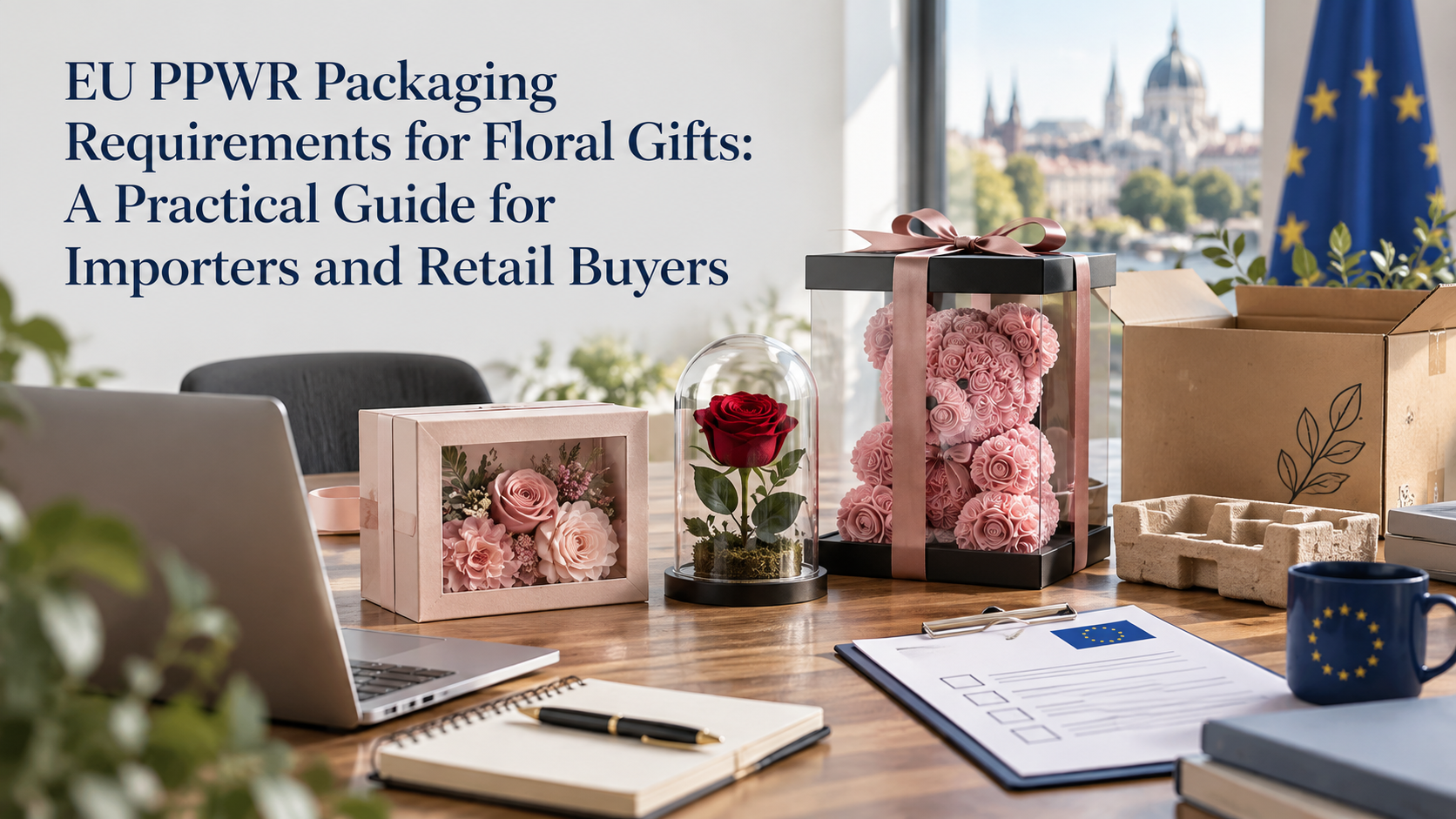
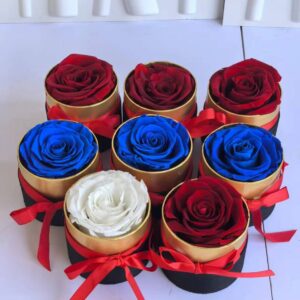
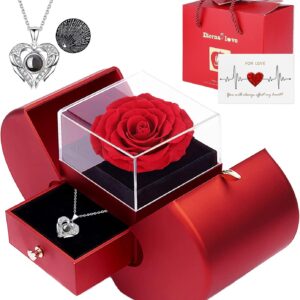
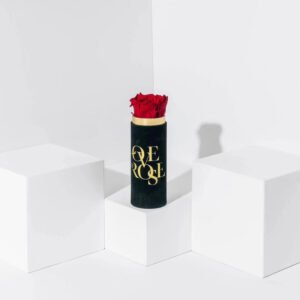
A preserved flower box can combine paperboard, a plastic window, an insert, ribbon and magnets. A rose under a glass dome needs extra protection in transit. A rose bear may be sold in a clear display package. E-commerce adds another layer of cartons and protective materials.
PPWR does not remove the need for attractive or protective gift packaging. It does, however, make packaging size, material choice, recyclability and documentation more important parts of the purchasing process.
This article looks at what that means in practical terms for importers and retail buyers sourcing floral gifts for the EU.
Less Packaging, Without Sacrificing Product Protection
One of the clearest PPWR changes is the requirement to reduce packaging weight and volume.
From January 1, 2030, packaging must be designed so that its weight and volume are no greater than necessary to perform its function. The regulation also calls out features such as false bottoms, unnecessary layers and double walls when their purpose is simply to make a product appear larger.
For gift products, however, the rule is more nuanced than “smaller is always better.”
Annex IV recognizes several legitimate packaging functions, including product protection, logistics and presentation for gift or seasonal sales.
That distinction is particularly relevant to floral gifts.
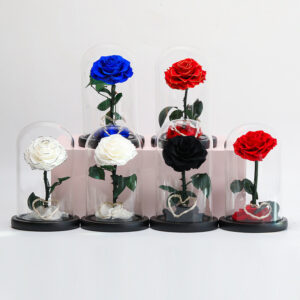
Take a preserved rose in a glass dome. The product may need a stable base, space around the glass and a protective outer structure. Removing too much clearance can turn a compact carton into a higher breakage rate.
An open preserved flower arrangement presents a different problem. If the flower heads sit too close to the protective box, vibration or compression during shipping may damage the petals.
In cases like these, the important question is not whether the package contains empty-looking space. It is whether that space performs a real and defensible function.
PPWR allows packaging minimisation assessments to rely on evidence such as testing, studies, modelling or simulations. Transport testing can therefore be useful when additional space or protection is genuinely required.
For less fragile floral products, there may be more opportunity to remove oversized cavities or unnecessary layers.
The direction is clear: premium presentation can remain, but excess volume needs a better reason than appearance alone.
Recyclability Becomes Part of the Packaging Design
Under PPWR, recyclability is moving from a broad environmental claim toward a more structured design requirement.
The regulation requires packaging to be recyclable and introduces design-for-recycling criteria that will be developed for different packaging categories. From 2030, recyclability performance will be assessed against the applicable criteria.
This matters because a floral gift package is rarely just one material.
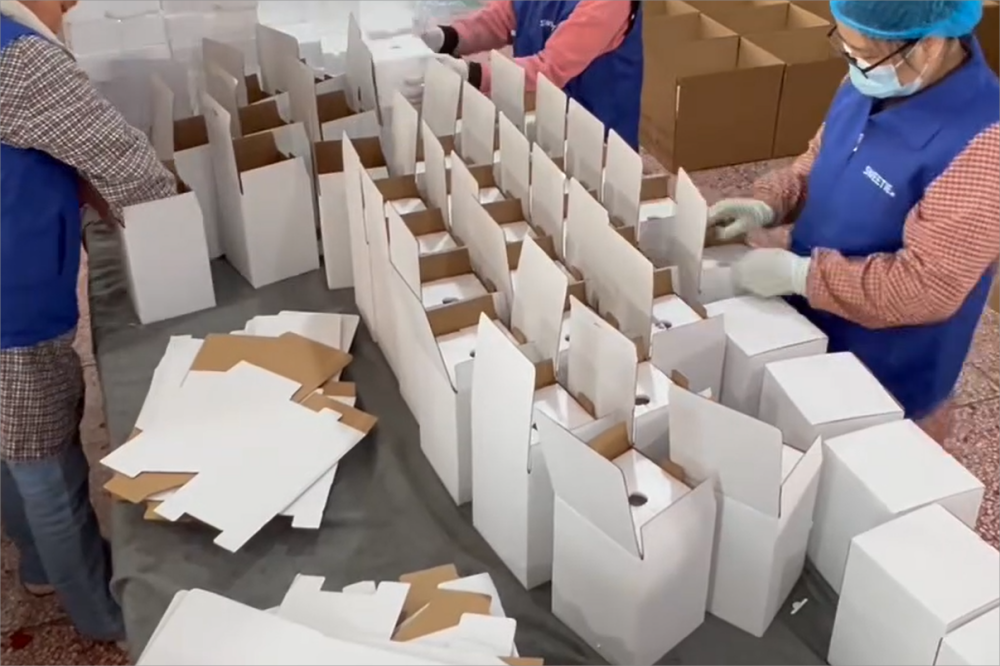
A paperboard box may also contain a plastic window, foam insert, magnet, coating, adhesive or decorative element. PPWR’s recyclability framework looks beyond the predominant material and considers packaging components and their compatibility with collection, sorting and recycling systems.
For sourcing, that changes the usefulness of simple descriptions such as:
“paper gift box”
or
“PET display box.”
Those descriptions are still useful commercially, but they are not enough to understand the full recycling profile of a package.
A better packaging discussion may include questions such as:
Can the transparent component be separated?
Is the insert paper, foam or plastic?
Is the surface laminated?
Are magnets permanently integrated?
What resin is used for the clear section?
This does not mean every mixed-material gift box must immediately be redesigned. It means the whole packaging construction is becoming more relevant.
What About PVC?
PPWR does not impose a blanket ban on PVC packaging. In fact, the regulation includes PVC within its packaging material categories.
That should not be interpreted as automatic approval either.
A PVC package still has to meet the requirements that apply to its category, including future design-for-recycling rules. For a new project, comparing PVC, PET and paper-dominant structures can therefore be more useful than treating one material name as a complete compliance answer.
Plastic Packaging Will Need Better Material Data
PPWR also introduces minimum recycled-content requirements for plastic packaging.
For the broad category of plastic packaging outside the specific categories listed separately in Article 7, the 2030 minimum is generally 35% post-consumer recycled content, subject to the regulation’s timing rules and exemptions.
This can be relevant for large transparent gift packages, rigid display boxes and plastic inserts used in floral gift sets.
Buyers do not need to become polymer specialists. But it will become increasingly useful to know:
- which plastic resin is being used;
- how much plastic the package contains;
- whether the material is virgin or recycled;
- what recycled-content percentage is being claimed;
- what documentation supports that claim.
The detailed EU methodology for calculating and verifying recycled content is still part of the PPWR implementation process in 2026, so broad statements that every recycled-plastic package already requires the same third-party certificate should be treated carefully.
The practical step today is simpler: make material data traceable to the packaging specification being purchased.
E-Commerce: Filling the Box Does Not Remove the Empty Space
E-commerce packaging is another area where PPWR can have a direct effect on floral gifts.
For grouped, transport and e-commerce packaging, Article 24 introduces a maximum empty-space ratio of 50%, starting from the later of January 1, 2030 or three years after the relevant implementing act enters into force.
There is an important detail in how that space is treated.
Paper filler, air cushions, bubble wrap, foam and similar cushioning materials still count as empty space for this calculation.
In practical terms, a small floral gift inside a very large shipping carton does not become space-efficient simply because the carton is packed tightly with filler.
That makes structural protection more valuable.
A well-designed insert or fixing structure can keep a delicate flower arrangement away from the carton walls without requiring a large volume of loose cushioning. Glass dome packaging can use a different fixing approach because the risk is movement and breakage rather than contact with exposed petals.
PPWR also requires the future calculation method to consider products that genuinely need additional space for protection, including products that can be easily damaged.
This is an important point for floral gifts. The aim is not to remove necessary protection. It is to avoid unnecessary shipping volume.
Our existing preserved-flower packaging work already includes different structures for covered flower boxes, exposed arrangements, glass domes and e-commerce applications, with structural fixing used where appropriate to reduce excess filler and packaging volume.
Developing an EU floral gift with a new retail or e-commerce package? Contact sales@sweetie-group.com to discuss the packaging structure before bulk production.
Do You Need a “PPWR Certificate” for the Packaging?
This is one of the areas where terminology can create confusion.
PPWR does not establish one universal mandatory third-party document called a PPWR Certificate for every package.
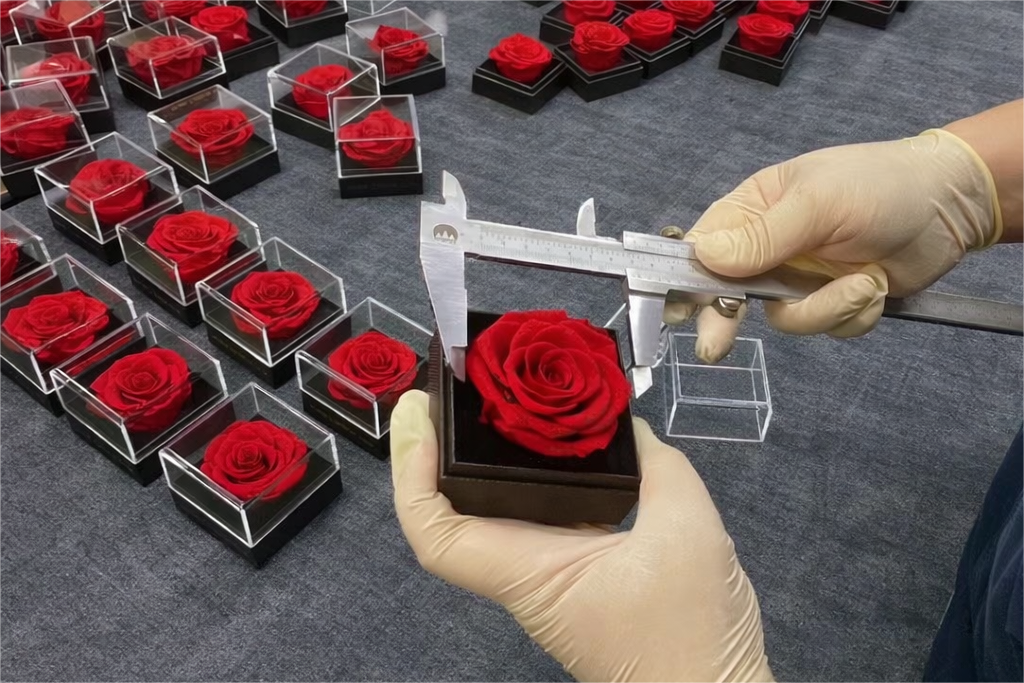
Instead, the regulation uses a conformity assessment system. Under Articles 38 and 39, conformity is assessed according to Annex VII, and the responsible manufacturer issues an EU Declaration of Conformity after the applicable requirements have been demonstrated.
The procedure in Annex VII is based on internal production control. Technical Documentation is part of that process.
Depending on the packaging, the documentation can include information about:
- the packaging and its intended use;
- design and construction;
- materials and components;
- applicable technical specifications;
- relevant assessments;
- test reports where applicable.
Third-party laboratories can still play an important role. A material test, transport test or other assessment may provide useful evidence. But a third-party test report and the EU Declaration of Conformity are not the same thing.
For importers, this distinction matters because Article 18 requires them to ensure that the conformity assessment has been carried out and that the required Technical Documentation exists before placing packaging on the market. Importers must also keep the EU Declaration of Conformity available and be able to make the required Technical Documentation available to authorities.
So instead of asking only:
“Do you have a PPWR certificate?”
a more useful sourcing question is:
“What documentation is available for this specific packaging construction?”
Does Every Repeat Order Need New Testing?
Normally, no.
PPWR does not say that a complete test program must be repeated every time a new purchase order is issued.
The more important issue is whether the packaging remains the same in the areas that matter for conformity.
Article 15 requires procedures to keep series production compliant and specifically requires relevant changes in design, characteristics and technical specifications to be taken into account.
Consider a gift box that has already been approved.
If the next order uses the same board, plastic window, insert, coating, dimensions and structure, the fact that the quantity has changed from 1,000 pieces to 5,000 pieces does not by itself mean that the complete packaging must be tested again.
The situation changes when the packaging changes.
A PET window replaced with PVC is a material change.
A paper insert replaced with EVA changes the packaging structure.
A heavier laminate, added magnet or larger box may affect recyclability or minimisation.
Changing from virgin plastic to recycled plastic also means the material information needs to be updated.
Even a new material supplier deserves attention if the documents used for the original packaging no longer represent the current material.
For repeat orders, the most useful discipline is therefore not “test everything again.”
It is:
confirm what has changed, then review the requirements affected by that change.
What Should Importers Check Before Approving a Floral Gift Package?
For new projects, a simple packaging record can prevent many problems later.
A Packaging BOM, or bill of materials, is a useful starting point for more complex gift packaging because it shows the main components instead of treating the whole package as one material.
| What to Check | What It Tells You |
|---|---|
| Packaging dimensions and weight | Whether the package may need a minimisation review |
| Main material of each component | How paper, plastic, glass and other materials are combined |
| Plastic resin type | Which plastic requirements may be relevant |
| Insert, coating and closure materials | Whether smaller components affect recyclability |
| Recycled-content data where applicable | Whether plastic-content claims have supporting information |
| Relevant material or test reports | What evidence is available for the current specification |
| Approved packaging construction | What bulk production should match |
| Changes since the last order | Whether existing evidence may need review |
For fragile products, it is also worth understanding why protective space exists. A glass dome requiring clearance for transport is different from a soft floral gift sitting inside an unnecessarily large cavity.
And for direct imports from outside the EU, documentation should not be left until the goods are already in transit. PPWR gives importers specific obligations to verify conformity and ensure that required documentation can be made available.
If you need material details, packaging specifications or development support for a floral gift project, email sales@sweetie-group.com before the packaging is finalized.
FAQ About PPWR and Floral Gift Packaging
Is there a mandatory PPWR certificate for every gift box?
No. PPWR does not create one universal mandatory third-party certificate for every package. The conformity framework uses Technical Documentation, conformity assessment and an EU Declaration of Conformity.
Must every packaging order be tested by a third-party laboratory?
No. PPWR does not prescribe the same third-party testing program for every packaging type or every order. Test reports can form part of the supporting evidence where relevant.
Does a repeat order require a completely new conformity assessment?
Not simply because a new order is placed. The key issue is whether changes in the packaging design, materials or characteristics could affect conformity.
Is PVC prohibited for floral gift packaging?
No. PPWR does not generally prohibit PVC. However, the packaging still has to meet the applicable recyclability and other requirements.
Does protective filler count as empty space?
Yes. Article 24 states that materials such as paper cuttings, air cushions, bubble wrap and foam are treated as empty space when calculating the relevant empty-space ratio.
Final Takeaway
PPWR adds a new layer to floral gift sourcing, but it does not require gift packaging to stop looking like gift packaging.
Presentation, seasonal use and product protection still matter. What changes is the level of discipline around why the package is designed that way, what it contains and what documentation supports it.
Price, appearance and MOQ will remain important purchasing factors.
For products entering the EU, one more question now belongs in the conversation:
How is this package built, and what information can be provided to support it?
That question is likely to become more useful as the 2030 requirements move closer.
This article provides general information on Regulation (EU) 2025/40 and is not legal advice. Applicable obligations depend on the packaging, the economic operator’s role in the supply chain and the timing of specific PPWR provisions.
Annie Zhang