To succeed in Australian supermarkets, non-fresh floral gifts must perform distinct retail functions that fresh flowers cannot. Rather than merely lasting longer, these alternative categories must eliminate cold-chain dependencies, capture high-margin impulse purchases, bypass strict biosecurity barriers, and tap into modern lifestyle and gifting trends that traditional floristry cannot easily reach.
Why must supermarket buyers look beyond longevity when managing non-fresh floral gifts?
For years, the default rationale for listing non-fresh florals was simple: “They do not die in a week.” However, experienced buyers in supermarket floral category management know that shelf-life alone does not justify valuable linear shelf space. Fresh flowers are highly optimized; they have dedicated chilled supply chains, predictable seasonal peaks, and established consumer behaviors. To earn a spot alongside or instead of fresh blooms, non-fresh alternatives must solve specific pain points or unlock new margin structures.
First, fresh flowers carry high write-down risks. Supermarkets frequently absorb write-offs of 15% to 25% on fresh cut stems due to temperature fluctuations, mechanical damage, or missed holiday sales windows (such as post-Mother’s Day or Valentine’s Day excess). Non-fresh floral gift categories for Australian supermarkets offer a write-down rate near zero, allowing retailers to hold inventory over multiple weeks or even roll unsold seasonal stocks into the next promotional window.
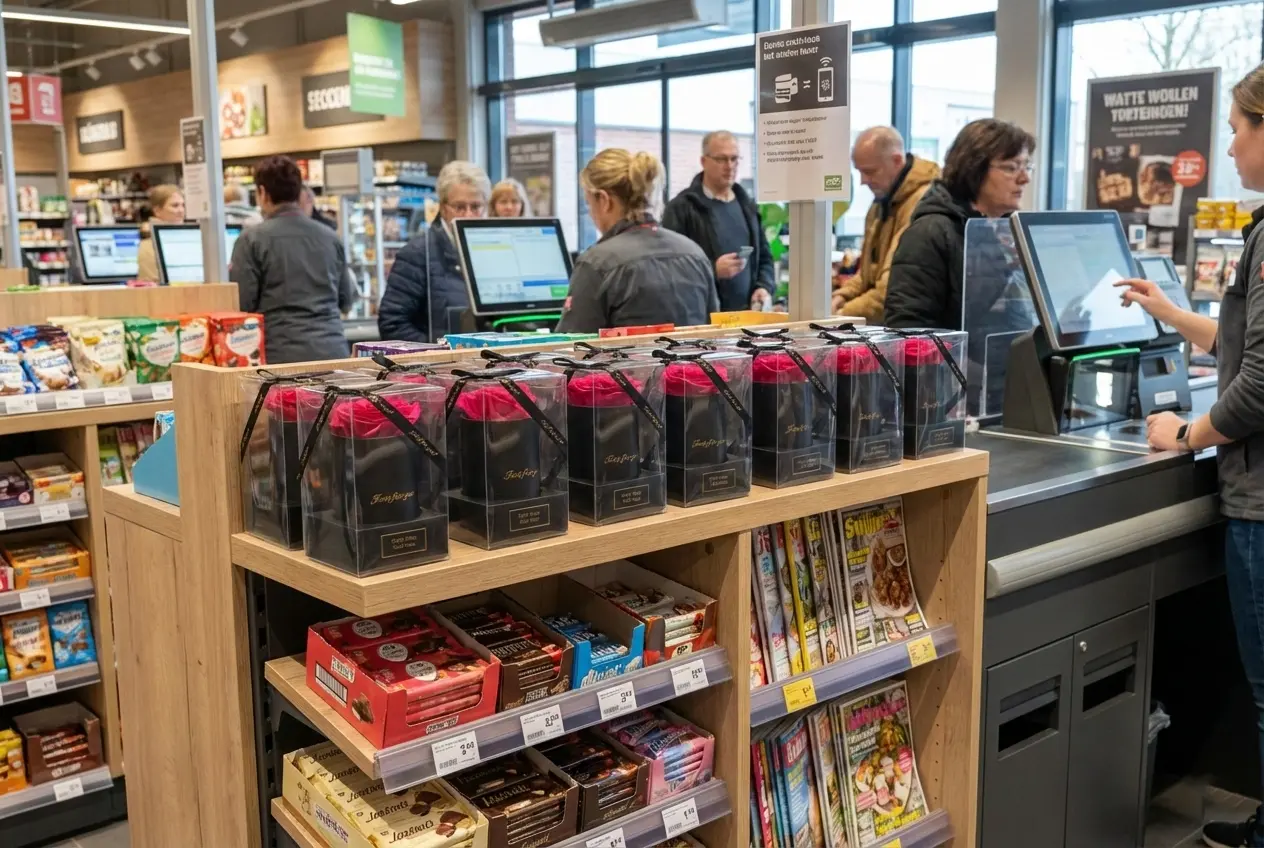
Second, non-fresh categories allow supermarkets to expand floral gifting into high-traffic, dry-shelf locations where fresh flowers cannot survive. By placing these products in the checkout queue, seasonal promotional aisles, or gifting end-caps, retailers capture high-margin impulse buys from shoppers who were not intending to visit the dedicated floral department. Understanding these commercial mechanics is critical before selecting which specific product category to trial.
How do preserved flowers fit into Australian grocery retail, and what are the hidden hurdles?
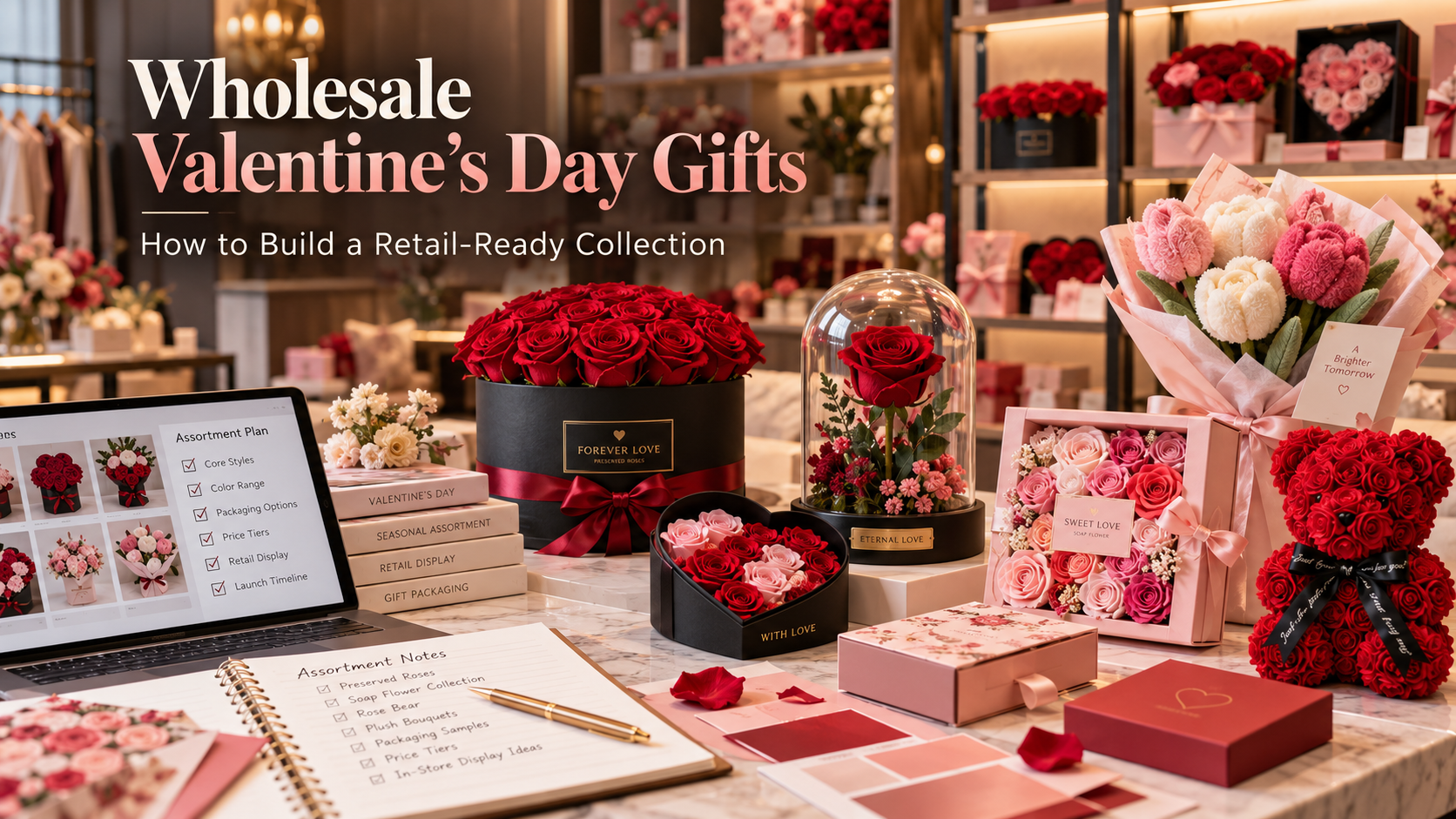
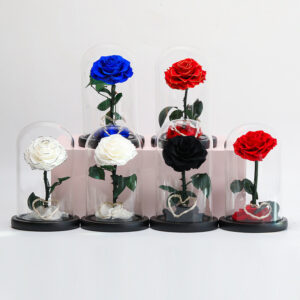
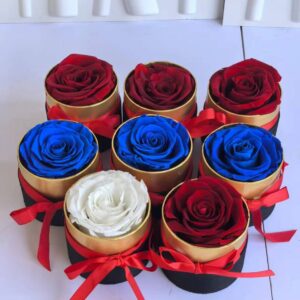
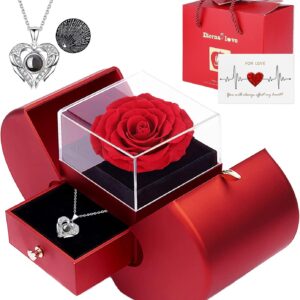
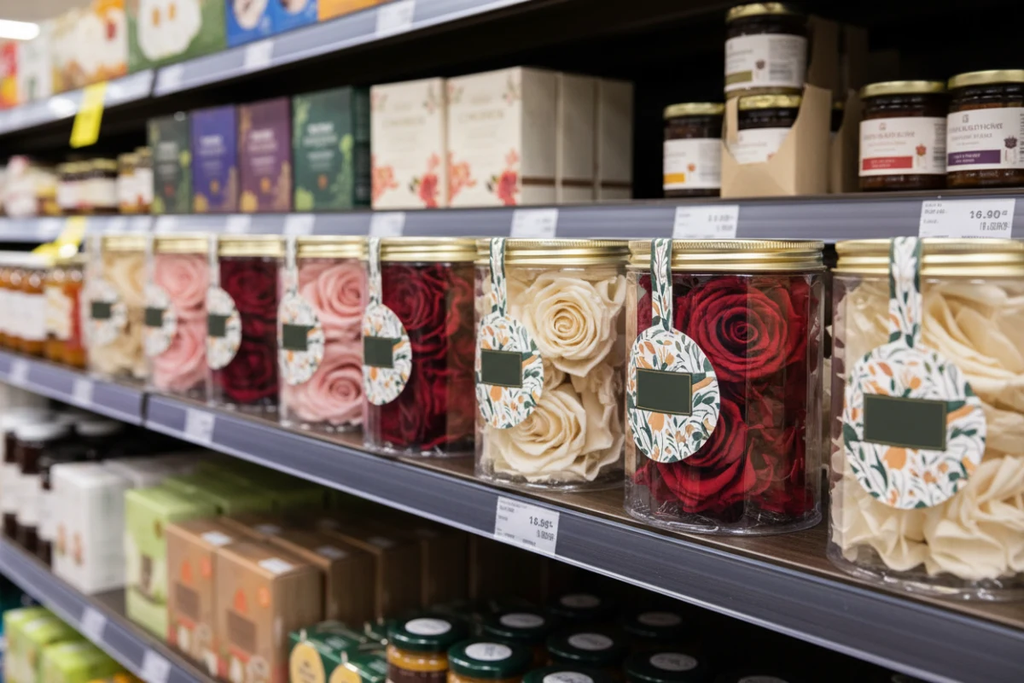
Preserved flowers—typically real roses, hydrangeas, and mosses treated with glycerin and dyes—represent a premium tier within the non-fresh market. They enjoy high consumer recognition in Australia, driven by boutique florists and online gifting disruptors. For a supermarket, they offer a premium average basket value and excellent gift credibility, particularly for Mother’s Day, graduation seasons, and anniversary promotions.
However, sourcing preserved flowers wholesale Australia comes with unique operational realities that supermarket buyers must manage carefully:
- Biosecurity and Import Compliance: Australia’s Department of Agriculture, Fisheries and Forestry (DAFF) enforces strict biosecurity measures. Because preserved flowers are derived from real organic materials, imports are subject to rigorous inspection for pests, soil, and unauthorized plant species. Shipments require specific treatment certificates (such as sulfur dioxide/methyl bromide fumigation or heat treatment). Failing these checks leads to expensive fumigation fees at the port or, in worse cases, wholesale destruction of the consignment.
- Fragility and Transit Damage: Unlike fresh flowers which are transported in water or protective sleeves in refrigerated trucks, preserved flowers are structurally delicate and brittle in low-humidity environments. Petal tearing and glass dome breakage are common transit issues. For a grocery supply chain, which relies on high-speed palletized distribution and centralized distribution centers (DCs), preserved flowers must be enclosed in robust, retail-ready protective packaging—such as high-transparency PET boxes or rigid cardboard outers with molded pulp inserts—to survive handling.
- Environmental Sensitivity: Australia’s diverse climate poses challenges. In high-humidity regions like Queensland, preserved flowers can experience “sweating,” where the glycerin dye mixture leaks from the petals, potentially staining packaging or adjacent merchandise. Conversely, in hot, dry regions, they can become overly brittle.
For these reasons, while preserved flowers yield excellent gross margins, they require a highly disciplined supply chain and sophisticated protective packaging design to succeed in bulk grocery distribution.
Plush and textile florals: What is the difference between character toys and soft plush flower stems?
One of the fastest-growing trends in the Australian gift landscape is the rise of textile-based florals. However, buyers must distinguish between two highly distinct product categories within this space to avoid misallocating shelf space.
Character-Based Plush Flowers
This category is exemplified by premium collector brands like Jellycat, where the flower is designed as a cute, animated character with eyes, a smile, and a defined brand personality. These items are highly collectable, driven by social media trends, and appeal heavily to Gen Z and Millennial shoppers. In a supermarket context, these function primarily as high-margin toys or specialty gifts rather than direct substitutes for floral arrangements. They command premium retail pricing but rely heavily on brand licensing, authenticity, and specific brand-obsessed demographics.
Soft Textile and Plush Flower Stems
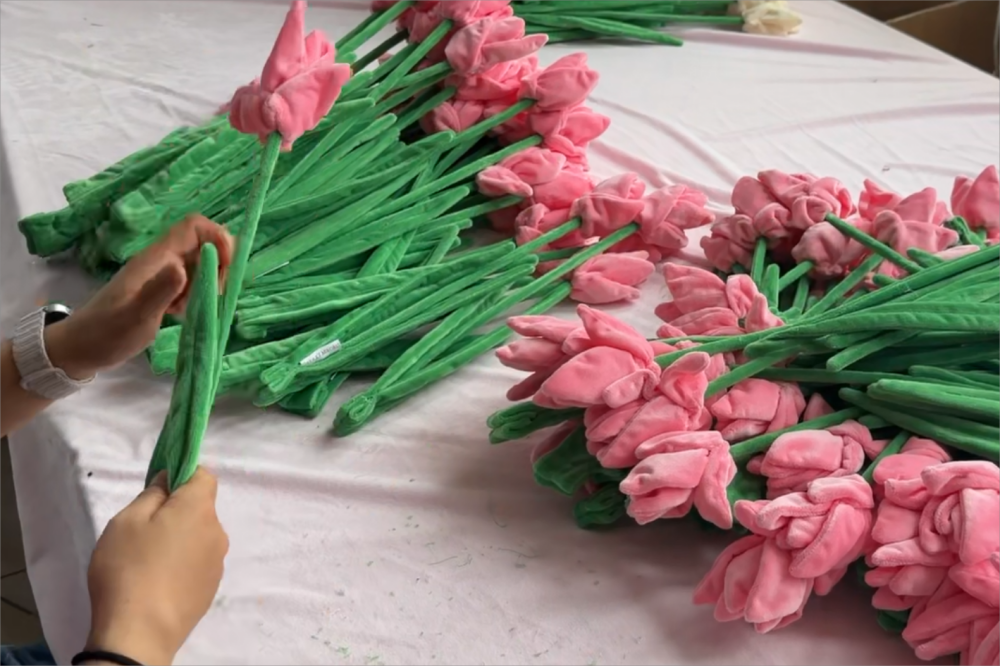
In contrast, soft textile and plush flower stems for retail focus entirely on the aesthetic of the flower itself, without toy-like character features. These products utilize premium fabrics—such as micro-velvet, felt, soft fleece, or corduroy—to recreate stems, leaves, and blooms. They feature flexible internal wire cores, allowing consumers to bend, pose, and arrange them into custom, everlasting bouquets.
This emerging category offers unique advantages for Australian grocery chains:
- Logistical Simplicity: Because they contain no natural plant materials, plush flower stems face zero biosecurity friction at Australian ports. They are lightweight, completely unbreakable, and highly compressible, which dramatically lowers ocean freight costs per unit and eliminates transit damage losses.
- Cross-Merchandising Versatility: Unlike fresh flowers, these plush stems can be displayed in standard cardboard dump bins, counter display units (CDUs), or hung on pegboards. They are ideal for back-to-school desk decorations, nursery room decor, or whimsical seasonal displays.
While highly promising, buyers should view plush flower stems as an emerging, high-margin trend rather than a fully mature, stable commodity. They require active, eye-catching visual merchandising in-store to explain their utility to the casual grocery shopper.
Where do soap flowers and rose bears stand in seasonal supermarket planning?
Soap flowers and rose bears represent highly specialized categories designed to capture impulsive, romantic, and holiday-specific purchasing power.
Soap Flowers: The Positioning Puzzle
Soap flowers—crafted from starch, polyvinyl alcohol, and fragrance to resemble realistic rose buds—occupy a unique space. They are visually stunning, budget-friendly, and emit a pleasant aroma that can enhance the sensory experience of a dry-goods retail aisle. However, in the Australian market, soap flowers frequently suffer from inconsistent retail categorization.
If placed in the personal care or bath aisle, consumers often hesitate to use them, as they are more decorative than functional for daily washing. If placed in the floral aisle, they can be mistaken for real preserved flowers, leading to post-purchase confusion when they dissolve in contact with water. For successful supermarket floral category management, soap flowers must be clearly packaged and promoted as “scented decorative gifts” rather than functional bath soaps. They perform exceptionally well when bundled into Mother’s Day gift packs or sold in small, clear-topped gift boxes as low-cost checkout-lane impulse items.
Rose Bears: High Impact, High Footprint
Rose bears—constructed by hand-applying hundreds of tiny synthetic polyethylene (PE) foam roses to a styrofoam bear mold—are highly popular for Valentine’s Day and high-romance gifting. They offer immense visual impact and are popular for social media gifting.
For supermarkets, however, rose bears present a volumetric challenge. They are bulky, non-compressible, and require significant shelf space relative to their weight. This lowers the “sales per linear foot” efficiency of the shelf. Furthermore, their demand is highly concentrated around Valentine’s Day; inventory left over after February 14th carries a steep markdown penalty as consumers do not typically purchase rose bears for everyday occasions. Retailers should plan these strictly as in-and-out promotional buys with tight allocation strategies.
Crochet and artificial florals: Can they drive repeat impulse purchases in the grocery aisle?
Traditional artificial flowers (made of polyester or plastic) and hand-crocheted yarn flowers represent two opposite ends of the manufacturing spectrum, each serving distinct roles in the supermarket ecosystem.
Traditional Artificial Flowers
Standard faux botanical stems are a mature, highly stable category. In major Australian retailers like Kmart, Target, and Spotlight, artificial stems are positioned as permanent home decor. They are sold individually or in pre-made arrangements designed to sit in vases. For a grocery supermarket, artificial flowers are generally less suited for the high-velocity gifting aisle because they lack the emotional urgency or premium packaging associated with a celebratory gift. They turn slowly, require extensive display space, and compete directly with established home-goods retailers.
Crochet Florals
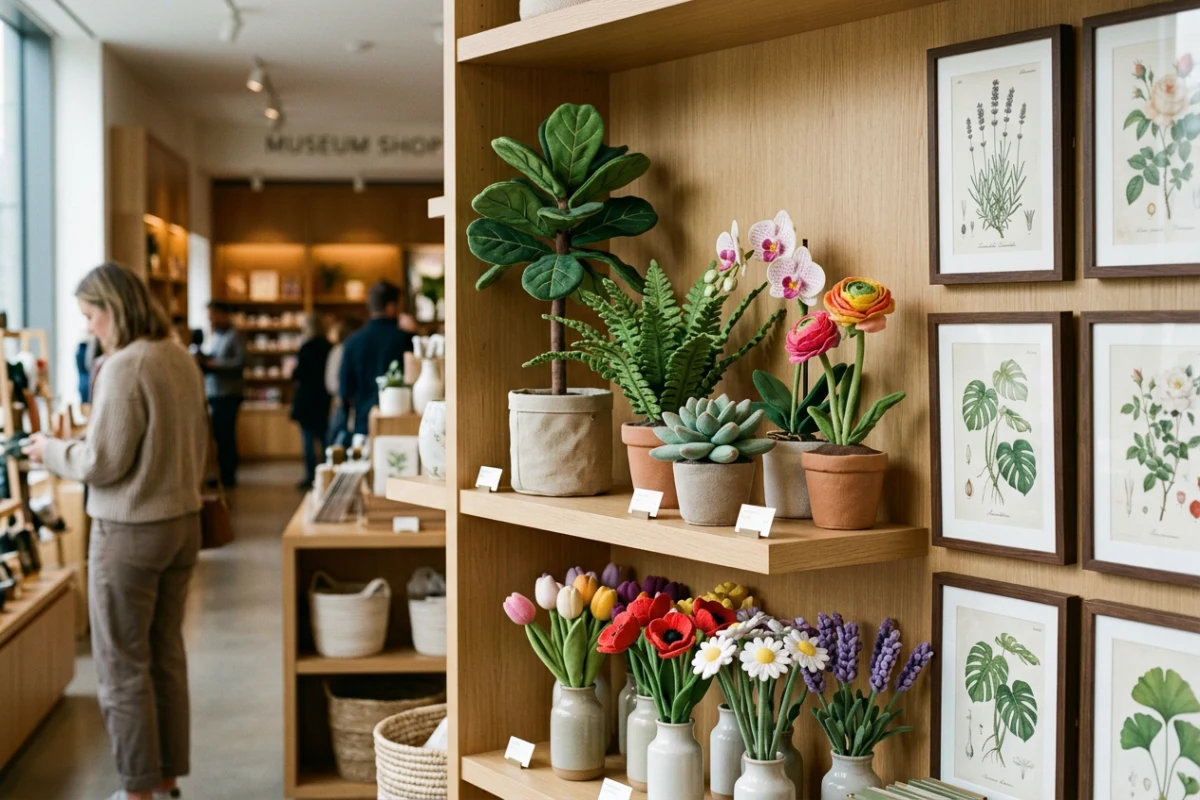
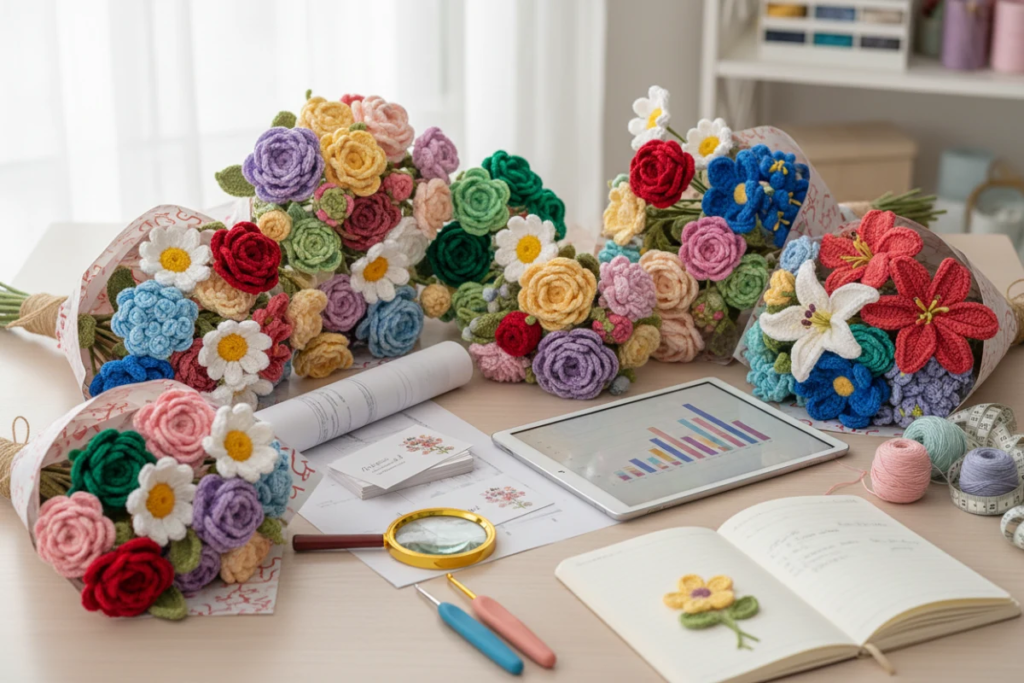
In contrast, hand-crocheted yarn flowers have emerged as a highly popular sub-category, particularly among younger consumers seeking a warm, “cottagecore” or artisanal aesthetic. These products carry a distinct handmade charm that feels personalized and thoughtful, making them excellent gifts for teachers, graduations, and casual birthdays.
For supermarkets, crochet flowers offer several benefits:
- High Perceived Value: The intricate knitted texture implies high labor and craftsmanship, allowing for a healthy retail markup.
- Durability: Like plush stems, they are virtually indestructible, making them exceptionally easy to ship, warehouse, and display.
- Targeted Demographic Appeal: They appeal directly to Gen Z consumers who value retro crafts and indie aesthetics over traditional, formal floral arrangements.
However, because crochet flowers require intensive manual labor to knit and assemble, production scaling can be slower compared to machine-made synthetic flowers. Supermarkets planning large-scale, nationwide campaigns must secure production capacity months in advance to ensure consistent quality and supply.
Evaluating the Best Fit: A Comparative Decision Framework for Supermarket Buyers
To help category managers evaluate where to allocate budget and shelf space, the table below compares these non-fresh floral gift categories across five critical retail metrics: gross margin potential, biosecurity import risk, durability in transit, footprint efficiency, and seasonal flexibility.
| Product Category | Gross Margin | Import / Biosecurity Risk | Logistical Durability | Shelf Footprint Efficiency | Best Seasonal Fit |
|---|---|---|---|---|---|
| Preserved Flowers | High (50%+) | High (Strict DAFF scrutiny) | Low (Fragile glass/petals) | Medium | Mother’s Day, Luxury Gifting |
| Plush Flower Stems | High (45%–55%) | Low (Zero plant materials) | High (Flexible, unbreakable) | High (Compressible bulk) | Back-to-School, Spring Promotions |
| Soap Flowers | Medium to High | Low (Synthetic base) | Medium (Moisture sensitive) | High (Compact boxes) | Mother’s Day, Everyday Impulse |
| Crochet Florals | High (45%+) | Low (Yarn/textile) | High (Soft and durable) | Medium to High | Graduation, Teacher Gifts, Spring |
| Rose Bears | Medium | Low (PE Foam) | Medium (Bulky, crushable) | Low (High volume per unit) | Valentine’s Day (Strict peak) |
| Traditional Artificial | Low to Medium | Low (Plastic/polyester) | High (Wire and plastic) | Low (Requires tall displays) | Year-Round Home Decor |
How can buyers streamline sourcing and quality control for multi-category floral gifts?
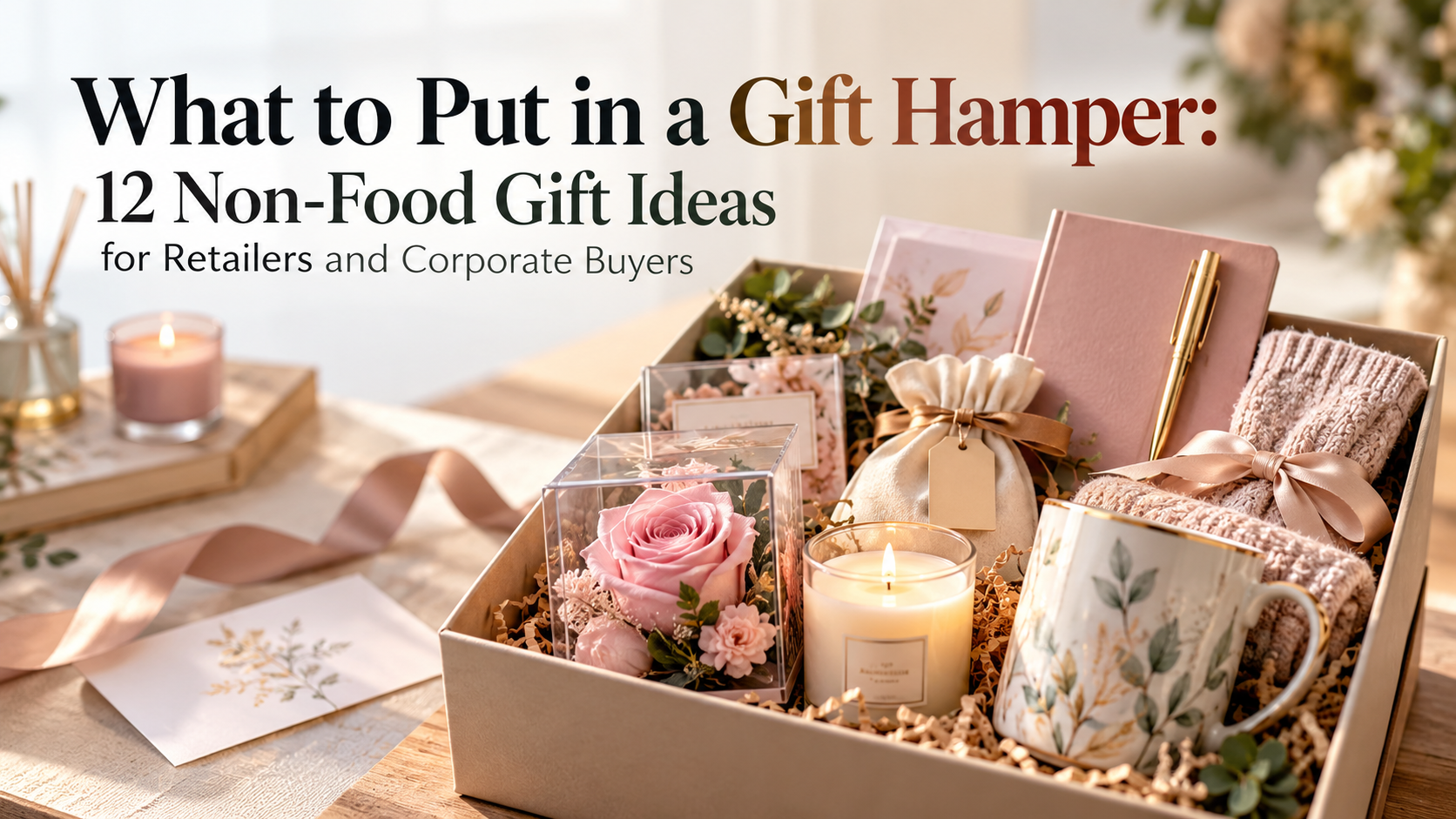
Managing multiple vendors for diverse product lines like plush, preserved, and soap flowers adds immense complexity to supermarket buying teams. Working with specialized manufacturing partners who offer cross-category development, packaging design, and strict quality control simplifies the entire procurement pipeline.
When importing non-fresh floral gifts bulk, buyers must look for partners who understand the specific requirements of the Australian market, including child-safety standards for plush items, non-toxic dye certifications for soap flowers, and clean treatment documentation for preserved flora. Robust retail packaging is also critical; products must arrive in shelf-ready display shippers that minimize in-store setup time for busy supermarket staff.
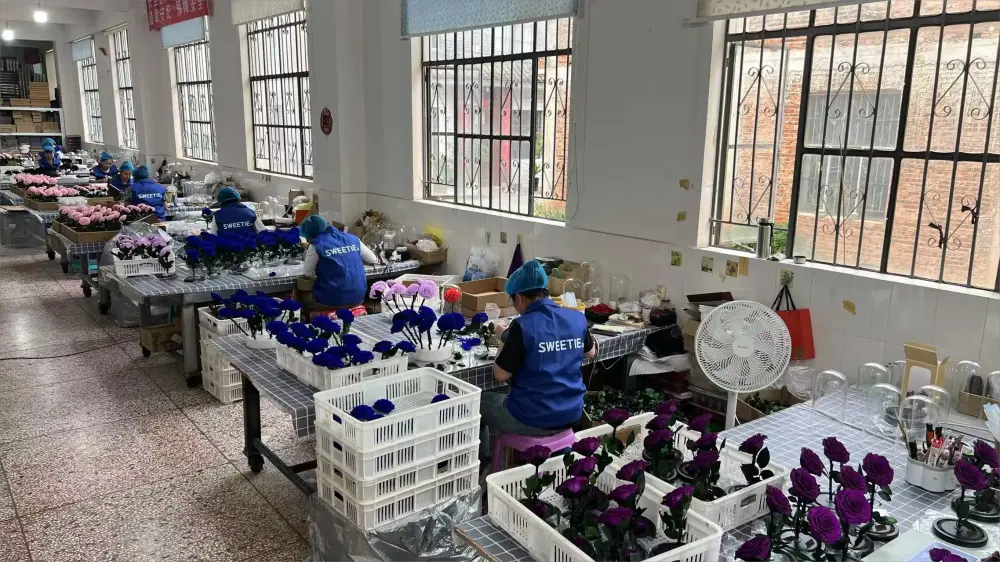
To simplify the initial selection and product development process, buyers can utilize digital tools like Sweetie AI. This specialized B2B platform allows procurement teams to browse an extensive portfolio of non-fresh floral categories, customize packaging specifications, and receive expert product selection and sourcing advice tailored to the unique regulatory and commercial landscape of Australia. By leveraging digital sourcing portals, buyers can quickly move from trend identification to sample approval without the historical friction of traditional manufacturing communication.
In my years observing global retail shifts, the supermarkets that win are those that treat non-fresh florals not as a cheap substitute for fresh cuts, but as a sophisticated, high-margin gifting category of their own. By balancing trend-forward items like plush stems with high-value classics like preserved flowers, category managers can build a resilient, highly profitable year-round program.
Exploring a floral gift category for the Australian market? Tell us what channel or product direction you are considering. Our team can share relevant product options and sourcing experience. Contact sales@sweetie-group.com
Frequently Asked Questions
Do preserved flowers imported into Australia require quarantine clearance?
Yes. Because preserved flowers are made from natural organic plant matter, they are subject to strict biosecurity inspections by the Department of Agriculture, Fisheries and Forestry (DAFF). Importers must ensure the products have undergone approved treatment processes (such as specific chemical preservation or fumigation) and possess valid treatment certificates to avoid quarantine delays, extra fees, or cargo destruction at the Australian border.
How should supermarkets display plush flower stems to maximize sales?
Unlike fresh flowers that require buckets of water, plush flower stems are highly versatile. The most effective way to merchandise them is using custom, colorful cardboard floor-display units (CDUs) placed in high-traffic cross-merchandising zones—such as next to the greeting card aisle, children’s toy sections, or checkout lanes. Displaying them in dry, clean wicker baskets or faux florist buckets also helps communicate the “arrange-your-own” concept to shoppers.
What is the typical shelf life of soap flowers in a retail environment?
In a standard, climate-controlled retail environment, soap flowers can remain in perfect condition for 2 to 3 years. However, they are highly sensitive to moisture and direct sunlight. High humidity can cause the soap petals to soften, stick together, or lose their shape, while direct sunlight will fade the vibrant dyes. Supermarkets should display them in sealed, clear PET or acrylic packaging away from entrance doors or produce misting systems.