The global market for premium everlasting florals has experienced significant growth as retailers, e-commerce brands, and event planners seek sustainable, cost-effective alternatives to fresh-cut blooms. When developing a product line, bulk buyers are often faced with a fundamental choice: artificial flowers vs preserved flowers. Understanding the operational, aesthetic, and financial differences between these two product categories is critical to building an efficient supply chain.
While both types serve the everlasting floral market, they are manufactured using entirely different base materials and production methods. Making the wrong choice can lead to significant issues in customs clearance, consumer dissatisfaction, or inventory spoilage. This guide breaks down the core distinctions between artificial and preserved floral products, helping you make informed purchasing decisions based on your target demographic, budget, and logistical capabilities.
Material and Production Differences: Real Blooms vs. Synthetic Creations
The fundamental distinction between artificial flowers vs preserved flowers lies in their biological origin and chemical composition. Preserved flowers are authentic, natural blooms harvested at their peak, whereas artificial flowers are synthetic goods manufactured entirely from non-living materials.
The Science of Preserved Flowers
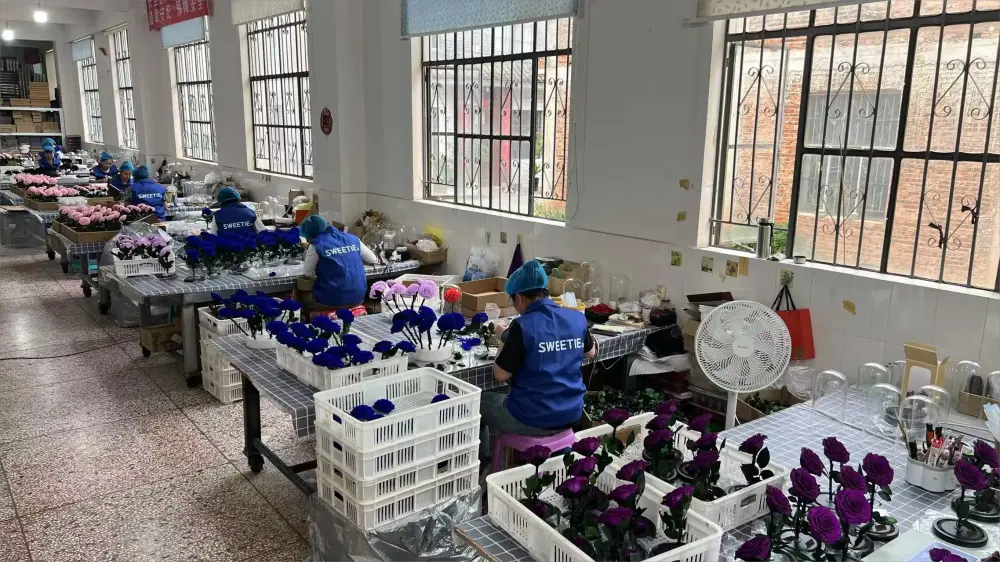
Preserved flowers are real, organic plants. The preservation process is highly technical and typically starts in premium agricultural regions, such as Yunnan, which is renowned for cultivating robust roses with thick petals and sturdy stems.
- Harvesting: Flowers are cut at their optimal blooming state when the shape is symmetrical and the petals are fully hydrated.
- Dehydration: The fresh-cut flowers are submerged in a chemical bath, usually consisting of pure alcohol, to draw out all natural moisture, sap, and pigments. This renders the petals translucent and colorless.
- Infiltration: The dehydrated cells are filled with a specialized preservation solution containing cosmetic-grade glycerin, water, and organic dyes. The glycerin replaces the water content at a molecular level, preventing the plant tissue from drying out or shrinking.
- Curing: The flowers are dried in temperature-controlled rooms. The resulting preserved rose or foliage maintains the natural suppleness, elasticity, and delicate texture of a fresh flower, lasting for up to three years without water.
The Engineering of Artificial Flowers
Artificial flowers are manufactured products designed to replicate the appearance of real plants. Instead of relying on agricultural cycles, their production is industrial and highly scalable. Common materials include:
- Polyester/Silk: High-density fabric is stamped, dyed, and heated in molds to create realistic petal textures.
- Polyurethane (PU): Used to make “real touch” flowers, providing a rubbery, flesh-like feel that closely mimics living plants.
- Polyethylene (PE) Foam: Lightweight and highly pliable, often used for mass-produced floral decor and novelty gifts.
- Soap Compounds: Formulated with cornstarch, polyvinyl alcohol (PVA), and pigments, soap flowers can be molded into incredibly detailed, fragrant petals.
- Yarn: Hand-knit or crocheted threads assembled into charming, rustic floral designs.
These synthetic materials allow factories to produce highly consistent units at a fraction of the cost of organic preservation. However, they lack the organic texture, natural imperfections, and premium appeal of preserved natural flowers.
E-Commerce Classification: How Retail Platforms Categorize Floral Products
For digital brands and importers, understanding how retail platforms classify these goods is essential for organic search visibility, tax compliance, and customs declarations.
On major e-commerce platforms like Amazon US, “Artificial Plants & Flowers” and “Dried & Preserved Flora” are separated into distinct subcategories. This is not merely an administrative choice; it directly reflects consumer search behavior and the physical requirements of the products.
| Feature / Metric | Preserved Flowers (e.g., Preserved Roses) | Artificial Flowers (e.g., Silk, PE, Soap) |
|---|---|---|
| Base Material | 100% natural organic flowers | Synthetic polymers, fabrics, soap, or yarn |
| HS Code Category | Chapter 6 (Live trees, plants, bulbs, cut flowers) | Chapter 67 (Prepared feathers, artificial flowers) |
| Tariff Rates | Highly dependent on phytosanitary and agricultural laws | Standard manufactured goods tariffs |
| Search Intent | Luxury gifting, premium home decor, weddings | High-volume events, budget decor, crafts |
| Storage Conditions | Strictly dry (40-60% RH), out of direct sunlight | Highly resilient, resistant to moisture/heat |
Importers must ensure they declare their shipments under the correct Harmonized System (HS) codes. Declaring wholesale preserved roses under synthetic flower codes can lead to customs audits, delays, and substantial fines. Preserved flowers, being organic matter, occasionally require phytosanitary certificates during import customs clearance depending on the destination port, while artificial flowers are treated as standard manufactured commodities.
Expanding the Portfolio: Understanding Dried, Soap, Crochet, and PE Rose Flowers
As the market for long-lasting flower sourcing matures, buyers must look beyond simple definitions and understand the nuances between different subcategories. The table below outlines how these materials diverge when comparing preserved flowers vs dried flowers, alongside various synthetic alternatives.
Preserved Flowers vs Dried Flowers
While both start as real plants, the comparison of preserved flowers vs dried flowers highlights two completely different preservation techniques:
- Dried Flowers: Dehydrated naturally by hanging upside down in dry, dark rooms, or processed using silica gel. The moisture is entirely removed without replacement. Consequently, dried flowers are highly brittle, prone to shedding, and lose their vibrant color, taking on a vintage, rustic, or muted appearance.
- Preserved Flowers: Retain their moisture-like suppleness through chemical replacement with glycerin. They do not shatter when touched, and they maintain bright, vivid colorations that make them highly desirable for luxury retail and floral arrangements.
Diverse Synthetic Alternatives in the Wholesale Market
For businesses looking to offer budget-friendly or highly durable alternatives to premium preserved roses, the artificial floral gifts wholesale market offers several highly profitable niches:
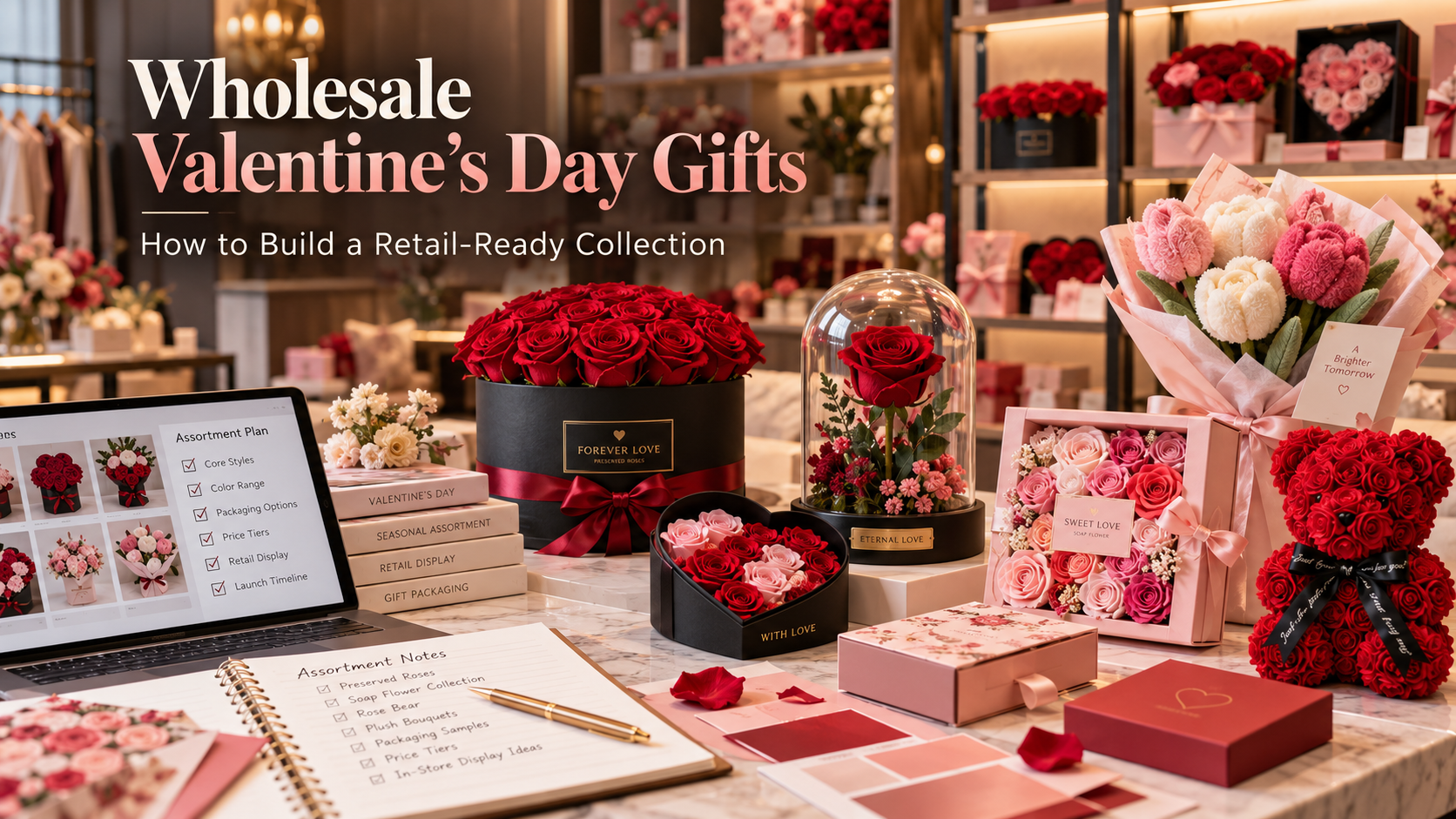
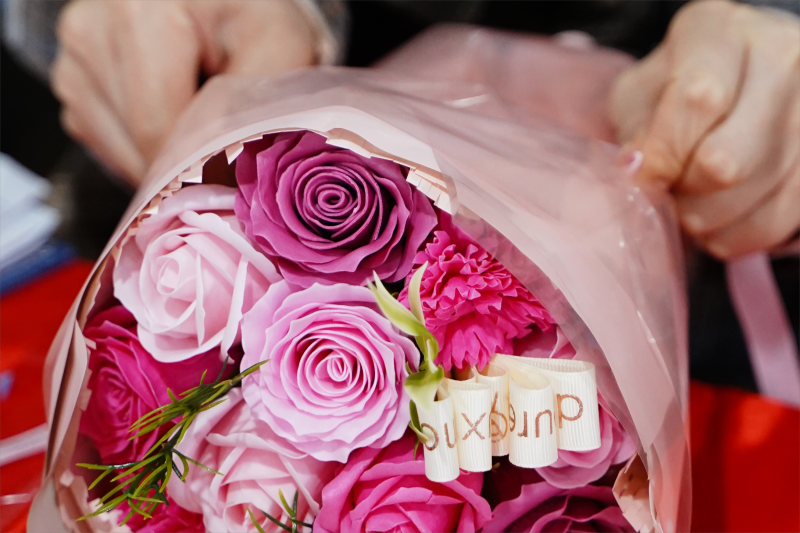
- Soap Flowers: Molded from scented soap paste, these arrangements are highly aesthetic, functional, and popular for Valentine’s Day or Mother’s Day gift sets. They are far more cost-effective than preserved roses while offering a pleasant aroma.
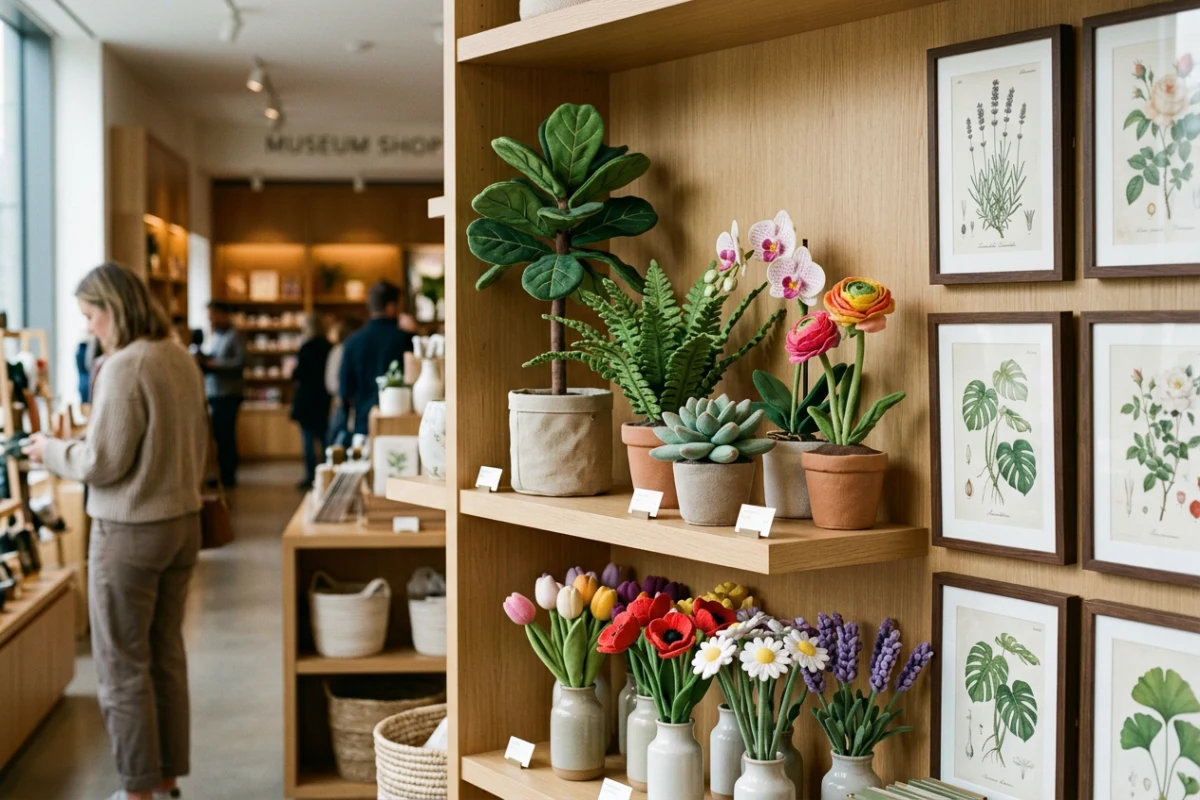
- Crochet Flowers: Appeals to consumers looking for artisan, hand-knit, and sustainable aesthetics. They are durable, washable, and hold a unique novelty value.
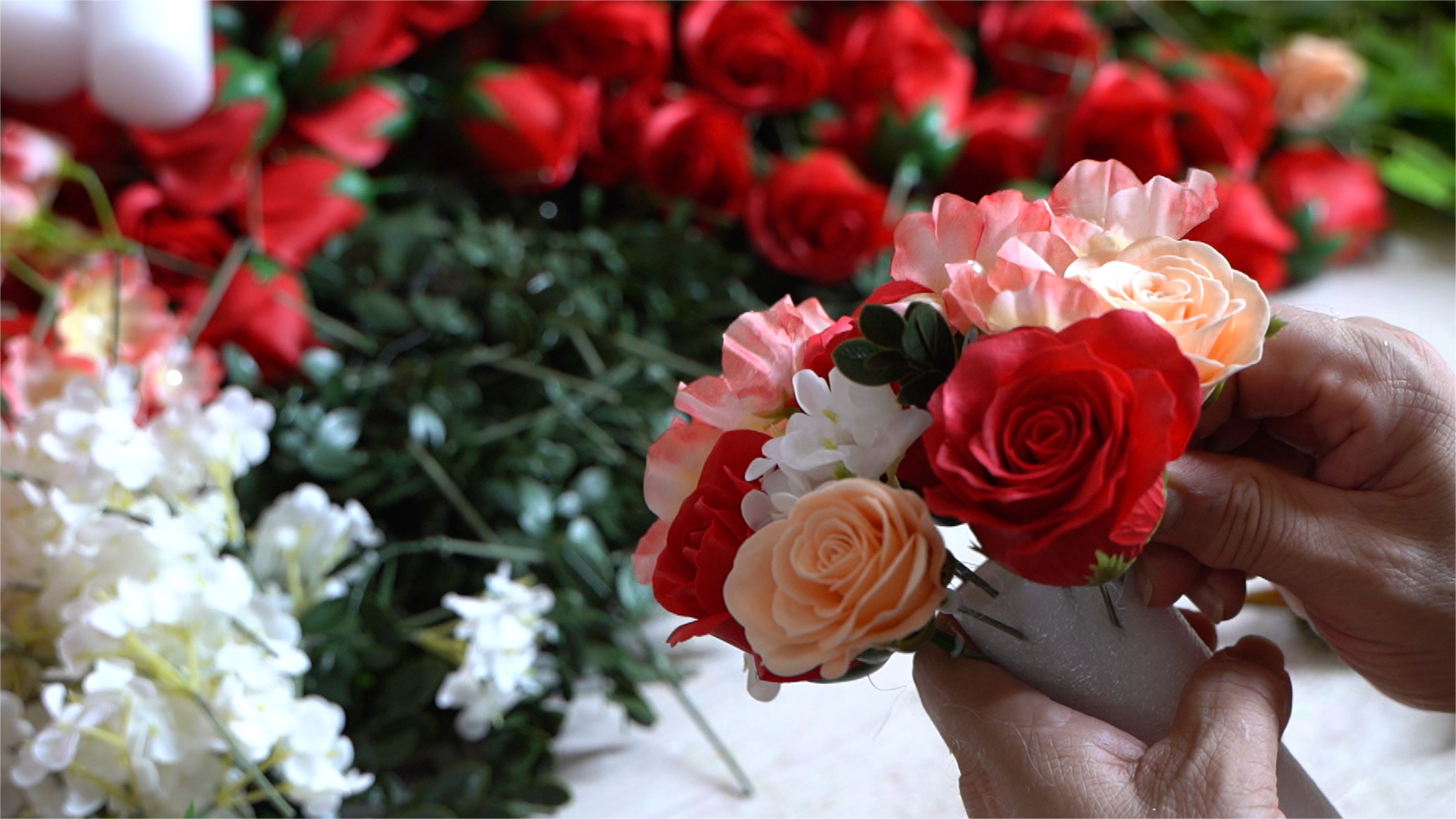
- PE Rose Animals: Typically constructed by gluing hundreds of molded PE foam roses onto a lightweight polystyrene foam base (such as the popular “PE Rose Bear”). These are highly resilient to rough handling and shipping, making them ideal for high-volume e-commerce fulfillment.
To explore which specific floral category fits your brand’s price point and target market, you can use the interactive Sweetie AI tool to filter options by material, design, and budget.
Customization and OEM/ODM Capabilities for Different Floral Types
Product differentiation is the key to maintaining healthy margins in the competitive gift and home decor sectors. Sourcing from a versatile supplier that handles both natural preservation and synthetic manufacturing allows for diverse customization.
Customizing Wholesale Preserved Roses
Preserved roses offer a high level of prestige but require precise agricultural grading. When sourcing preserved roses, customization options typically include:
- Rose Grading: Sourcing Grade A roses (perfect symmetry, thick petals, no cracking) vs. Grade B roses (slight natural imperfections, suitable for dense arrangements).
- Sizing: Choosing specific bud diameters, ranging from micro-roses (2-3 cm) to giant premium roses (9-10 cm).
- Color Matching: Custom dyeing processes to match exact Pantone colors, metallic shades (gold, silver), or multi-color rainbow gradients.
Customizing Artificial Floral Gifts Wholesale
For synthetic products like PE rose bears, soap flowers, and crochet arrangements, manufacturing flexibility is virtually limitless. Importers can customize:
- Molds and Shapes: Creating unique foam bases (unicorns, hearts, custom mascots) for PE rose assembly.
- Scent Formulation: Infusing soap flowers with customized fragrances (lavender, rose, jasmine) at specified concentrations.
- Yarn Specifications: Adjusting crochet patterns, yarn thickness, and color palettes to align with seasonal trends.
Packaging Development and Quality Control
Because preserved flowers are delicate and susceptible to crushing, packaging is a critical component of the OEM process. Premium acrylic boxes, glass domes, and heavy-duty cardboard gift boxes with custom-molded plastic inserts are required to keep the roses stable during transit. For artificial flowers, packaging focuses more on volume reduction to lower shipping costs.
If you have custom design ideas or need custom packaging prototypes, our product development team at Sweetie is ready to assist. Please contact us at inquiry@sweetie-group.com to review your requirements.
Logistics, Storage, and Quality Control: Sourcing Best Practices
Managing the supply chain for artificial flowers vs preserved flowers requires completely different operational strategies regarding logistics and warehousing.
Shipping and Logistics
- Preserved Flowers: They are classified as fragile cargo. High humidity (above 70% RH) can cause the glycerin to leak out, leading to color bleeding and mold growth. Direct sunlight causes rapid fading. Therefore, ocean freight requires the use of desiccants and moisture-barrier packaging. For premium high-value shipments, air freight is highly recommended to minimize transit times and exposure to uncontrolled climates.
- Artificial Flowers: Extremely durable. They can withstand high heat and humidity during long ocean transits. The primary logistical challenge is volume. Products like PE rose bears are bulky and light. Vacuum-packaging or nested shipping methods are utilized to maximize container space and reduce shipping costs.
Quality Control (QC) Protocols
To avoid costly returns, importers must establish strict QC criteria with their suppliers before production. At Sweetie, our QC teams operate under two distinct frameworks:
- For Preserved Flowers: Inspection checks focus on petal cracking, mold presence, color uniformity, and glycerin saturation levels. We source directly from premium farms in Yunnan to ensure the base materials are of the highest caliber.
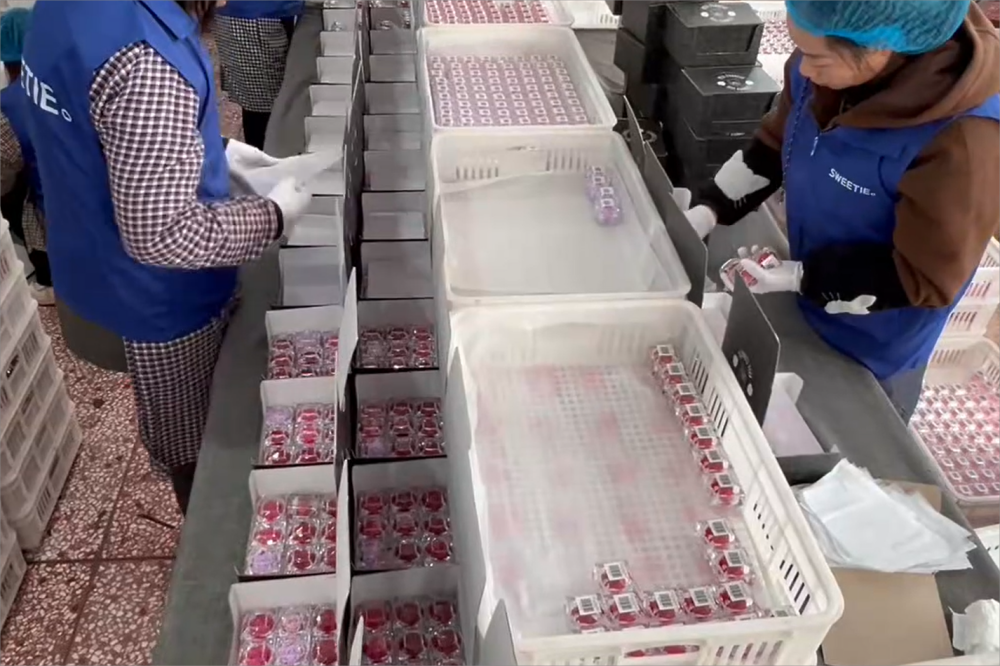
- For Artificial Flowers: Inspection checks focus on hot-glue residue, structural integrity of the base frames, colorfastness under heat, and scent retention in soap flower formulations. Our Yiwu-based manufacturing network utilizes automated sorting and high-precision assembly lines to maintain consistency.
Strategic Sourcing: How Sweetie Simplifies Your Floral Supply Chain
Navigating the complexities of long-lasting flower sourcing can be challenging when dealing with multiple specialized factories. Sweetie bridges this gap by integrating the best of both worlds: Yunnan’s premium agricultural preservation and Yiwu’s unparalleled industrial manufacturing capabilities.
Whether your brand focuses on high-end wholesale preserved roses in luxury acrylic cases, or high-volume artificial floral gifts wholesale for major holidays, Sweetie offers complete end-to-end solutions. From initial raw material selection to structural packaging design, rigorous quality control, and international door-to-door shipping, we ensure your products arrive in pristine condition.
For custom quotes, physical samples, or a detailed review of our factory certifications, please email our sourcing team directly at inquiry@sweetie-group.com . We invite you to discuss materials, customization, packaging, sampling, and production options for your target market.