For buyers sourcing preserved flowers, the most difficult decision rarely comes before the first order. It comes right after it.
The samples look fine. The trial shipment arrives on time. Nothing is obviously wrong. Yet many buyers hesitate to move forward. Not because of price, but because one question remains unanswered: Will this supplier still perform when the order is no longer small?
In the preserved flower business, the transition from an initial order to repeat production is where most sourcing risks appear. Understanding how experienced buyers manage this transition helps explain why some suppliers become long-term partners, while others remain one-time vendors.
1. First Deliveries Reveal More Than Samples Ever Do
Product condition after transport matters more than presentation
Samples are usually inspected in controlled conditions. First deliveries are not. Once preserved flowers go through packing, loading, international transport, and local handling, their real condition becomes clear.
Buyers pay close attention to how products arrive, not just how they looked before shipping. Flower head integrity, color stability, and overall presentation after unpacking are early indicators of whether a supplier understands real-world logistics.
Complete product integrity shapes confidence
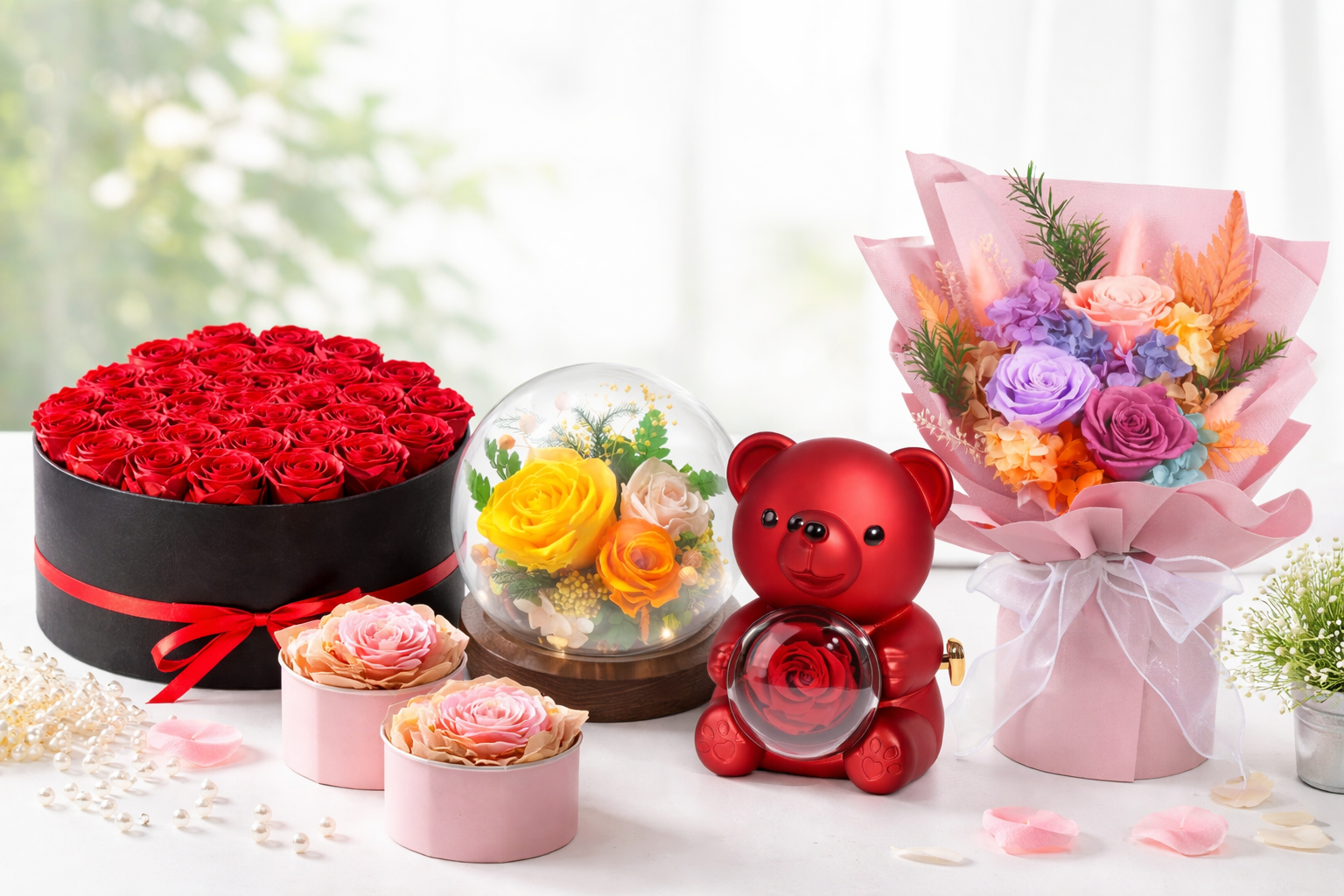
For preserved flower arrangements, especially those involving glass covers or structured boxes, the condition of the entire product matters as much as the flowers themselves. Poor fixing, loose internal structures, or unbalanced designs quickly raise concerns about scalability.
If you are reviewing a first preserved flower order and want to reduce uncertainty before moving forward, you are welcome to reach us at inquiry@sweetie-group.com for a practical discussion.
2. Breakage Is a Scaling Problem, Not a Trial Problem
Small losses become large costs at volume
In low quantities, damaged items are often tolerated. At scale, they are not. Buyers quickly learn that breakage rates increase costs far beyond product replacement, affecting delivery reliability and customer trust.
This is why experienced buyers look at early shipments not just for visible damage, but for signs that packaging and assembly were designed with repeat shipments in mind.
Packaging reflects operational maturity
Effective packaging is not defined by thickness alone. Buyers evaluate whether packaging design considers stacking, vibration, space efficiency, and handling during long-distance transport. These details often determine whether scaling is realistic.
3. Cost Decisions Shift After the First Order
Unit price loses influence as complexity increases
During early conversations, unit price dominates discussion. After the first order, attention shifts. Buyers begin calculating total landed cost, factoring in logistics efficiency, packaging volume, replacement rates, and internal coordination time.
What once looked like a competitive price may no longer be attractive once all operational costs are visible.
Logistics performance becomes a deciding factor
As order quantities grow, logistics performance stops being an estimate and becomes a measurable factor. Buyers assess whether shipping methods, packaging dimensions, and freight planning remain workable when volume increases.
4. Responsiveness Becomes a Test of Reliability
Clear communication reduces uncertainty
As cooperation progresses, buyers evaluate how clearly a supplier communicates. Accurate product details, consistent updates, and timely responses reduce friction and internal decision delays.
Poor communication, even when products are acceptable, often slows or stops repeat orders.
Issue resolution defines partnership potential
Problems are inevitable in production. What matters is how they are handled. Buyers observe whether issues are addressed proactively, with practical solutions, or delayed through explanations without resolution.
Early interactions set expectations for future cooperation.

5. Production Timing Exposes Hidden Constraints
Trial orders rarely reflect real production pressure
Initial orders are often flexible. Repeat production is not. Once volume increases, factory scheduling, material availability, and labor planning become critical.
Buyers evaluate whether delivery timelines are clearly explained and whether production planning accounts for seasonal peaks.
Seasonal demand highlights weak planning
In preserved flower sourcing, missed delivery windows during major holidays are often caused by late commitments rather than quality issues. Buyers learn to assess whether suppliers communicate capacity limits early and realistically.
6. Consistency Determines Long-Term Viability
Samples do not guarantee repeatability
A good sample proves capability once. It does not guarantee stable output. Buyers focus on whether product quality, color tone, and assembly remain consistent across batches.
Inconsistent results, even if minor, introduce risk that many buyers are unwilling to accept.
Stability comes from systems, not promises
Long-term reliability depends on internal controls, material sourcing, and standardized processes. Buyers look for evidence of these systems rather than verbal assurances.
If you are considering whether a preserved flower supplier is ready for repeat production, we are happy to share our experience. You can contact us at inquiry@sweetie-group.com
Where Our Experience Fits Into This Process
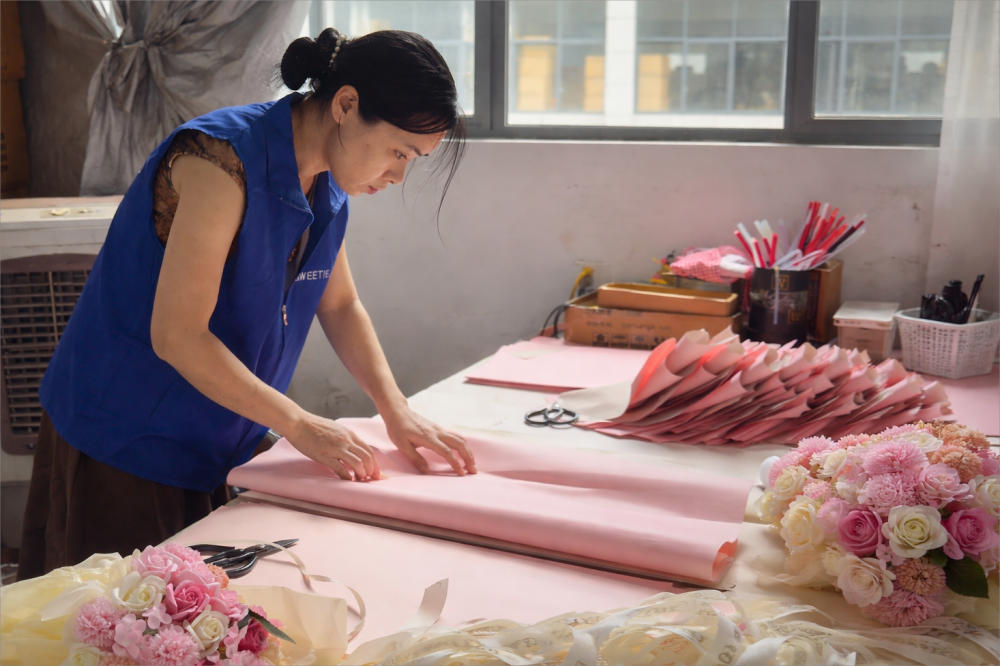
Much of this evaluation process becomes visible only after buyers move beyond samples and trial orders. This is the stage where we work most closely with our customers.
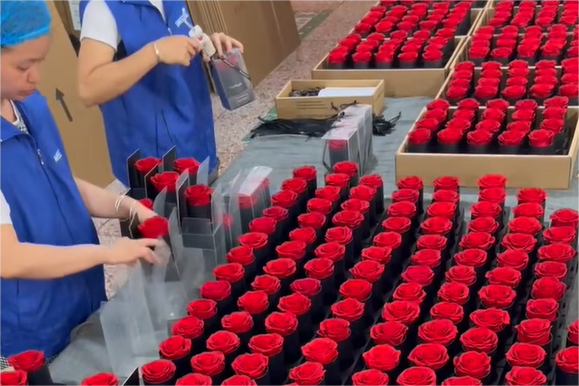
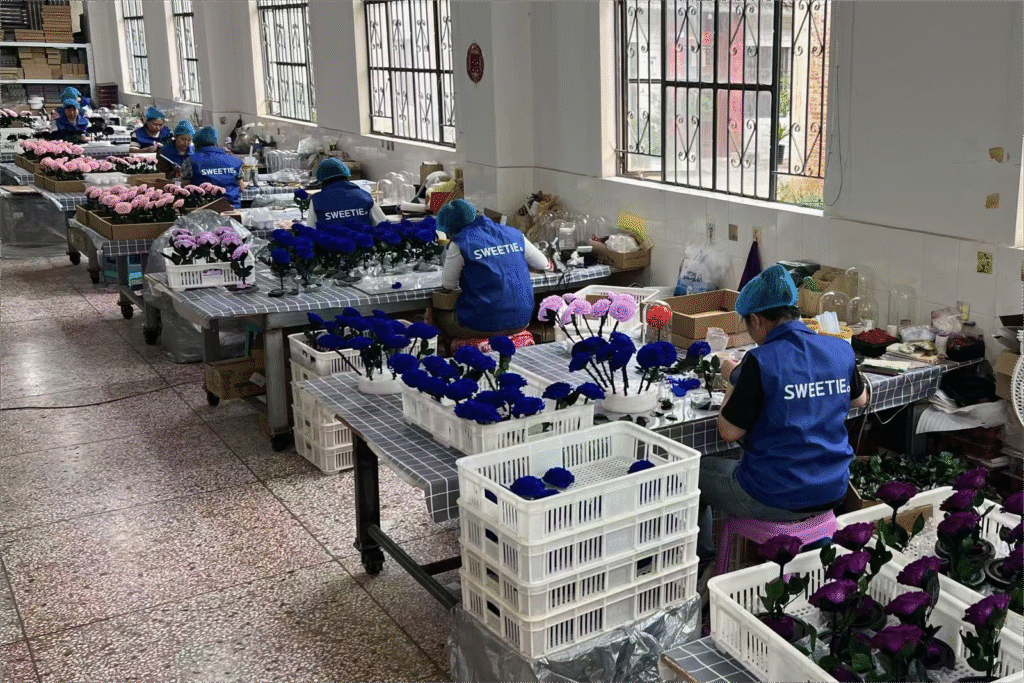
At Sweetie, we support preserved flower buyers as they transition from initial orders to repeat production. Over the past 16 years, we have worked with clients across Europe, the Middle East, and North America who face exactly these decisions.
Because our production is based in China with direct access to Yunnan’s flower resources, we are involved at the points that matter most when scaling: material selection, preservation control, batch consistency, and packaging structures suited for international transport.
Our role is not to accelerate volume prematurely, but to help buyers reduce uncertainty as orders grow.
Conclusion
In preserved flower sourcing, the most important decisions are rarely made before the first order. They are made afterward, when real conditions reveal how a supplier performs under scale, pressure, and repetition.
Buyers who understand this transition reduce risk. Suppliers who understand it earn long-term trust.
If you are evaluating your next steps after a first preserved flower order and want to discuss how to move forward with confidence, you are welcome to contact us at inquiry@sweetie-group.com.
Annie Zhang, CEO of Sweetie Group