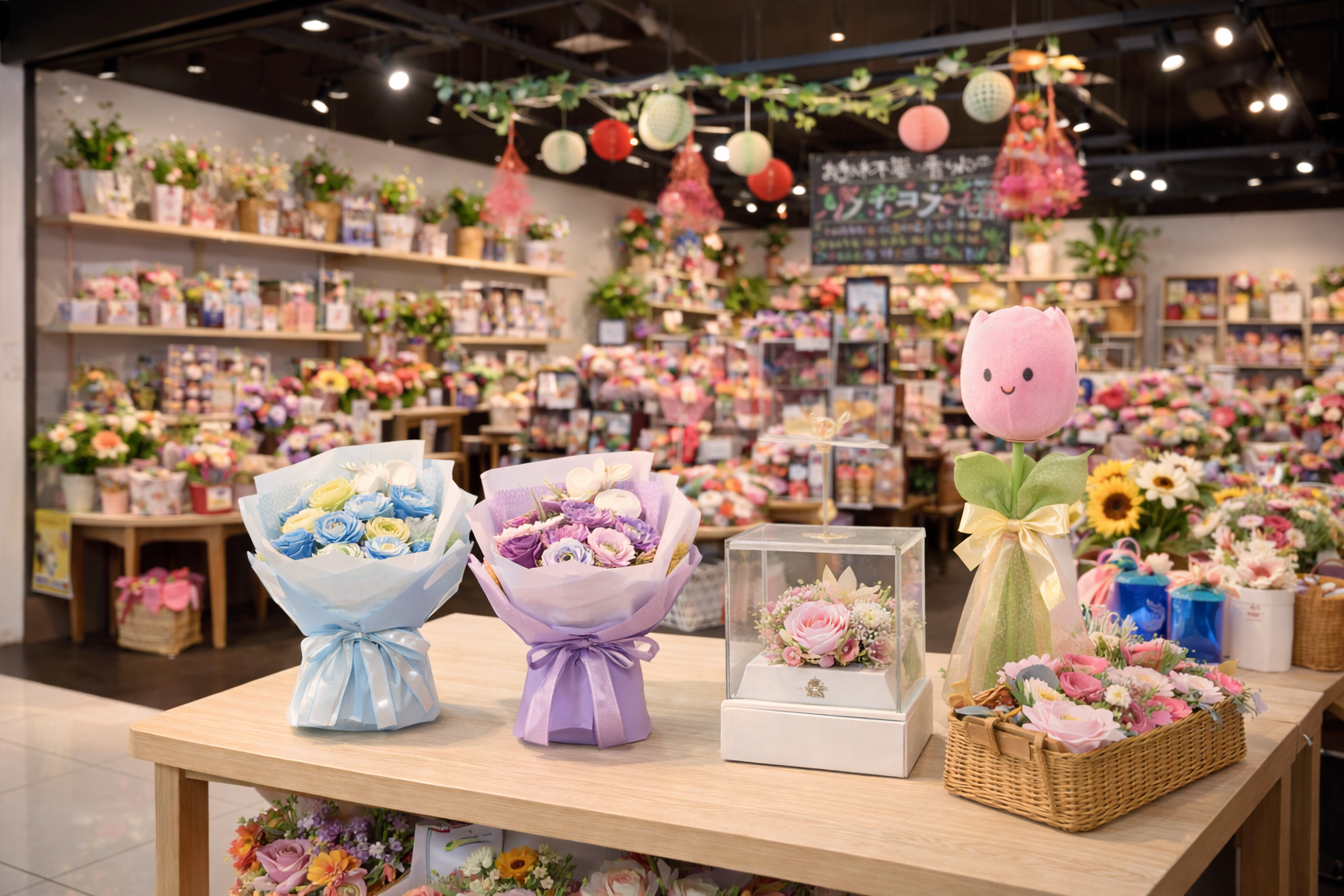
Mother’s Day remains one of the most commercially reliable gifting occasions in supermarkets across the U.S. and Europe. Sales spike. Foot traffic increases. Shoppers say they plan to buy something.
And yet, many buying teams walk away from the season with a familiar question:
Why did some products perform exactly as expected, while others—despite careful planning—fell short?
The answer is rarely about execution errors. More often, it comes down to a disconnect between how Mother’s Day shoppers actually behave and how assortments are traditionally built.
This article takes a closer look at that disconnect—and what it means for supermarket buyers planning Mother’s Day programs today.
Mother’s Day Is Still a Gifting Holiday—but Not a Predictable One
From a buying perspective, Mother’s Day appears stable:
- It happens every year
- Core categories repeat (flowers, chocolates, small gifts)
- Historical data offers clear benchmarks
But consumer behavior around Mother’s Day has shifted in ways that make outcomes less predictable at the SKU level.
Shoppers still want to give something—but how and when they decide has changed.
How Shoppers Actually Approach Mother’s Day Purchases
1. Planning Happens Earlier—Purchasing Happens Later
Many consumers begin thinking about Mother’s Day weeks in advance, but the actual purchase often happens in the final days before the holiday.
This creates a compressed decision window where shoppers:
- Spend less time comparing options
- Rely more on visual cues and price anchors
- Choose items that feel immediately appropriate as gifts
For supermarkets, this means Mother’s Day success is increasingly driven by decision speed, not just assortment depth.
2. Price Anchors Matter More Than Category Labels
Rather than shopping by category (“flowers,” “gifts,” “seasonal”), many shoppers shop by acceptable spend.
Common comfort zones include:
- Entry-level gifting
- Mid-range, gift-ready items
- Simple upgrades that feel thoughtful but not excessive
Products that clearly communicate value at a glance tend to outperform those that require explanation—even if the latter are objectively higher quality.
If you are reviewing how price structure affects sell-through during Mother’s Day, we’re always open to sharing category-level insights from recent U.S. and European retail programs. You can reach us at inquiry@sweetie-group.com.
3. Experience Is Competing With Physical Gifts
A growing share of Mother’s Day budgets goes toward dining out, shared activities, or experiences. This does not eliminate gift purchases—but it changes expectations.
Shoppers often look for:
- A symbolic item rather than a functional one
- Something that complements an experience
- A gift that communicates care without feeling overplanned
This helps explain why some traditional gift items underperform, while simpler, emotionally clear products convert more consistently.

The Role of Amazon: Not a Replacement, but a Filter
Amazon has reshaped Mother’s Day shopping without replacing supermarkets.
Online platforms tend to absorb:
- Planned purchases
- Standardized gift options
- Shoppers prioritizing delivery certainty
Supermarkets, by contrast, capture:
- Immediate, emotional decisions
- Last-minute purchases
- In-store problem-solving (“I need something today”)
This division means supermarket assortments increasingly succeed when they:
- Reduce shopper hesitation
- Feel gift-ready without context
- Avoid creating pressure for post-holiday clearance
Where Buyer Assumptions Often Break Down
The mismatch usually isn’t dramatic—but it is costly when repeated at scale.
Common friction points include:
- Overestimating how much time shoppers will spend choosing
- Underestimating demand for non-perishable, non-season-exclusive gifts
- Assuming variety improves performance, when clarity often does more
In Mother’s Day programs, less friction often beats more choice.
Why Some Buyers Adjust Their Sourcing Strategy
As Mother’s Day becomes more behavior-driven and less calendar-driven, some buyers reassess what they prioritize in seasonal sourcing.
Instead of focusing only on novelty, they look for:
- Gift-ready presentation that works under time pressure
- Stable quality during peak season
- Products that remain sellable after the holiday without discomfort
These considerations are less about trend-chasing and more about operational resilience.
If you’re evaluating how to reduce uncertainty in your next Mother’s Day program, we’re happy to have a practical conversation at inquiry@sweetie-group.com.
Rethinking Mother’s Day as a Retail Moment
Mother’s Day has not become less important—it has become more compressed, more emotional, and more channel-influenced.
For supermarkets, the opportunity lies not in radically changing categories, but in aligning assortments with how shoppers actually decide:
- Quickly
- Emotionally
- With limited time and attention
Buyers who plan for that reality tend to see more consistent results—without taking on additional risk.

Annie Zhang, CEO of Sweetie Group