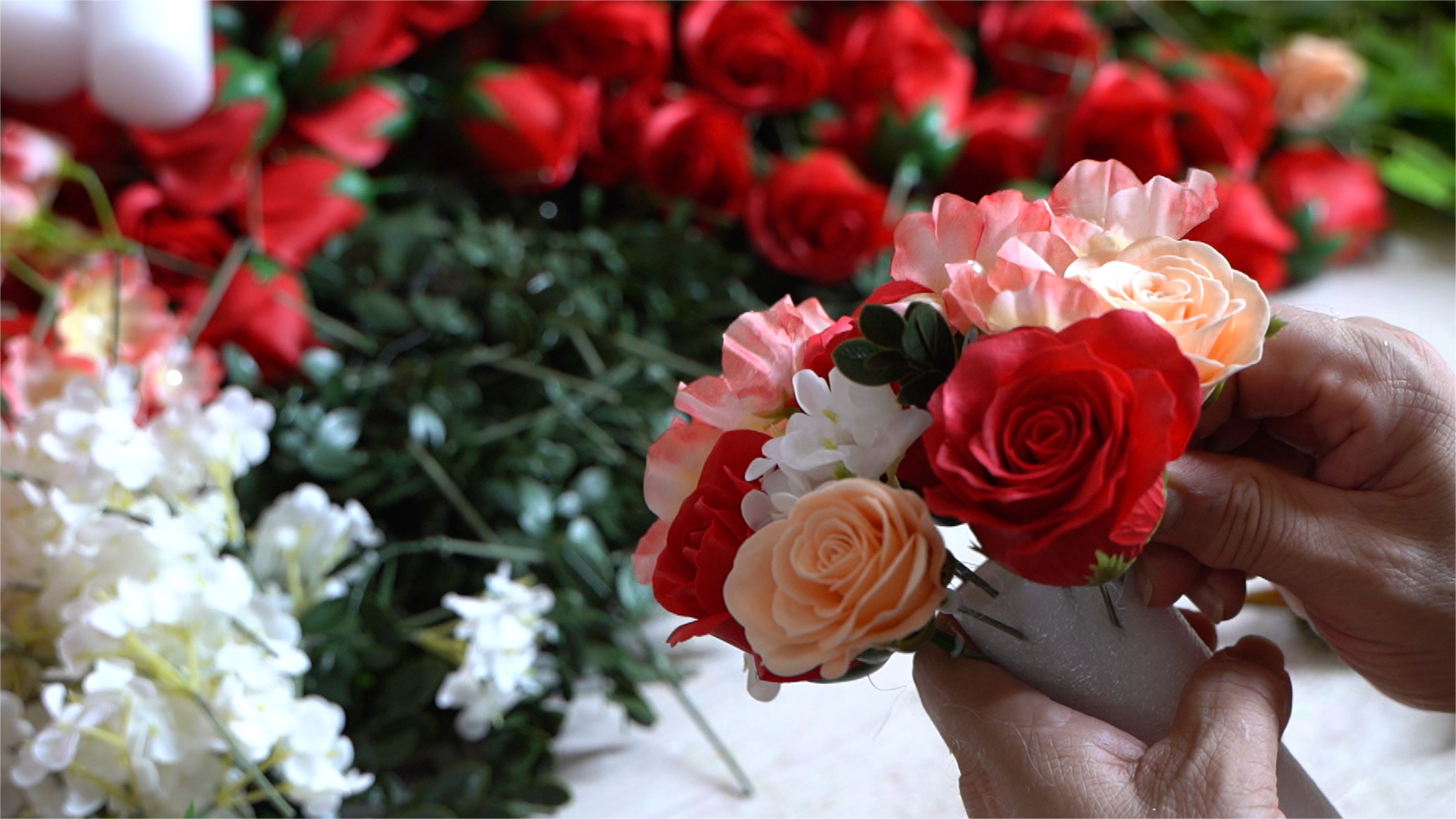
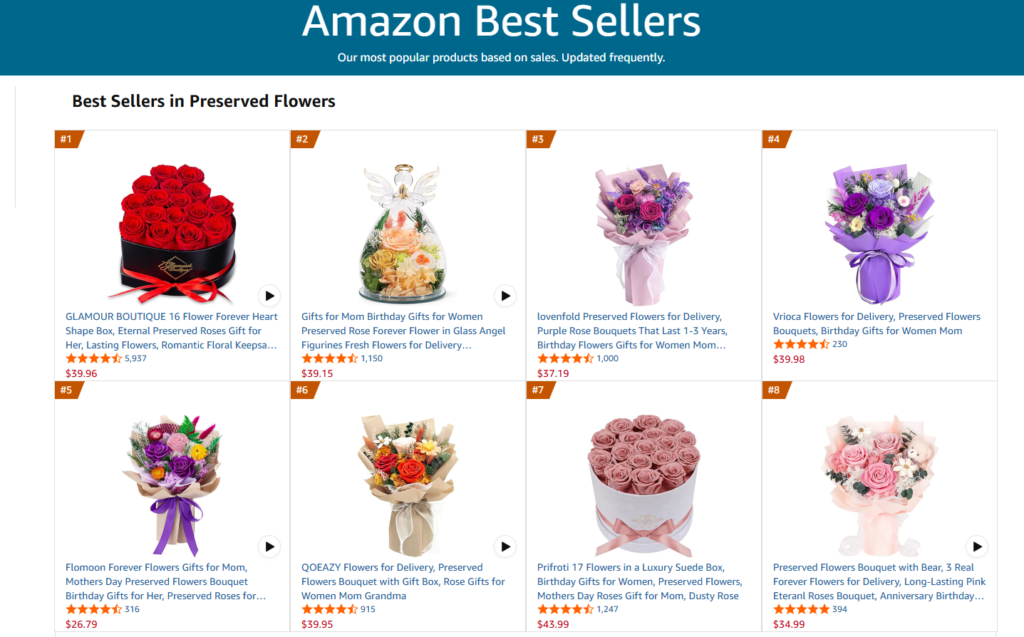
Preserved flower bouquets can sell well on Amazon. They are giftable, visually strong, and easier to manage than fresh flowers.
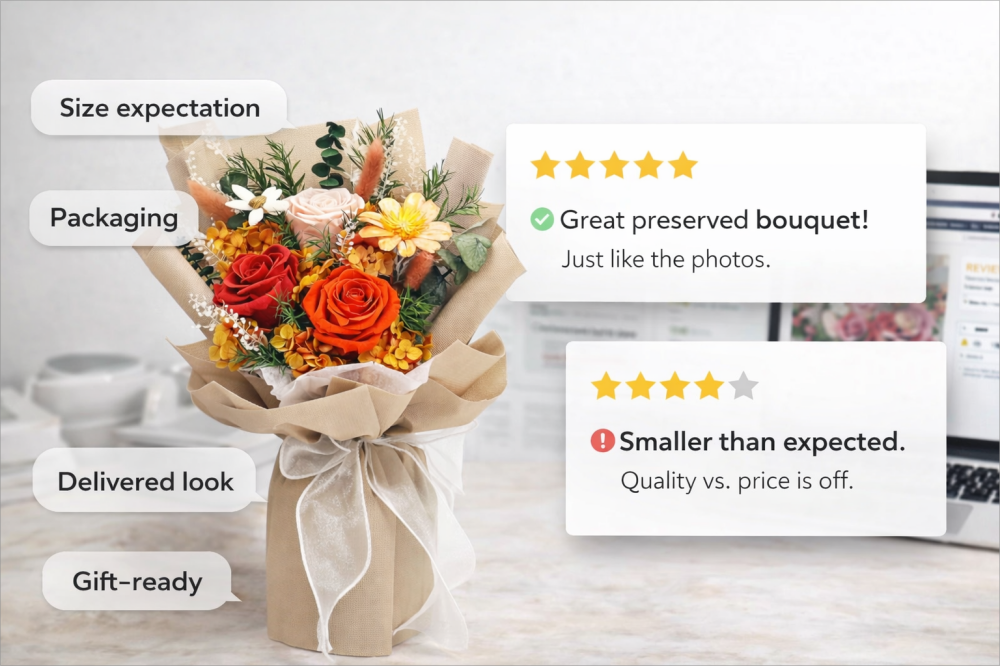
But this category also generates avoidable complaints when the delivered product does not match customer expectations on size, appearance, packaging, or value.
For Amazon sellers, the issue is usually not demand. It is alignment. If the bouquet, the listing, and the delivery experience do not work together, reviews and returns become harder to control.
This article explains why preserved flower bouquets get complaints on Amazon, what buyers expect from the category, and what sellers should get right to reduce returns and improve customer experience.
Quick Answer: Why Do Preserved Flower Bouquets Get Complaints on Amazon?
The short answer is simple:
Most complaints happen when the delivered bouquet feels different from the listing promise.
That mismatch usually comes from five areas:
- the product is not clearly defined
- the size feels smaller than expected
- the bouquet arrives looking less polished than the listing photos
- the packaging protects poorly during parcel delivery
- the overall presentation feels less premium than the price suggests
When these five areas are handled well, complaints and returns usually become much easier to control.
What Amazon Customers Often Misunderstand About Preserved Flower Bouquets
One of the biggest challenges in this category is that many customers do not clearly understand what “preserved flowers” means.
A preserved flower bouquet uses real flowers that have been treated to last much longer than fresh-cut flowers. But that does not mean customers automatically know how preserved flowers should look, feel, or behave.
On Amazon, buyers often compare preserved bouquets to three very different reference points at the same time:
- fresh flower bouquets
- dried flower bouquets
- artificial flower bouquets
That creates confusion quickly.
Some customers expect something close to fresh flowers. Others think in terms of dried floral décor. Others focus only on whether the bouquet looks natural enough not to seem fake. If the listing does not define the product clearly, the customer often fills in the blanks with the wrong assumptions.
That is one reason this category needs stronger explanation than many other gift items.
Why the Category Still Works Well on Amazon
Even with those challenges, preserved flower bouquets remain attractive for Amazon sellers.
The reasons are straightforward:
- they fit major gifting occasions
- they have a longer shelf life than fresh bouquets
- they can be stocked ahead of peak seasons
- they offer more emotional appeal than many standard gift items
- they are easier to manage operationally than perishable flowers
In other words, the category works because it combines gift value, visual appeal, and convenience.
The real opportunity is not simply to sell preserved bouquets on Amazon. It is to sell them in a way that reduces preventable disappointment after delivery.
The Main Reasons Customers Leave Negative Reviews
Most problems in preserved flower bouquets are not random. They follow a pattern.
1. The bouquet feels smaller than expected
This is one of the most common triggers for poor reviews.
In floral gifting, size is not only about dimensions. It affects perceived value. If the bouquet looks fuller or taller in the listing than it feels in real life, the customer may quickly feel the product is overpriced.
That reaction can happen even when the listed dimensions are technically correct.
2. The delivered bouquet does not match the photos closely enough
This category is highly visual, so photo-to-product alignment matters a great deal.
A bouquet can look soft, balanced, and full in a product image, but arrive looking tighter, flatter, or less layered after packing and transit. Customers usually do not analyze why. They simply react to the gap.
Once the product feels different from what was promised, complaints become much more likely.
3. The customer expected something closer to fresh flowers
This is not a small issue.
Preserved flowers are real flowers, but they are not fresh-cut flowers. If a customer expects the softness, moisture, or movement of fresh flowers, the preserved bouquet may feel unfamiliar or disappointing.
Without clear listing guidance, some buyers interpret that difference as poor quality rather than as a category characteristic.
4. The bouquet is not built for parcel delivery
A bouquet can be attractive on a sample table and still be weak in Amazon fulfillment conditions.
Common issues include:
- pressed flower heads
- shifted structure
- exposed support materials
- wrapping that loses shape
- filler elements that move too easily during shipping
For customers, these details affect the first impression immediately. In a gifting category, first impression often becomes the review.
5. The product looks decorative, but not premium enough for gifting
There is a meaningful difference between “pretty enough” and “gift-worthy.”
If the bouquet feels overly busy, too synthetic in color, or too decorative in structure, customers may struggle to connect the delivered product with the price they paid. They may not describe the issue in design language, but they often express it as disappointment, low value, or “not what I expected.”
What Amazon Buyers Usually Expect from This Category
Understanding complaints becomes easier once the underlying expectations are clear.
Most buyers want preserved flower bouquets to do four things well:
- last longer than fresh flowers
- look close to the listing photos
- feel like a real gift, not just a floral arrangement
- arrive ready to present or display
That is the real standard.
Most customers are not looking for a technical lesson on floral preservation. They want a product that makes sense the moment they see it, open it, and compare it with the listing.
If the bouquet delivers that clarity, satisfaction usually improves. If it creates confusion, return risk goes up.
How Amazon Sellers Can Reduce Complaints Before the Product Ships
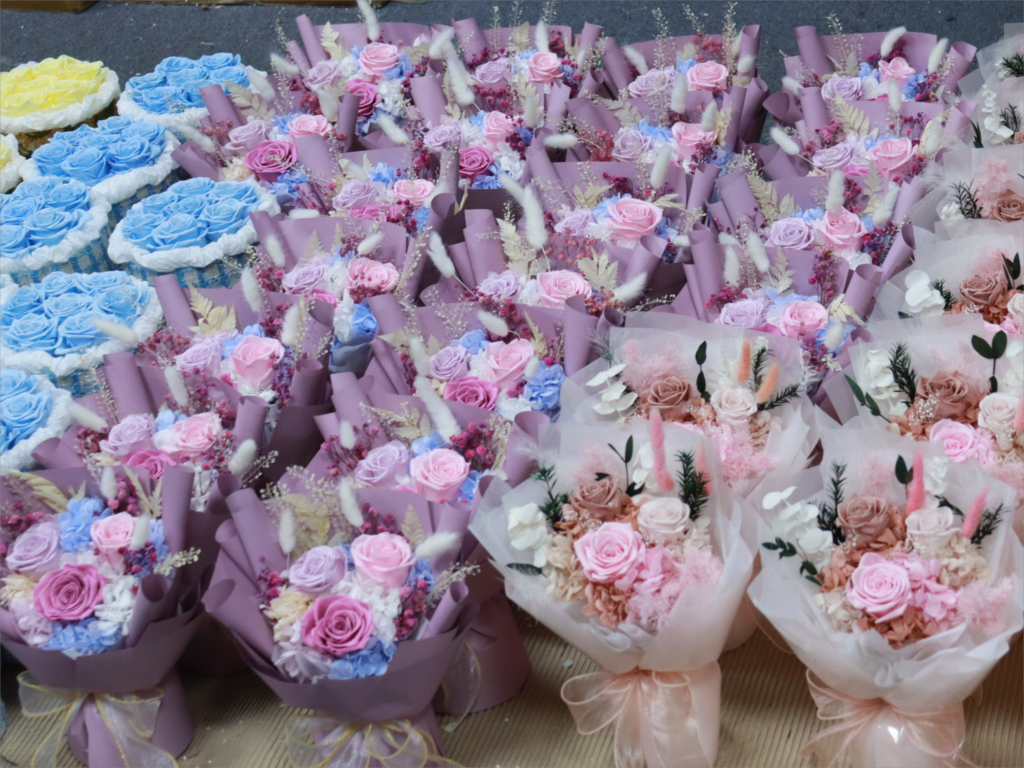
Returns and poor reviews often begin much earlier than customer service.
In preserved flower bouquets, prevention usually starts with product definition, listing communication, and packaging decisions.
Make the product type unmistakably clear
Do not assume the customer understands the category.
A stronger listing should explain clearly that the product uses real preserved flowers, and that preserved flowers are different from both fresh-cut bouquets and artificial bouquets.
This helps customers judge the bouquet by the right standard from the beginning.
Show scale in a way customers can understand quickly
Preserved bouquets need strong size communication.
That usually means using:
- in-hand photos
- tabletop or shelf context
- dimension graphics
- realistic front-view images
This is not about making the product look smaller. It is about reducing surprise after delivery.
Use product images that reflect real delivery condition
Attractive photography matters, but over-styled photography can create unnecessary complaint risk.
For Amazon sellers, a listing usually performs better over time when the photos reflect the bouquet as customers are likely to receive it, rather than only the bouquet in its most ideal styling condition.
Clarify the presentation format
Customers should not need to guess whether they are buying:
- bouquet only
- bouquet with outer gift wrapping
- bouquet with a display box or gift bag
- bouquet that needs light adjustment after opening
- bouquet that is ready to display immediately
This kind of clarity often improves trust rather than reducing conversion.
If your team is reviewing bouquet formats, presentation styles, or parcel-friendly packaging options for Amazon, contact inquiry@sweetie-group.com. Early alignment usually reduces revision work later.
Why Product Development Has a Direct Impact on Amazon Reviews
For preserved flower bouquets, product development affects reviews more directly than many sellers expect.
This is not just a traffic or conversion issue. It is a delivered-experience issue.
Build bouquet structures that hold up better in delivery
Some bouquet styles look elegant in product photography but are less stable in parcel shipping.
Amazon sellers usually benefit from bouquet structures that:
- hold their front-facing shape better
- use filler materials more strategically
- reduce movement during transit
- keep the gift impression intact after unpacking
A bouquet that arrives well usually starts with a bouquet that was developed with delivery in mind.
Control visual hierarchy more carefully
A bouquet should have a clear focal impression.
If too many materials compete visually, or if filler dominates the design, the bouquet may look busy instead of refined. That affects perceived value quickly, especially in gift categories.
Stronger bouquet development usually comes from editing, not from adding more elements.
Treat wrapping as part of the product, not as an afterthought
Wrapping has a major role in this category.
It influences:
- gift readiness
- perceived value
- shape retention
- unboxing experience
For Amazon sellers, wrapping is not only presentation. It is also part of the customer’s judgment about whether the product was worth the price.
Match bouquet design to the Amazon use case
Not every preserved bouquet is equally suitable for Amazon.
Some designs are better for:
- seasonal gift campaigns
- premium gifting
- entry-level price points
- gift bags or boxed presentation
- lower-damage parcel shipping
The strongest products usually come from matching bouquet design to channel logic, not simply choosing attractive flowers.
A Practical Framework for Amazon Sellers Evaluating Bouquet SKUs
A useful way to judge a preserved bouquet for Amazon is to evaluate it across three areas.
1. Product fit
Ask:
- Is the bouquet easy to understand at a glance?
- Does it feel clearly gift-oriented?
- Is the size easy to communicate online?
2. Delivery fit
Ask:
- Can the bouquet hold its look after normal parcel handling?
- Does the packaging reduce shifting and compression?
- Will the customer still see a polished bouquet after unboxing?
3. Review fit
Ask:
- Does the delivered product match the listing promise closely enough?
- Are there obvious expectation traps in the images or copy?
- Does the bouquet feel worth the price once it is in hand?
If the bouquet is weak in one of these areas, reviews usually reveal that weakness sooner or later.
What Many Amazon Sellers Overlook When Choosing a Supplier
A supplier may be able to produce an attractive sample. That does not automatically mean they are a strong fit for an Amazon-oriented preserved bouquet program.
Those are different capabilities.
For Amazon-focused sellers, the right supplier usually needs to understand:
- consistent repeat production
- parcel-friendly packaging
- practical product definition
- the difference between showroom styling and delivered condition
- small adjustments that reduce complaint risk
- OEM or trial development before scaling
That distinction matters. A product that looks good in a sample meeting may still struggle once it enters real fulfillment conditions.
How Sweetie-Gifts Supports Amazon-Focused Bouquet Development
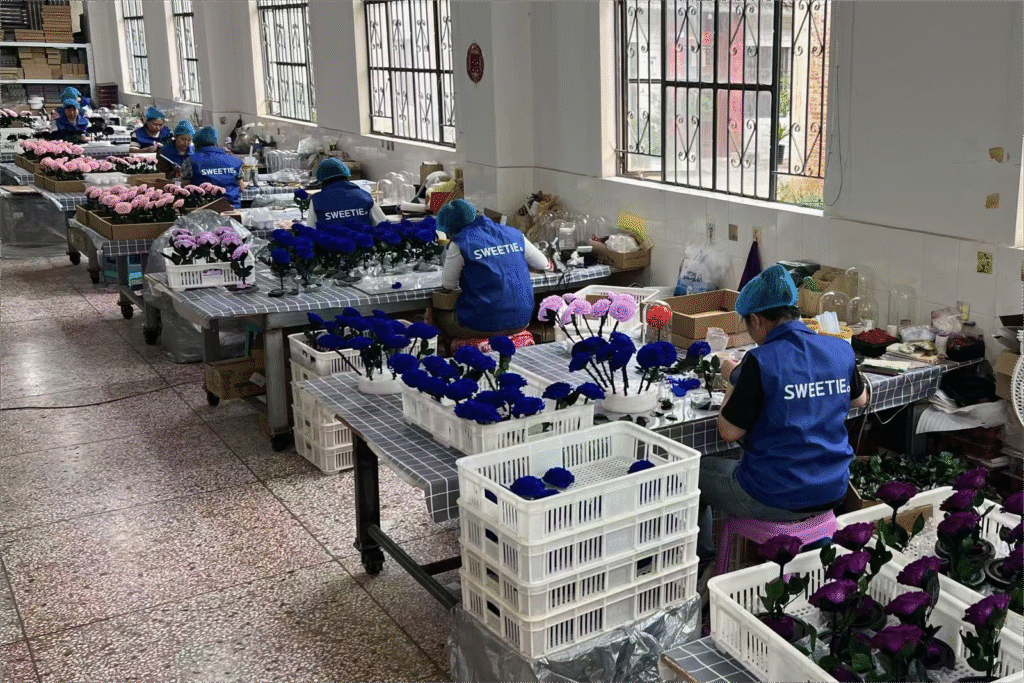
At Sweetie-Gifts, preserved flower bouquets are developed with both product presentation and e-commerce delivery in mind.
That means attention goes beyond flower combinations. It also includes structure stability, wrapping logic, packaging fit, and whether the delivered product will support the expectation created by the listing.
For Amazon-oriented projects, that often includes work on:
- bouquet style refinement
- presentation and wrapping adjustments
- parcel-friendly packaging
- OEM customization
- small-batch testing before larger rollout
This kind of preparation is useful because many complaints in preserved bouquets do not come from one large defect. They come from several smaller gaps that add up in the customer’s mind.
If you are planning a preserved flower bouquet line for Amazon, a gift-focused e-commerce store, or a seasonal online collection, email inquiry@sweetie-group.com. A short discussion around bouquet structure, packaging, or test-order planning can make supplier evaluation much more efficient.
FAQ: Preserved Flower Bouquets for Amazon Sellers
Are preserved flower bouquets a good Amazon category?
Yes, they can be. The category combines gifting appeal, visual merchandising value, and a longer shelf life than fresh flowers. But it also requires stronger control of product definition and delivered experience.
Why do preserved flower bouquets get returned on Amazon?
Returns often come from expectation mismatch: size, appearance, packaging, or misunderstanding of what preserved flowers are.
Is packaging really that important?
Yes. Packaging affects both protection and perceived value. In this category, it plays a major role in how customers judge the product.
Should Amazon listings explain the difference between preserved, dried, and artificial flowers?
Yes. That explanation helps buyers understand the category properly and reduces the chance that they evaluate the bouquet by the wrong benchmark.
What should Amazon sellers ask a bouquet supplier?
Key questions usually include delivery stability, repeat-order consistency, packaging fit, customization options, and whether the supplier understands e-commerce realities, not just product samples.
Final Takeaway
Preserved flower bouquets can be strong Amazon products. The demand is there, and the gifting logic is clear.
But success in this category usually depends on more than attractive images and seasonal demand. It depends on whether the bouquet that arrives at the customer’s door feels aligned with the promise made by the listing.
For Amazon sellers, that usually means getting five things right:
- category explanation
- size communication
- product-photo honesty
- delivery-friendly bouquet development
- packaging that protects both the product and the gift experience
When those pieces work together, complaints and returns become much easier to manage.
For teams looking to develop preserved flower bouquets with Amazon in mind, contact inquiry@sweetie-group.com.

Annie Zhang, CEO of Sweetie Group