Walk into a store like Søstrene Grene for one small item and something curious often happens. A candle holder turns into a candle holder plus a tray. A notebook quietly pulls in clips, ribbon, maybe a small box. Before long, the basket is fuller than expected, but it still does not feel heavy.
That is the part worth studying.
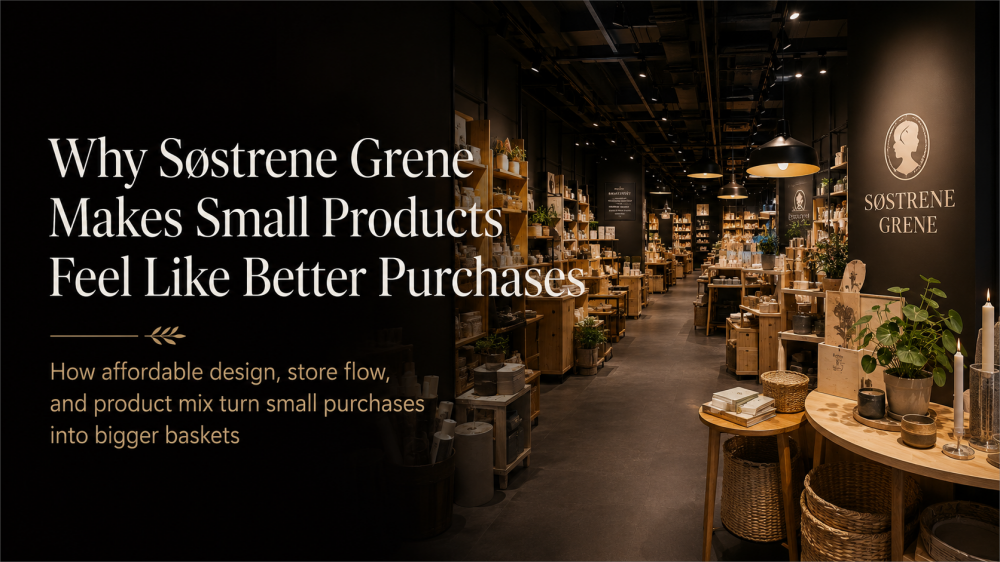
The usual explanation is “good atmosphere” or “nice products.” Both are true, but they are not enough. What really makes this retail model work is the way products are arranged to support one another. Small items do not sit there alone. They open the basket, deepen it, and sometimes lift its value without making the shopper feel pushed. That is why Søstrene Grene is more useful as a retail case study than as a simple “Scandinavian design brand.” Recent coverage describes it as a fast-growing Danish lifestyle retailer with a maze-like layout, calm in-store experience, frequent newness, and a broad assortment that stretches across homeware, crafts, gifts, stationery, and small furniture.
For buyers, merchandisers, and product teams, the interesting question is not whether the products look attractive. It is this: how does a retailer make affordable products feel more valuable, and how does it make small purchases grow so naturally?
It starts with a very light first “yes”
A lot of retail strategy sounds complicated until you watch what actually happens in a basket.
The first item matters more than the fifth. If the first item feels easy, the whole shopping trip changes. At Søstrene Grene, that first “yes” is often attached to something low-risk: a ribbon, a little ceramic piece, a candle holder, a notebook, a wrapping detail, a seasonal object. These are not major decisions. They are small, portable, and easy to imagine at home. That lowers friction immediately.
And once friction drops, the trip stops being purely functional.
That is where many retailers miss the real point. Small products are not only there to be sold cheaply. The best ones are there to change the mood of the purchase. They turn a task into a browse. They turn “I came in for one thing” into “maybe I’ll just finish this little corner while I’m here.”
That shift sounds subtle. Commercially, it is huge.
The basket grows because the products are not acting alone
The easiest way to understand Søstrene Grene is not by category, but by role.
Some products open the basket. Some products fill it out. Some products quietly raise its value.
Here is a simple way to read that structure:
| Product role | What it does | Typical examples |
|---|---|---|
| Basket opener | Makes the first purchase feel easy | candles, stationery, mini décor, wrapping items |
| Basket builder | Makes the purchase feel more complete | trays, storage pieces, small craft items, tabletop accessories |
| Basket lifter | Raises value without changing the tone of the trip | side tables, stools, light furniture, larger décor |
That structure is not an official company framework. It is simply the clearest way to explain what is happening.
A shopper picks up a candle holder. On its own, it is fine. But nearby there is a candle, a tray, maybe a soft-colored vase. Suddenly the customer is not buying one object. The customer is buying a small arrangement. The same thing happens with stationery, gift wrapping, children’s craft items, and light storage products. The second and third products do not feel like random add-ons. They feel like completion.
That is the trick, if “trick” is even the right word. It is less manipulation than choreography.
The store itself is doing part of the selling
This model would not work the same way in a flat, purely functional store.
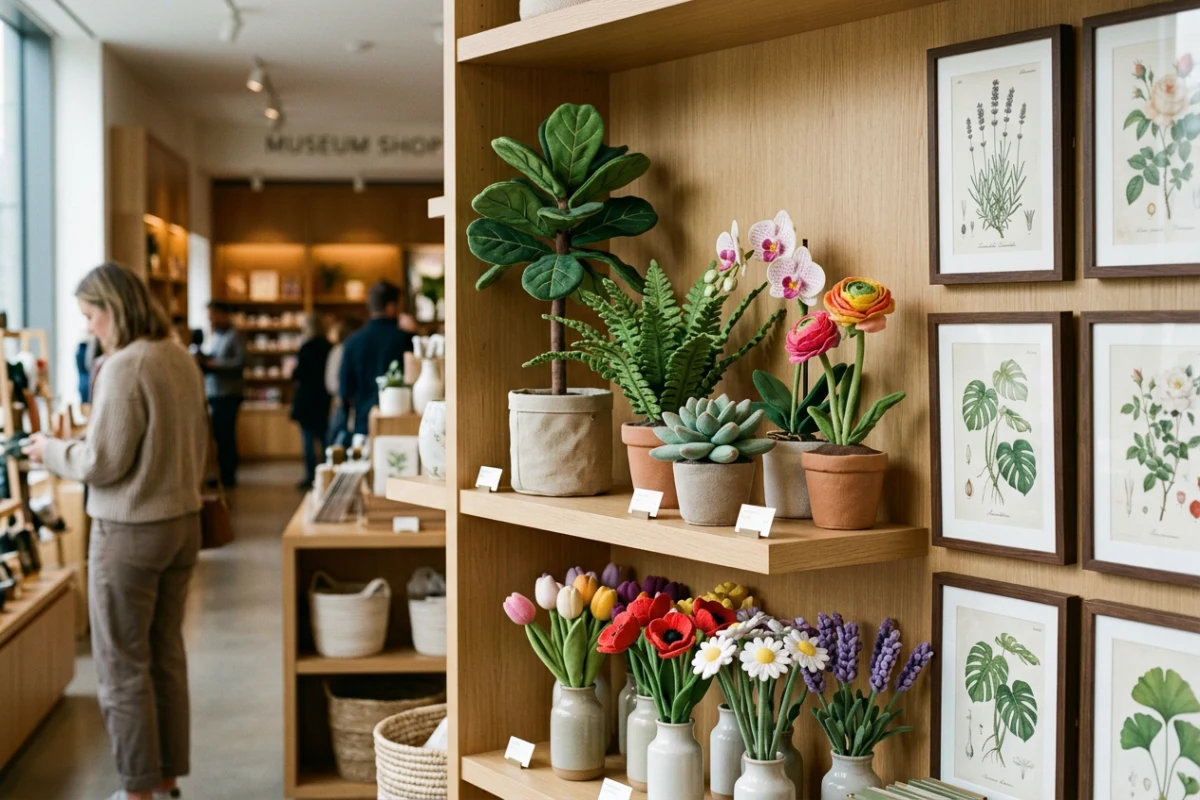
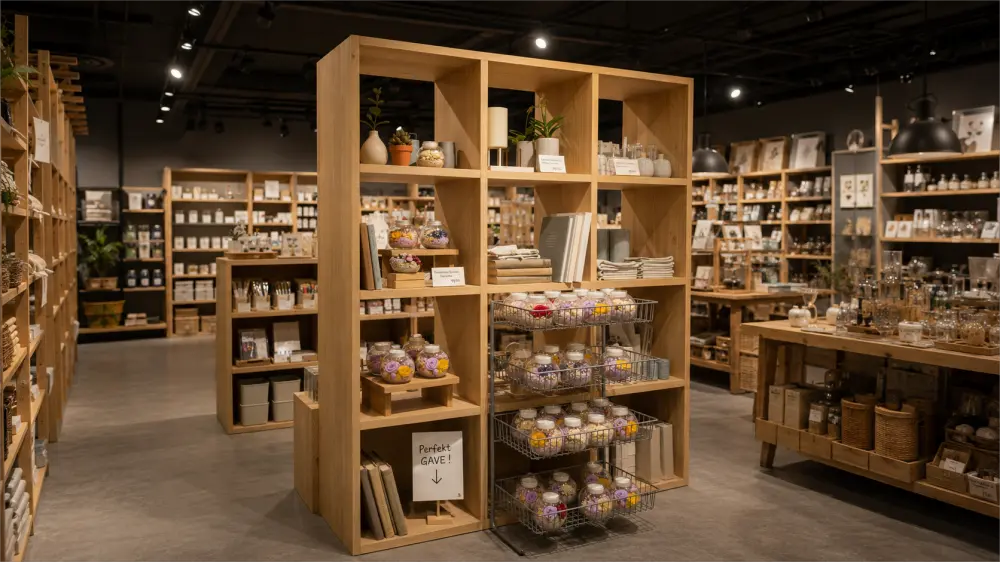
Søstrene Grene’s store design matters because it gives products time to connect. Public descriptions of the brand repeatedly mention its maze-like layout, darker walls, classical music, and a softer, slower browsing atmosphere. That combination changes how people move. They are not marching in, grabbing, and marching out. They are noticing things. Comparing. Building a tiny mental picture of where something could go.
That matters because connected buying needs exposure.
If a shopper never passes the tray after picking up the candle holder, the basket may stop early. If the path naturally carries that shopper from one related zone to another, the purchase expands without feeling forced. In other words, basket growth is not just a pricing story or a product story. It is also a pathing story.
This is one reason the brand is difficult to copy badly. A competitor can buy similar products. That is not the hard part. The harder part is making those products feel like they belong together inside a single trip.
Cheap is not the point. Manageable is the point
This is where the model gets more interesting.
A lot of people talk about affordable design as if it begins and ends with price. It does not. Low prices help, obviously. But low prices alone do not create value. Plenty of retailers sell cheap items that never become memorable, giftable, or basket-building.
What Søstrene Grene seems to understand is something more delicate: products do not need to feel expensive to feel worthwhile. They need to feel easy to adopt.
That means a few things at once:
- easy to understand
- easy to carry
- easy to place at home
- easy to combine with something else
- easy to justify without a long internal debate
That is a very different standard from simply being low-cost.
Financial Times used a pricing contrast that says a lot in very little space: about £3.54 for candlesticks, about £39.40 for a side table. That is not a random spread. It shows a price ladder. Very low-ticket products open the visit. Mid-level products deepen it. Light furniture gives the shopper one more step up without turning the trip into a major purchase event.
That is why a fuller basket still feels manageable. The tone of the visit stays gentle, even as value increases.
Newness keeps the system alive
A discovery-led store only works if discovery keeps happening.
If the assortment feels static, the whole system loses energy. Customers may still buy what they need, but they stop expecting surprise. Once that happens, basket growth becomes harder.
Søstrene Grene appears to understand this well. Public descriptions and background summaries point to frequent new products and regular seasonal refreshes. That matters because newness gives customers a reason to browse with attention. It also gives social media something useful to do: not close the sale, but start the visit.
That distinction is important.
A lot of retail teams ask whether social media “converts.” Sometimes that is the wrong question. In a model like this, social content may be better understood as a nudge toward in-store discovery. It is less “buy this now” and more “there may be something new waiting for you.” The store then finishes the work.
There is a serious operating system behind the soft mood
From the outside, this all looks easy. That is probably part of the appeal.
From the inside, it is not easy at all.
A retail model built on broad assortment, frequent newness, multi-category browsing, and repeated in-store discovery places real pressure on operations. It needs replenishment discipline. It needs good role balance across the assortment. It needs enough consistency that the store still feels visually coherent. And because the product categories stretch across home décor, crafts, kids’ items, and lighting, it also needs a wider compliance mindset than many people first assume. Public recall notices in Ireland involving a watercolour set and LED string lights are a reminder that “soft lifestyle retail” can still carry hard operational risk.
Logistics also stop being a back-office detail once the network grows. Recent reporting on the company’s investment in a distribution center in the Netherlands suggests the brand is reinforcing the infrastructure needed to support expansion and keep stores feeling fresh.
That part matters for anyone supplying discovery-led retail. If the store depends on flow, the supply side cannot behave like a slow, static catalog business.
So what should buyers and product teams actually take from this?
Not “let’s copy the candles.”
That would be the shallow reading.
The better takeaway is this: assortments perform better when products have jobs.
Some products should be there to open the basket. Some should complete the moment. Some should stretch the value gently. Once a team starts thinking in those terms, range planning gets smarter very quickly.
A few practical questions help:
1. Which items in the range are supposed to start the basket?
These should be low-friction, low-regret, easy-to-carry products.
2. Which items help one purchase lead naturally into another?
These are the products that make a basket feel fuller, not messier.
3. Which items raise value without changing the emotional tone of the trip?
That is where light furniture, better décor, or slightly larger pieces often come in.
4. Does the visual language help products support each other?
Aesthetic consistency is not decoration. It reduces decision friction.
5. Is seasonal planning only refreshing visuals, or also reshaping basket behavior?
That second part is where a lot of value hides.
These are not abstract questions. They are directly useful for gift chains, lifestyle stores, home décor retailers, seasonal programs, and compact floral or decorative ranges.
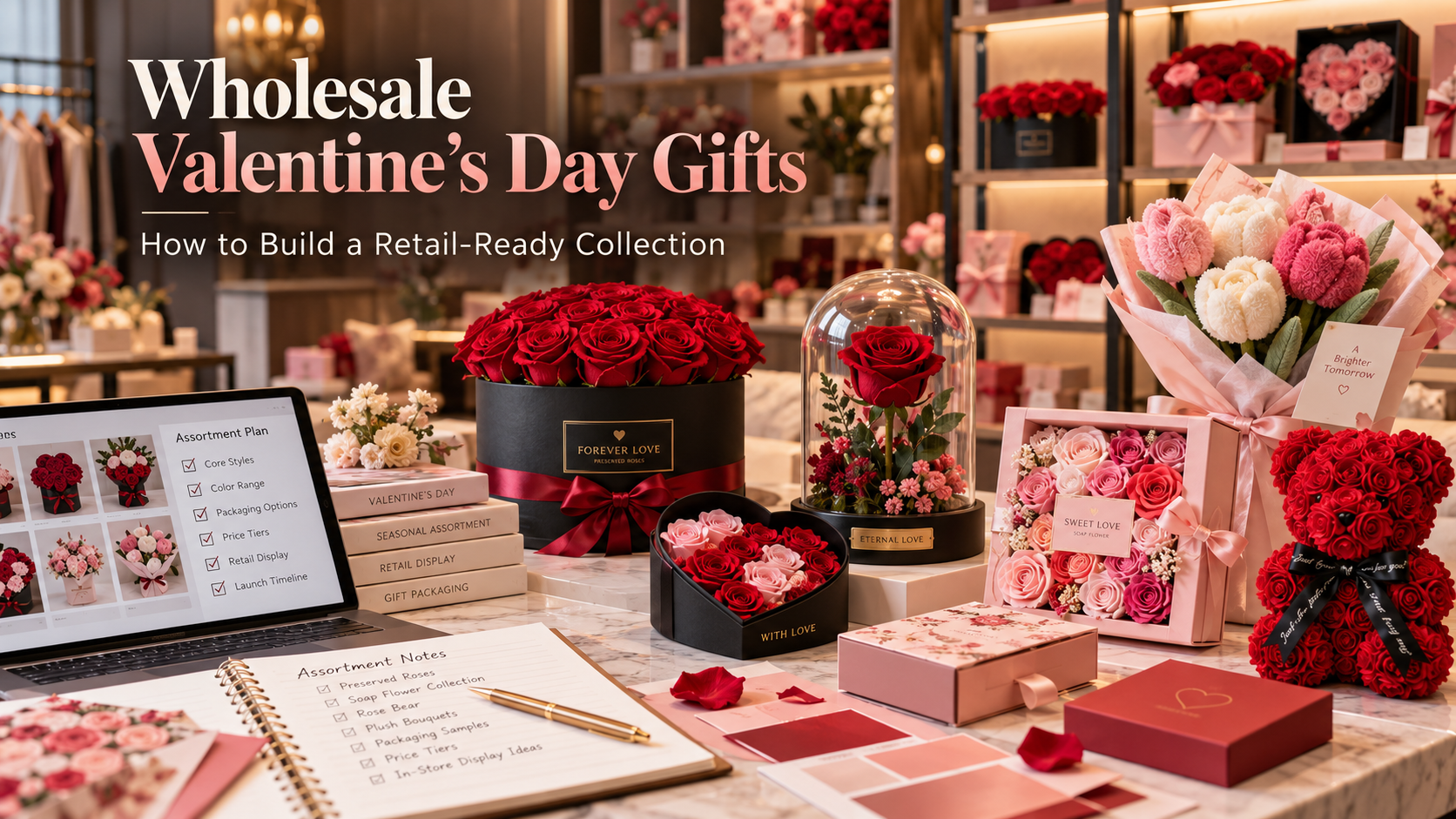
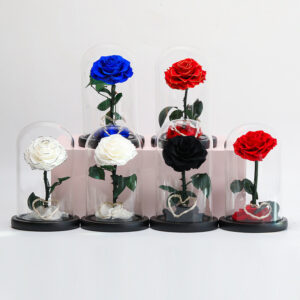
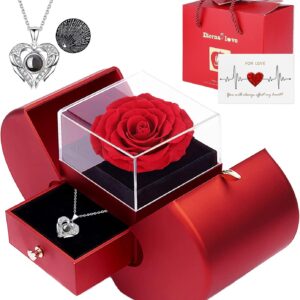
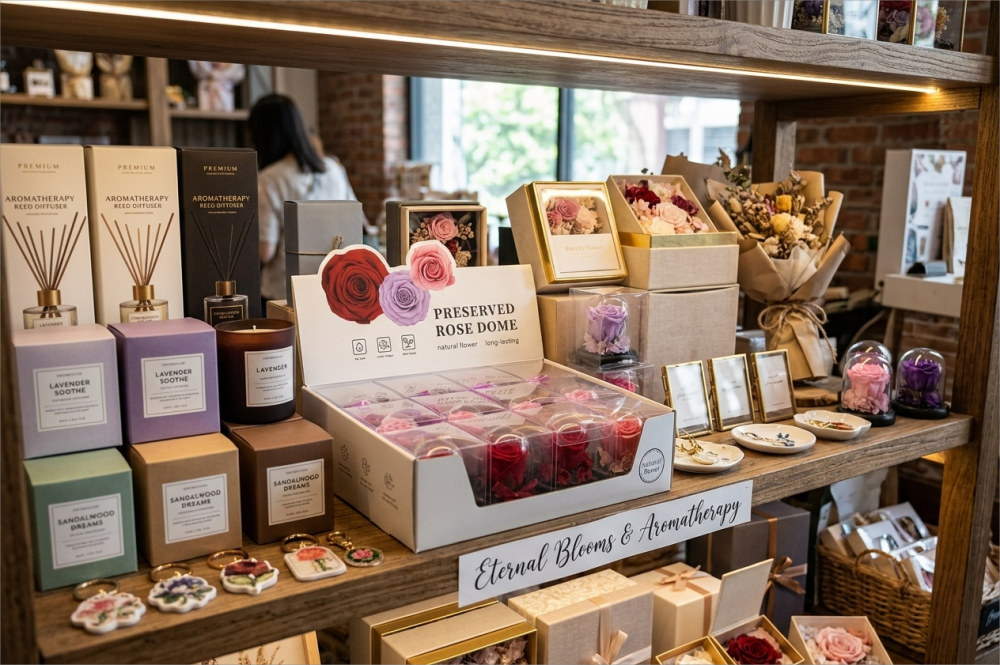
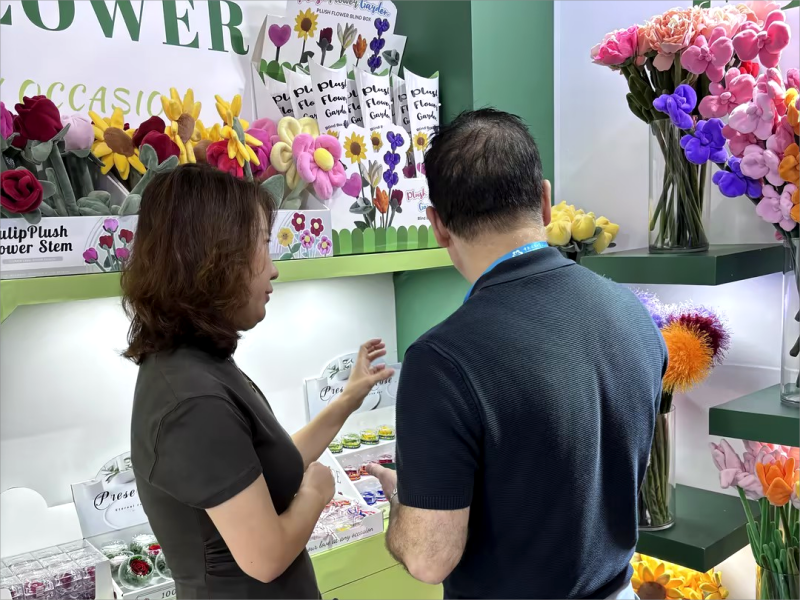
That is also why this case matters for product development beyond classic homeware. Sweetie’s own development system is built around “Flower + Everything,” which is really another way of saying floral products can work as basket-openers, basket-builders, or seasonal companions across more than one category. The company’s materials show experience with small preserved decoration, preserved flower gift boxes, rose animal products, plush flower lines, and one-stop custom development that includes sampling, 3D visualization, production planning, and after-sales follow-up.
If your team is thinking about discovery-led décor, floral add-ons, or small giftable products for a retail program, write to inquiry@sweetie-group.com.
A few direct answers buyers may actually want
Is Søstrene Grene mainly a cheap retailer?
Not really. It is more accurate to call it an affordable lifestyle retailer with strong discovery mechanics. Price matters, but the store experience and assortment structure matter just as much.
Why do customers buy more than they planned?
Because the first product feels easy, the next products feel related, and the store layout gives those products time to connect.
What makes its product mix work?
A clear mix of basket-openers, basket-builders, and basket-lifters, supported by a coherent visual world and regular newness.
What is the biggest operational challenge behind that model?
Keeping the assortment fresh, connected, compliant, and in stock across categories and markets without breaking the calm customer-facing experience.
Final thought
What makes Søstrene Grene worth studying is not that it sells small, nice things. Plenty of retailers do that.
What makes it useful is that it shows how small, nice things can be organized into a larger commercial system. One product opens the door. Another product deepens the reason to buy. A third product lifts value without making the customer feel that the trip has changed shape.
That is a stronger lesson than “sell more low-priced items.”
It is really about building a basket that grows politely.
Annie Zhang, CEO of Sweetie Group