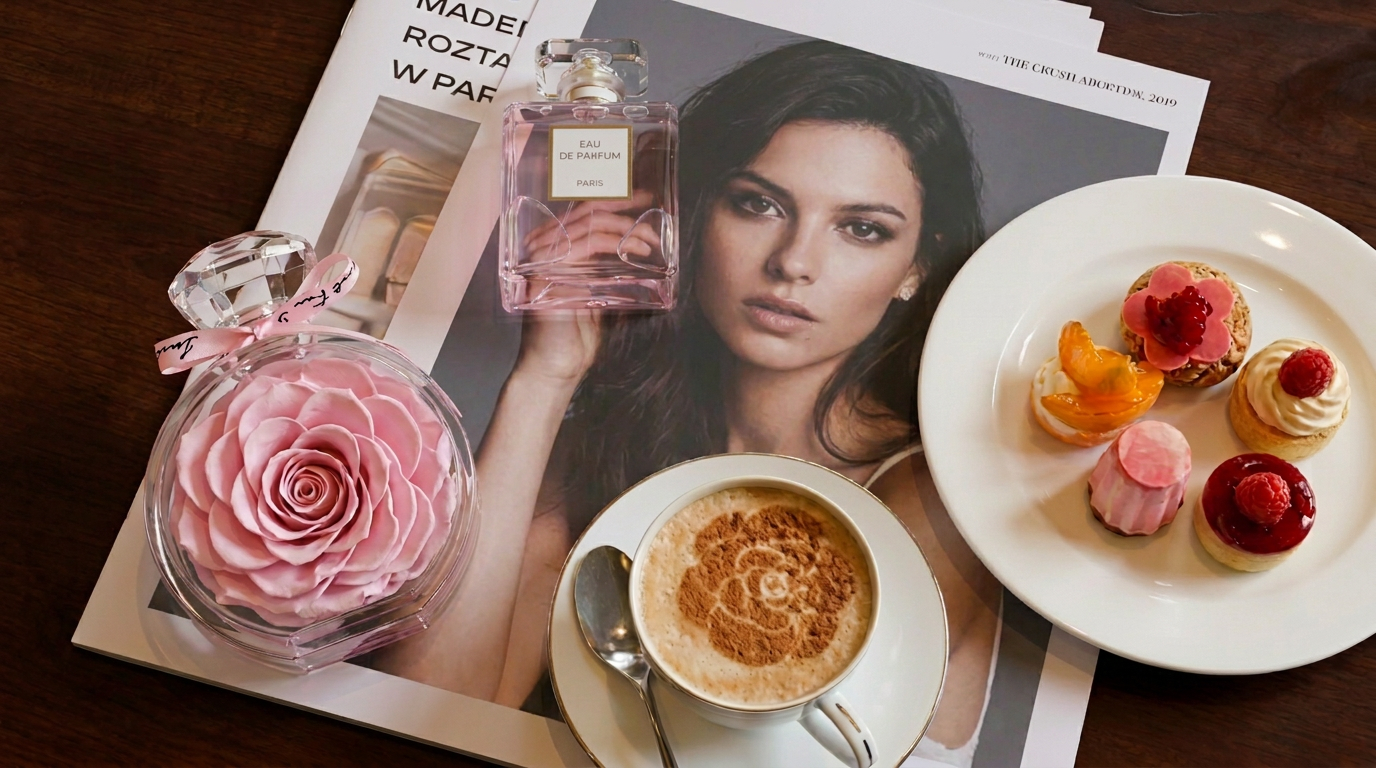
Retail has become much better at removing unnecessary work.
Products arrive closer to shelf-ready condition. Packaging is easier to handle. Prices are clearer. Replenishment is faster. Many gifts can now move directly from a shipping carton to a retail display with little adjustment.
That is real progress.
No store benefits from damaged packaging, confusing labels, unstable products, or gift items that require extensive preparation before they can be sold.
However, convenience alone does not explain why a gift product deserves space in a physical store.
A store can help a product become easier to see, compare, understand, and combine with other items. It can also provide relevant service or allow appropriate interaction with the product.
The challenge is not to make retail less efficient. It is to develop gift products that work efficiently while giving the store something useful to present.
Convenience Reduces Effort, but It Does Not Create Retail Value
Retail convenience can be measured through practical details:
- Carton quantity
- Shelf-space use
- Packaging stability
- Setup time
- SKU count
- Breakage rate
- Replenishment speed
These factors matter because they affect cost, labor, and day-to-day retail operations.
But once most products in a category meet the same basic standards, convenience becomes an entry requirement rather than a clear advantage.
A product may be easy to stock and easy to purchase, yet still look almost identical to every other item around it.
Retail value comes from something different.
A gift product creates more value in a physical store when its materials, quality, size, presentation, or intended use become easier to understand in person. It may support useful comparison, fit naturally into a coordinated display, or benefit from brief and relevant service.
A practical distinction is:
Retail convenience reduces effort. Retail value gives the product something worth presenting.
Both are necessary.
A product that looks attractive but is difficult to manage may not remain presentable after several weeks on display. A highly efficient product with no visible point of difference may struggle to justify its place in the assortment.
What Physical Retail Can Add to a Gift Product
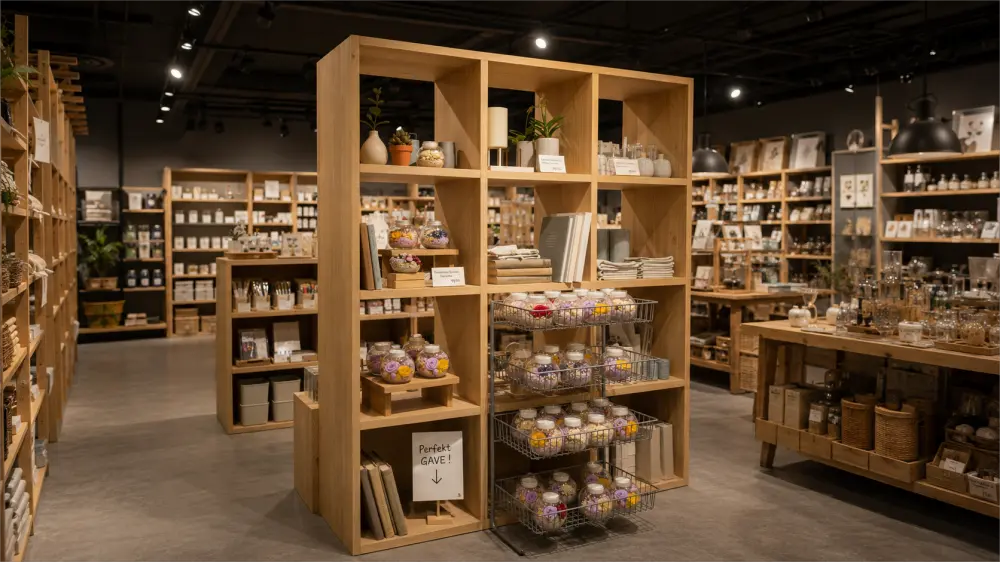
Physical retail does not need to create a complicated experience.
Its value often comes from four simple functions: product understanding, comparison, service, and discovery.
Clearer Product Understanding
A physical store presents the real scale, color, texture, and proportion of a product.
This matters for many flower-based gifts.
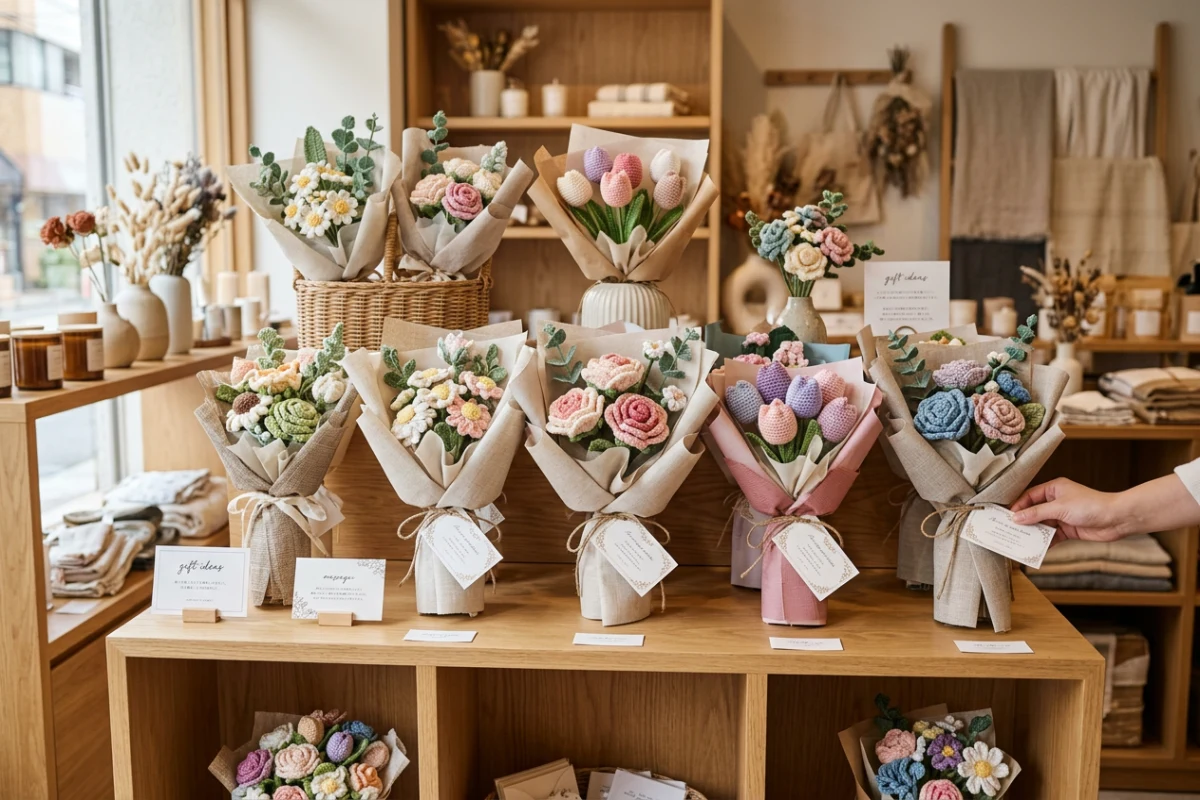
A preserved flower arrangement may appear fuller or smaller than expected in a photograph. A plush flower is partly defined by touch. A crochet flower can be judged by its shape, stitching, and finishing. A glass dome gift depends on balance, clarity, and visible stability.
Packaging should make these qualities easy to inspect without requiring the product to be opened.
For floral gifts, important visible details may include:
- Flower head condition
- Color balance
- Arrangement density
- Product proportions
- Main decorative elements
- Container quality
- Internal stability
When the main product value is hidden, the store loses part of its advantage.
Useful Comparison
A physical display can make differences between products easier to understand.
Comparison works best when the variations are meaningful.
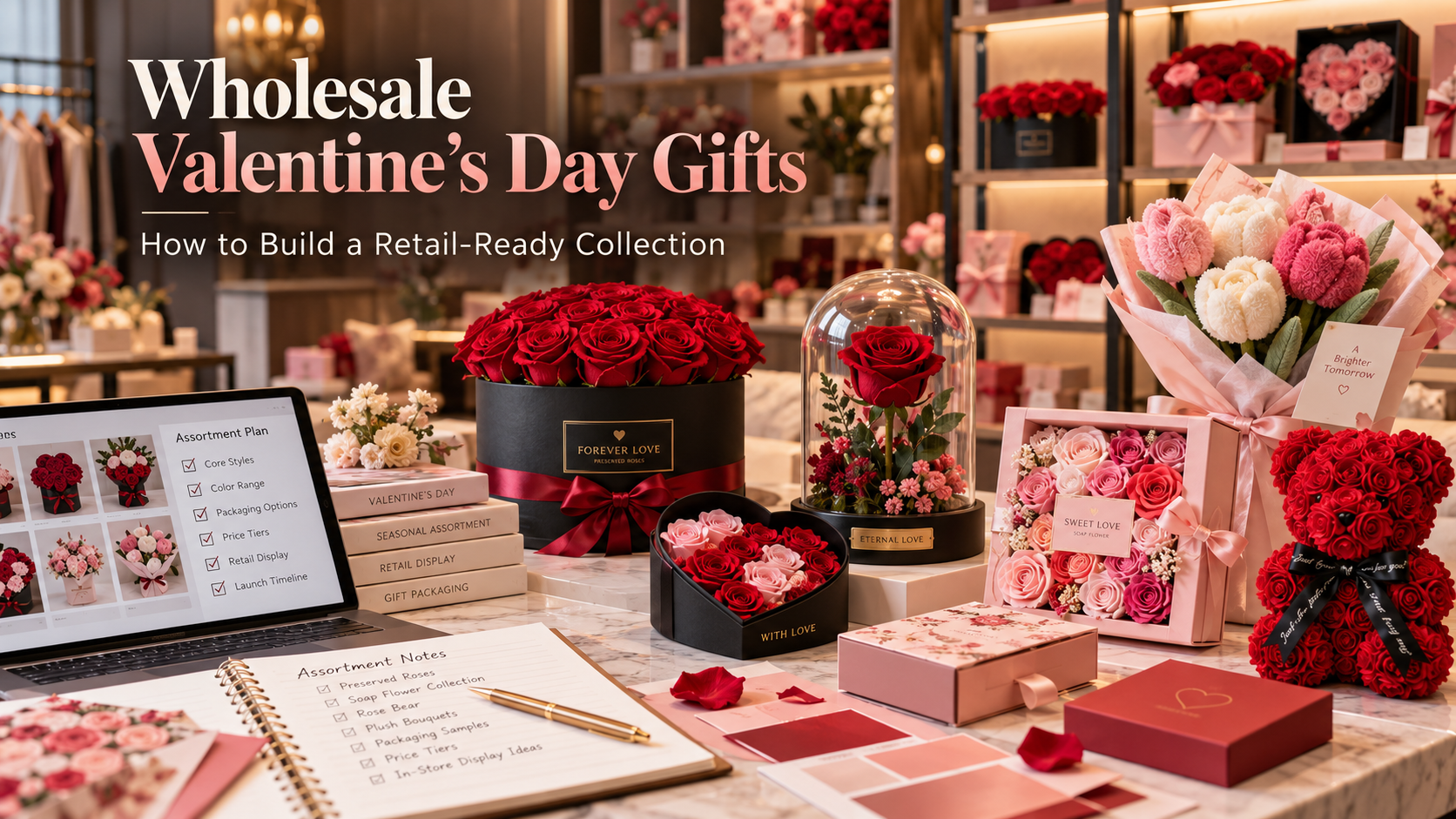
A compact gift, a medium presentation box, and a larger premium arrangement create a clear progression. A preserved flower gift, a plush flower gift, and a soap flower gift may offer distinct materials, prices, and use occasions.
Comparison becomes less useful when a collection contains too many nearly identical colors or minor variations.
A strong assortment does not need to show every possible option. It needs to make the available options clear.
Relevant Service
Some gift products benefit from a short explanation.
A flower shop may explain how preserved flowers differ from fresh flowers. A gift store may clarify the difference between plush, crochet, soap, fabric, and preserved flower products. A department store may provide brief information about materials, care, or customization.
The service should remain concise.
A product that requires a long sales presentation may be too complicated for the channel. A product that becomes easier to understand through a few accurate details can benefit from the store environment.
Product Discovery
Physical retail can place products together in ways that support new combinations.
A floral gift may be displayed beside:
- Fragrance
- Candles
- Chocolate
- Jewelry
- Stationery
- Plush toys
- Home accessories
This creates a gifting context without changing the product itself.
Discovery may come from a coordinated seasonal table, a display organized by occasion, a clear price ladder, or a floral gift placed beside a complementary category.
The product still needs to communicate clearly within that setting.
For ideas on a channel-specific gift collection, send the retail format, target price range, and planned launch season to inquiry@sweetie-group.com.
A Gift Is Not a Commodity With a Ribbon
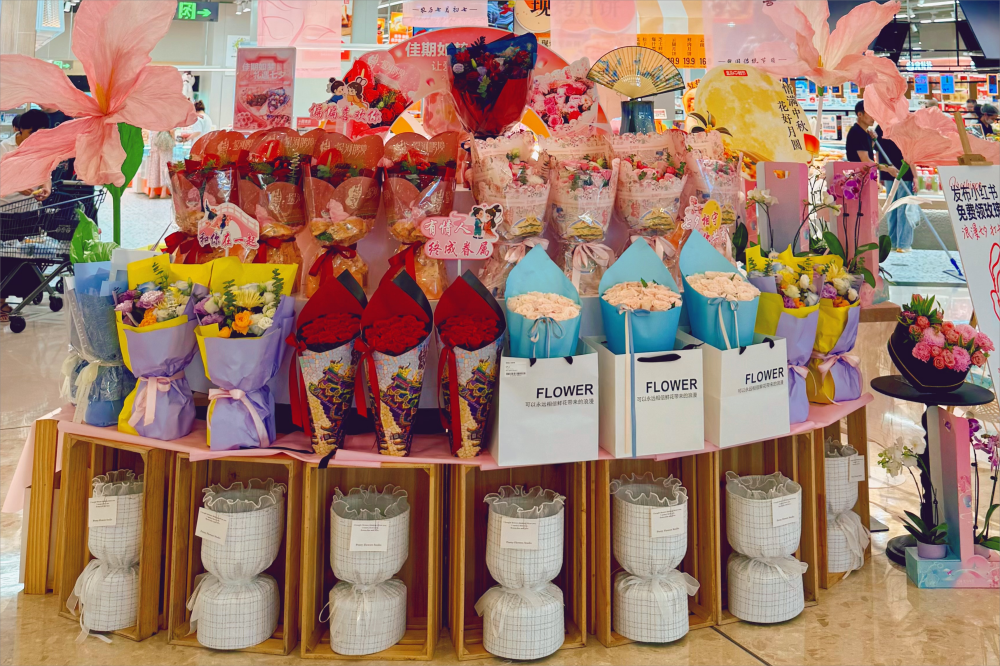
Gift categories often rely on familiar visual formulas.
Heart shapes communicate romance. Red and pink suggest Valentine’s Day. Gold lettering indicates a higher price level. Transparent boxes show the product. Ribbons complete the presentation.
These choices are not automatically wrong.
The problem appears when the same formula is repeated throughout the category.
Products may have different logos, but the box proportions, colors, windows, ribbons, and product combinations remain almost the same.
Convenience can accelerate this sameness because familiar structures are easier to approve and reproduce.
A better development question is not:
What decoration should be added?
It is:
What role should this product play in the retail assortment?
That role may involve:
- A specific price point
- A compact format
- A premium presentation
- A new material
- A clearer occasion
- A stronger product silhouette
- A category suitable for cross-merchandising
- A design created for one particular channel
This decision should come before decorative details.
Difference does not require unusual design for its own sake. It should come from clear product logic.
A preserved flower gift, a soap flower product, a plush flower, and a crochet flower do not need to use the same packaging structure or visual language. Each category has different material, display, price, and handling characteristics.
Different Retail Formats Need Different Levels of Experience
The appropriate balance between convenience and retail value changes by format.
| Retail format | Main priority | Value worth preserving |
|---|---|---|
| Mass retail | Fast recognition and easy handling | Visible quality and simple comparison |
| Specialty retail | Organized assortment and differentiation | Browsing, material comparison, and relevant service |
| Premium retail and events | Controlled presentation | Limited collections and selective personalization |
Mass Retail
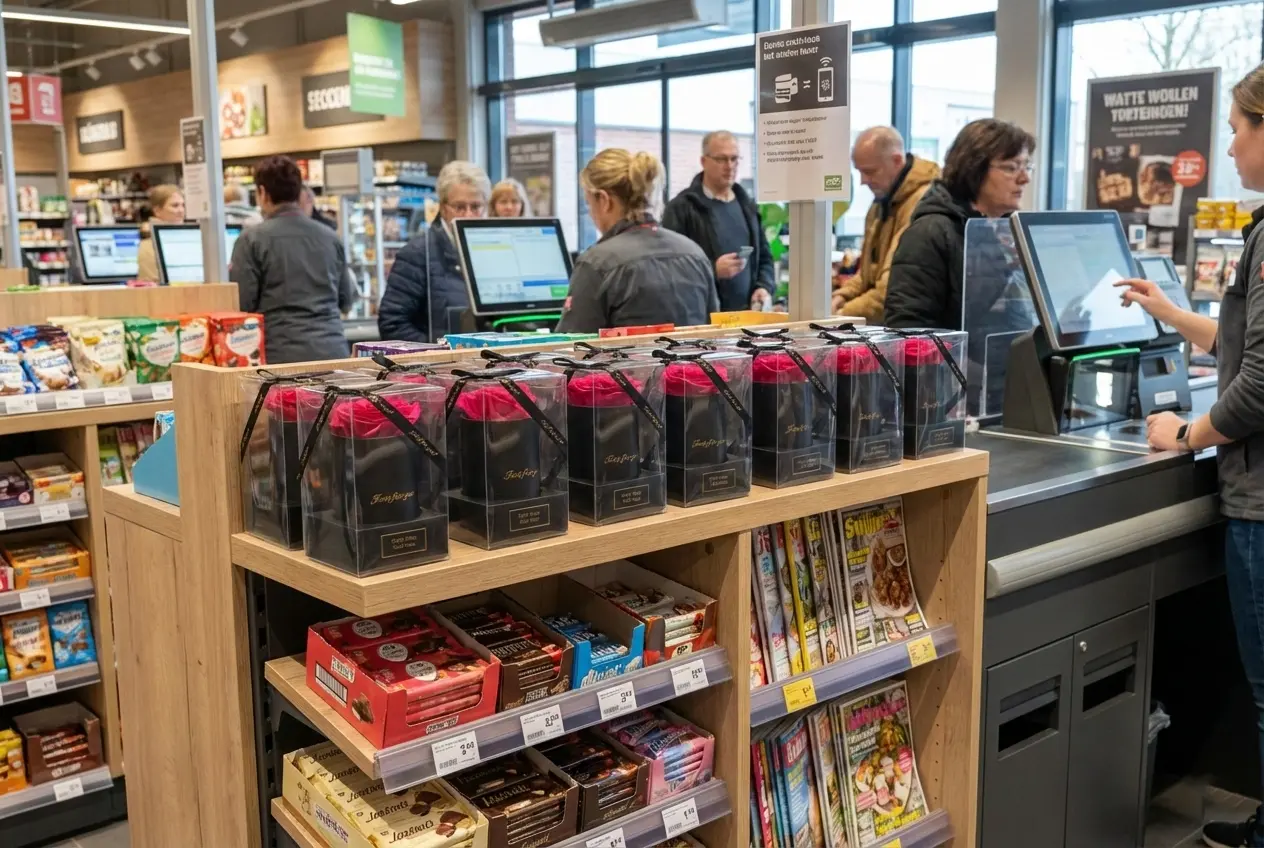
Supermarkets and convenience stores require clarity.
Products should be easy to understand, stable during self-service handling, clearly priced, and ready to give. SKU structures should remain manageable, and the product should not depend on staff explanation.
Suitable products may include compact flower boxes, single preserved rose gifts, small soap flower gifts, and mini plush flowers.
The experience is limited, but the product still needs a clear visual role.
Fast selection does not require complete sameness. Clear size levels, recognizable product shapes, and controlled seasonal displays can provide distinction without making the purchase more difficult.
Specialty Retail
Gift shops, lifestyle stores, flower shops, and department store gift areas can support more browsing and comparison.
These stores may carry multiple materials, sizes, occasions, and price levels. Products may be displayed in coordinated collections or beside complementary categories.
Here, convenience should organize the experience rather than remove it.
Useful elements may include:
- Consistent collection design
- Clear price progression
- Cross-category displays
- Limited color choices
- Appropriate display samples
- Brief material or care information
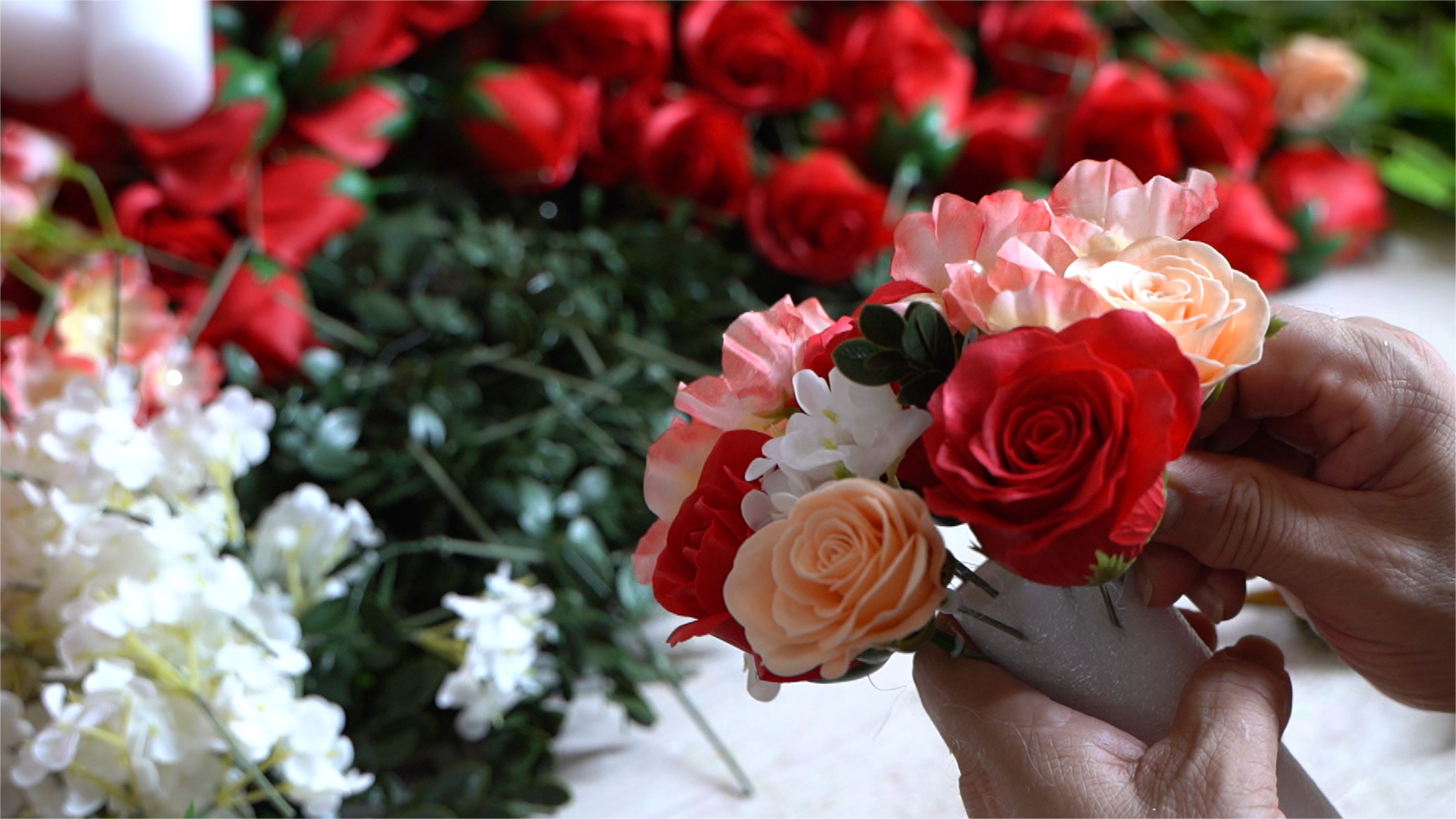
Flower shops can also add light finishing, simple wrapping, or product combinations. The service should enhance the product, not repair it.
Premium Retail and Events
Premium brand programs, pop-ups, seasonal activities, and corporate events can support a more controlled presentation.
Suitable elements may include:
- Limited colors
- Custom brand details
- Event-specific packaging
- Coordinated displays
- Selective personalization
- Simple live finishing
More options do not automatically create a better experience.
A strong premium program usually depends on disciplined decisions, clear service steps, and consistent execution.
To discuss a custom collection for mass retail, specialty stores, or a branded event, contact inquiry@sweetie-group.com.
Product and Packaging Should Support the Same Retail Role
A strong product concept can become weaker when the packaging, assortment, and retail setting do not follow the same logic.
A compact convenience-store gift should not require a large outer box or complicated explanation. A premium event product should not look like a basic self-service SKU with only a new logo added.
Product development should begin with the intended retail role.
Keep Product Differences Clear
Variations should create visible and commercially useful differences.
A practical assortment may include:
- A compact entry product
- A mid-level gift
- A premium presentation
The progression may come from size, material, flower quantity, container quality, or packaging detail.
Minor differences that cannot be understood from the shelf rarely justify separate SKUs.
Make the Main Value Visible
Retail packaging often performs the role of a salesperson.
It should communicate:
- What the product is
- What it is made from
- Whether it requires care
- Which occasion it suits
- Whether it is ready to give
The main visual value should usually be visible without opening the package.
A strong product should not need a long paragraph of text to explain why it is valuable.
Protect the Product Without Hiding It
Packaging has to protect the item during transportation and remain suitable for display.
Different product structures need different solutions.
A lidded flower box already protects the flower heads, so the outer package mainly needs to control movement, pressure, dust, and scratching. An open arrangement needs enough clearance to prevent exposed flowers from touching the unit carton. A glass dome requires secure fixation and shock protection.
Transparent packaging also needs careful handling because scratches, dents, reflections, and internal movement remain visible on the shelf.
Avoid Using Decoration as a Substitute for Product Value
More ribbons, larger boxes, metallic finishes, and decorative layers do not automatically create a stronger gift.
Decoration is useful when it:
- Clarifies the occasion
- Supports the price position
- Strengthens the collection
- Connects the product to a brand
- Improves gift presentation
It becomes visual noise when it competes with the product itself.
Shelf impact should come from clear proportions, visible quality, a recognizable structure, and a consistent collection.
Keep Seasonal Elements Adaptable
Seasonal identity can improve relevance, but it can also increase inventory risk.
A neutral base package can be adapted through:
- Paper sleeves
- Occasion cards
- Stickers
- Small accessories
- Local-language labels
- Controlled color changes
This allows one product structure to support several holidays or gifting occasions without rebuilding the entire package.
For a product or packaging review, send product photos, dimensions, target channel, and expected order quantity to inquiry@sweetie-group.com.
Physical Retail Should Be Easy, but Not Empty
Convenience remains essential.
Retail teams need products that are stable, clear, easy to display, and practical to replenish. Stores should not spend time correcting damaged arrangements, explaining basic information, or managing unnecessary variations.
At the same time, physical retail still adds value when it helps products become easier to see, compare, understand, combine, or experience.
The goal is not to make shopping slower.
It is to make the store useful.
A successful gift product works operationally while giving the retail environment something meaningful to present.
At Sweetie-Gifts, we develop preserved flower gifts, soap flower gifts, rose animals, plush flowers, crochet flowers, and customized gift combinations. Our work can cover design, sampling, packaging, channel adaptation, and bulk production.
The principle is simple:
Make the product easy to sell without removing the reasons it belongs in a physical store.
For retail-ready gift development, custom floral concepts, or channel-specific collections, contact inquiry@sweetie-group.com.
Frequently Asked Questions
What value can physical retail add to gift products?
Physical retail can make product size, material, quality, and presentation easier to understand. It can also support useful comparison, brief professional service, coordinated displays, and discovery across related categories.
How can gift products avoid looking generic?
Start with a clear retail role rather than familiar decoration. Product structure, material, proportions, occasion, price position, and channel suitability usually create stronger differentiation than additional ribbons or seasonal graphics.
How should gift products differ across retail formats?
Mass retail requires fast recognition, simple assortments, and easy handling. Specialty stores can support more browsing, comparison, and service. Premium retail and events may use limited collections, stronger presentation, and controlled personalization.
What should retail-ready gift packaging achieve?
It should protect the product, show its main value, communicate essential information, remain stable on the shelf, and support easy carrying and gifting. Every packaging component should serve a clear purpose.
Annie Zhang