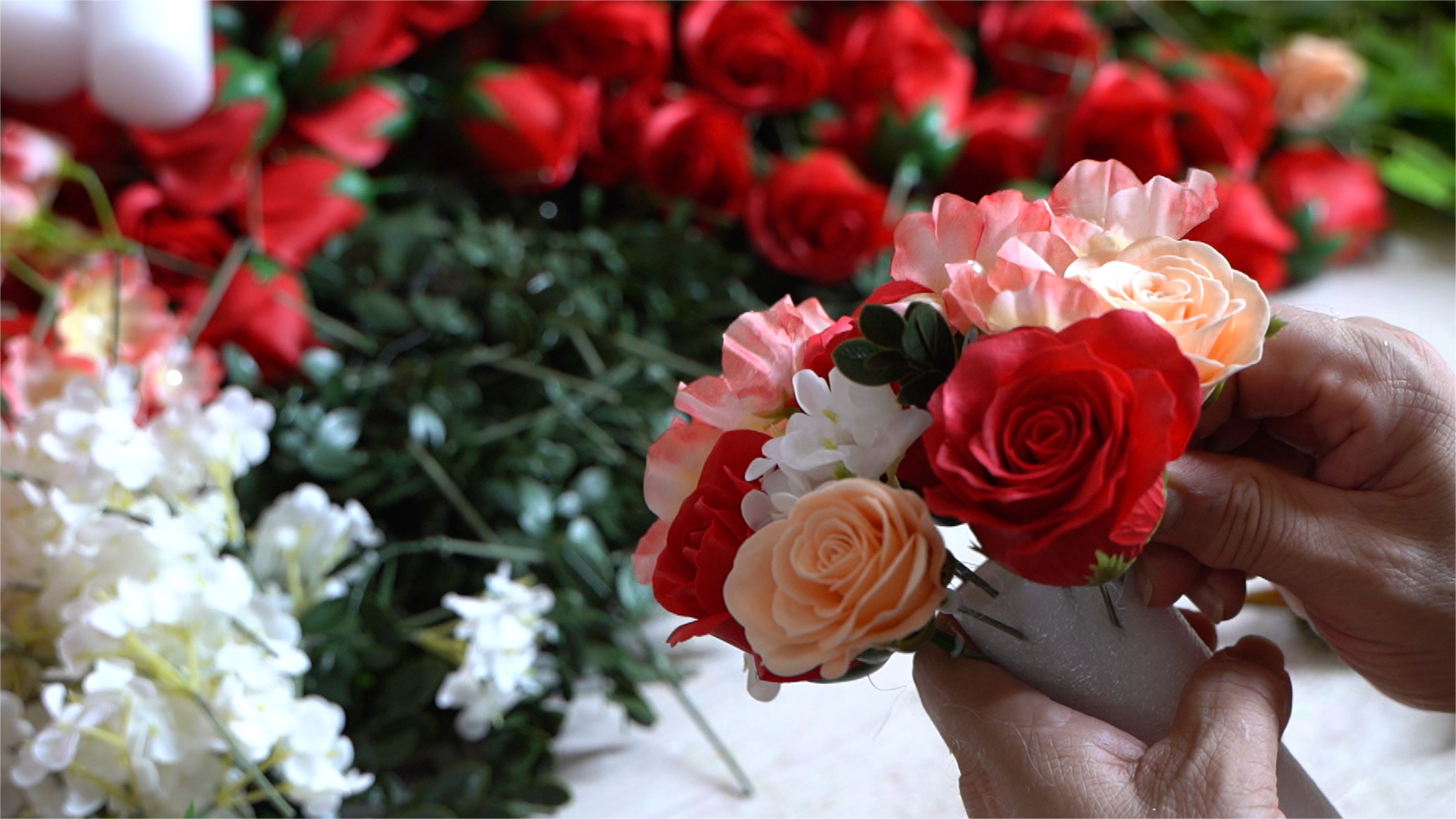
Plush flowers are easy to understand at first glance. They are soft, colorful, and naturally giftable. That is their advantage.
But for supermarkets and gift retail stores, a cute product is not enough. A buyer still has to answer practical questions: Will shoppers notice it? Will the display stay tidy? Can store staff refill it quickly? Will the packaging protect the flower shape during shipping?
In retail, plush flowers should not be treated as loose decorative items. They work better when they are planned as a display-ready gift program.
This article explains how supermarkets and gift retailers can choose the right plush flower display format, avoid common execution problems, and turn a visually appealing product into something that can actually sell on the retail floor.
Why Plush Flower Displays Need More Planning Than They Seem
At first, plush flowers look simple. Put them in a box, a bucket, or a shelf, and they should sell.
In reality, the display affects almost every part of the buying decision.
A shopper usually does not enter a supermarket with “plush flower” on a shopping list. The product has to earn attention in a busy environment. The display must quickly tell the shopper what the item is, why it is giftable, and how to buy it.
For this category, a good display should do three things well:
- Create instant recognition: shoppers should understand the product within seconds.
- Protect the gift feeling: the display should look intentional, not like mixed loose toys.
- Reduce store labor: the setup should be easy to place, refill, and maintain.
This is why retail-ready packaging matters. A beautiful sample can still perform poorly if the display collapses, looks crowded, or becomes messy after several pieces are removed.
For buyers planning a plush flower retail program, Sweetie-Gifts can help review display format, packaging structure, and sample direction. Contact us at inquiry@sweetie-group.com.
Start with the Retail Job, Not the Display Style
Before choosing a display, the buyer should define the job of the product.
Is it meant to be a low-risk seasonal impulse item?
A giftable product for a curated retail space?
A collectible product for younger shoppers?
A visual centerpiece for a campaign or event?
Different answers lead to different displays.
A supermarket may need a compact shelf-ready box. A gift store may need a warmer presentation that invites browsing. A brand event may need something more visual and interactive. The mistake is trying to force one display format into every channel.
A practical way to decide is to ask:
| Buyer Question | Why It Matters |
|---|---|
| How much space does the store have? | A display must fit the actual shelf, counter, or promotional area. |
| How much staff time can the store spend? | Some beautiful displays require too much daily maintenance. |
| What is the buying occasion? | Valentine’s Day, Mother’s Day, daily gifting, and brand events need different messages. |
| How will the product ship? | Plush flower heads and display boxes must arrive in good shape. |
This step prevents many later problems. It also helps the supplier design around the real retail environment, not just the product photo.
Shelf-Ready Display Boxes: The Most Practical Starting Point for Supermarkets
For supermarkets and mass retail, the best display is often the one that creates the least operational friction.
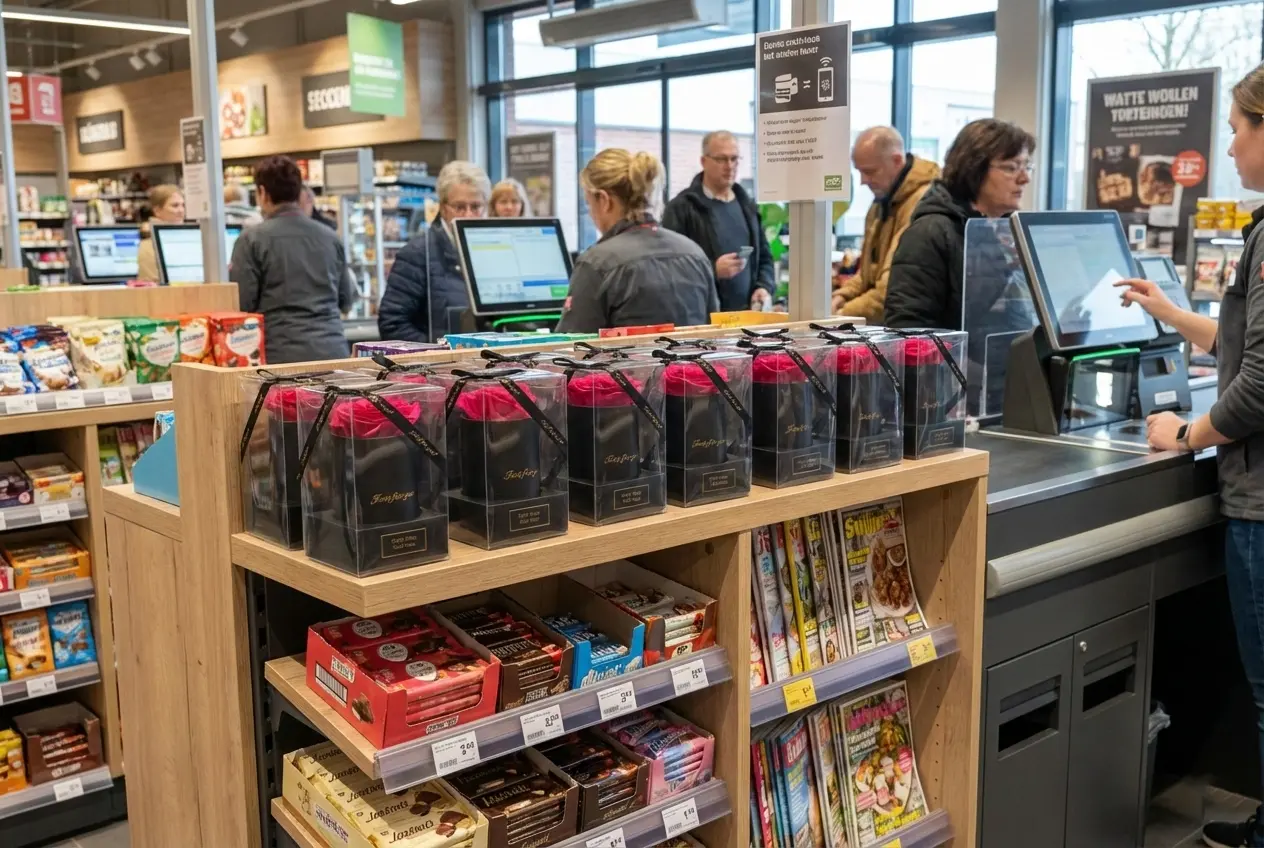
A shelf-ready display box works well because it arrives as a selling unit. Store staff can open it, place it, and refill it without rebuilding the entire presentation. This matters during busy seasonal periods when stores do not have time to handle delicate displays.
What makes a good supermarket display box?
A good display box should not only hold the flowers. It should make the product easy to shop.
The key details are:
- the flower heads should be visible from the front;
- the stems should stay organized without looking squeezed;
- shoppers should be able to remove one piece easily;
- the display should remain stable after partial sell-through;
- there should be space for price, barcode, or seasonal messaging;
- the box should survive transport without losing shape.
The goal is not to create a complicated visual installation. The goal is to make the product easy to understand and easy to buy.
For supermarkets, this is usually the safest first format because it balances appearance, cost, shelf efficiency, and store labor.
Bucket Displays: Better for Gift Stores Than High-Speed Retail
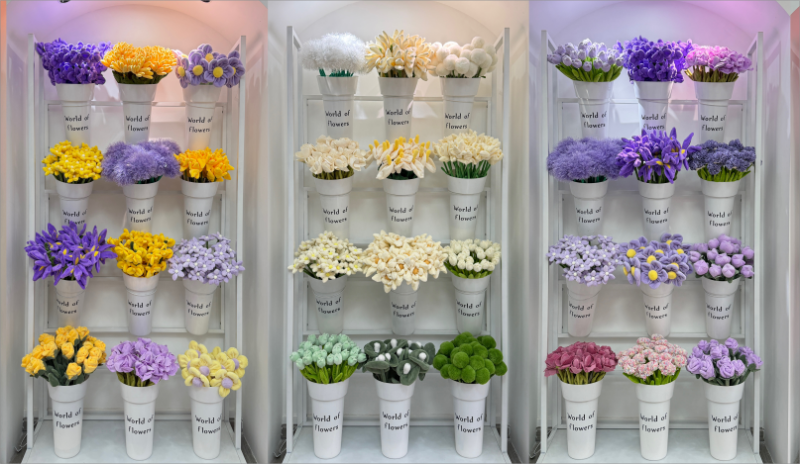
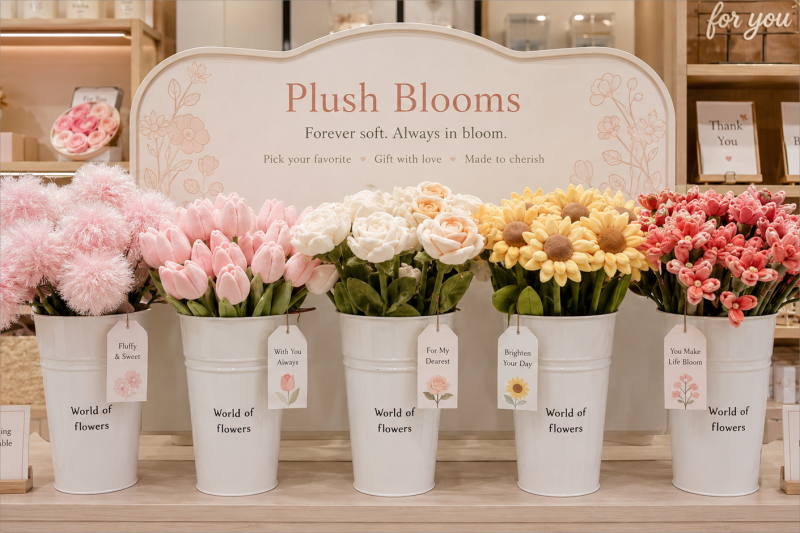
Bucket displays create a more emotional shopping experience. They allow shoppers to choose a flower by hand, which makes the product feel closer to fresh flowers.
This format is especially useful when the retailer wants browsing, not just quick grabbing.
Disney-style plush flower displays are a helpful reference. The bucket gives shoppers a simple picking experience, while the backing board gives the display a theme. For Disney, that theme comes from characters. For general gift retail, it can come from color, occasion, or mood.
The useful lesson from Disney-style displays
The value is not in copying an IP display. The value is in the structure:
- the bucket makes the product approachable;
- the backing board explains the theme;
- the color grouping helps shoppers understand the occasion;
- the display makes a single flower feel like a gift choice.
For example, a soft pink and cream display can suggest Mother’s Day. A red and blush display can suggest Valentine’s Day. A yellow display can feel cheerful for graduation or celebration.
The risk is clutter. If too many colors, tags, and flower types are mixed together, a bucket display can quickly look like a random bin. It works best when each section has one clear story.
Wall Bay Displays: Useful, But Only When the Retailer Has Space and Discipline
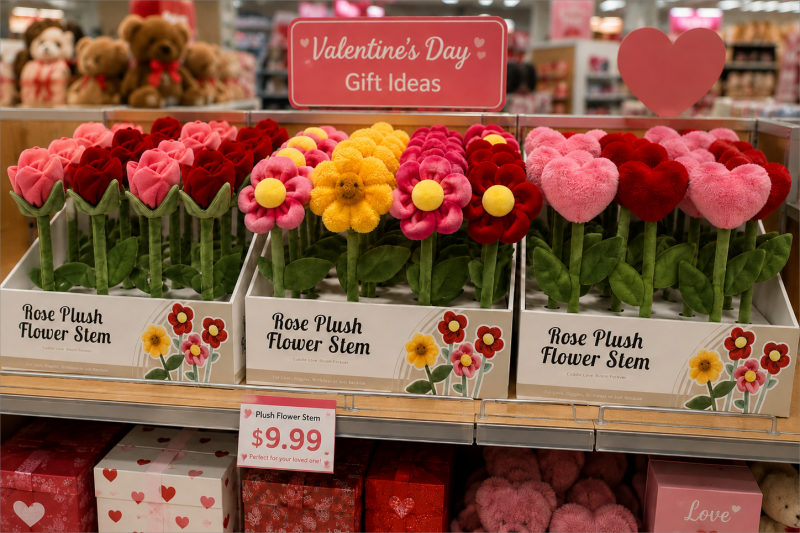
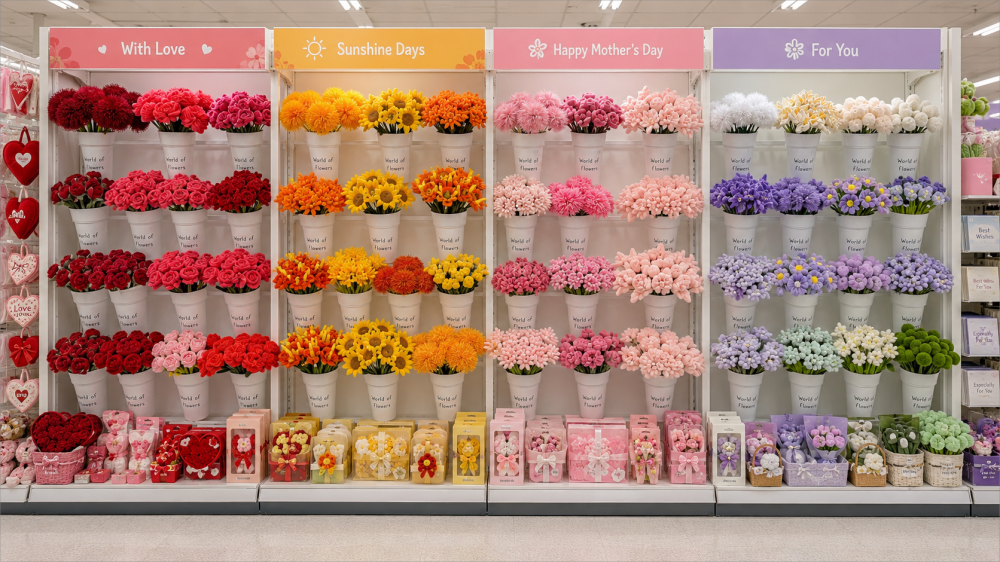
Large supermarkets and retail stores sometimes use wall-based merchandising for seasonal products, toys, children’s goods, and promotional categories. Plush flowers can work in this format, but only when the range is controlled.
A wall bay display is not the same as a full decorative flower wall. It is a retail section with a defined theme, clear color blocking, and a limited number of styles.
When does a wall bay make sense?
A wall bay is worth considering when the retailer wants stronger visual impact and has enough space to support it. It is better for a planned seasonal story than for a small test order.
The display should be edited carefully. Plush flowers already have strong texture and color, so too many choices can overwhelm shoppers. A wall bay should look abundant from a distance, but still be easy to replenish.
The best version usually has:
- one main season or occasion;
- a limited color palette;
- a few strong bestselling shapes;
- clear separation between price points or styles;
- enough empty space so the display does not feel crowded.
For smaller stores, a shelf-ready box or compact endcap is usually more realistic.
Event-Style Displays: Strong for Campaigns, Not Always for Daily Retail
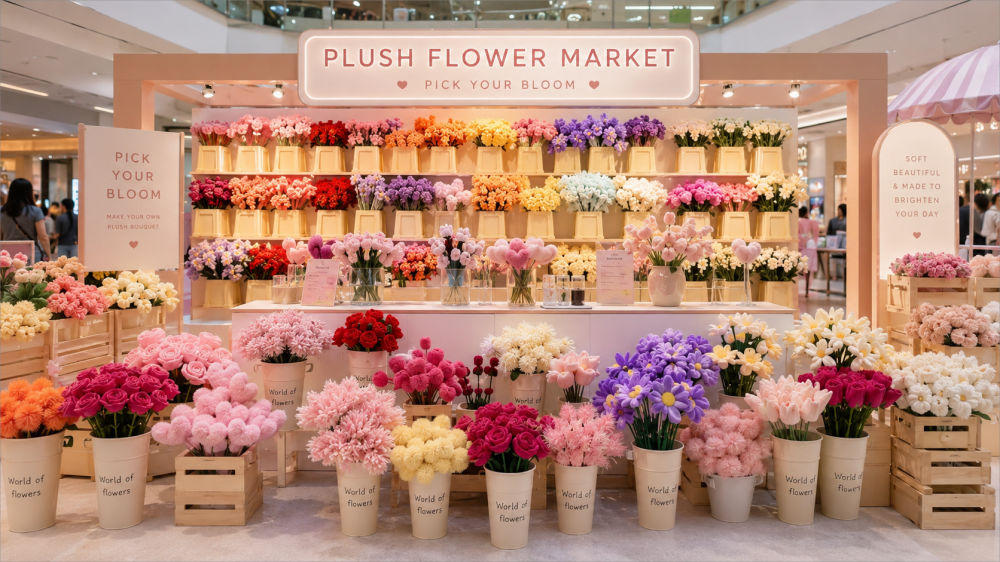
Flower-market-style displays can be powerful. Cj Hendry’s plush flower market concept is a good example of how abundance, color, and hand-picking can turn plush flowers into an experience.
That kind of display works because shoppers are not only looking at products. They are participating.
They choose. They touch. They compare colors. They may take photos. The display becomes part of the memory.
Where this format works best
Event-style plush flower displays are most suitable for:
- brand pop-ups;
- shopping mall campaigns;
- department store events;
- holiday promotions;
- beauty, fragrance, or jewelry launches;
- flagship store displays.
For ordinary supermarket shelves, a full flower wall is usually too demanding. It needs space, maintenance, and staff attention. But the idea can be scaled down.
A supermarket can turn it into a seasonal endcap.
A gift retailer can make a small “pick your bloom” corner.
A brand can create a flower bar for event giveaways.
The important point is to borrow the interaction, not necessarily the full installation.
For brand events, seasonal campaigns, or custom plush flower displays, Sweetie-Gifts can support concept development, sampling, packaging, and production planning. Email inquiry@sweetie-group.com.
Blind Box Displays: Treat Them as Collectibles, Not Just Small Gifts
Plush flower blind boxes need a different logic from single stems.
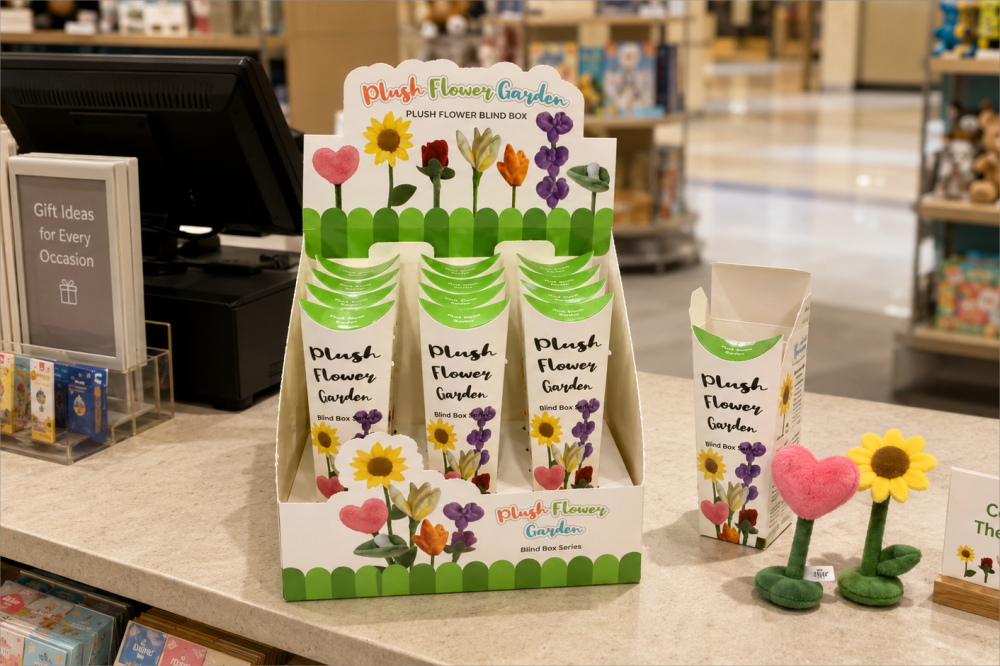
A single plush flower is usually bought as a gift. A blind box is bought for surprise, collection, or curiosity. The display therefore needs to explain the series, not just show the package.
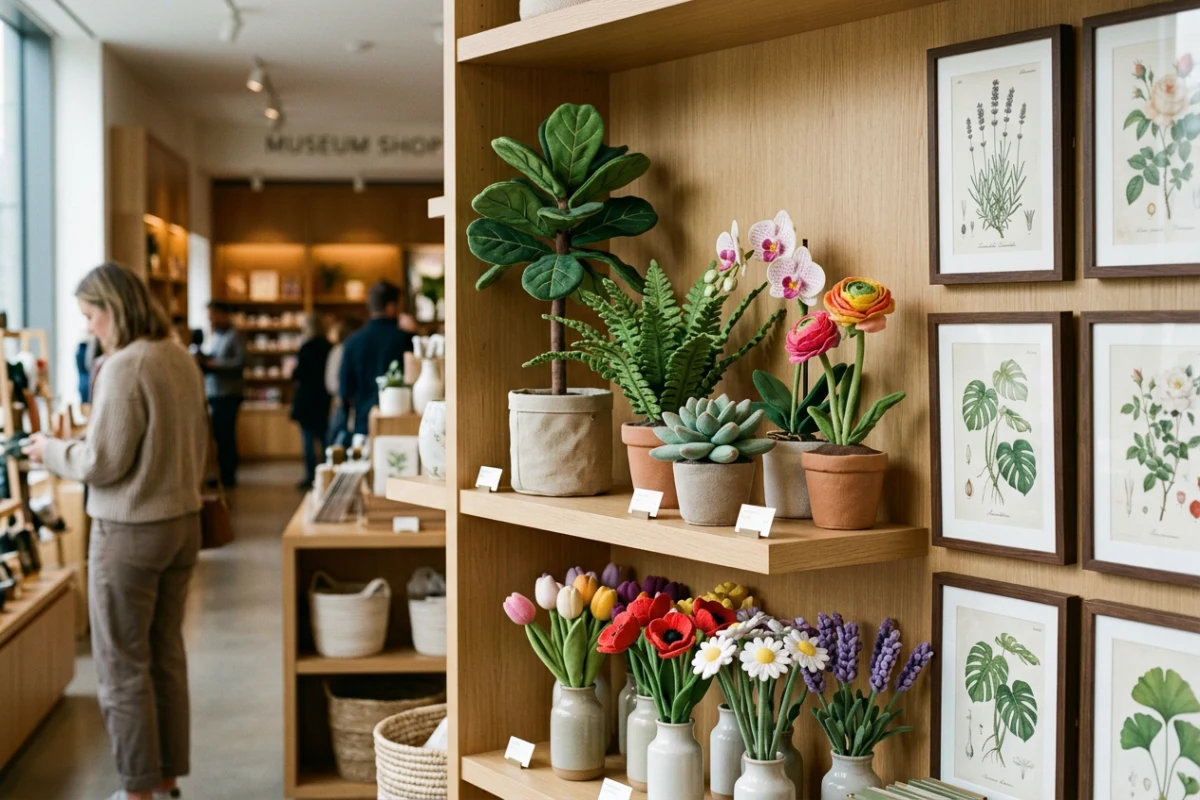
This format can work well in gift counters, toy sections, bookstore gift areas, lifestyle stores, and museum shops. It can also support social media and online-to-offline selling because the unboxing element is easy to understand.
What makes a blind box display work?
A blind box display should answer a few questions quickly:
- What is the theme of the collection?
- How many designs are in the series?
- Is there a rare or hidden style?
- Why would a shopper buy more than one?
Without a clear series idea, a blind box becomes only a small packaged item. With a clear theme, it becomes collectible.
For supermarkets, blind boxes are usually better as a secondary display. For gift and toy retail, they can become a stronger part of the program.
Common Display Problems Buyers Should Avoid
A plush flower display can look good in a presentation but still fail in store. Most problems come from practical details that were ignored too early.
1. Too many styles in the first launch
A broad range may impress buyers during selection, but it can confuse shoppers on the shelf. For a first retail test, fewer styles with a clearer color story often perform better.
2. Weak protection during shipping
Plush flowers are soft, but they still deform. Flower heads can flatten, stems can bend, and display boxes can lose shape. Packaging should be tested with the final display format, not only with loose samples.
3. Display structure that only looks good when full
Some displays look perfect at 100% stock but messy after 30% of the products are sold. A retail display should still look acceptable during partial sell-through.
4. Unclear product positioning
Buyers should decide whether the item is positioned as a gift, decoration, toy, collectible, or seasonal product. This affects labeling, testing, shelf placement, and packaging language.
These details are not exciting, but they make the difference between a nice sample and a repeatable retail program.
What Buyers Should Confirm Before Ordering
Before placing a bulk order, buyers should confirm the practical conditions of the display.
The most important questions are:
- Can the display go directly onto the shelf or counter?
- How many pieces are packed in each display unit?
- Will the flower shape be protected during shipping?
- Does the display need extra assembly in store?
- Where will barcode, price, and product labels be placed?
- What product classification applies in the target market?
- Are safety tests or age labels needed?
- Can the packaging be adapted for seasonal campaigns?
- What are the MOQ, sample time, production lead time, and reorder options?
These questions help both buyer and supplier avoid misunderstandings before production begins.
How Sweetie-Gifts Supports Retail-Ready Plush Flower Programs
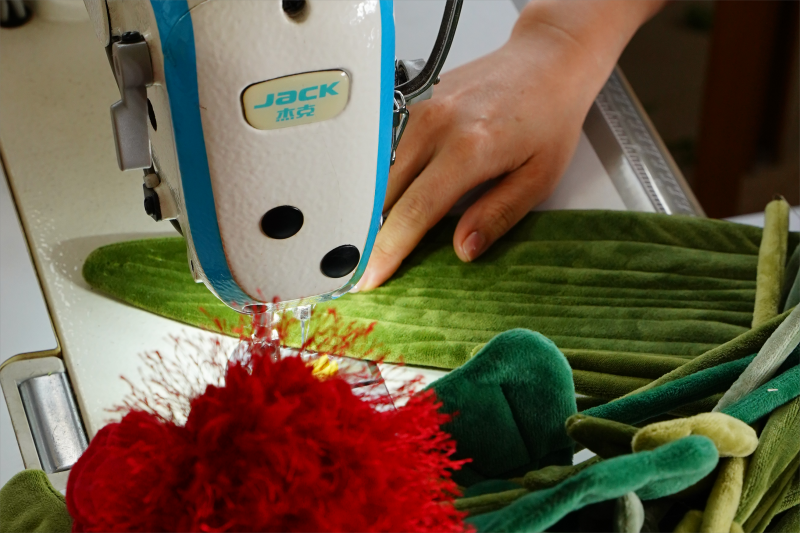
Sweetie-Gifts is a floral gift manufacturer, but B2B retail projects require more than manufacturing. Buyers often need help turning an idea into something that can be sampled, packed, shipped, displayed, and repeated.
For plush flower projects, the work usually starts with retail questions:
Where will the product be sold?
How much display space does the buyer have?
What price level is needed?
Should the product feel seasonal, collectible, decorative, or event-ready?
How should the display be packed to reduce deformation?
From there, Sweetie-Gifts can support product development, display structure, packaging planning, sample adjustment, production scheduling, and quality control.
Sweetie-Gifts has experience in floral gift design, production, customization, and B2B service. Its company profile includes product development, market research, sample making, packaging planning, production, inspection, delivery, and after-sales support as part of its customized service process.
The company’s “Flower + Everything” approach also supports floral gift concepts combined with beauty, jewelry, fragrance, IP themes, seasonal campaigns, and other retail ideas.
For retail buyers, the value is not only getting plush flowers made. It is getting a display-ready solution that fits the channel, protects the product, and supports store execution.
To discuss a supermarket display box, gift retail collection, blind box program, or brand event display, contact inquiry@sweetie-group.com.
FAQ: Plush Flower Displays for Retail Buyers
What is the most practical display for plush flowers in supermarkets?
A shelf-ready display box is usually the most practical starting point because it is easy to place, easy to refill, and suitable for repeated store execution.
Can plush flowers be displayed like fresh flowers?
Yes. Bucket displays can create a “pick your flower” feeling, especially in gift stores and theme retail. The display should use clear color grouping and avoid too many mixed styles.
Are plush flower walls suitable for supermarkets?
Large flower walls are better for events, pop-ups, mall campaigns, and flagship displays. For supermarkets, smaller wall bays, endcaps, or shelf-ready boxes are usually more practical.
Are plush flower blind boxes suitable for retail stores?
Yes, especially in gift, toy, lifestyle, and museum retail. They work best when the collection has a clear theme and encourages repeat purchase.
What should importers confirm before ordering plush flower displays?
Importers should confirm display format, packing quantity, shelf placement, label requirements, shipping protection, product classification, testing needs, MOQ, lead time, and reorder options.
Final Thoughts
Plush flowers should not be planned only as cute products. For supermarkets and gift retail stores, they need to be planned as retail displays.
The right format depends on the buying moment. A supermarket may need a shelf-ready box. A gift store may need a bucket display. A large retailer may use a wall bay. A brand event may need an interactive flower bar. A toy or gift counter may test blind boxes.
The best display is not the most complicated one. It is the one that helps shoppers understand the gift value quickly while making store execution easier.
For custom plush flower display solutions, seasonal retail programs, blind box concepts, or brand event projects, please contact inquiry@sweetie-group.com.
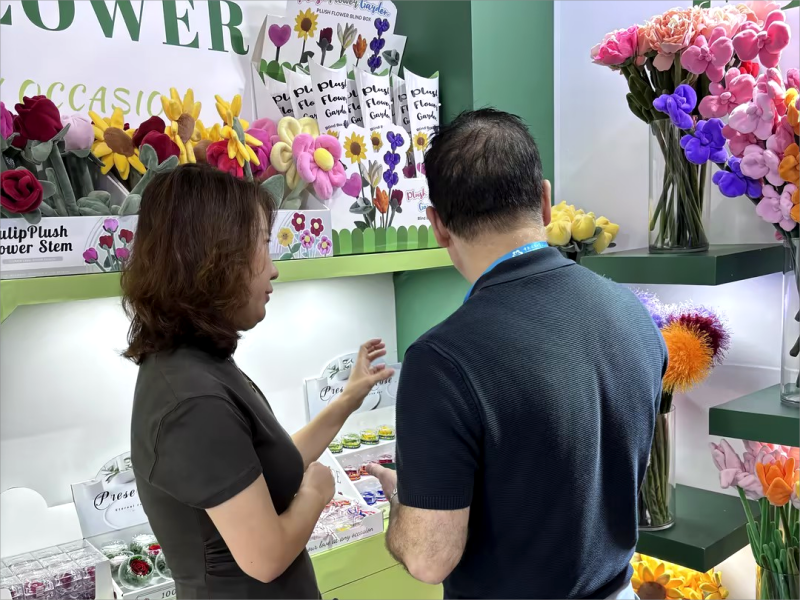
Annie Zhang, CEO of Sweetie Group