Retail assortments are shaped by far more than product appeal. In large retail organizations, every item on the shelf must coexist with planning systems, operational realities, and risk controls that extend far beyond a single category.
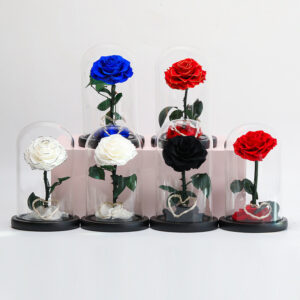
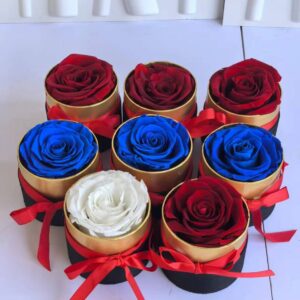
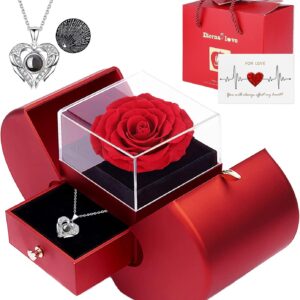
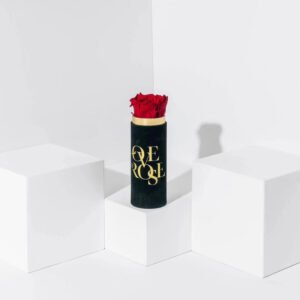
Soap flower products are increasingly present in gift and decorative assortments across different markets. Their role in retail is not accidental. It reflects how certain product characteristics align with the structural needs of modern retail systems.
This article explores why soap flower products often fit into large retail assortments when evaluated through commercial, operational, and organizational lenses.
Retail Assortments Are Designed Around System Stability
At scale, retail is a system of coordination. Merchandising, supply chain, finance, and store operations all rely on predictable inputs. Products that introduce volatility increase internal cost, even if consumer demand exists.
In gift and decorative categories, retailers tend to prioritize products that can be planned with confidence. This includes consistency in appearance, controllable supply timelines, and the ability to support both seasonal programs and standard assortments.
Soap flower products often enter consideration because they support this need for stability. Their lifecycle is less dependent on short term environmental variables, which allows planning teams to integrate them into broader assortment strategies without constant adjustment.
For retail teams evaluating category balance and planning reliability, discussions around these product attributes are often more relevant than visual differentiation alone.
If you would like to discuss how different gift formats align with retail planning structures, you are welcome to contact us at inquiry@sweetie-group.com.
Consistency Matters More Than Novelty at Scale
Innovation plays an important role in retail, but scale places boundaries on how much variation a system can absorb. When a product must perform across hundreds or thousands of locations, consistency becomes a requirement rather than a preference.
Retail buyers often assess decorative products based on their ability to deliver uniform results across regions. This includes color consistency, structural integrity, and packaging performance over time.
Soap flower products are frequently evaluated favorably in this context because they are designed for repeatable execution. This does not eliminate the need for strong design, but it ensures that design can be replicated reliably without operational exceptions.
In large retail systems, products that balance creativity with repeatability tend to progress further in assortment discussions.
Risk Evaluation Focuses on Manageability, Not Elimination
No retail product is free of risk. What differentiates successful assortments is how clearly those risks can be understood and managed within existing frameworks.
For decorative gift items, retail teams typically examine several areas simultaneously. These include consumer understanding, handling and storage requirements, material transparency, and potential impact on brand reputation.
Soap flower products are often reviewed through this lens because their intended use can be clearly defined and their care requirements are relatively straightforward. This clarity allows internal teams to align more easily across compliance, operations, and customer service.
Below is a simplified representation of how retail systems often structure this evaluation.
| Evaluation focus | Retail consideration |
|---|---|
| Consumer clarity | Is the intended use clearly communicated |
| Operational impact | Can stores handle and display the product easily |
| Compliance visibility | Are materials and documentation transparent |
| Brand exposure | Are returns and complaints predictable |
When these factors remain within manageable boundaries, products are more likely to remain viable within the system.
If you are comparing how different decorative products perform under these considerations, we are open to further discussion at inquiry@sweetie-group.com.
Store Level Execution Shapes Long Term Performance
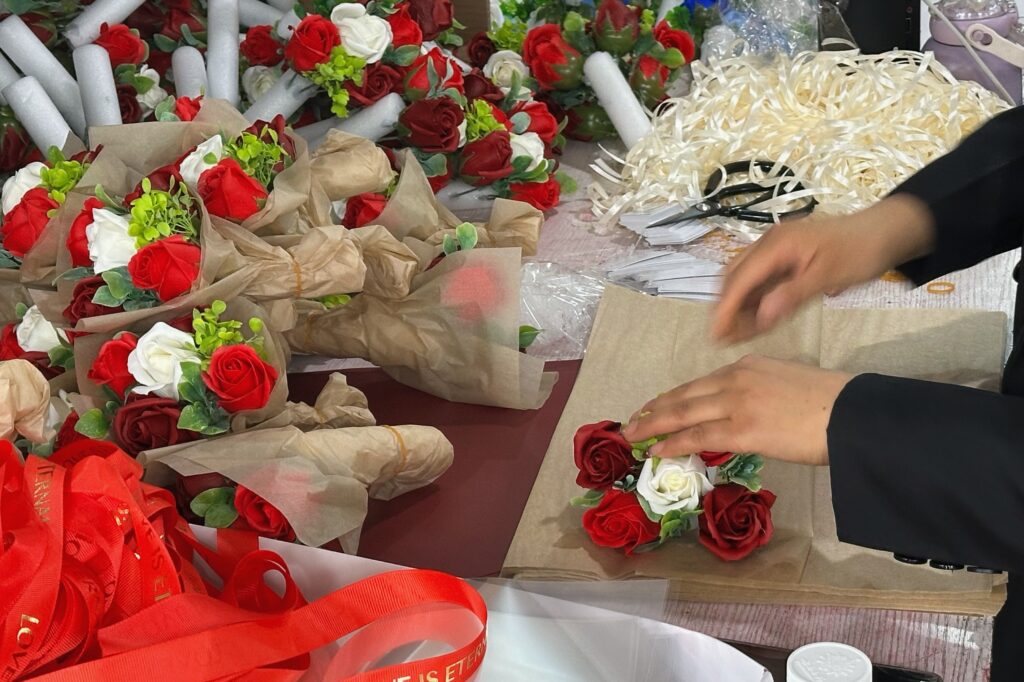
While assortment decisions are often made centrally, store level execution ultimately determines longevity. Products that require frequent intervention, explanation, or adjustment place additional pressure on store teams.
Retail environments generally favor products that maintain their presentation with minimal effort. Display stability, tolerance to typical store conditions, and low maintenance requirements all influence whether a product continues to receive internal support.
Soap flower products are frequently discussed in this context because they can remain visually consistent on shelf without daily upkeep. Over time, this operational simplicity can contribute to sustained performance, even when competing products cycle out.
System Compatibility Is a Gatekeeper for Growth
Before a product reaches the shelf, it must function within retail systems. Accurate item data, packaging dimensions, logistics alignment, and replenishment compatibility are essential for scalable execution.
Products that introduce complexity at the system level often face friction that limits expansion. Even strong sell through cannot compensate for persistent operational inefficiencies.
Soap flower products that align with existing data structures and logistics models tend to move more smoothly through internal processes. This compatibility supports broader rollout and repeat programs across multiple buying cycles.
If system integration is part of your current evaluation process, we welcome a practical exchange at inquiry@sweetie-group.com.
Reliability Builds Confidence Across Buying Cycles
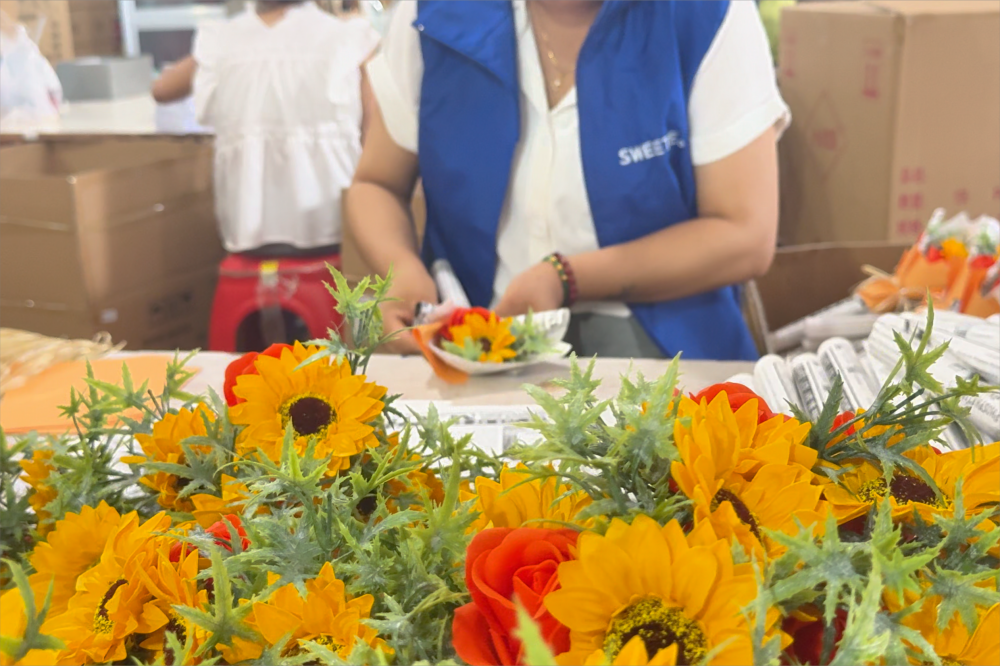
Retail trust is cumulative. Initial performance matters, but sustained reliability matters more. Products are continually evaluated based on how they perform during peak periods, replenishment pressure, and extended shelf time.
In gifting categories, reliability often determines whether a product becomes a recurring component of the assortment or remains a one time experiment. Predictable behavior under pressure strengthens confidence among category and operations teams alike.
Soap flower products that maintain consistency across these conditions are more likely to remain part of ongoing assortment strategies.
Organizational Alignment Influences Long Term Partnerships
Retail systems evaluate not only products, but also the organizations behind them. Communication quality, responsiveness, and transparency all influence long term compatibility.
When suppliers demonstrate an understanding of retail complexity, collaboration becomes more efficient. This alignment reduces friction and supports continuity across multiple programs.
Over time, this organizational fit can be as important as the product itself in determining whether an item remains in the assortment.
Final Perspective
Soap flower products are not universally suitable for every retail environment. Their relevance depends on how well they align with the structural requirements of the system they enter.
When evaluated through planning stability, execution consistency, risk manageability, and operational efficiency, it becomes clear why these products often find a place in modern retail assortments.
From a manufacturing perspective, the focus is not on promoting a single product category, but on understanding how products interact with retail systems over time.
For further discussion from a retail perspective, you can reach us at inquiry@sweetie-group.com.
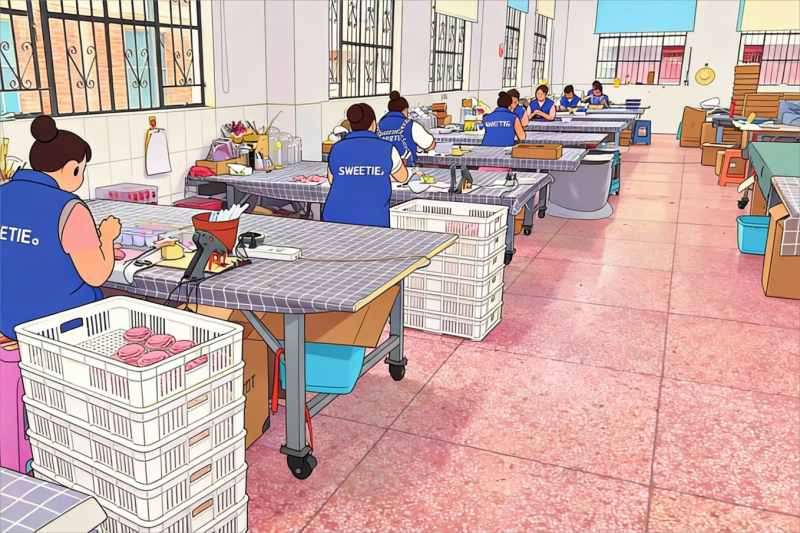
Annie Zhang, CEO of Sweetie Group