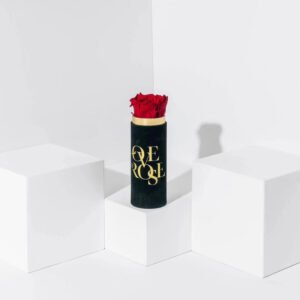
Valentine’s Day is one of those occasions where familiarity is part of the appeal. A rose still says romance. A heart still works on a gift box. Red still earns its place in February.
That does not mean the category stands still.
What has become more interesting in recent Valentine seasons is the way established ideas are being stretched into new formats. The occasion reaches beyond couples. Small gifts sit beside statement pieces. Packaging is doing more of the design work. Flowers are appearing inside wider gift concepts rather than always standing alone.
For Valentine’s Day 2027, the strongest direction may not be one breakthrough product. It may be a more flexible way of building the whole seasonal collection.
Valentine’s Day Is Becoming a Wider Gifting Season
The romantic couple remains at the center of February 14, but the commercial occasion around it has become noticeably broader.
The National Retail Federation’s 2026 U.S. research still showed significant others as the main recipients of Valentine gifts, while friends, coworkers, teachers and pets were also firmly part of the holiday. More than one-third of those celebrating planned something for a pet.
This matters because those occasions do not all call for the same product.
A large rose arrangement with an elaborate presentation box may be ideal as a romantic centerpiece. It can feel excessive for a friend, colleague or casual gesture. A smaller flower, mini box, compact keepsake or simple gift-ready item may fit much better.
That opens the Valentine assortment at both ends.
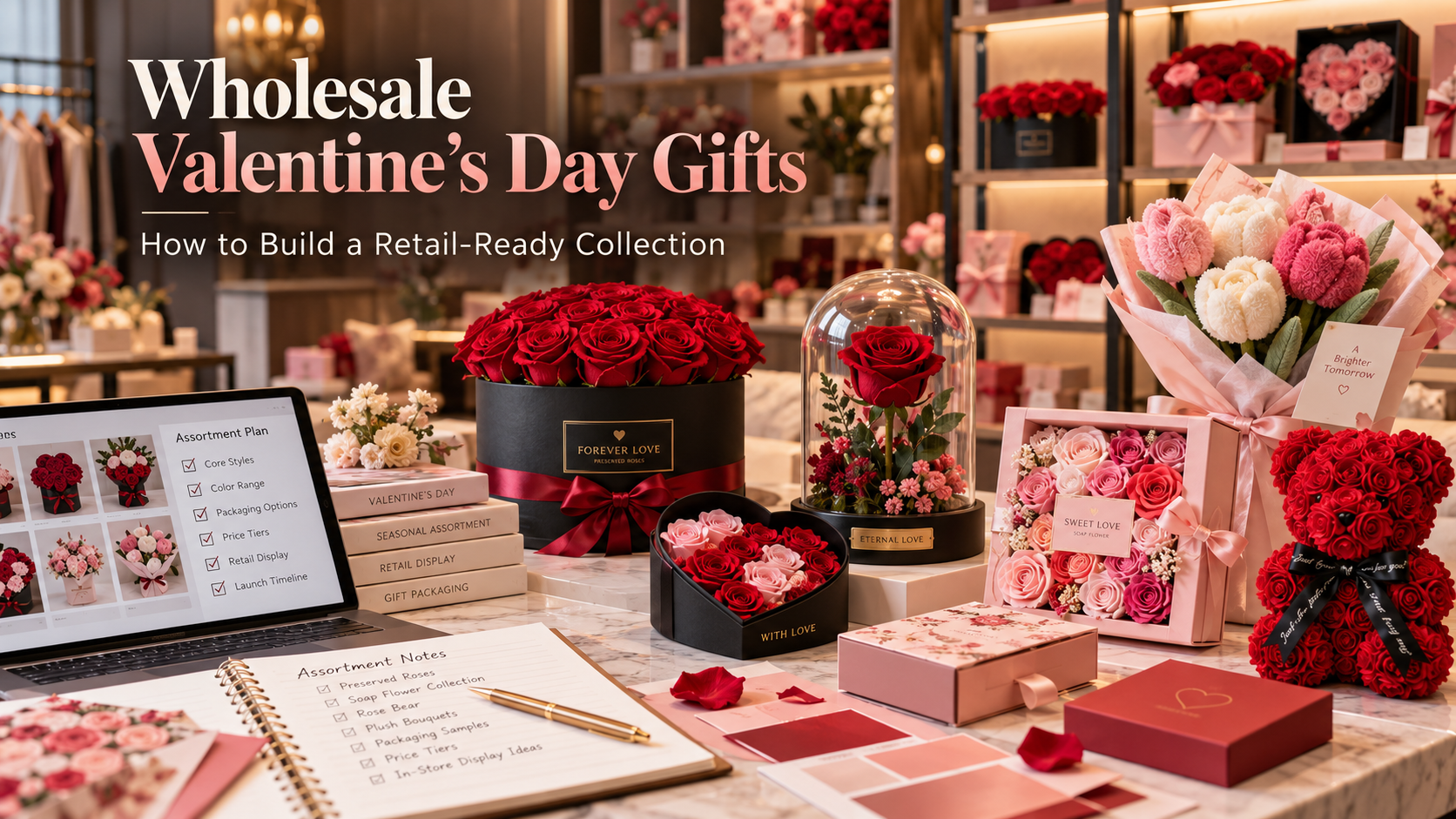
There is still room for premium romantic gifts, but there is also more reason to develop products that feel thoughtful without feeling too formal. A single preserved rose, a small floral accessory, a compact soap flower arrangement or a modest gift box can have a very different role from the main Valentine hero product.
Self-gifting adds another dimension. Japan’s Valentine chocolate market has become especially visible for jibun-choko, chocolate purchased for oneself. The exact tradition is local, but the broader idea is useful: February 14 no longer depends entirely on one person buying for another.
A seasonal collection can therefore work harder when it covers several kinds of giving instead of repeating the same romantic idea at different sizes.
For custom Valentine floral concepts or small-format seasonal gifts, product ideas can be discussed at inquiry@sweetie-group.com.
The Classics Still Work, but Generic Execution Is Easier to Ignore
Flowers remain one of the most established Valentine categories. In the U.S., NRF reported that 41% of consumers planned to buy flowers in 2026, with spending expected to reach $3.1 billion.
Mastercard’s transaction analysis also found sharp Valentine increases in florist spending in Germany and the U.S. during 2025. France showed strong activity around chocolate and cosmetics, while Italy stood out for jewelry.
This is useful because it challenges a common trend-writing habit: declaring that familiar products are finished simply because they are familiar.
They are not.
The more relevant question for 2027 is how to give an established category a reason to feel current.
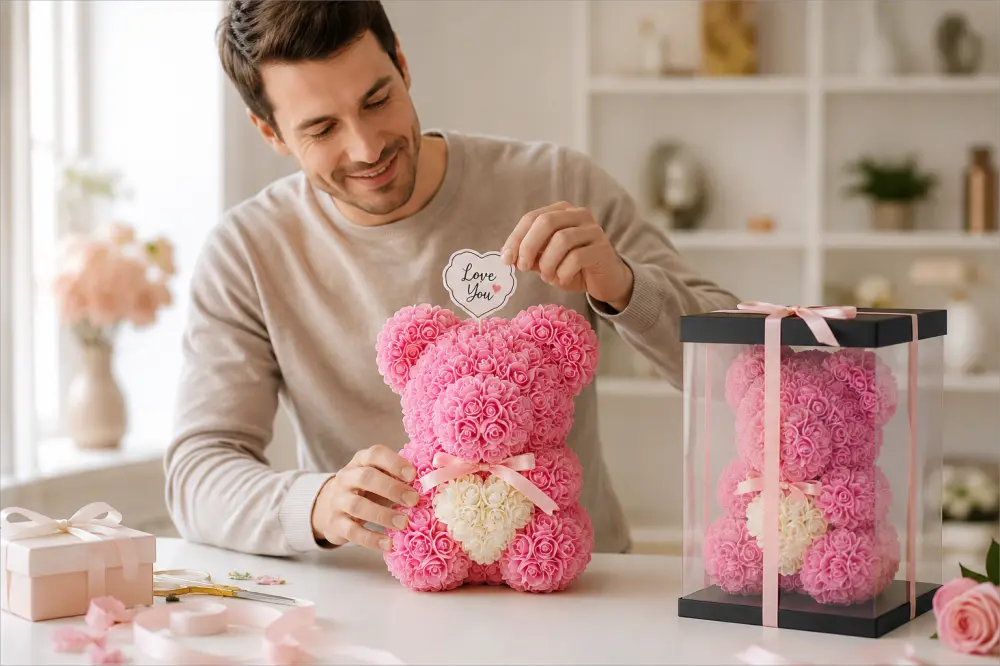
A traditional rose arrangement can change through a new container, a less expected color combination, a personalized message or a second gift element. A heart-shaped box can move from inexpensive and playful to premium depending on material, proportion and finish. A simple single-flower gift can become more appealing when its packaging turns it into a complete presentation rather than an unfinished item.
The change is often in the execution rather than the product name.
Personalization Is Moving Into the Product Structure
Personalization does not have to begin with a completely custom design.
It can be built into the product from the start.
A space for a message card, an interchangeable name plate, a choice of flower colors, removable sleeves, different ribbons or a small photo insert can create variation without redesigning the entire item.
Mintel’s 2026 UK Valentine’s research highlighted personalization, gift wrapping and build-your-own gifting as areas with continued potential.
For seasonal programs, this type of modular customization has another advantage. The core product can remain relatively stable while the visible Valentine elements change.
That is particularly useful when the selling window is short.
A red printed box covered in Valentine graphics has limited life after February 14. A more neutral gift box with a replaceable Valentine sleeve or ribbon can be adapted more easily for another occasion.
The product still feels seasonal, but not every component has to become seasonal inventory.
A Good Valentine Collection Needs More Than One Price Story
The Valentine market does not appear to be moving neatly toward either cheaper gifts or more expensive ones.
U.S. planned spending reached a record level in 2026, according to NRF. At the same time, recent UK research has shown greater pressure on gift spending.
That difference is important.
It suggests that “premium” should not automatically become the strategy for an entire Valentine range.
A more practical collection can have several layers.
At the accessible end, there may be single flowers, mini arrangements, small decorative gifts or products that work as an add-on purchase.
The middle of the assortment can carry stronger presentation, more floral content, personalized details or a simple combination with another gift category.
At the upper end, the product can become more substantial through materials, scale, flower quantity, packaging or an added jewelry, beauty or lifestyle component.
This type of price ladder also fits the widening range of Valentine occasions.
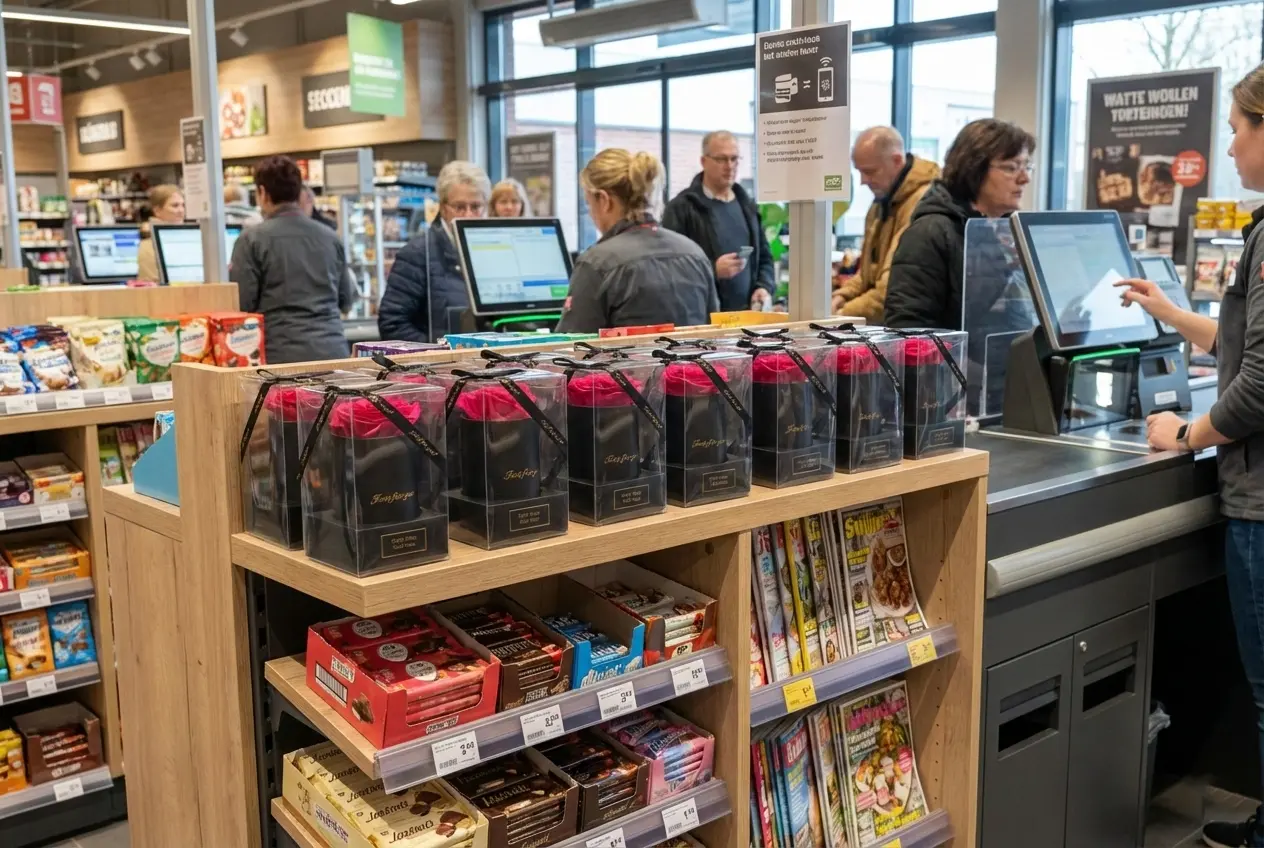
A gift for a spouse may have a different budget from something for a friend. A planned online order may differ from a last-minute supermarket purchase. A luxury brand promotion needs a different presentation from an impulse seasonal item near a checkout.
The interesting part is that all of them can still belong to the same Valentine story.
Smaller Does Not Have to Look Cheap
This is where design becomes especially important.
When a gift becomes smaller, the easiest response is to reduce everything proportionally. That often produces a product that simply looks like a cheaper version of the original.
A stronger approach is to give the small item its own logic.
One rose in a carefully proportioned display box can feel intentional. A tiny floral keepsake with a jewelry compartment can have a clear purpose. A compact gift with good surface finishing and neat internal presentation can look complete even when its material cost is modest.
The difference is not always more decoration.
Often it is better proportion.
Flowers Are Becoming Part of Bigger Gift Ideas
Some of the most flexible Valentine products begin with a combination rather than a single category.
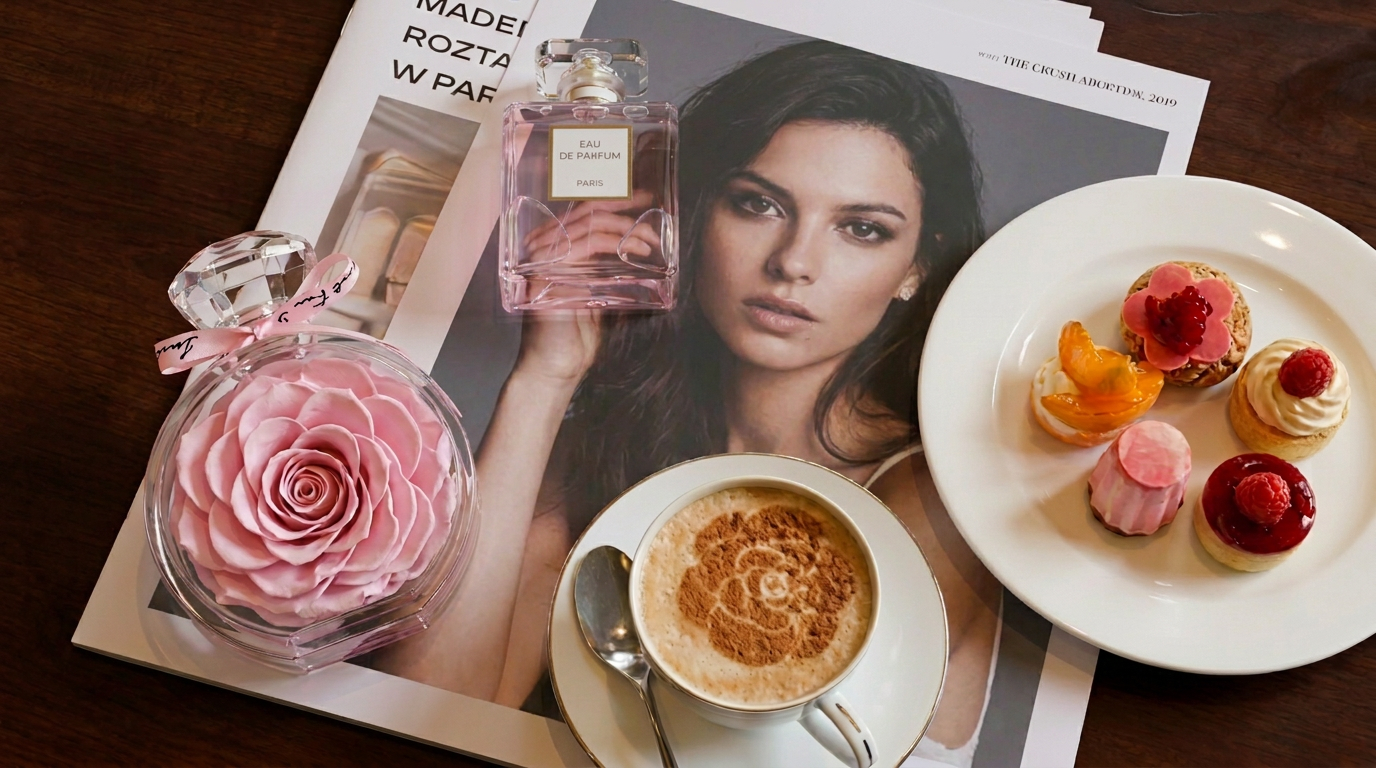
Flowers and jewelry are an obvious pairing, but they are far from the only one. Flowers can sit alongside fragrance, cosmetics, chocolate, candles, accessories, plush items or branded merchandise.
This changes the role of the floral element.
Instead of being the entire gift, the flower can become the emotional and seasonal layer around another product.
That is useful for categories that do not naturally look “Valentine” on their own. A fragrance bottle, cosmetic set or accessory can gain a February identity through the floral presentation around it without changing the core item.
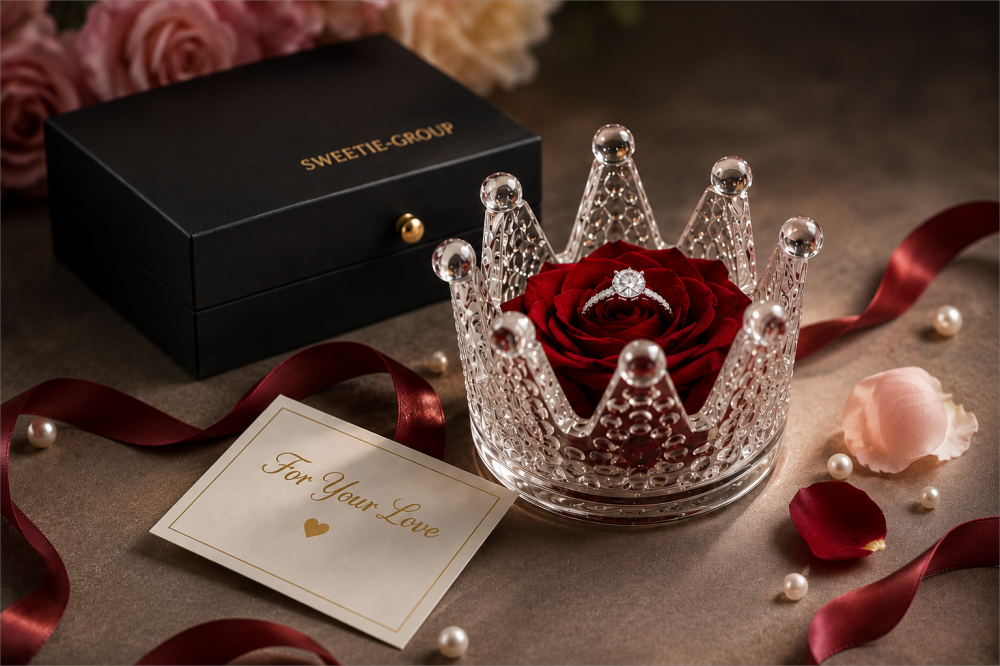
It also works in the opposite direction. A flower gift can gain more utility or longer life when it includes a small keepsake.
This is one reason cross-category development continues to be interesting. It creates newness without requiring a completely unfamiliar product.
A familiar item in a new context can be enough.
For projects combining flowers with beauty, jewelry, accessories or other gift categories, contact inquiry@sweetie-group.com for customization and packaging discussions.
Packaging Is Carrying More of the Valentine Experience
Seasonal packaging used to be treated mainly as decoration.
For modern floral gifts, that is too narrow.
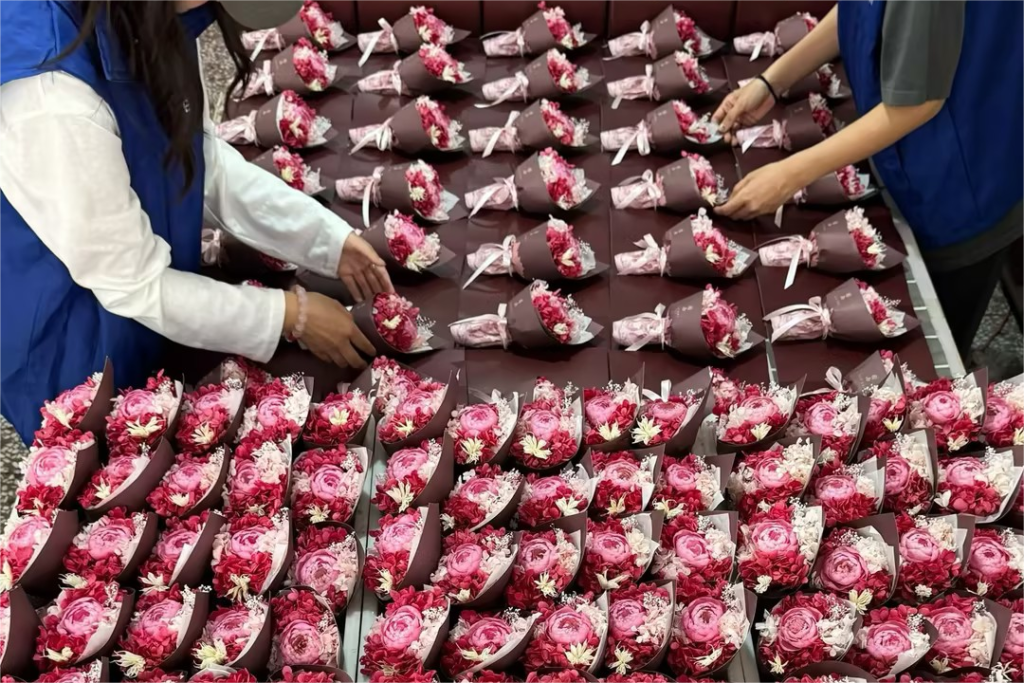
Packaging affects the first image seen online, the amount of shelf space required, the product’s survival during transport and the way the gift feels when it reaches the recipient.
Those functions can pull in different directions.
An open flower arrangement may look attractive on a shelf but needs enough clearance to prevent the blooms from rubbing against the outer protective box. A glass dome has strong visual impact but introduces breakage risk. An e-commerce gift may need stronger internal fixation than a product shipped to a store by the case.
The best packaging solutions tend to make those protective features less visible.
A support structure can hold a flower box away from the outer carton without filling the package with unnecessary padding. A glass dome can be secured through the shape of its presentation box. A clear display package can protect the surface while still showing the product properly.
The Valentine element can then sit on top of that functional structure through print, ribbon, color, sleeves or inserts.
Seasonal Without Becoming Disposable
There is another advantage to separating structure from seasonal decoration.
It makes the packaging easier to reuse across occasions.
A clear box with a Valentine paper band can become a Mother’s Day product with a different band. A neutral rigid box can change through ribbon and card design. An outer sleeve can carry the heart graphics while the main package remains usable for birthdays or anniversaries.
This is not only an inventory decision. It can also make the product look more considered.
Valentine packaging does not have to shout the date from every surface.
Sometimes one strong seasonal element is enough.
The Gift That Remains After February 14
Another direction is emerging around products that leave something behind.
Confectionery disappears. Fresh flowers fade. An experience ends.
A reusable box, decorative object, small accessory, preserved flower or collectible element can extend the life of the gift.
South Korean Valentine retail provides a useful example. Convenience-store seasonal programs have made extensive use of licensed characters and gift sets that combine confectionery with items such as pouches, accessories and other merchandise.
The character may be the attention grabber, but the more transferable idea is the structure of the set: one part is seasonal and consumable, another part is worth keeping.
That logic can work without IP licensing.
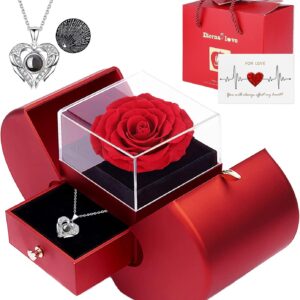
A floral box with a jewelry drawer, a rose presented with a small accessory, or a reusable container designed as part of the gift can achieve a similar effect.
It also creates room for materials that feel less temporary.
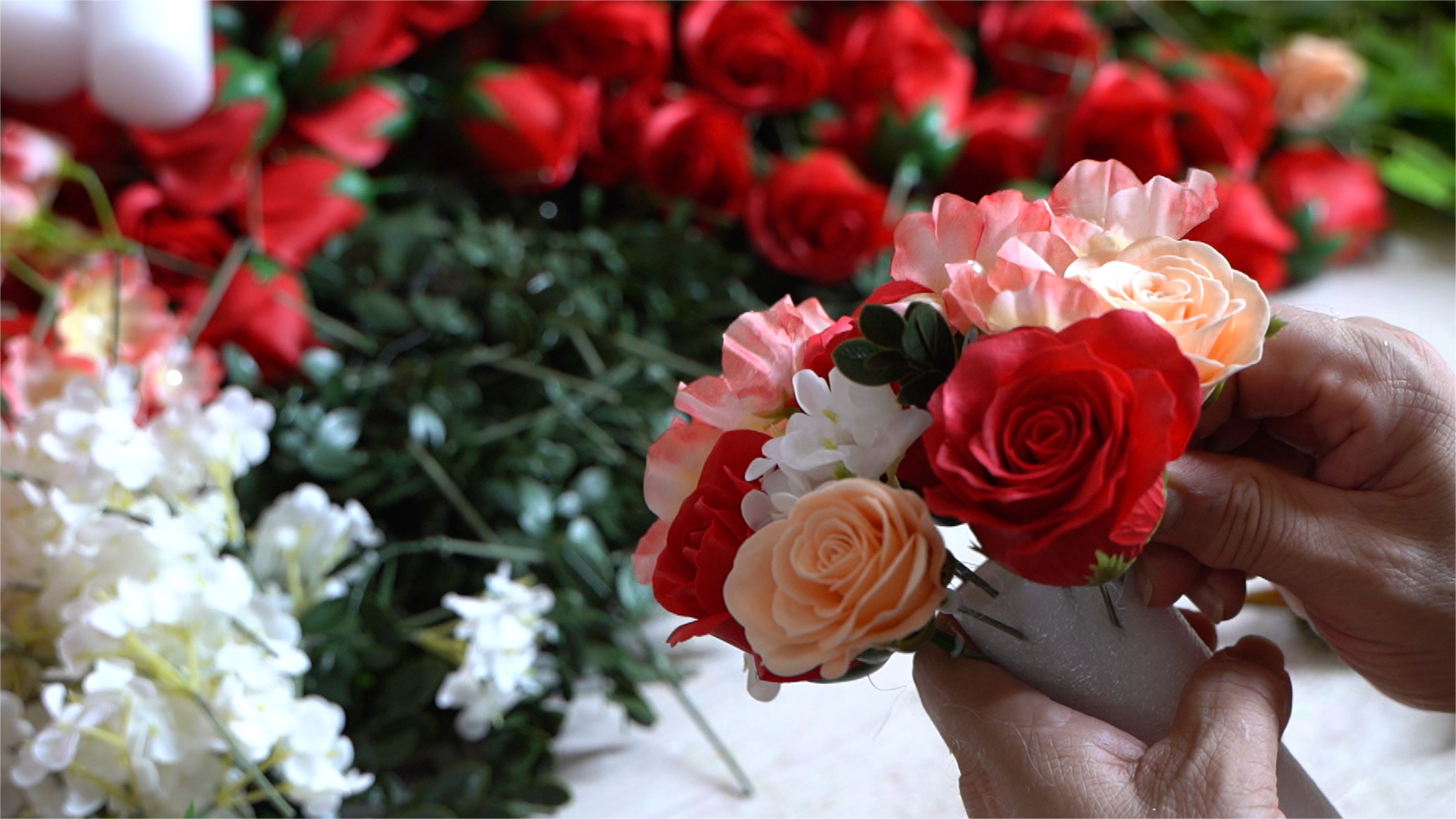
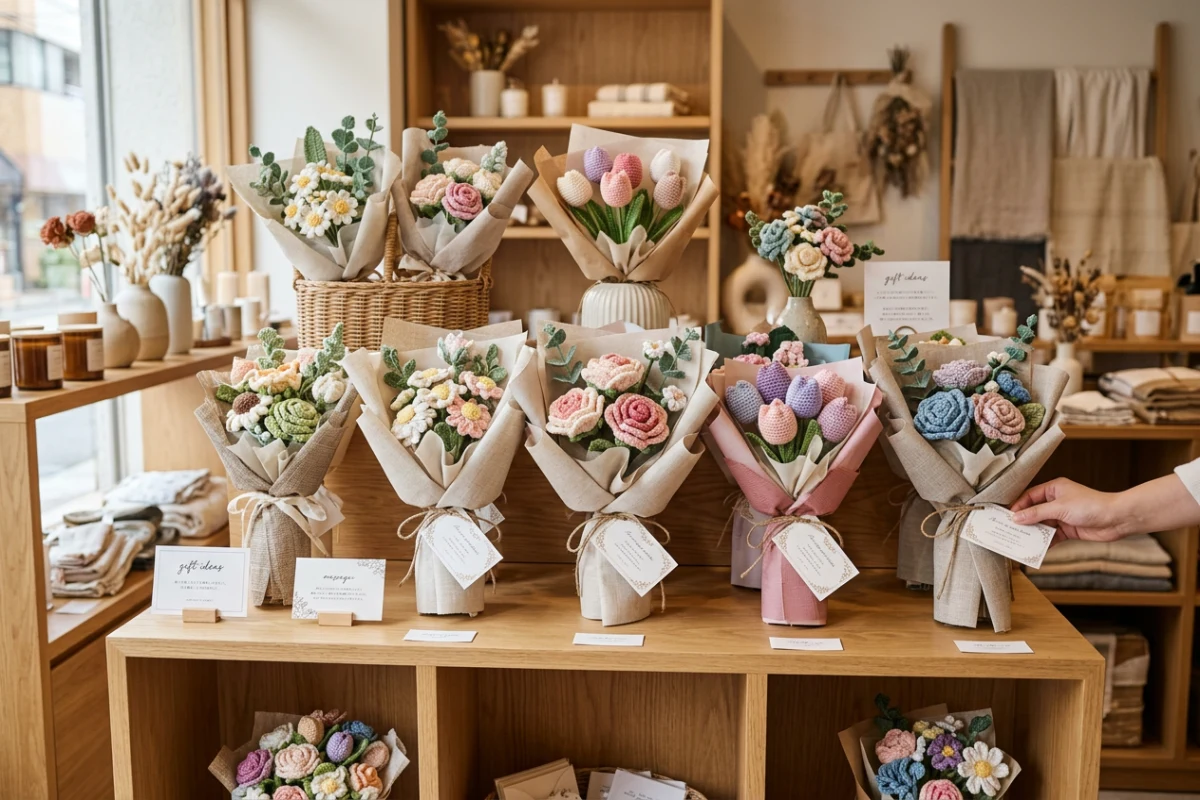
Fabric details, soft textures, decorative floral elements and handcrafted finishes can make a Valentine product feel more like an object than short-term seasonal packaging.
The point is not that every product needs to last forever.
It is that the end of Valentine’s Day does not have to be the end of the product’s value.
Color Is Opening Up, but Red Still Owns the Occasion
2027 design forecasts also suggest a slightly wider visual vocabulary.
WGSN and Coloro’s Spring/Summer 2027 palette includes Luminous Blue, Energy Orange, Pop Pink, Meadowland Green and Clay. Luminous Blue has been named their Colour of the Year for 2027.
For Valentine’s Day, that does not mean replacing red and pink.
Those colors still carry instant recognition.
The more practical opportunity is to use new colors selectively. Blue can create a cooler contemporary collection. Green and Clay can soften packaging for a natural or lifestyle look. Orange can provide a more playful accent. Pop Pink can push traditional Valentine color into something brighter and less formal.
A well-developed Valentine assortment does not need one palette.
It can have a core romantic story and smaller color stories around it.
One Valentine’s Day, Several Very Different Markets
The difficulty with any “global Valentine trend” is that February 14 behaves differently from country to country.
Mastercard’s spending analysis makes this obvious. Florists saw especially strong Valentine lifts in Germany, while France leaned toward chocolate and cosmetics. Italy showed a notable jewelry increase, and the UK recorded unusually strong spending around cinema and live theater.
Those differences matter more than a single global trend forecast.
| Market | A useful direction to watch |
|---|---|
| United States | Broad gift occasions, strong floral demand, several price levels |
| United Kingdom | Personalization, gift presentation, experiences and selective spending |
| Germany | Strong Valentine connection with florists |
| France | Chocolate, cosmetics and traditional gifting remain relevant |
| Japan | Self-gifting and premium presentation within a distinctive chocolate culture |
| South Korea | Character collaborations, collectible extras and highly seasonal retail programs |
| Australia | Flowers remain important even as participation becomes more selective |
A product does not have to be completely redesigned for every market, but the emphasis may need to change.
The same floral gift can use a different color palette, message, packaging treatment or price point. A premium box that makes sense for one channel may need a smaller version for another. A highly romantic design may sit beside a friendship-oriented version in a market where Valentine gifting is widening.
Localization does not always mean starting over.
Often it means deciding which part of the product should speak the loudest.
February 14, 2027 Will Be an Unusual Selling Day in the U.S.
There is one factor that makes the U.S. Valentine season particularly unusual in 2027.
Super Bowl LXI is scheduled for February 14, 2027 at SoFi Stadium in Inglewood, California, the same Sunday as Valentine’s Day. The date is listed in the NFL’s official calendar.
This is more than an interesting coincidence for seasonal planning.
The days leading into February 14 may carry more weight than usual. Friday and Saturday could absorb more restaurant plans, gift exchanges and deliveries. Supermarkets and mass retailers will also have two major occasions competing for display space during the same weekend.
For online gifting, timing becomes especially sensitive.
A Valentine order that normally targets delivery on the 14th may be better positioned to arrive earlier. Products intended for Friday or Saturday gifting may need to appear in campaigns sooner. Promotional calendars can also benefit from treating the Valentine weekend as several selling moments rather than one peak evening.
The overlap will affect channels differently, but it makes one thing clear: the 2027 U.S. Valentine program deserves a slightly different calendar from a normal year.
What May Define the Best Valentine Collections in 2027
The most interesting Valentine products next year may not look radically unfamiliar.
That is not a weakness.
The category already has powerful symbols and habits. Flowers, hearts, chocolate, jewelry and romantic colors do not need to be replaced simply for the sake of novelty.
The stronger opportunity lies in how those elements are edited.
A collection can reach more occasions without becoming generic. A smaller gift can still look intentional. Personalization can be added without turning every order into a custom manufacturing project. Packaging can protect the product and carry much of the design. A flower can become part of a larger gift idea, while a keepsake element can give the product a life beyond one evening.
Those changes are quieter than inventing a completely new Valentine category.
They are also much closer to how successful seasonal products usually evolve.
For Valentine’s Day 2027 product development, customized floral gifts or retail-ready packaging, contact inquiry@sweetie-group.com.
Frequently Asked Questions
What Valentine’s Day gift trends are likely to matter in 2027?
The strongest directions include broader gifting beyond couples, more varied price points, personalization, flexible seasonal packaging, cross-category gift sets and products with reusable or keepable elements.
Are flowers still a strong Valentine’s Day category?
Yes. Flowers remain one of the established Valentine categories. NRF reported that 41% of U.S. consumers planned to purchase flowers for Valentine’s Day 2026.
Are Valentine products becoming less romantic?
Not necessarily. Romantic gifting remains central. The market is expanding around it, creating additional occasions for friendship, self-gifting, colleagues, teachers and pets.
What packaging trends are relevant for Valentine’s Day 2027?
Flexible packaging is especially useful for short seasonal programs. Removable sleeves, ribbons, cards and interchangeable details can create a Valentine look while allowing the main package to work for other occasions. For e-commerce, internal fixation and product protection remain just as important as visual presentation.
Will red and pink still be important in 2027?
Yes. Red and pink remain closely associated with Valentine’s Day. Broader 2027 color forecasts suggest opportunities to introduce blue, green, orange and warm neutral tones as supporting or alternative palettes rather than replacements.
Why is Valentine’s Day 2027 different in the United States?
Super Bowl LXI and Valentine’s Day fall on the same date, Sunday, February 14, 2027. This may place more importance on Friday and Saturday gifting, earlier deliveries and a different promotional calendar.
Annie Zhang