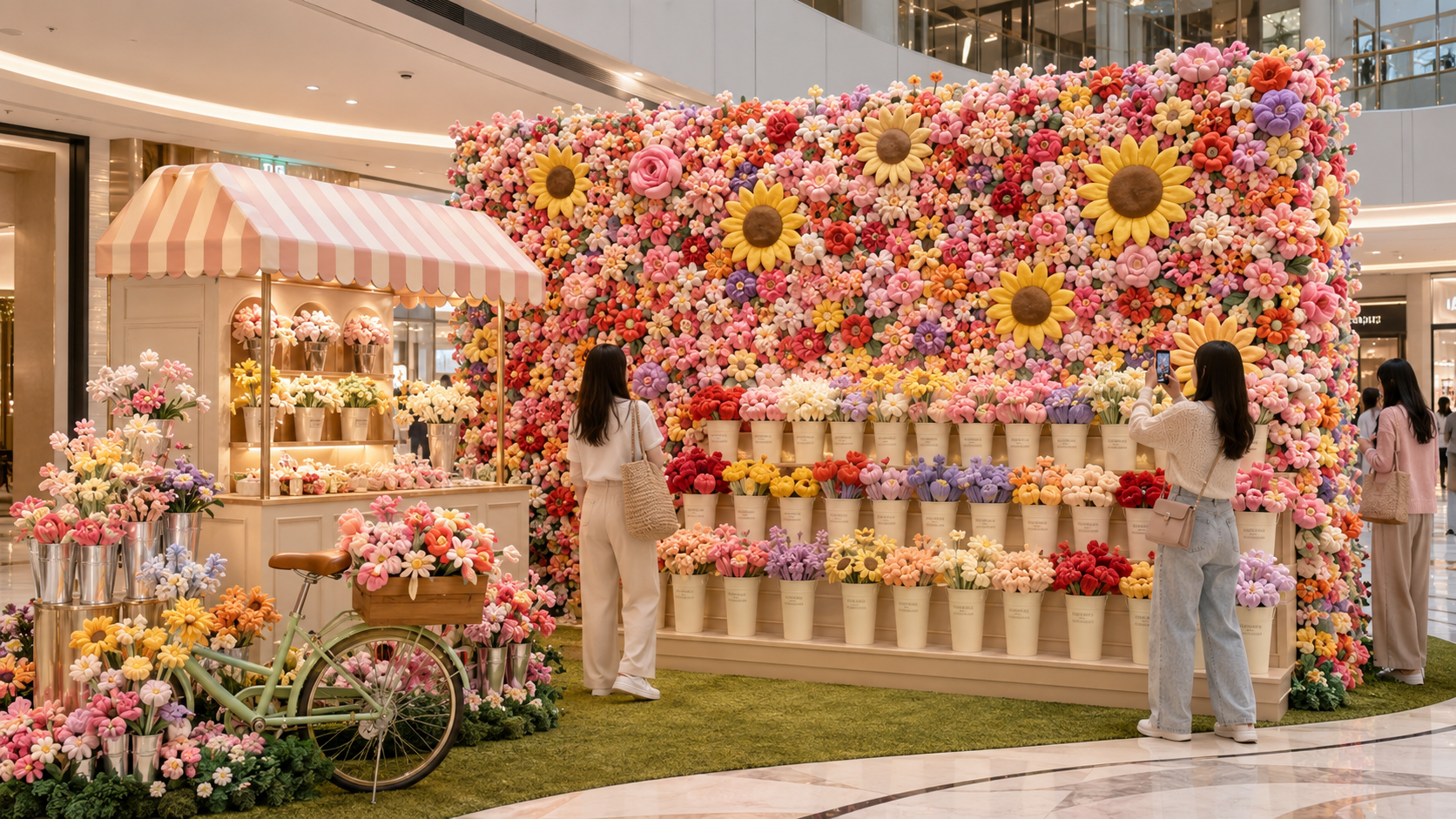
If a floral product looks beautiful but sells slowly, breaks in transit, or confuses shoppers, it is not a strong retail product. It is just a pretty idea.
That is why I think the posy category deserves a more practical conversation. In search behavior, buyers and consumers may use words like posy, posies, mini bouquet, or small floral gift. In retail, though, the real issue is not vocabulary. The real issue is product fit.
A small floral gift can work very well in gift shops, flower shops, online stores, and seasonal retail programs. But only when the format matches the channel. Fresh flowers, preserved flowers, and soap flowers each solve a different business problem. If you choose the wrong one, you usually pay for it later in waste, returns, weak sell-through, or poor repeat orders.
If you are building a posy-style floral range and want to compare product options with a manufacturer, email us at inquiry@sweetie-group.com.
Executive Answer
For most retailers, a posy is best understood as a small, gift-friendly floral product rather than one fixed product type.
If you need:
- natural beauty and local floral service, fresh flowers usually make sense
- longer display life and stronger gifting value, preserved flowers are often the better choice
- color consistency and accessible pricing, soap flowers can be more practical
The best format depends on how you sell, how you stock, how you ship, and what your customers expect.
What Retail Buyers Usually Mean by “Posy”
In traditional flower language, a posy often refers to a small, compact arrangement or bouquet. In modern retail, the meaning is wider. A posy may show up as:
- a mini bouquet
- a compact flower gift
- a small boxed floral product
- a ready-to-display decorative flower gift
That matters because many buyers search for posy, but the products they finally source may be listed under completely different names.
So when I evaluate this category, I do not focus too much on whether the item is literally named “posy.” I focus on whether it has the core posy-style traits:
- compact size
- clear giftability
- easy display
- manageable pricing
- channel-friendly packaging
Why Small Floral Gifts Keep Getting Retail Attention
There is a simple reason this category keeps coming back: it works in more than one shopping context.
It lowers the purchase barrier
A compact floral gift feels easier to buy than a large bouquet. Customers do not need a major occasion to justify it.
It fits more shelves
Small floral products can work in gift shops, boutique displays, side tables, holiday programs, checkout zones, and curated online assortments.
It gives buyers more flexibility
Retailers can test colors, packaging, and price points without committing to a large, complicated floral range.
It supports gifting behavior
Small floral gifts are often bought for birthdays, thank-you moments, desk décor, seasonal add-ons, and impulse gifting.
That is the commercial logic behind the category. Not romance. Not trend language. Retail practicality.
Option One: Fresh Flowers
Fresh flowers are still the strongest solution for businesses built around floristry.
Fresh flowers are usually the right fit when:
- your store already handles floral care
- same-day or local delivery is part of the model
- your customers expect authentic fresh bouquets
- weddings or sympathy sales are important revenue streams
Where fresh flowers win
Fresh flowers bring the strongest natural impression. They offer fragrance, softness, and the emotional response many shoppers still associate with “real flowers.”
Where fresh flowers create pressure
They also bring the most operational risk:
- short selling window
- stock loss
- daily care requirements
- timing pressure
- variation from season to season
So I would say this clearly: fresh flowers are excellent, but only when the retailer is structurally ready for them.
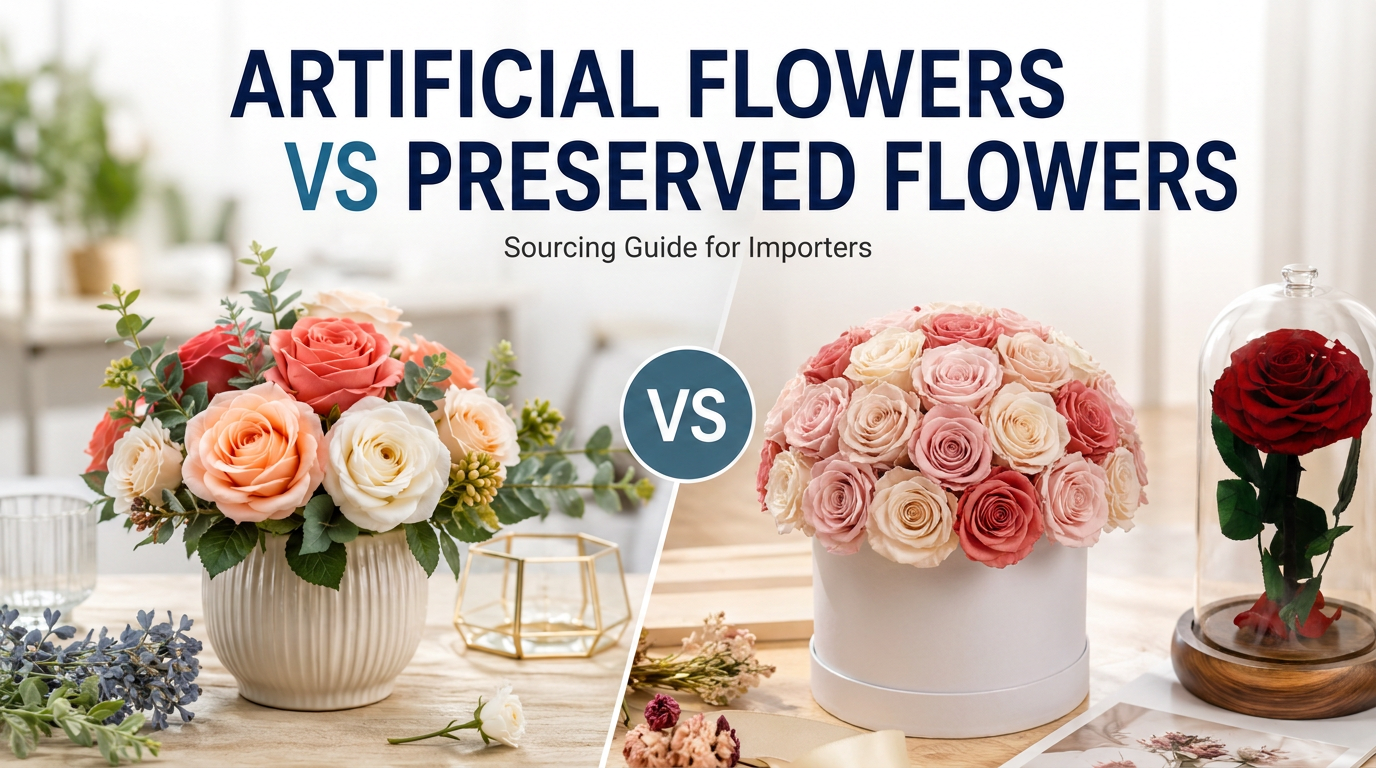
Option Two: Preserved Flowers
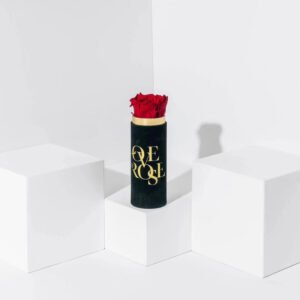
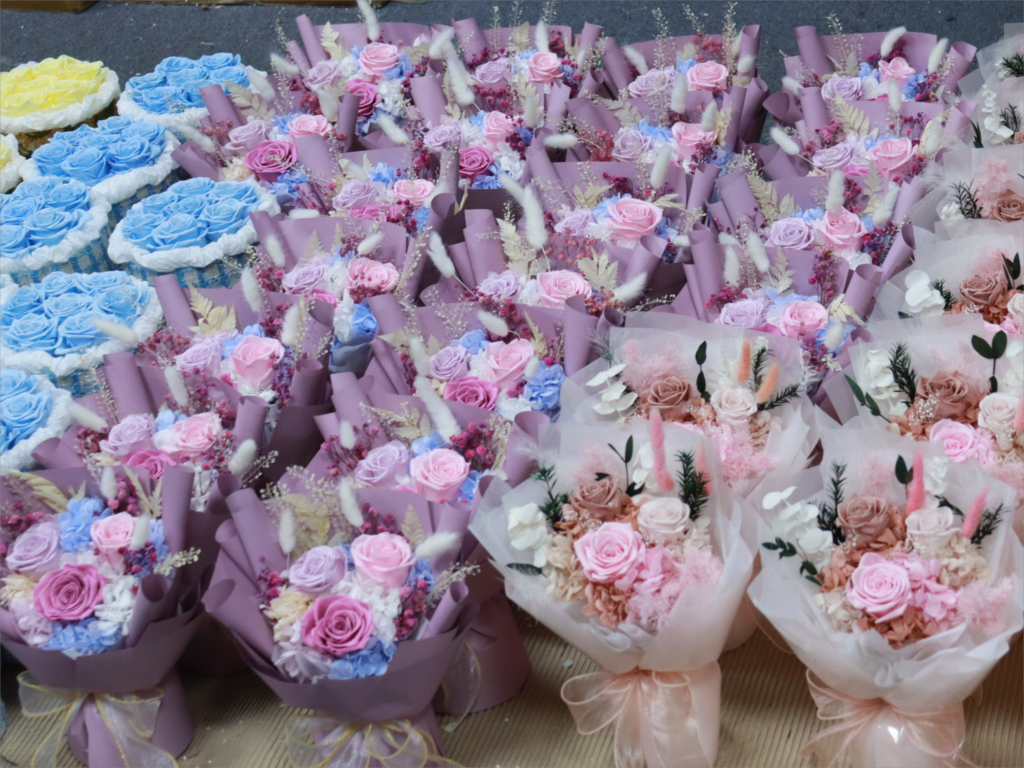
Preserved flowers often make the most sense when the retailer wants a floral product with stronger shelf stability and stronger gift presentation.
Preserved flowers are usually the right fit when:
- you sell gift-led products rather than daily fresh flowers
- you need longer display time
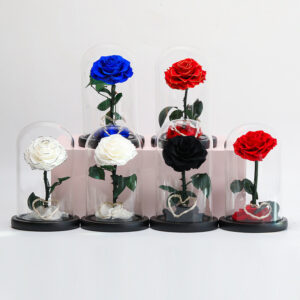
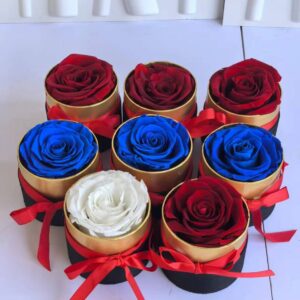
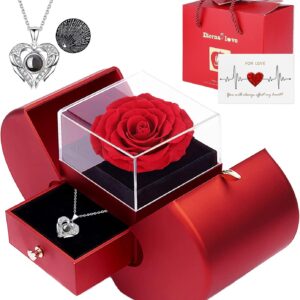
- you want floral products that work in boxes, domes, or compact gift formats
- your business depends on visual consistency and easier planning
Where preserved flowers win
Preserved flowers are especially strong in:
- gift shops
- online stores
- premium gifting
- branded event gifts
- keepsake-style floral products
They combine the emotional value of real flowers with a much more manageable retail rhythm.
Where preserved flowers need more planning
They are not a shortcut product. Buyers still need to think through:
- packaging protection
- product positioning
- customer education
- pricing relative to the local market
Still, when the goal is to build a floral gift line without running a fresh-flower operation, preserved flowers often offer the best balance.
Option Three: Soap Flowers
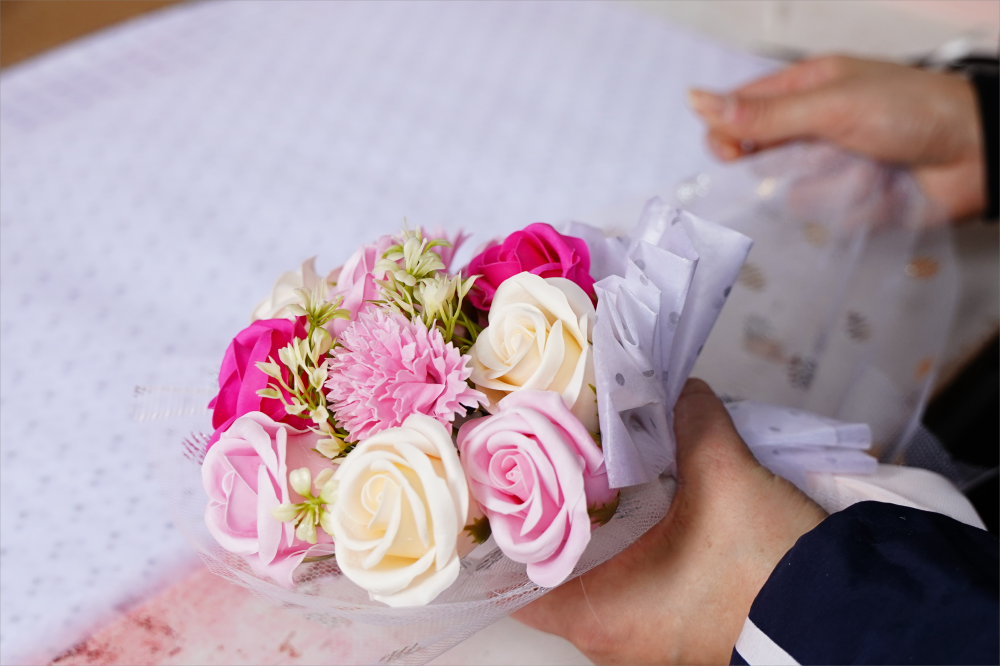
Soap flowers are often underestimated because people compare them to the wrong category.
If I compare them to fresh flowers on naturalness, they will lose. If I compare them to preserved flowers on premium perception, they may also lose in some channels. But if I compare them on standardization, color control, and accessible pricing, they become very competitive.
Soap flowers are usually the right fit when:
- the channel is price-sensitive
- visual consistency matters
- seasonal gifting drives sales
- the retailer wants a decorative floral look at a lower risk level
- the program requires higher volume and easier repeatability
Where soap flowers win
Soap flowers are useful when buyers need:
- strong color choice
- stable appearance
- simpler scaling
- value-focused gift lines
- promotional or seasonal programs
Where soap flowers are more limited
They are not always ideal for:
- highly premium retail environments
- brands that lean heavily on natural storytelling
- shoppers who want a real-flower keepsake experience
Soap flowers are not the universal answer. But in the right retail setting, they are a very workable answer.
Quick Decision Guide
If you want the shortest possible version, use this:
Choose fresh flowers if:
- you already operate like a florist
- fast local turnover is normal for your business
- perishability is manageable
Choose preserved flowers if:
- you sell gifts, not daily fresh inventory
- shelf life matters
- presentation matters
- packaging and shipping need to be more controlled
Choose soap flowers if:
- price sensitivity is high
- color consistency matters
- you need scalable, decorative floral gifting
Comparison Table
| Product Format | Best For | Main Strength | Main Risk |
|---|---|---|---|
| Fresh Flowers | Florists, local delivery, weddings, sympathy work | Natural look and emotional impact | Short life and operational pressure |
| Preserved Flowers | Gift shops, online stores, premium gifting | Longer display life and gift-ready value | Higher cost and packaging sensitivity |
| Soap Flowers | Promotional retail, seasonal gifting, value-driven channels | Standardization and accessible pricing | Lower natural feel in some markets |
Which Retail Channels Usually Match Each Format
This is where the decision becomes easier.
Flower shops
Fresh flowers usually fit best, especially if floristry service is part of the brand. Preserved flowers can still work as an add-on category, particularly for keepsake gifting or boxed floral gifts.
Gift shops
Preserved flowers are often the strongest choice because they align well with gift packaging, shelf display, and longer selling windows. Soap flowers may also work in more price-driven assortments.
Online stores
Preserved flowers and selected soap flower formats are usually easier to photograph, standardize, pack, and ship. That matters more online than many buyers first expect.
Supermarkets and chain retail
Operational consistency matters here. Products need to be stable, repeatable, display-friendly, and realistic to replenish. That often makes preserved and soap flower products more practical than fresh flowers.
If you are evaluating which format makes sense for your retail channel, feel free to email us at inquiry@sweetie-group.com.
Five Questions Buyers Should Ask Before They Source
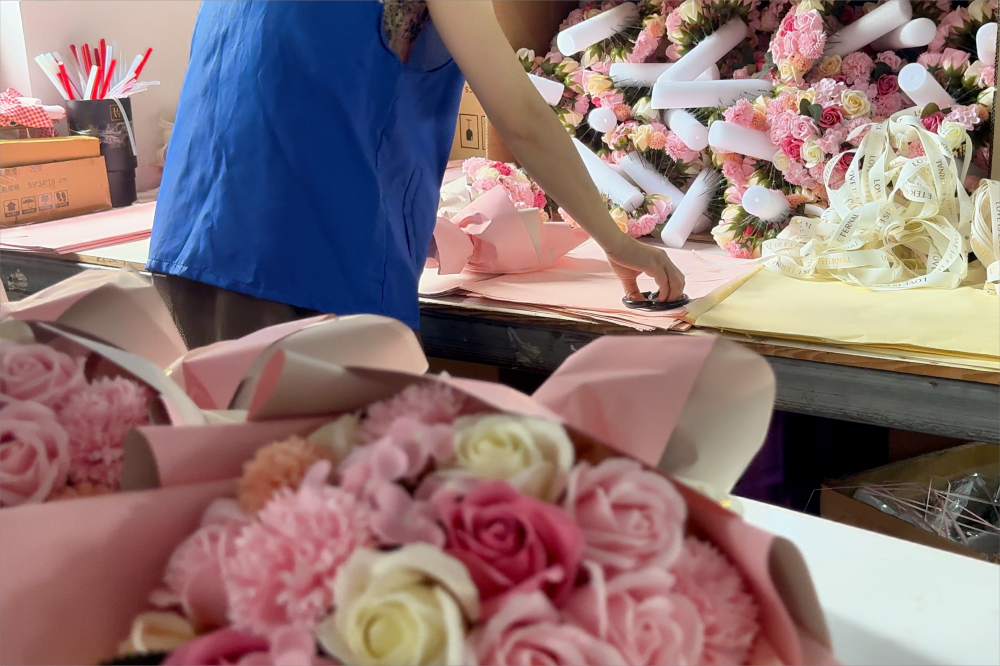
Before I would approve any posy-style floral line, I would want clear answers to these five questions:
1. How long does the product need to stay sellable?
A short seasonal campaign and a year-round gift line do not need the same floral format.
2. How will the product be shipped?
Parcel shipping, shelf display, and wholesale distribution each create different packaging demands.
3. What price band are you targeting?
A floral gift that looks good at one retail price may fail at another.
4. How much variation can your customers accept?
Some channels accept handmade variation. Others want every unit to look nearly identical.
5. What role does the product play in your assortment?
Is it an impulse gift, a premium keepsake, a holiday special, or an entry-level floral item?
I think these questions are far more useful than asking which material is “best” in the abstract.
Common Mistakes Buyers Make in This Category
I see the same problems again and again.
Buying by appearance alone
A product may photograph well and still fail in transit or on shelf.
Choosing fresh flowers without fresh-flower operations
This usually leads to waste, unstable margins, and frustration.
Using premium-looking products at the wrong price point
If the retail price does not match the customer’s expectations, the product stalls.
Ignoring packaging until too late
In floral gifting, packaging is part of the product, not an afterthought.
Treating “posy” as a fixed SKU
It is better to treat posy as a retail format or presentation logic, not one rigid product definition.
Final Take
A posy is not just a flower term. In retail, it is a useful shorthand for a smaller, easier-to-sell floral gift format.
Fresh flowers work best when the retailer already has floristry capability and local speed. Preserved flowers work best when the goal is gifting value, shelf stability, and better planning. Soap flowers work best when standardization, color choice, and pricing flexibility matter most.
So if I am making a buying decision, I would not start with the question, “What is the prettiest option?” I would start with this one:
Which format gives my business the best mix of sell-through, presentation, and operational control?
That is usually where the right answer appears.
If you are developing a posy-style floral program for gift retail, e-commerce, or seasonal projects, contact us at inquiry@sweetie-group.com.
Annie Zhang, CEO of Sweetie Group