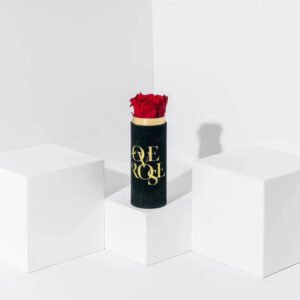
Plush flowers offer viable commercial potential for licensed character merchandise when tailored to character fanbases and produced either as bespoke character blooms or standard floral stems enhanced with licensed accessories and branded packaging. While not every intellectual property suits floral formats, character-driven gift programs succeed when aligning fan gifting occasions, visual novelty, and manageable manufacturing minimums.
Why should IP merchandise brands consider plush flowers as licensed character gifts?
Traditional character merchandise categories—such as standard sitting plush toys, acrylic standees, keychains, and graphic apparel—frequently encounter saturated retail shelves and margin erosion. Merchandising managers, licensing directors, and retail gift buyers constantly seek adjacent novelty formats that command gifting price premiums without introducing delicate mechanical assemblies or fragile breakable components.
Licensed plush flowers bridge the gap between traditional toy collectibles and decorative lifestyle gifts. Unlike conventional plushies that sit passively on a bedroom shelf, floral plush stems fit naturally into celebratory bouquets, desk vases, graduation presentations, Valentine’s Day promotions, and curated holiday gift boxes.
Several distinct commercial drivers explain why plush floral formats deserve serious evaluation in IP merchandise planning:
- Extended Shelf Life and Display Utility: Fresh floral arrangements perish within days, whereas fabric and plush blooms remain vibrant indefinitely. Fans retain them on vanity tables, work desks, or bedroom displays as permanent character keepsakes.
- Elevated Perceived Gifting Value: When assembled as an arrangement or enclosed in structured window boxes, character plush flower gifts shift consumer perception from an impulse novelty toy to a formal celebratory gift, supporting higher retail price thresholds and healthier margins.
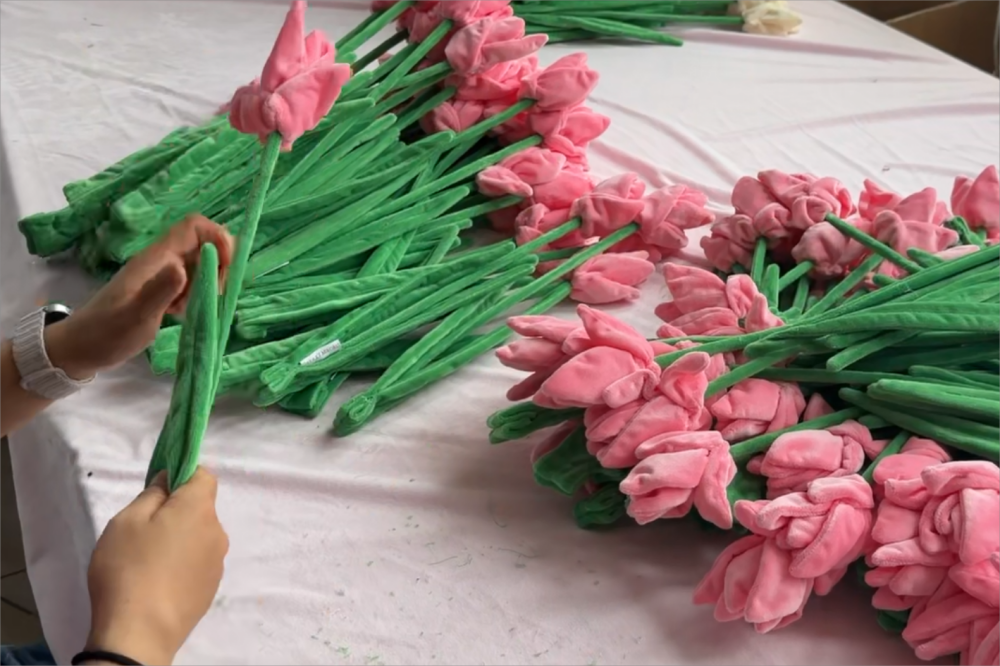
- Modest Structural Tooling Overhead: In contrast to injection-molded figures or complex electronic home goods, plush floral development relies on fabric patterning, precision embroidery, and flexible internal wire stems, keeping upfront prototyping and tooling investments relatively modest.
- Multi-Occasion Retail Alignment: Floral merchandise integrates smoothly into high-volume retail calendar peaks, such as Valentine’s Day, Mother’s Day, graduation season, convention pop-ups, and character birthday milestones.
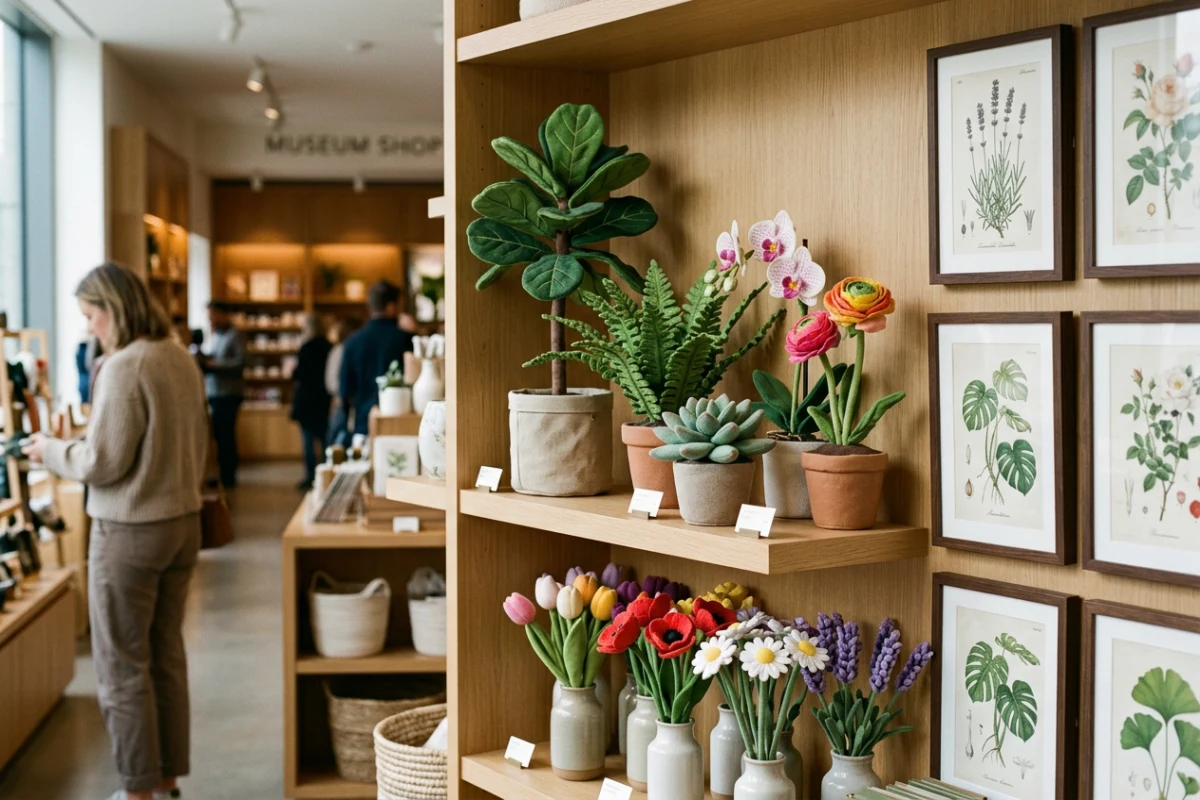
- Expanded Retail Placement: Well-designed licensed character floral merchandise enables brands to gain shelf space in lifestyle gift boutiques, department store floral counters, specialty gift shops, and premium pop-up venues that rarely stock standard toy assortments.
Which character IPs and fan demographics match plush floral gifts best?
Not every entertainment property translates effectively into botanical formats. An intellectual property must possess visual traits, narrative themes, and emotional associations that make floral integration feel intuitive rather than forced.
Successful IP plush bouquet development generally concentrates around three distinct categories of intellectual property:
1. Kawaii, Mascot, and Comfort Characters
Cute animal mascots, comforting illustrated icons, and nostalgic storybook characters represent the most natural fit. Their soft color palettes, rounded facial proportions, and association with warmth complement pastel petals, plush leaves, and soft velboa textures. Fanbases for these properties actively seek aesthetic, room-brightening lifestyle accessories that bring comfort to daily living spaces.
2. Anime, Gaming, and Romance-Centric Franchises
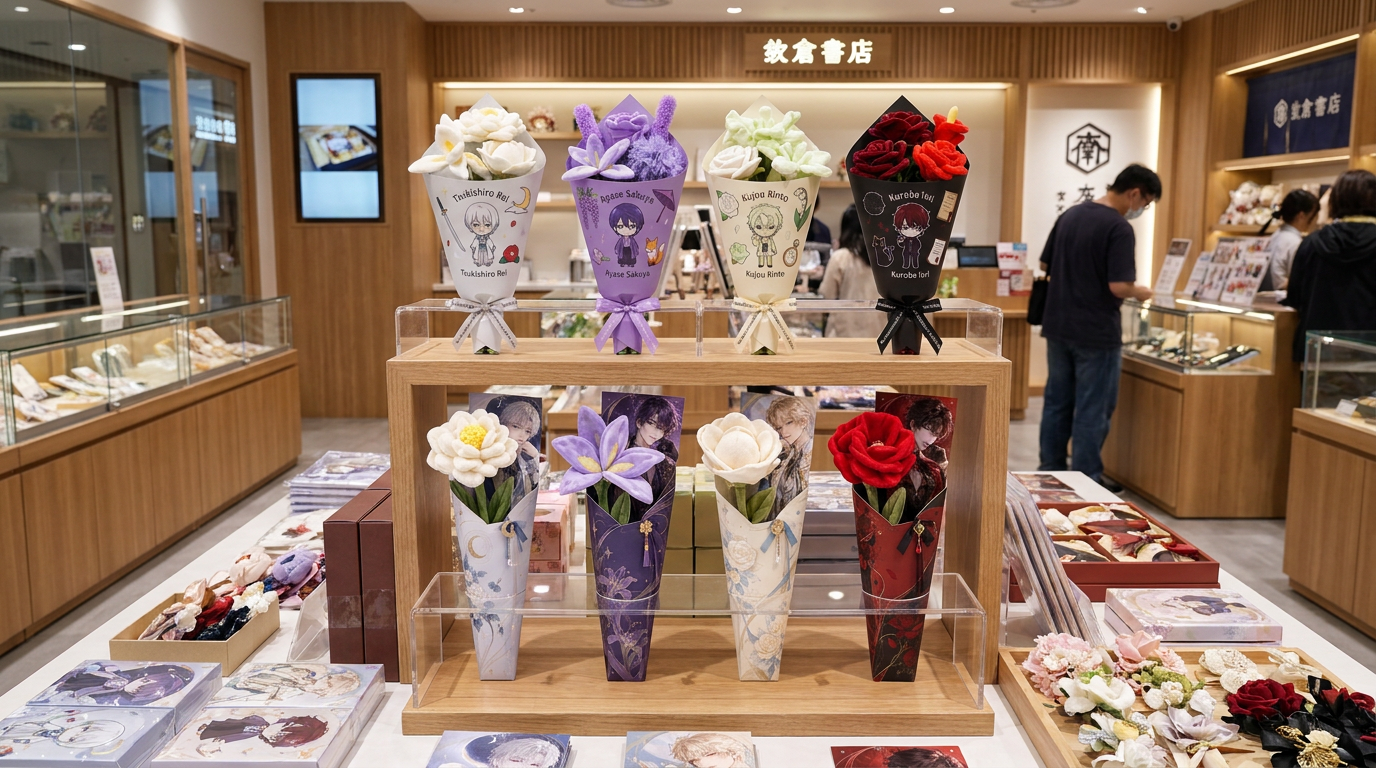
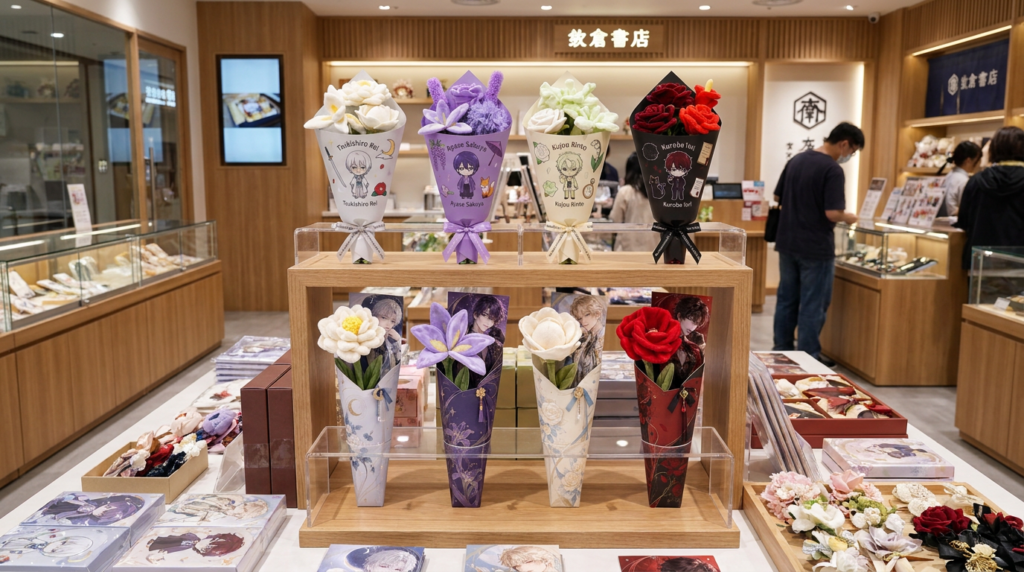
Properties with devoted fan followings, particularly romance visual novels, idol multimedia franchises, and otome games, benefit significantly from character-coded floral products. In these fandoms, individual characters frequently have assigned image colors, signature botanical motifs, or dedicated birthday celebration milestones. Plush floral stems themed to specific characters allow fans to construct personalized floral arrangements for celebration photos, fan gatherings, and personal display shrines.
3. Iconic Pop Culture Brands with Strong Lifestyle Appeal
Heritage cartoon brands and fashion-adjacent character franchises can leverage plush flowers as playful, retro lifestyle accessories. These products appeal strongly to young adults, Gen Z consumers, and millennial gift shoppers looking for whimsical desk accessories and cheerful home decor.
Conversely, gritty action franchises, dark horror themes, or mechanical sci-fi IPs rarely achieve broad commercial adoption in plush floral formats unless executed with deliberate streetwear irony. Product managers should evaluate whether their core audience views the character as comforting, decorative, or giftable before initiating custom plush flower OEM development.
What are the two main product development models for licensed plush floral merchandise?
When launching an IP floral product collection, licensing teams and brand buyers typically choose between two primary manufacturing approaches: full bespoke character shaping or standard plush blooms equipped with licensed packaging and accessories.
| Evaluation Dimension | Model A: Bespoke Character Blooms | Model B: Standard Flowers + IP Packaging & Accents |
|---|---|---|
| Product Definition | Flower center or petals sculpted directly into character faces, heads, or full mascot bodies. | Universal plush roses or tulips paired with character hangtags, branded ribbons, plush charms, and custom sleeves. |
| Tooling & Patterning | Custom plush embroidery patterns, specialized fabric cutting dies, multi-part fabric assembly. | Standard existing floral patterns with customized print runs for packaging, ribbons, and small character charms. |
| Development Lead Time | 6–10 weeks for sampling and multi-stage licensor approval revisions. | 2–4 weeks for graphic packaging, accessory sampling, and rapid prototyping. |
| Licensor Approval Burden | High: requires precise 3D facial proportions, embroidery checks, and brand safety reviews. | Moderate to Low: standard flower body with 2D graphic packaging approval and small accessory review. |
| Minimum Order Quantities (MOQs) | Higher (typically 1,000–3,000 pcs per character SKU depending on fabric dye runs). | Lower (often 300–500 pcs per floral colorway when utilizing shared base stem components). |
| Retail Positioning | Premium collectible, standalone centerpiece gift (18–45 USD retail). | Accessible gifting item, add-on bouquet component (8–25 USD retail). |
Model A: Bespoke Character-Shaped Blooms
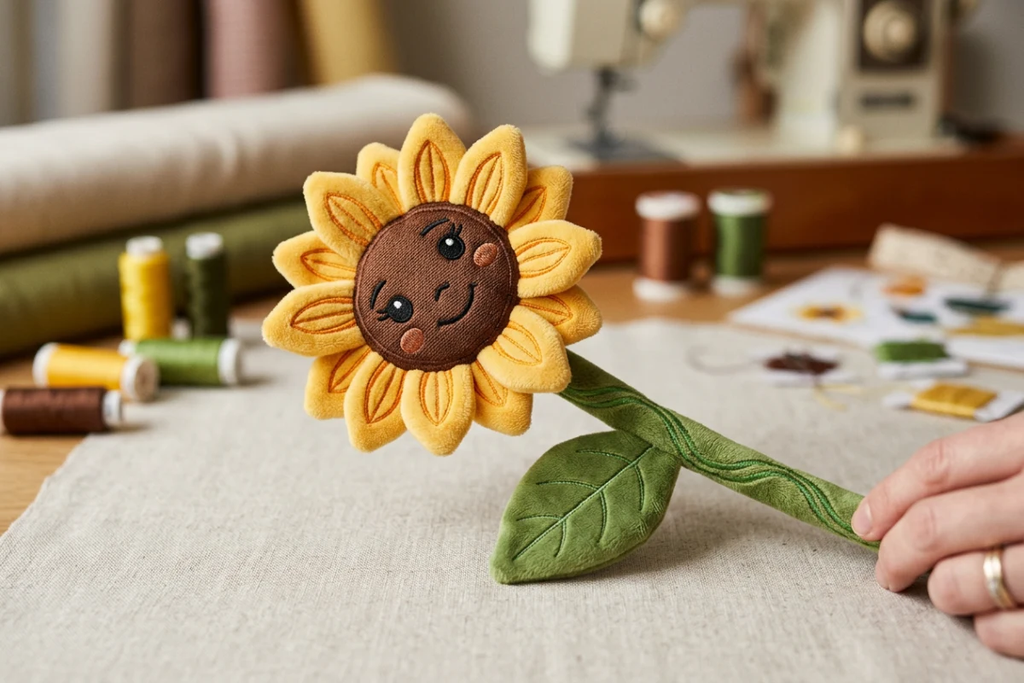
In this model, the plush flower itself represents the character. The blossom center might feature the embroidered face of a mascot, or the petals may be customized with character ears, iconic hats, or distinct color gradients. This approach delivers unmatched visual novelty and strong shelf presence, but requires rigorous licensor design approvals, precise fabric cutting dies, and dedicated pattern engineering.
Model B: Standard Floral Stems with Licensed Presentation
In this approach, brands utilize classic plush flower shapes—such as velour roses, bendable sunflowers, or plush tulips—in character-specific color palettes. Character integration is achieved through licensed printed wrapping paper, custom debossed ribbons, character acrylic charms attached to stems, or small clip-on plush mascot attachments. This model dramatically reduces sample iteration cycles, lowers tooling risk, and provides inventory flexibility across multiple character colorways.
If you are planning an upcoming collection and need experienced guidance on physical prototyping, fabric selection, and custom packaging integration, contact the team at Sweetie-Group by sending an email to inquiry@sweetie-group.com to discuss your project requirements.
What commercial feasibility factors determine if an IP plush bouquet is worth manufacturing?
Before committing capital to pattern development and volume manufacturing, product developers must evaluate several commercial variables to protect unit margins and ensure retail sell-through.
1. Landed Cost vs. Retail Price Architecture
Licensed merchandise carries royalty overheads (typically 8% to 18% of wholesale or net retail sales). To maintain standard retail gross margins of 50% to 65%, your target bill of materials (BOM) must account for plush fabric, internal wire stem reinforcements, safety compliance testing, packaging boxes, and master cartons.
- Single Stem Target Retail: 8.00–14.00 USD (Target FOB: 1.20–2.50 USD)
- 3-Stem Character Bouquet: 22.00–32.00 USD (Target FOB: 4.00–7.00 USD)
- Deluxe Packaged Arrangement: 45.00–75.00 USD (Target FOB: 9.00–16.00 USD)
2. Retail Packaging Integrity and Volumetric Shipping
Plush flowers present unique logistical considerations during international transit. Unlike rigid hard goods, plush flowers can tolerate modest compression, but excessive crushing damages custom wrapping, creases fabric petals, or distorts delicate facial embroidery. Designing flat-pack retail gift boxes or modular display cartons is essential to maintain acceptable ocean and air freight volumetric ratios.
3. Physical Safety and Regulatory Compliance
Even when marketed primarily as lifestyle home decor or collector gifts, plush products frequently fall under regional toy safety testing if characters hold broad appeal for children under 14. Custom plush flower OEM manufacturing must comply with EN71 (Europe), ASTM F963 (USA), and CCPSA (Canada), specifically regarding:
- Seam tension and tensile strength on small attached parts, such as embroidered charms, plastic eyes, and decorative buttons.
- Heavy metal and lead content restrictions on internal flexible metal wire cores.
- Flame retardancy standards for synthetic plush velboa and polyester fiberfill materials.
To quickly evaluate product formats, assess unit budgets, and configure tailored assortment plans for your retail or distribution channels, you can explore Sweetie AI for procurement planning support.
4. Channel Dynamics and Merchandising Footprint
Consider how the product will be merchandised in target retail environments. Single plush stems require vertical counter-top display buckets or peg-hook hangtag packaging. Bundled bouquets require rigid protective window boxes or clear cylindrical canisters that prevent customer handling wear while maintaining a premium gift presentation.
How can brands pilot and validate a licensed plush flower collection with low risk?
Rather than launching large global production runs across an entire character roster, experienced merchandise managers use phased pilot programs to test consumer reception and operational economics.
Step 1: Digital Concept Validation and Community Polls
Render photorealistic 3D product mockups or present photography of preliminary physical prototypes across your digital community or fan club channels. Gauge engagement, colorway preferences, and price sensitivity before finalizing master purchase orders.
Step 2: Limited Event or Seasonal Exclusives
Produce an initial short run of 500 to 1,000 units dedicated to a specific convention, character pop-up cafe, or holiday retail window such as Valentine’s Day or graduation season. Limited seasonal drops create immediate purchasing urgency, allowing you to test price elasticity without long-term inventory exposure.
Step 3: Bundle Integration with Core SKU Lines
Pair a single character plush flower stem with an established hero product—such as a collector vinyl figure, an art book, or an apparel drop—as a value-added gift box set. This tests whether floral accents increase the overall perceived value and conversion rate of your core offerings.
Step 4: Multi-Character Line Rollout
Once sell-through velocity, customer unboxing feedback, and packaging durability are confirmed in real-world retail environments, scale production into permanent catalog lines featuring full cast assortments and seasonal color variants.
Sweetie-Group specializes in floral gift product development, providing end-to-end B2B customization, packaging engineering, and sampling support for custom plush flower projects. To review your licensing concept, request material swatches, or initiate sample development, reach out directly via email at inquiry@sweetie-group.com.
Frequently Asked Questions
How long does the sampling and OEM production cycle take for custom plush flowers?
Prototyping and sample refinement typically take 2 to 4 weeks, depending on the complexity of facial embroidery and petal patterning. Once licensor approvals are finalized, mass manufacturing usually requires 30 to 45 days, followed by standard sea or air transit.
Can plush flower stems be designed with flexible or posable wire cores?
Yes. Most commercial plush flowers incorporate an internal coated wire core wrapped in protective padding and fabric. This allows consumers to bend and wrap stems around bag straps, bed frames, or vase arrangements while ensuring the wire remains safely sealed within the plush casing.
What are typical minimum order quantities for custom plush flower manufacturing?
For bespoke character-shaped blooms requiring custom embroidery tooling and fabric dye runs, minimum order quantities generally range between 1,000 and 3,000 units per character design. If opting for standard floral silhouettes customized with branded packaging, charms, and printed ribbons, MOQs can often start as low as 300 to 500 units per colorway.