Plush flowers are safe for commercial retail under general consumer product safety standards when manufactured with non-toxic solid EVA hot-melt glue, fully sealed anti-puncture bendable wire stems, and colorfast, skin-friendly fabrics. Verified through 100% factory metal detection and classified as decorative artificial flora rather than toys, commercial plush flowers eliminate costly botanical quarantine risks while maintaining strict physical and chemical safety for global retail chains.
How Are Plush Flowers Classified for Retail Compliance and Commercial Safety?
Commercial retail buyers, floral distributors, and giftware category managers frequently ask: are plush flowers safe for commercial retail, and what legal framework governs their commercial distribution? In international trade and customs administration, plush flowers are officially categorized under HS Code 6702.90 as artificial flowers, foliage, and decorative articles made of textile materials, rather than children’s playthings.
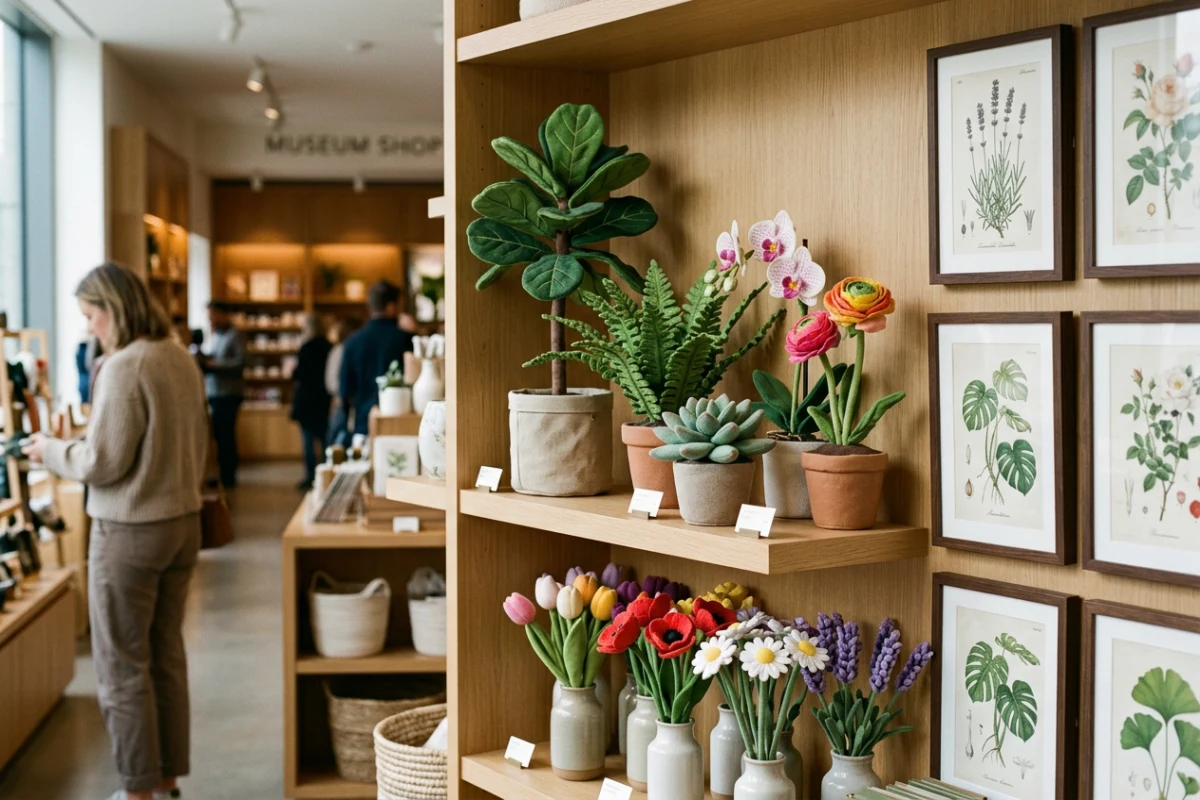
Because plush flowers serve primarily as home decor items, botanical bouquet arrangements, lifestyle accessories, and seasonal gift items, they fall under general consumer product safety legislation. In the European Union, they are governed by the General Product Safety Directive (GPSD / General Product Safety Regulation), while in the United States, they are regulated under general consumer goods safety requirements overseen by the Consumer Product Safety Commission (CPSC). This distinction is vital for commercial retail compliance, as it determines testing mandates, required documentation, and import tariff classifications.
| Compliance & Regulatory Dimension | Decorative Plush Flowers (HS 6702.90) | Traditional Plush Toys (HS 9503.00) |
|---|---|---|
| Intended Function | Home decor, floral bouquet gifting, visual merchandising | Active play, recreation, and child cuddling |
| Applicable Safety Framework | General Product Safety (EU GPSD / US CPSC Consumer Goods) | Mandatory Toy Directives (EN 71, ASTM F963, ISO 8124) |
| Target Consumer Profile | Teenagers, adult gift buyers, lifestyle shoppers | Infants, toddlers, and young children under 14 |
| Required Testing Scope | Dye colorfastness, lead/cadmium limits, sharp point checks | Small parts choke tests, drop tests, acoustic limits |
| Import Customs Documentation | Commercial Invoice, Packing List, Material Declaration | Children’s Product Certificate (CPC), Toy Declarations |
| Mandatory Warning Labels | General material care / Decorative product notice | Age grading labels (e.g., 0-3 choke hazard warnings) |
Maintaining artificial plush floral wholesale compliance under decorative and lifestyle categories protects B2B importers from the heavy testing overhead of children’s toy directives, while ensuring the end product complies with all necessary toxicological, mechanical, and physical safety standards expected by major department stores, supermarket chains, and gift retailers.
What Fabric Flower Material Specifications and Non-Toxic Glues Are Used in Quality Production?
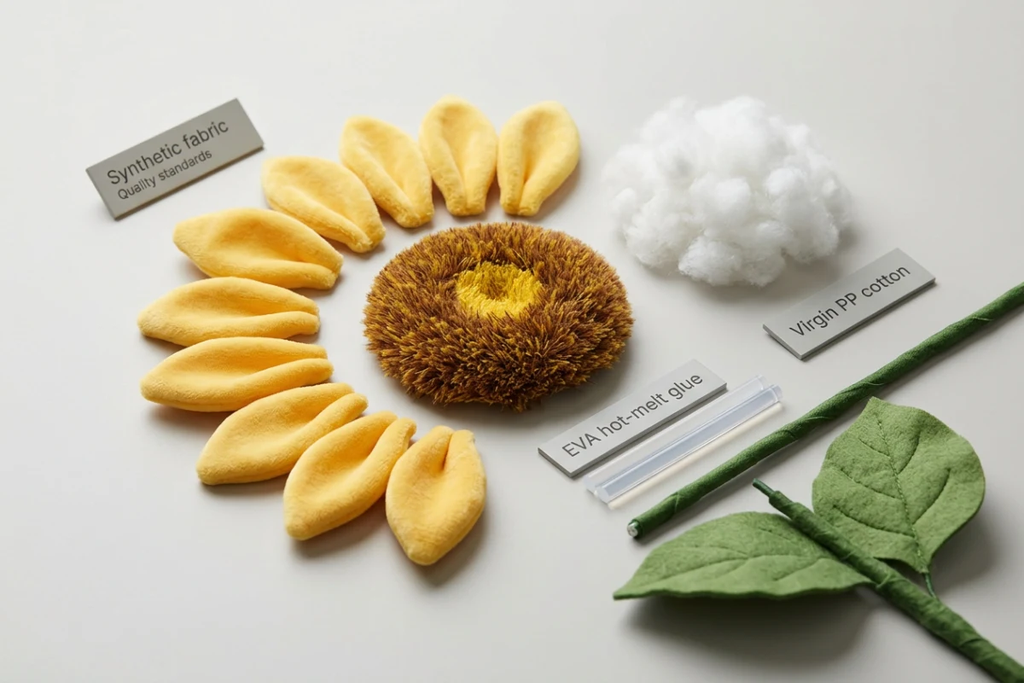
To ensure complete consumer comfort and structural longevity on retail shelves, commercial fabric flower material specifications focus heavily on skin-contact safety, structural resilience, and non-toxic adhesive formulations. Premium plush flowers are assembled from carefully selected synthetic textiles, virgin polymer batting, and solid-state bonding agents that withstand repeated handling.
- Skin-Friendly Synthetic Textiles: High-grade plush floral collections utilize crystal super-soft velboa, brushed micro-plush, poly-fleece, and warp-knitted short-pile velvet. These fabrics offer a soft hand-feel, high tensile strength, and clean ultrasonic edge cuts that prevent edge fraying or fiber loss during consumer handling.
- Standardized Dyes and Rubbing Colorfastness: Export-grade textiles undergo strict eco-dyeing protocols that eliminate banned azo colorants, formaldehyde, and heavy metals. Quality standards require dry and wet rubbing colorfastness ratings of Grade 4 or higher (under ISO 105-X12 / AATCC 8), ensuring rich petal dyes will not bleed onto hands, light-colored clothing, or wrapping materials.
- Non-Toxic Solid EVA Hot-Melt Adhesive: Unlike conventional liquid solvent glues that release volatile organic compounds (VOCs) and toxic vapors, reputable manufacturers utilize solid, transparent Ethylene Vinyl Acetate (EVA) hot-melt glue. EVA hot-melt adhesives form a flexible, water-resistant bond purely through thermal melting and rapid cooling. Because they contain zero organic solvents, they leave no hazardous chemical residues, eliminate off-gassing, and prevent lingering chemical odors in packaged merchandise.
- Hypoallergenic Virgin PP Cotton Padding: Petal cores and plush flower centers are filled with 100% virgin polypropylene (PP) synthetic fiberfill. This batting is non-allergenic, odorless, moisture-resistant, and resilient against flattening, maintaining petal plumpness even after prolonged compressed storage in shipping cartons.
By auditing fabric flower material specifications prior to volume production, corporate procurement teams ensure that floral arrangements displayed in florist shops, lifestyle chains, and gift stores remain clean, hypoallergenic, and safe for continuous skin contact.
How Is Bendable Wire Plush Stem Safety Engineered to Prevent Puncture Hazards?
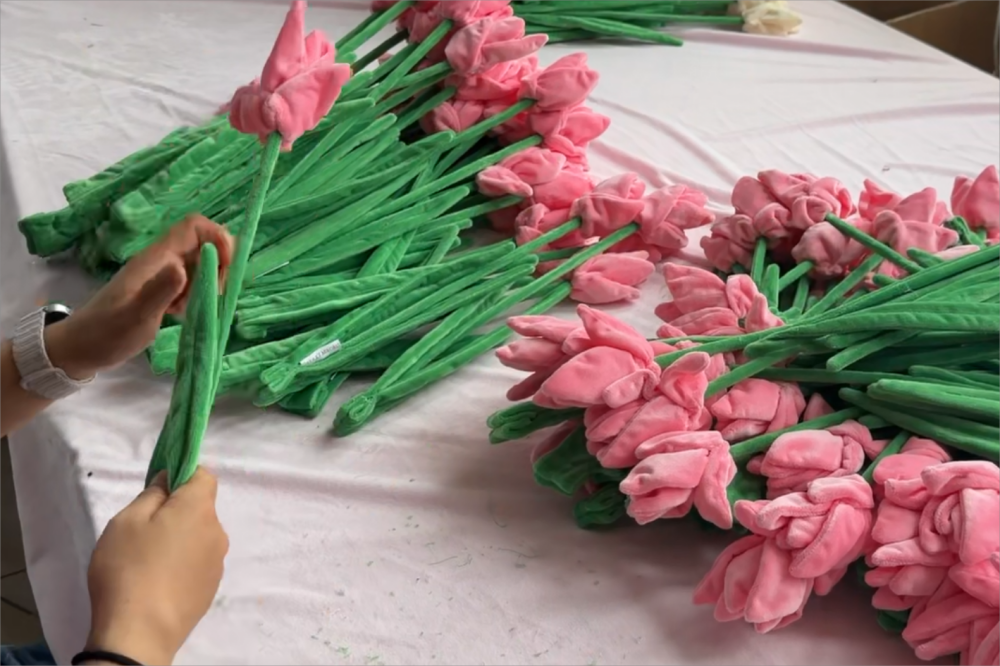
One of the most appealing commercial features of plush flowers is their poseable stem structure. Customers and florists can wrap plush stems around banisters, shape dynamic bouquets, bend them around greeting cards, or coil them around wine bottles as decorative accents. Ensuring bendable wire plush stem safety requires specialized multi-layer mechanical engineering to prevent internal wires from fatiguing or puncturing the outer fabric.
- Annealed Low-Carbon Iron Wire Core: The internal stem structure is fabricated from continuous annealed low-carbon iron wire, typically ranging from 1.5 mm to 2.5 mm in diameter depending on the flower head weight. Annealing relieves internal mechanical stress, allowing the wire to bend smoothly across 50+ repeated cycles without metal embrittlement or snapping.
- Protective End-Cap Encapsulation: Uncut or raw wire ends present sharp-point puncture hazards. Professional manufacturing protocols mandate that both the top and bottom ends of the internal wire are mechanically capped with injection-molded plastic safety tips, or mechanically turned back into smooth rounded loops before assembly. This permanently isolates sharp edges inside the stem cavity.
- Multi-Layer Cushioning Barrier: The wire core is sleeved within high-density expanded polyethylene (EPE) foam tubing or wrapped in dense non-woven needle-punched fiber batting before being inserted into the outer plush textile sleeve. This dual-layer cushion creates a protective buffer that prevents the metal wire from rubbing directly against the outer plush fabric, ensuring a soft grip and complete puncture resistance.
For commercial gift retailers, event planners, and retail chains planning bespoke seasonal collections, our team provides full material documentation and tailor-made sample kits. If you are seeking compliant, high-quality plush blooms for your next collection, contact our specialists at inquiry@sweetie-group.com to request current catalog previews and physical material swatches.
How Do Plush Flowers Compare with Fresh and Preserved Botanicals for Customs and Import?
Importing botanical products across international borders presents significant logistics challenges, including biological decay, mandatory quarantine delays, and escalating cold-chain freight rates. Artificial plush flowers provide a robust, shelf-stable alternative that streamlines global freight and eliminates biological import barriers.
| Operational & Logistics Metric | Commercial Plush Flowers | Fresh Cut Flowers | Preserved / Dried Botanicals |
|---|---|---|---|
| Phytosanitary Certification | Not Required | Mandatory government certificate | Often required by import customs |
| Fumigation & Pest Treatment | Not Required | Mandatory chemical fumigation | Required in many customs zones |
| Cold-Chain Logistics | None (standard dry container) | Mandatory reefer container (2–4°C) | Climate-controlled (moisture-sensitive) |
| Shrinkage & Spoilage Rate | 0% (indefinite retail shelf life) | 15%–35% spoilage and decay | 10%–20% petal breakage & mold |
| Customs Clearance Speed | Immediate (standard commercial docs) | High risk of port border holds | Moderate risk of organic inspection |
| Seasonal Inventory Management | Flexible warehousing across quarters | Highly perishable; zero storage buffer | Fragile storage; sensitive to humidity |
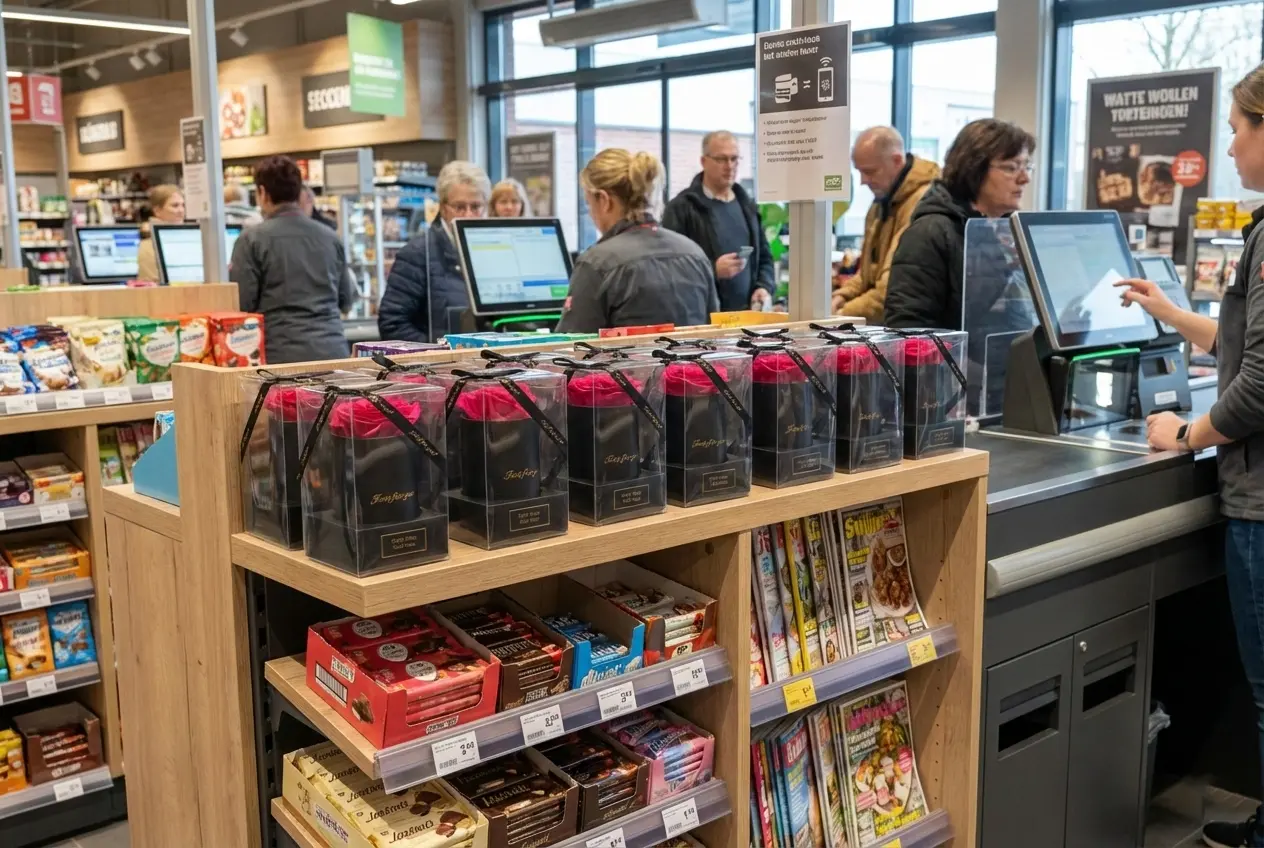
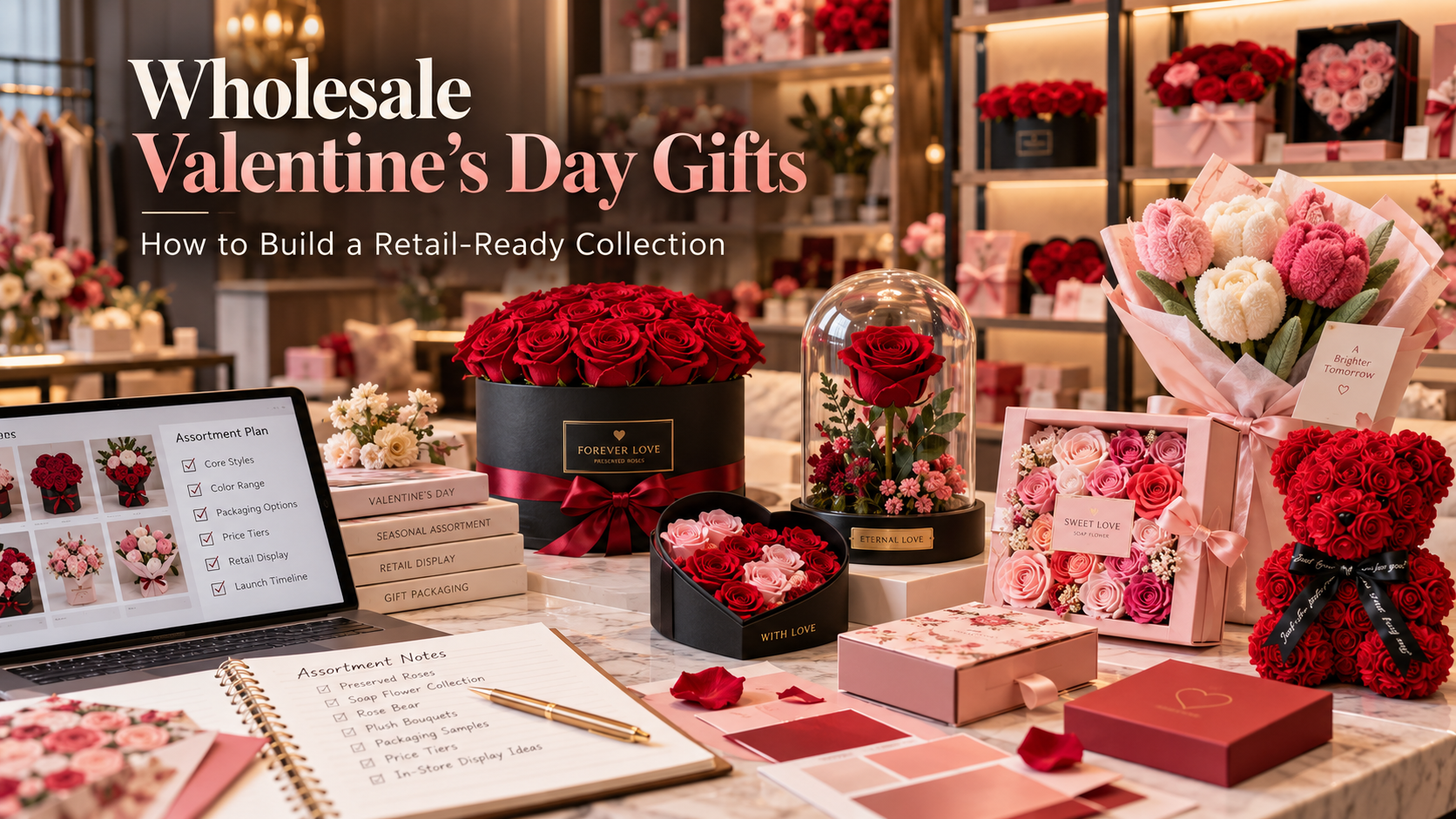
Because plush flowers contain no organic botanical material or soil, border clearance proceeds efficiently with standard commercial invoices, packing lists, and non-wood packing declarations. This reliability allows retail chains to schedule major promotional campaigns—such as Valentine’s Day, Mother’s Day, and spring merchandising windows—without the risk of port detentions or stock spoilage.
When evaluating order quantities, channel requirements, and retail price points across diverse markets, buyers can use Sweetie AI to quickly simulate product configurations, compare packaging dimensions, and structure efficient procurement plans tailored to specific market demands.
What Factory Quality Controls and Needle Detection Standards Protect Retail Chains?
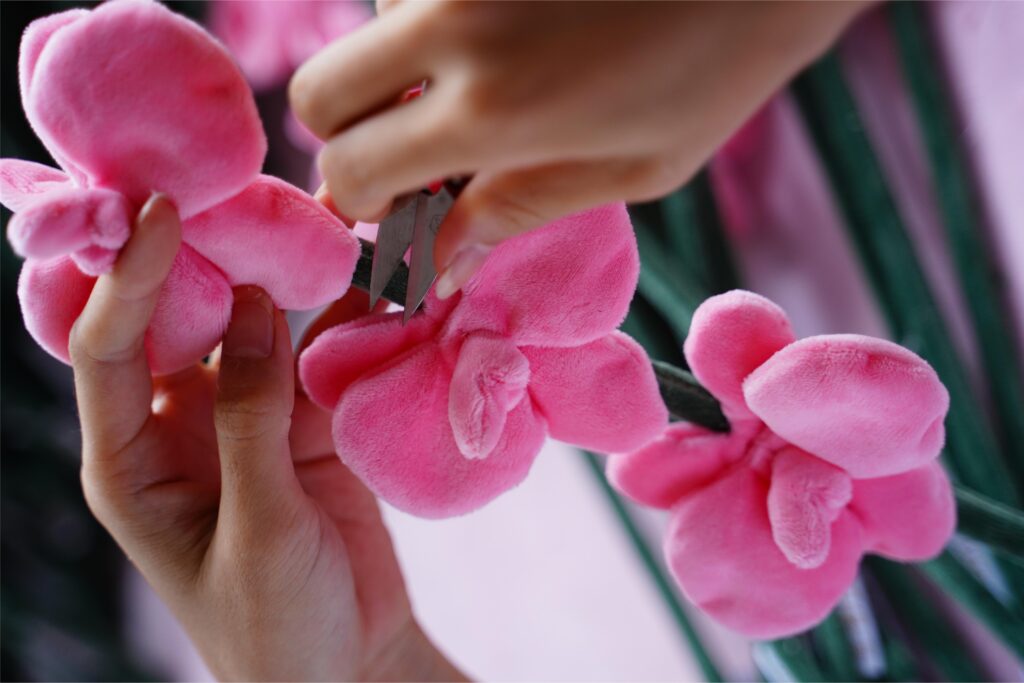
To safeguard commercial brand reputations and eliminate consumer product liability, compliant manufacturing facilities implement comprehensive quality assurance workflows across cutting, stitching, gluing, and packaging stages.
- 100% Conveyor-Type Metal & Needle Detection: In textile manufacturing, broken sewing needles represent a serious potential hazard. Quality protocols at Sweetie-Group require every finished plush flower and assembled bouquet to pass individually through a calibrated conveyor needle detection machine. These sensors are calibrated to detect ferrous metal particles as small as 0.8 mm to 1.0 mm, automatically rejecting non-compliant items before packing.
- Petal and Calyx Tensile Pull Testing: Production technicians utilize digital pull gauges to apply standardized mechanical tension (minimum 70 Newtons for 10 seconds) on bonded petals, calyx cups, and fabric leaves. This rigorous pull-testing guarantees that EVA hot-melt bonding and seam stitches withstand firm handling by consumers.
- Colorfastness and Lightbox Verification: Production batches are regularly checked under standardized D65 lighting booths to verify color uniformity against approved master swatches, ensuring batch-to-batch consistency across large retail production runs.
- Third-Party Testing Coordination: While decorative plush flowers do not require toy-specific certificates, manufacturers can coordinate testing with accredited third-party laboratories (such as SGS, Intertek, or TÜV) to verify specific chemical compliance criteria—such as REACH Annex XVII heavy metal and phthalate limits or California Proposition 65 total lead content—upon customer request.
What Should B2B Buyers Include in Their Plush Flower Sourcing and Quality Checklist?
Before finalizing purchase orders and initiating mass manufacturing, retail sourcing professionals should systematically evaluate supplier capabilities against established plush flower safety standards. Using a structured inspection checklist helps avoid costly quality disputes and customs clearance bottlenecks.
- Mechanical Safety & Stem Integrity Checklist:
- Has the internal wire undergone repeated 90-degree flex testing (minimum 50 cycles) without snapping or fatigue failure?
- Are both terminal ends of the wire capped with molded plastic tips or bent into rounded closed loops?
- Is the wire surrounded by EPE foam or non-woven padding to prevent tactile exposure through the outer fabric?
- Do petal bonds and calyx attachments withstand a 70 N continuous mechanical pull test?
- Chemical, Dye, and Odor Checklist:
- Does the factory exclusively use solid EVA hot-melt glue free from solvent vapors and VOC emissions?
- Have the fabrics achieved a minimum Grade 4 dry and wet rubbing colorfastness rating?
- Are all textile dyes and synthetic fibers free from regulated azo compounds, formaldehyde, and heavy metals?
- Is the finished product completely free from chemical odors after polybag unsealing?
- Packaging & Documentation Checklist:
- Are finished cartons inspected through 100% automated needle detection equipment with calibration records?
- Are sealed master cartons equipped with adequate silica gel desiccants to prevent transit moisture buildup?
- Is the product correctly labeled with country of origin, material composition, and decorative HS Code 6702.90?
Frequently Asked Questions About Artificial Plush Floral Wholesale Compliance
Do commercial plush flowers require CE or UKCA toy safety marking?
No, standard plush flowers designed and sold as lifestyle accessories, artificial floral arrangements, or decorative gifts do not require CE or UKCA toy safety markings under the Toy Safety Directive. They must, however, comply with general consumer safety regulations (such as the EU GPSD), ensuring that materials are non-toxic, structurally sound, and accurately labeled under HS Code 6702.90.
Can wire stems rust or oxidize during ocean shipping?
To prevent oxidation, export-grade plush flower stems use galvanized or anti-rust treated annealed iron wire. When packaged alongside food-grade silica gel desiccants within sealed inner cartons, the metal core remains entirely protected from maritime humidity and ambient condensation during multi-week ocean transit.
How should retail packaging be labeled for commercial compliance?
Commercial plush flower packaging should display clear product identification, the designated HS code, country of origin, manufacturer or importer business details, and a clear statement such as “Decorative Gift – Not Intended as a Children’s Toy” to prevent regulatory misclassification during point-of-sale retail distribution.