Museums and botanical gardens turn archival botanical collections and historical illustrations into profitable custom botanical plush merchandise by abstracting defining morphological traits into manufacturable fabric patterns, precision embroidery, and stable internal structures through dedicated OEM/ODM prototyping. By partnering with specialized manufacturers, institutions can balance botanical accuracy with textile production realities, creating distinctive museum-exclusive retail lines that drive gift shop revenue while supporting educational missions.
How Do Institutions Translate Archival Herbarium Sheets and Botanical Art into 3D Plush Forms?
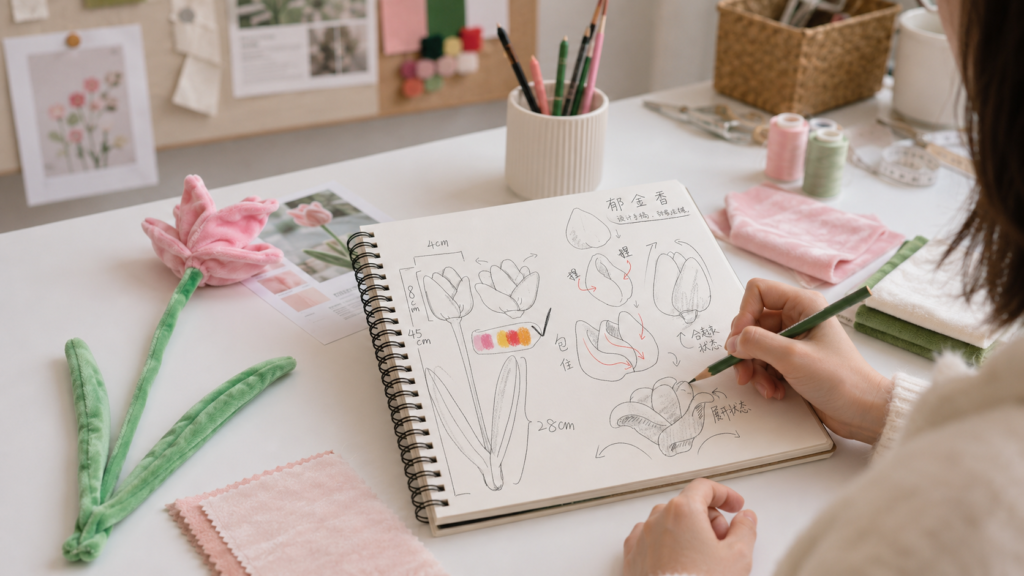
Transforming two-dimensional historical botanical illustrations, copperplate engravings, and dried herbarium specimens into tactile, three-dimensional plush items requires systematic visual and physical deconstruction. Historic botanical illustrations—such as Pierre-Joseph Redouté’s delicate watercolors or vintage lithographs—depict intricate petal curvatures, delicate stippling, and precise leaf venation. Because textile soft goods rely on seams, gussets, and tensile surfaces rather than flat lines, pattern makers must first identify the diagnostic morphological markers that make a plant instantly identifiable to visitors and botanists alike.
Industrial pattern engineers begin plush plant product development by breaking the specimen into modular geometric sections: the corolla, calyx, stem, bracts, and root or pot structure. When designing an orchid (Orchidaceae) model, for instance, the dorsal sepal, lateral petals, and specialized labellum (lip) cannot simply be stamped onto a single sphere. Instead, each petal component is drafted as an independent pattern piece with specific seam allowances and directional grain lines to replicate the organic flare of the living flower.
Color reproduction presents another critical bridge between archival art and physical merchandise. Traditional plush fabrics with solid dye lots often fail to capture the subtle watercolor bleeds and tonal gradients found in historical botanical prints. To overcome this limitation, digital sublimation printing on short-pile micro-velboa or brushed tricot is employed. This technique infuses high-resolution artwork directly into the synthetic fibers, maintaining a plush, velvety hand-feel without creating stiff, plasticky surfaces. High-density embroidery is then layered over printed panels to render raised structural veins, stamen filaments, and textured pollen sacs, giving the final piece depth, tactile engagement, and unmistakable archival authenticity.
What Structural and Fabric Engineering Challenges Arise When Replicating Complex Flora?
Unlike traditional character soft toys with spherical heads and cylindrical limbs, botanical species possess organic, architectural silhouettes. Plants feature slender, weight-bearing stems, hollow structures, drooping tendrils, and translucent or cupped petals. Successfully engineering these forms in custom museum retail plush manufacturing requires an understanding of textile stiffness, internal armatures, and specialized fabrication methods.
Carnivorous plants and specialized tropical flora highlight the engineering decisions required to reconcile botanical fidelity with production feasibility:
- Pitcher Plants (Nepenthes): The characteristic hollow trap requires a multi-panel cylindrical gusset reinforced with thin, laminated foam interlining or non-woven stiffeners. This prevents the pitcher cavity from collapsing while retaining its lightweight, soft feel. The ribbed peristome encircling the trap mouth is constructed using high-density satin cord piping, while the overarching operculum (lid) incorporates a flexible internal plastic sheet to maintain its open, hovering position above the fluid chamber.
- Venus Flytraps (Dionaea muscipula): Capturing the bivalve trap requires two concave fabric halves joined along a reinforced central hinge. The internal trigger hairs are rendered via precision single-stitch embroidery, whereas the interlocking marginal cilia (teeth) are cut from high-density, non-fraying felt using ultrasonic laser cutting to guarantee crisp, uniform edges.
- Exotic Epiphytes and Orchids: The intricate ruffled margins of specialized orchid petals require ultrasonic edge-sealing and targeted internal gathering stitches (darts) that force the fabric into a self-supporting, natural cup shape without relying on visible exterior wire frames.
Stem engineering is equally critical for retail performance. Real flower stems must remain upright while supporting substantial floral heads. In plush construction, this is achieved by inserting high-tensile galvanized iron wire encased inside an extruded polyethylene (PE) foam tube or needle-punched cotton batting sleeve. The outer fabric sleeve is sewn tightly around this padded core. This prevents the metal core from poking through the fabric after repeated bending by retail shoppers while allowing customers to pose the stems dynamically in vases or floral arrangements.
If you are planning custom botanical plush merchandise for your museum or botanical garden, email your plant references, target quantity, and product requirements to inquiry@sweetie-group.com to review design options, sampling schedules, and OEM/ODM production parameters.
Which Retail Formats Perform Best: Single Stems, Potted Plants, or Collectible Bag Charms?
Selecting the right merchandise formats depends heavily on your store’s footprint, customer demographics, retail price architecture, and available display fixtures. Botanical plush falls into four primary commercial categories, each addressing distinct visitor purchasing behaviors.
| Product Format | Target Visitor Segment | Price Architecture | Structural Highlights | Visual Merchandising Strategy |
|---|---|---|---|---|
| Single Plush Stems | Impulse buyers, school tour groups, tourists | Accessible entry-level (8–18) | Bendable internal wire, realistic bloom, modular mix-and-match | Galvanized metal florist buckets, wooden crates, acrylic barrel displays |
| Potted Plush Flora | Interior decor shoppers, museum patrons, desk workers | Mid to Premium (22–48) | Self-standing weighted base (sand/PE pellets), multi-leaf canopy | Tiered wooden display risers, themed greenhouse tables, eye-level shelving |
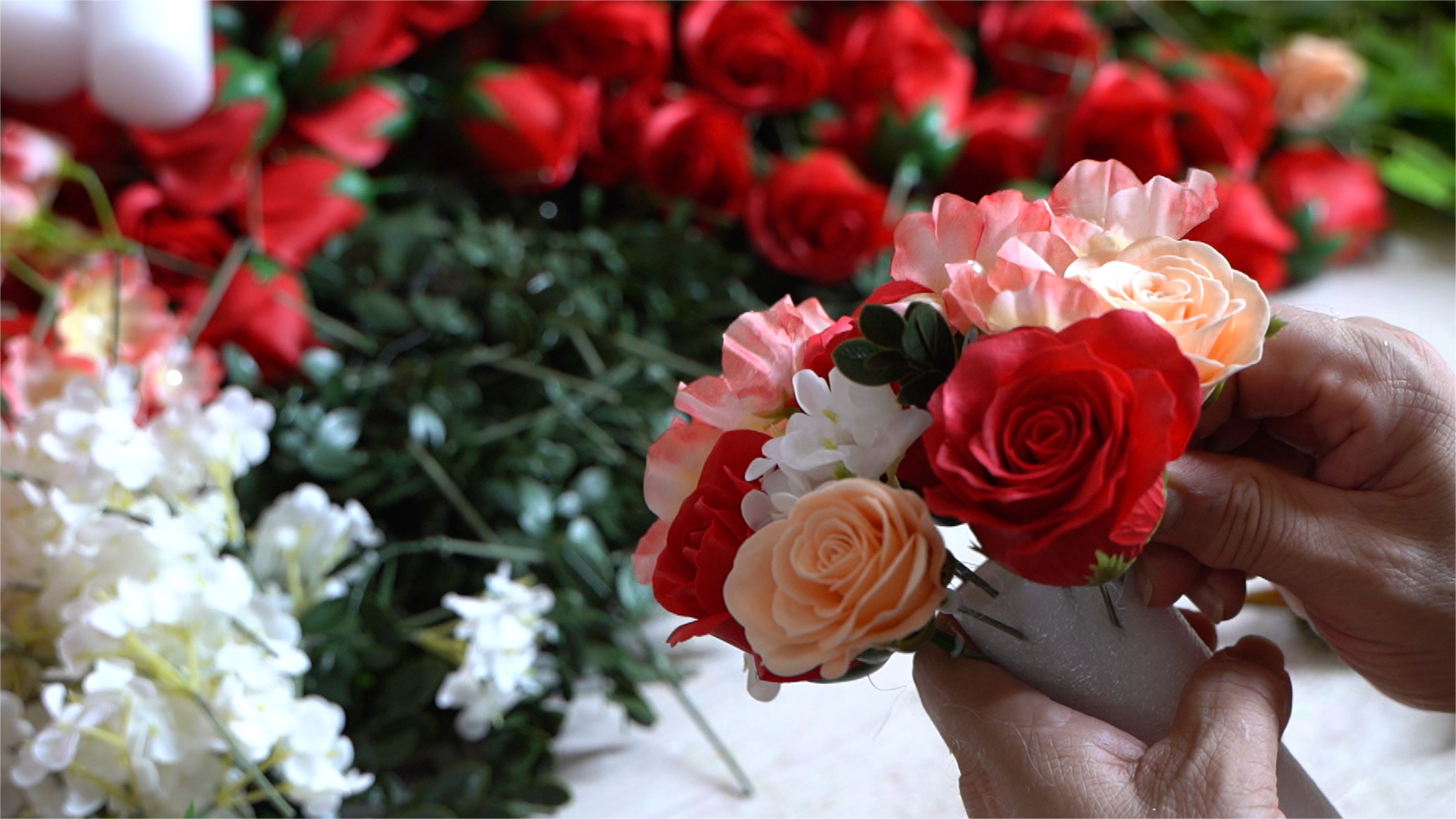
| Plush Bouquets & Bundles | Exhibition gift buyers, seasonal shoppers | High-tier premium (35–75) | Coordinated floral groupings, craft paper wrapping, grosgrain ribbon | Feature front-of-house gift tables, museum admissions counter displays |
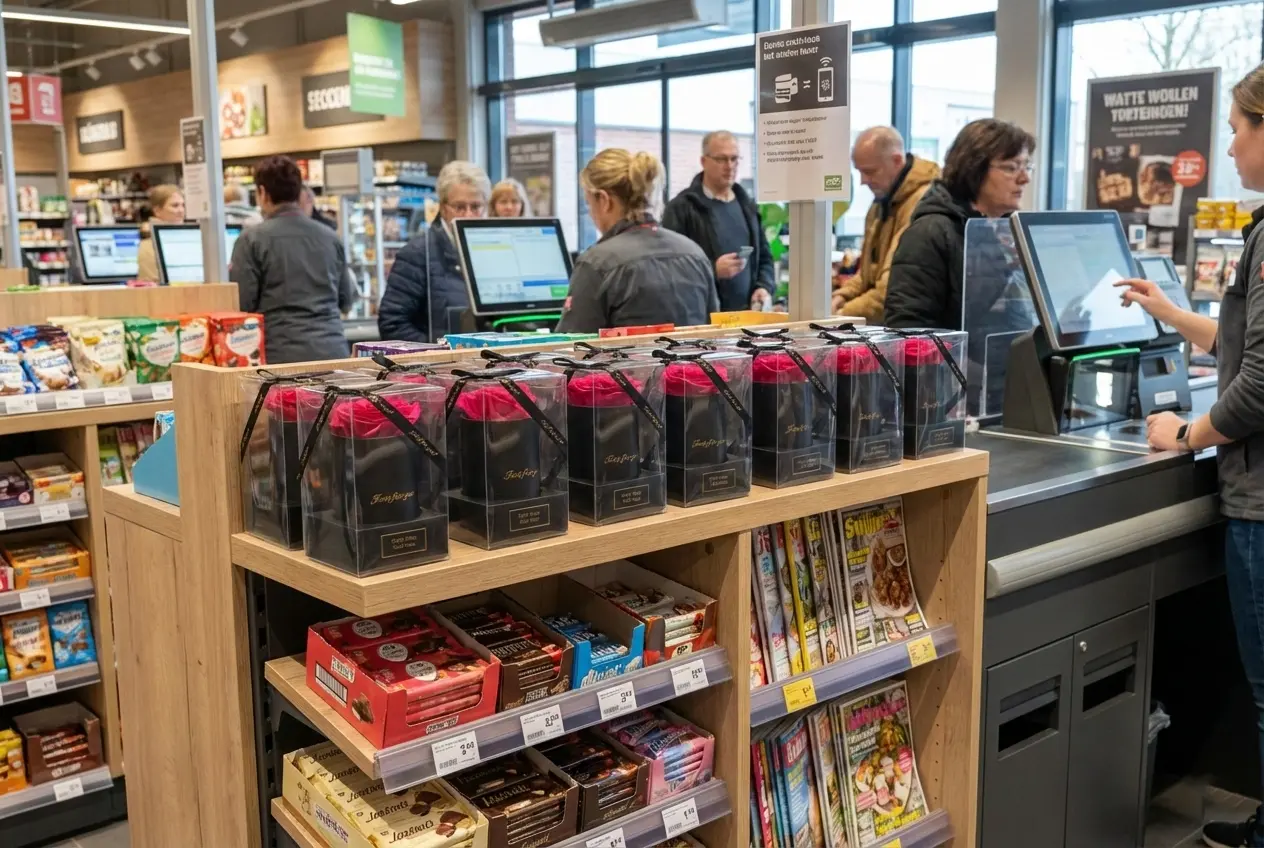
| Plush Keychains & Charms | Youth visitors, backpackers, souvenir collectors | Impulse entry-level (6–14) | Micro-embroidery, compact 8–12 cm profile, zinc-alloy carabiner | POS spinner racks, cash register impulse baskets, counter-top dump bins |
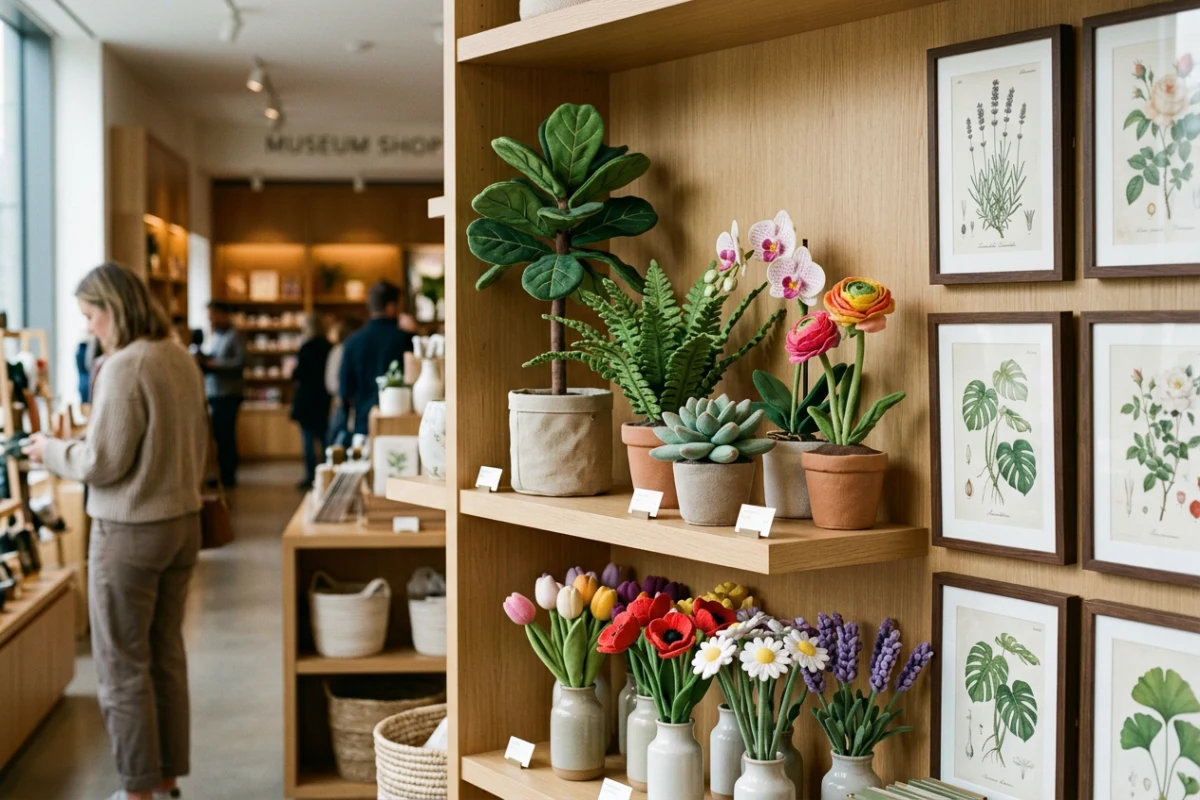
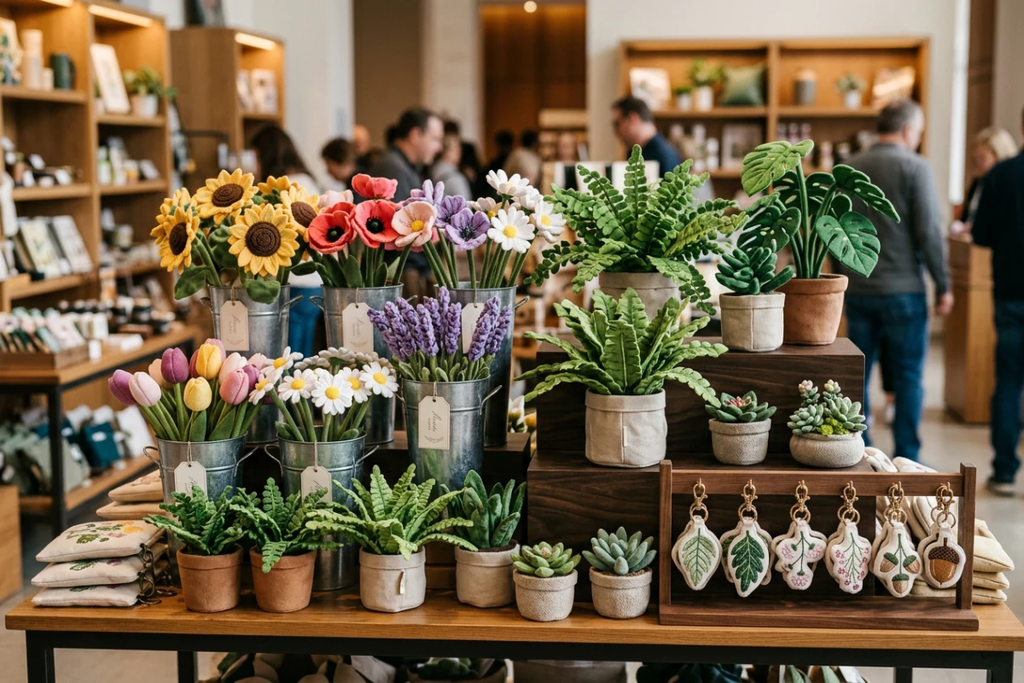
Single museum store plush flowers offer exceptional flexibility, allowing visitors to construct personalized botanical arrangements at their own price point. They take up minimal retail floor space and generate high multi-unit impulse purchases. Conversely, potted plush plants serve as permanent, zero-maintenance interior decor. To ensure stability on retail shelves and customer desks, potted plush items utilize a dual-fill system: polyester fiberfill in the upper foliage combined with a sealed inner pouch of washed silica sand or non-toxic polyethylene (PE) pellets placed at the base of the fabric pot. This lowers the center of gravity, preventing top-heavy arrangements from falling over when handled.
To evaluate assortment strategies, calculate retail margin scenarios, and configure product mixes tailored to specific museum store footprints, institutional retail planners can utilize Sweetie AI to analyze category requirements and model procurement volumes.
What Distinguishes Museum-Inspired Items from Museum-Exclusive Collections Regarding IP and Licensing?
Institutional buyers must establish clear boundaries between generic museum-inspired products and legally protected museum-exclusive lines. This distinction directly influences design development agreements, supplier exclusivity commitments, and wholesale margins.
- Museum-Inspired Merchandise: This classification covers common botanical species—such as general sunflowers, monsteras, roses, or lavender—that utilize open-market, unexclusive styling. While these items can be produced quickly using standard factory pattern libraries, they offer no legal barrier preventing other commercial gift retailers from selling identical or similar items. These serve well as general revenue drivers for baseline inventory.
- Museum-Exclusive Merchandise: Exclusive lines are directly derived from the commissioning institution’s proprietary assets, rare herbarium collections, unique living conservatory specimens, or historical archive illustrations. Examples include a custom plush replica of an endemic botanical species discovered on an expedition funded by the museum, or a collection created directly from rare archival copperplate prints. In these instances, the institution licenses its high-resolution imagery, official branding, and specialized curatorial assets to the manufacturing run.
When commissioning botanical garden custom plush OEM ODM production for exclusive merchandise lines, formal contracts must specify intellectual property boundaries. The manufacturer must agree that customized cutting dies, proprietary sublimation print artwork, tailored embroidery digitizing files, and custom branded woven tags remain the exclusive property of the contracting museum. Exclusivity agreements ensure that the supplier cannot market overruns, surplus stock, or identical design modifications to third-party distributors or competing retail stores.
How Does the OEM and ODM Prototyping Iteration Process Work in Practice?
Navigating custom plush product development from conceptual sketches to finished inventory requires a structured, multi-stage prototyping pipeline. Sweetie-Gifts utilizes extensive floral gift industry experience and a dedicated plush and fabric flower supply chain in Yiwu to streamline this workflow through clearly defined quality gates.
Phase 1: Archival Review and Technical Specification (Tech Pack)
The museum team provides digital scans of archival botanical art, living plant photographs, or herbarium specimen sheets, alongside targeted dimensions, functional requirements (e.g., poseable stem vs. soft desk ornament), and target retail price points. The manufacturing design team converts these references into a technical specification sheet (Tech Pack) identifying fabric swatches, PMS (Pantone Matching System) color references, stitch counts, structural armatures, and fill weights.
Phase 2: Structural Pattern Drafting and Calico Mockups
Pattern makers construct a preliminary three-dimensional prototype using plain calico or raw fabric stock. This stage verifies volumetric proportions, petal counts, leaf orientation, and structural stability. The commissioning institution reviews detailed multi-angle photo documentation and video captures to evaluate botanical proportions and seam placement before expensive custom dyeing or printing commences.
Phase 3: Material Sourcing, Custom Printing, and Initial Finished Sample
Upon approval of structural geometry, full-specification materials are prepared. Sublimation print patterns are transferred to cut fabric panels, embroidery programs are executed, and internal wireframes or weighted bases are assembled. The first fully realized pre-production sample is shipped directly to the museum retail team for physical tactile inspection, color validation, and curatorial review.
Phase 4: Sample Revision and Golden Sample Sign-Off
Curatorial and merchandising teams evaluate the sample for botanical fidelity, seam integrity, and tactile appeal. Minor revisions—such as adjusting a stamen length, refining an embroidery colorway, or altering soil base firmness—are implemented in a final revision. Once approved, this piece is designated as the binding “Golden Sample.” Mass production runs are strictly inspected against this physical master standard.
What Packaging, Safety Compliance, and Merchandising Strategies Maximize Store Sales?
Custom botanical plush merchandise functions simultaneously as home decor, botanical memorabilia, and collectible giftware. Because these items are not exclusively purchased as children’s playthings, packaging, labeling, and merchandising displays must communicate both historical provenance and safety compliance.
Educational Storytelling Hangtags
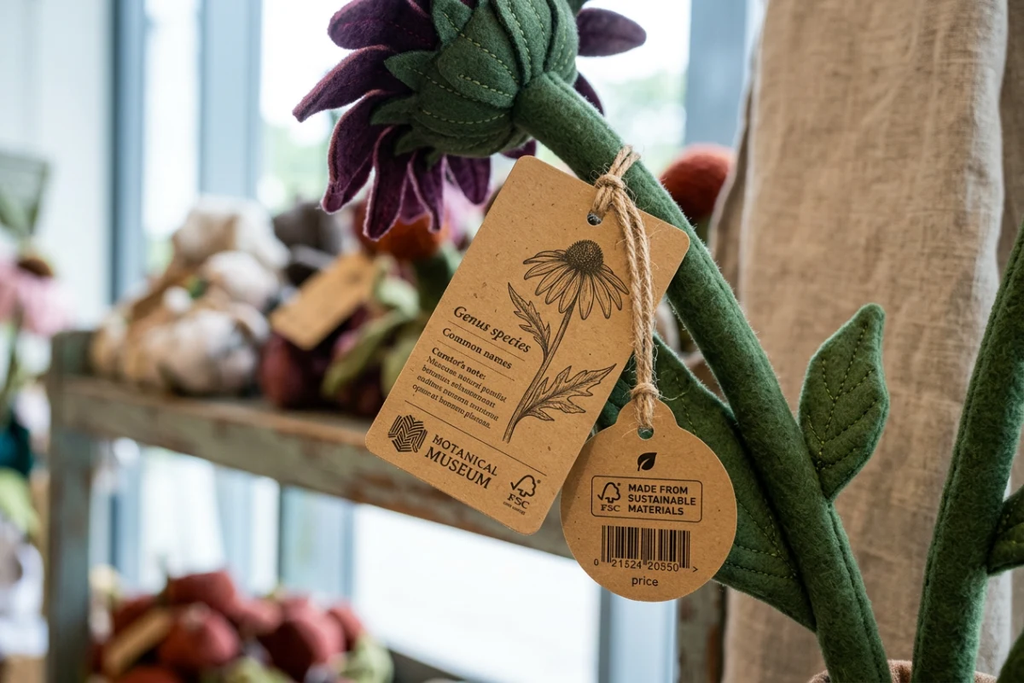
Museum visitors buy merchandise that extends their cultural experience. High-performing botanical plush hangtags are printed on FSC-certified unbleached kraft paper or textured stock to emphasize ecological authenticity. Effective hangtag anatomy includes:
- Botanical Taxonomy: Prominently displays the formal scientific binomial nomenclature (Genus species) alongside common names and botanical family classifications.
- Archival Narrative: Features a miniature reproduction of the original historical illustration, artist credit, or herbarium accession number from the institution’s permanent collection.
- Curatorial Insight: A concise 2–3 sentence narrative detailing the plant’s natural habitat, ecological importance, or historical significance to the museum’s collection.
- Institutional Branding: Institutional logos, custom barcodes, and official collection endorsement seals.
Regulatory Classification and Safety Compliance
Plush merchandise must be categorized accurately for customs clearance, regional import compliance, and consumer safety. If marketed as an educational soft toy for children, products must pass regional toy safety testing, including EN71 (Europe), ASTM F963 (United States), and CPSIA standards. These tests verify seam tensile strength, flame retardancy, and heavy metal/phthalate absence in dyes and plastics.
If positioned strictly as poseable botanical home decor or an adult collectible, the packaging must clearly state: “Decorative Botanical Collectible / Not a Toy for Children Under 14 Years.” This distinction aligns the item with appropriate import classifications while protecting the institution from regulatory liabilities. Specific compliance pathways, pricing structures, and minimum manufacturing requirements are determined on a per-project basis.
Visual Merchandising Integration
Plush botanicals should not be stored in deep dump bins where delicate leaves and petals risk crushing. Museum gift shops achieve the highest sales velocity when displaying single stems in tall florist buckets or ceramic jars, grouped by color or botanical family. Potted plush plants perform exceptionally well on wooden greenhouse shelving units placed near conservatory exits, natural history exhibition exits, and museum cafe seating areas.
How Should Buyers Plan Procurement: Minimum Order Quantities, Lead Times, and Quality Control?
Successful seasonal and exhibition merchandising requires aligning international production schedules with museum programming. Developing custom botanical plush lines involves custom pattern drafting, material sourcing, and detailed hand assembly, demanding structured procurement planning.
Minimum order quantities (MOQs) depend on the degree of material customization required. Using stock fabrics in standard pantones allows for accessible production runs, whereas custom-printed sublimation patterns or exclusive dyed fabrics require larger textile yardage minimums. Pricing, MOQs, and production lead times are established based on specific institutional designs and material selections.
Standard manufacturing timelines generally follow three operational windows:
- Prototyping & Sampling: 2 to 4 weeks, depending on design complexity and institutional revision turnaround times.
- Mass Production: 30 to 45 business days following formal Golden Sample sign-off and raw material preparation.
- Logistics & Freight: 15 to 35 days depending on ocean freight schedules or expedited air transit options.
To ensure consistent quality across mass shipments, experienced factory QC teams perform strict inline and final AQL (Acceptable Quality Limit) inspections. Inspectors verify stitch density along narrow leaf joints, validate that wire armatures remain safely sealed within internal foam channels, check that weighted bases are completely sealed against leakage, and ensure colors match approved master standards under standardized light boxes.
For tailored advice on developing custom botanical collections, fabric options, and project-specific sampling schedules, contact our team or email inquiry@sweetie-group.com to review your upcoming exhibition and retail merchandising plans.
Annie Zhang