When Chinese sellers enter your Amazon category aggressively, the first impact is obvious: pricing tightens.
But the deeper impact is structural.
The rules of your category change.
Customer comparison behavior changes.
Speed expectations change.
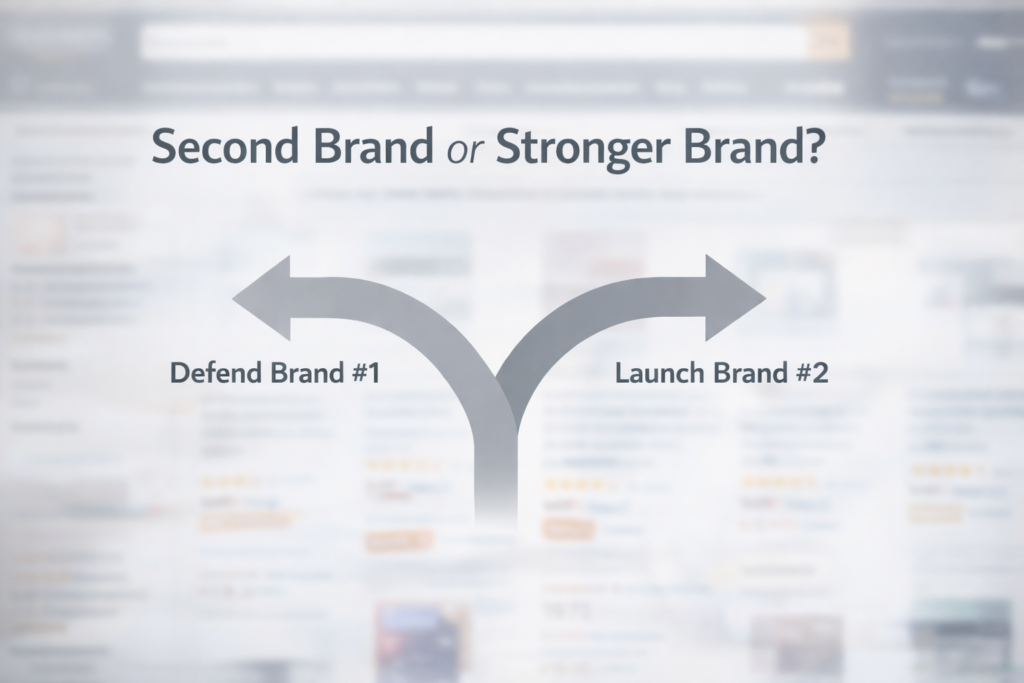
At that moment, many Amazon founders start asking a serious strategic question:
Is it smarter to strengthen my current brand—or diversify into a second one?
This is not a marketing decision. It is a capital allocation decision.
And the wrong move can quietly weaken your entire business.
Why Chinese Seller Competition Forces Strategic Repositioning
Let’s be precise.
Chinese sellers typically compete on three structural advantages:
- Manufacturing proximity and cost leverage
- Faster product iteration cycles
- High SKU density within a category
When those forces intensify, U.S. and European founders face a different kind of pressure:
- Margins compress faster than advertising can compensate.
- Minor quality issues turn into amplified review damage.
- Product differentiation becomes less visible on search pages.
At this stage, simply “optimizing listings” is not enough. The question becomes whether your brand architecture itself needs adjustment.
The Real Question: Expansion or Reinforcement?
Launching a second brand can be a defensive strategy, but it can also create dilution.
Before deciding, founders should evaluate which of these two situations they are actually in:
Situation A: Your Core Brand Still Has Strategic Headroom
If your current brand:
- Has healthy review equity
- Owns a recognizable design language
- Has room to elevate packaging or product structure
- Can justify a stronger premium position
Then launching a second brand may weaken focus.
In many cases, strengthening differentiation inside Brand #1 delivers better long-term value than starting over.
Situation B: Your Core Brand Is Structurally Constrained
A second brand makes sense when:
- Your current positioning traps you in price comparison
- Your packaging limits perceived value
- Your supplier structure cannot support higher-tier upgrades
- Your catalog strategy prevents you from targeting a new buyer intent
In these cases, Brand #2 is not an escape. It is a repositioning tool.
But repositioning only works if the product system changes—not just the logo.

What Most Founders Overlook: Product System Defines Brand Power
On Amazon, “brand” is often misunderstood.
Customers rarely read your About Us page.
They evaluate:
- Visual hierarchy
- Packaging confidence
- Bundle logic
- Material quality
- Consistency across variations
- Delivery reliability
When competition intensifies, product architecture becomes brand equity.
If Brand #2 is built on the same product system as Brand #1, you have not created strategic separation. You have created operational complexity.
The Supply Chain Factor in Brand Portfolio Decisions
This is where many second-brand strategies quietly fail.
Launching another brand requires:
- Faster sampling cycles
- Flexible packaging development
- Reliable quality control across multiple SKUs
- Clear cost visibility at different price tiers
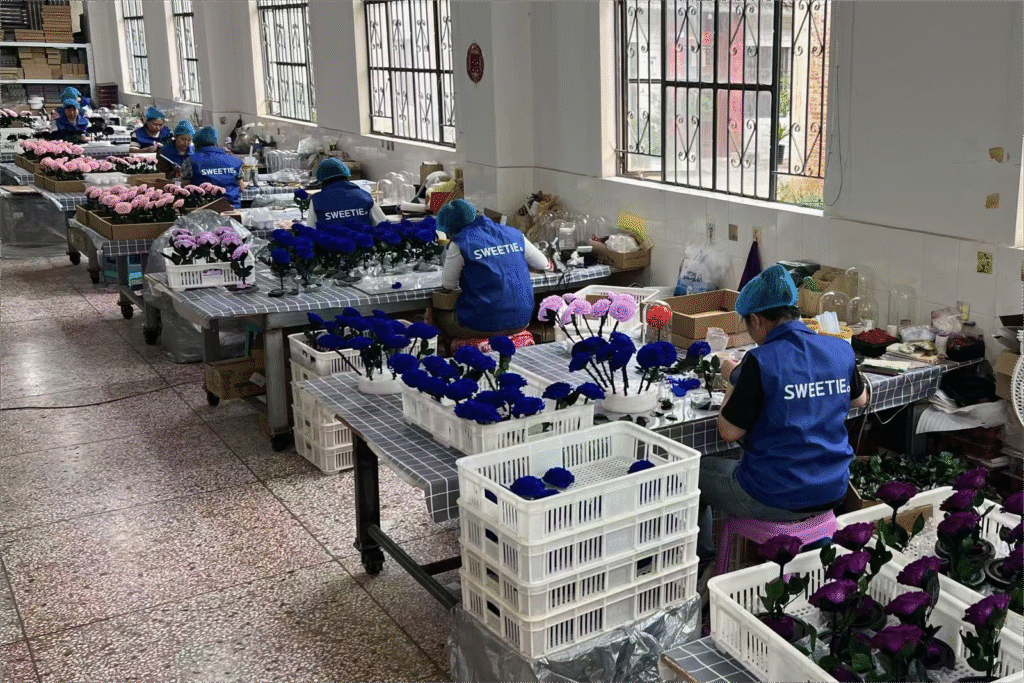
- Production capacity that supports parallel lines
Without a responsive supply chain, Brand #2 becomes slower, not faster.
In highly competitive Amazon categories, speed is not optional. It is survival.
If you are considering expanding your brand portfolio and want a practical assessment of feasibility—from packaging to iteration speed—you can reach us at inquiry@sweetie-group.com. A short technical discussion often reveals risks founders do not see on spreadsheets.
When a Second Brand Strengthens Enterprise Value
From a long-term valuation perspective, Brand #2 adds value only if it:
- Targets a distinct buyer segment
- Operates at a different perceived tier
- Uses differentiated packaging or product design
- Avoids cannibalizing your hero SKUs
- Expands your total addressable market
If it simply absorbs volume at lower margin, it reduces enterprise value rather than enhancing it.
Sophisticated founders think in portfolio leverage, not emotional reset.
Alternative Strategy: Deepening Instead of Dividing
There is another path many experienced founders choose:
Instead of launching Brand #2, they redesign:
- Packaging formats to elevate gifting value
- Product bundles to reduce direct comparison
- Quality specifications to minimize review volatility
- Visual differentiation that increases perceived tier
Often, structural improvements inside the existing brand generate more durable advantage than starting from zero again.
Especially in gift-driven categories, presentation and packaging can reposition a product without multiplying brand overhead.
A Practical Test Before You Decide
Ask yourself three strategic questions:
- Does Brand #2 change the buyer’s intent—or just the price?
- Does my supply chain support faster iteration at the new tier?
- Will this increase enterprise value in 3–5 years?
If you cannot answer “yes” to all three, strengthening your primary brand may be the more disciplined move.
The Bottom Line for Amazon Founders
Chinese seller competition is not a temporary wave. It is a structural feature of the marketplace.
The founders who sustain margin and growth do not simply react. They redesign their competitive architecture.
Sometimes that means launching a second brand.
Sometimes it means making the first brand harder to replace.
The decision is not about fear. It is about structural advantage.
If you want to explore how packaging, product differentiation, and faster development cycles can support either path, contact us at inquiry@sweetie-group.com.
Annie Zhang, CEO of Sweetie Group