Transforming a custom plush flower from a botanical concept into mass production requires a professional OEM/ODM process that bridges design, precise fabric selection, structured internal wire engineering, and specialized assembly techniques to ensure aesthetic appeal and long-term durability.
Why Custom Plush Flowers Demand a Specialized Manufacturing Approach
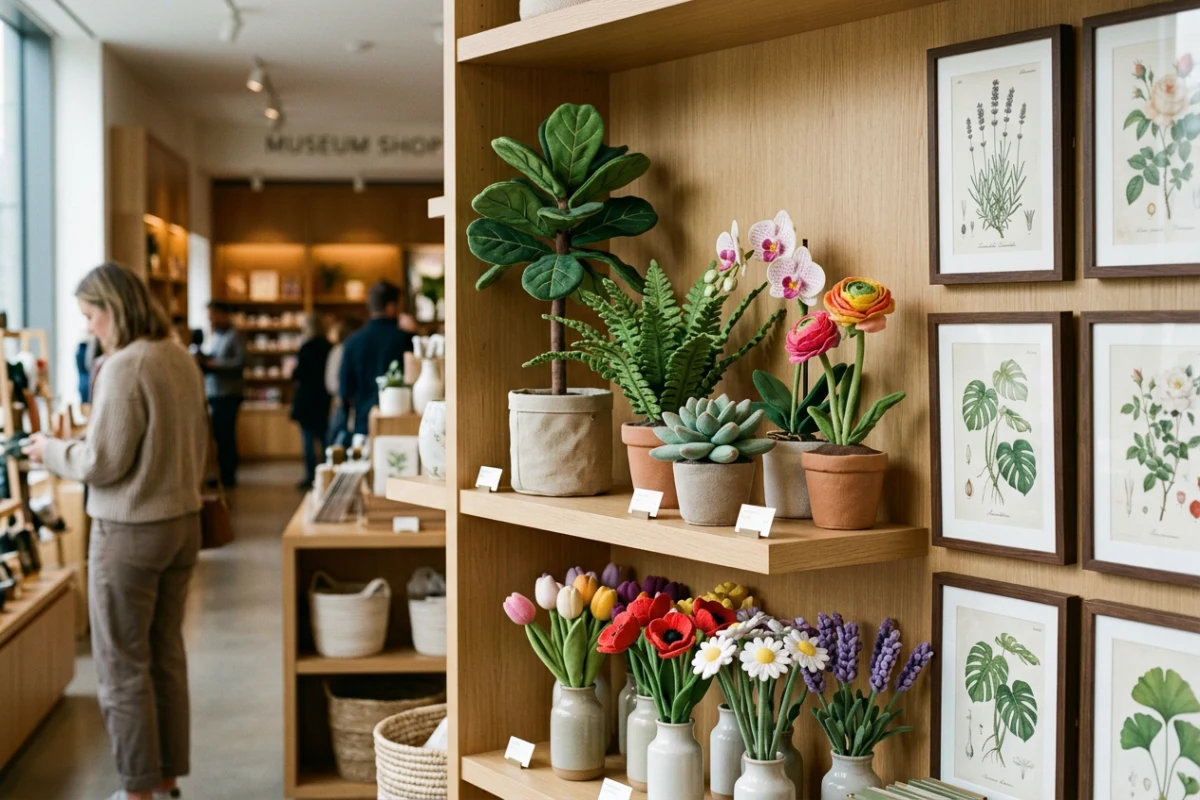
Unlike standard stuffed toys, plush flowers require a unique balance between realistic botanical accuracy and soft, huggable aesthetics. Standard plush patterns are typically spherical or blocky, whereas flowers feature delicate petals, slender stems, and varied leaves. Achieving this requires specialized custom plush flower manufacturing capabilities. A professional manufacturer must translate natural plant anatomy into stable, replicable fabric components that can stand upright, bend naturally, and withstand repeated handling without losing their shape.
How Do You Translate a Botanical Reference into a Plush Design?
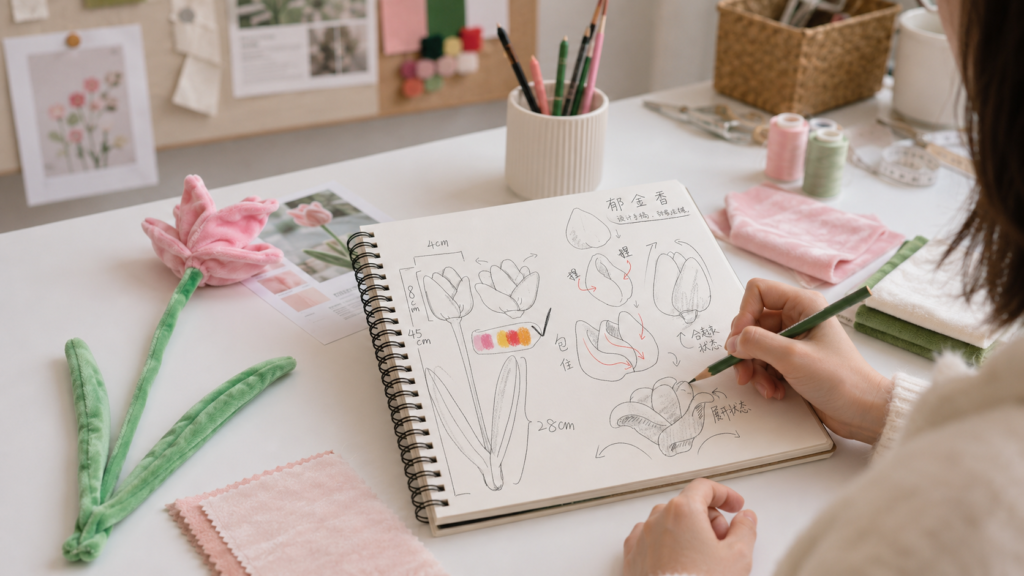
The fabric flower manufacturing process begins by deconstructing a real flower or concept sketch into flat, two-dimensional pattern pieces.
- Botanical Anatomy Translation: Designers break down the flower into specific parts: the pistil/stamen, individual petal layers, sepal, stem, and leaves.
- Pattern Engineering: Software like CAD is used to draft patterns that curve and cup when stuffed. For instance, a tulip requires curved petal panels to form its signature bulb shape.
- Proportion Adjustments: Real flowers have razor-thin petals. In plush toy translation, these elements are thickened slightly or layered with internal reinforcement so they look plump and premium.
What Materials Are Best for Premium Petals and Stems?
Choosing the right fabric is critical for both the tactile feel and structural integrity of the final product. As an experienced plush flower OEM ODM partner, Sweetie categorizes materials based on the desired floral texture and stiffness:
| Floral Part | Recommended Fabrics | Purpose / Visual Effect |
|---|---|---|
| Petals | Crystal super-soft velour, PV fleece, felt, or printed peach-skin fabric | Provides a velvety sheen, rich color depth, and soft touch. |
| Stems & Leaves | Brushed tricot, canvas, or short-pile velvet | Offers durability and a clean look; easily conceals internal wiring. |
| Stuffing | 100% premium PP cotton or organic cotton | Ensures resilience, fluffiness, and shape retention over time. |
| Internal Support | PVC-coated iron wire or flexible aluminum wire | Allows the stem and leaves to be bent, posed, and shaped without snapping. |
| Accents | Embroidery thread, custom screen printing | Adds realistic petal veins and pollen textures. |
What Happens During the Custom Stuffed Flower Production Sample Stage?
The prototyping phase is where concepts are tested and refined. During custom stuffed flower production, the sampling process typically follows these key steps to resolve potential structural bottlenecks:
- First Draft Sample: Constructed using stock fabrics to verify the overall shape, volume, and proportions.
- Material and Color Matching: Dyes are matched to Pantone standards to ensure the petals and leaves align perfectly with your brand’s color palette.
- Safety and Structural Testing: Ensuring the internal wire is securely wrapped in protective cotton or plastic caps so it cannot pierce through the fabric, satisfying international toy safety standards (EN71, ASTM).
- Client Review and Approval: The physical sample is sent to the client for final feedback on hand-feel, structural flexibility, and overall aesthetics.
How Is Stable Mass Production Achieved for Plush Flowers?
Once the sample is approved, scaling up production requires strict manufacturing consistency and quality control. At Sweetie, we transition to mass production through a series of structured assembly steps:
- Precision Cutting: Laser-cutting machines are used to cut hundreds of petal and leaf panels simultaneously, ensuring perfect edge sealing and identical dimensions.
- Detailed Embroidery: Petal veins and facial features (for cute plush designs) are embroidered onto the flat panels prior to sewing.
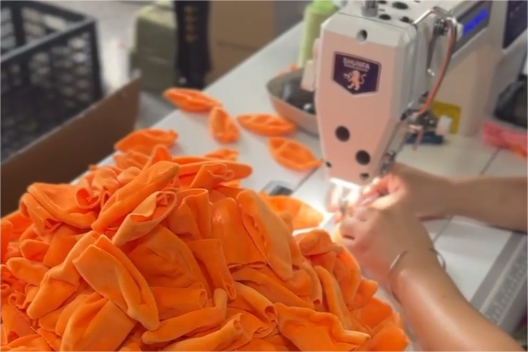
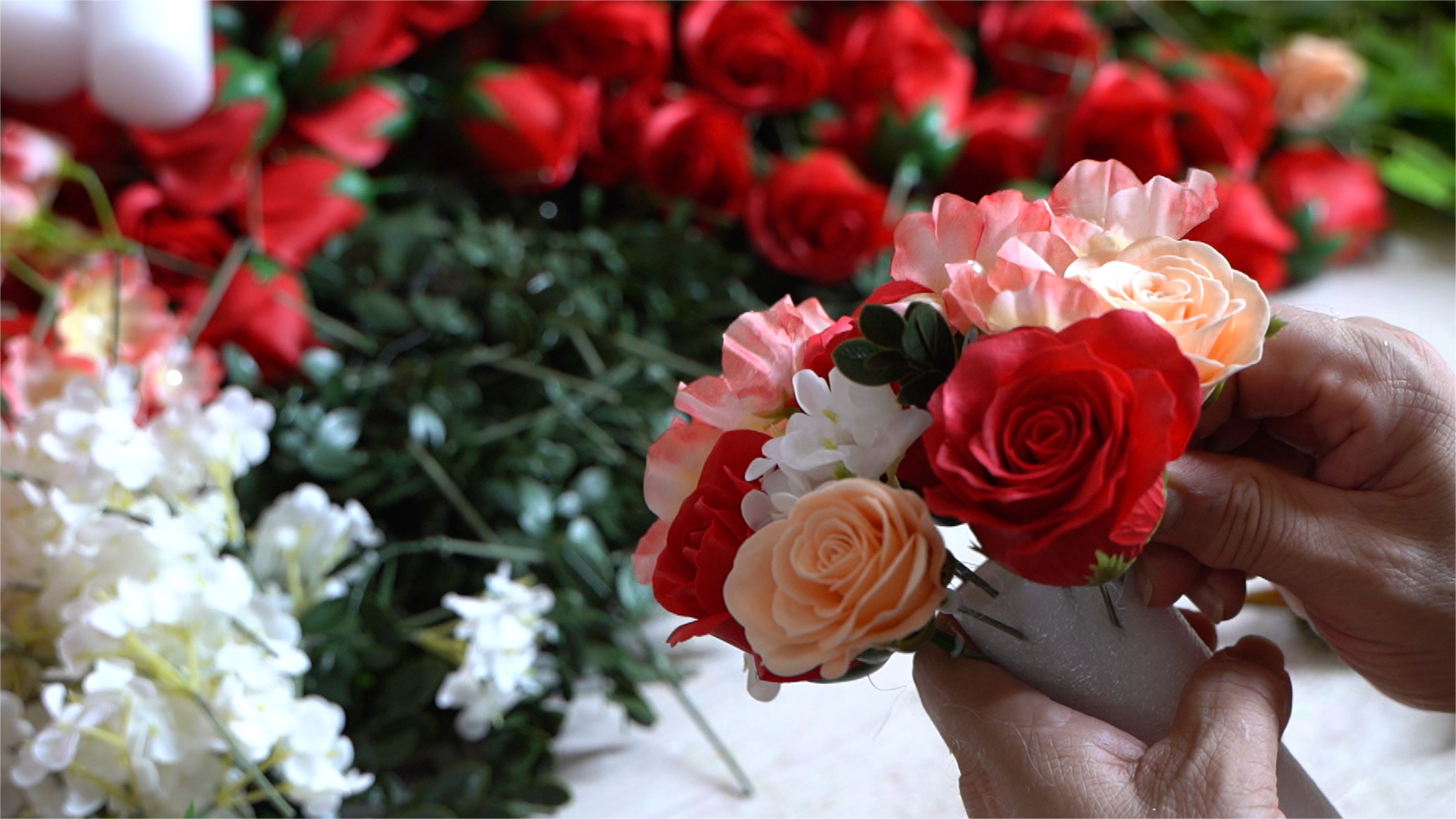
- Manual Assembly & Wiring: Skilled workers sew the delicate petals together, insert the pre-wrapped internal wires into the stems, and hand-stuff each piece to ensure uniform density.
- Metal Detection & Inspection: Every finished plush flower passes through a high-sensitivity metal detector to guarantee no needles or wire fragments are left behind, followed by final aesthetics QC.
- Compression Packaging: Plush flowers are carefully packed in bulk cartons, sometimes using light vacuum sealing, to optimize shipping volumes while preventing petal deformation.
How Can B2B Buyers Optimize MOQ, Lead Times, and Costs?
To ensure a successful sourcing campaign with a reliable plush flower supplier, B2B buyers should plan around the following industry benchmarks:
- Minimum Order Quantity (MOQ): Standard custom orders typically start at 500 to 1,000 units per design, depending on fabric customization requirements.
- Lead Times: The sampling phase generally takes 7 to 10 days. Mass production averages 30 to 45 days after sample approval and deposit receipt.
- Cost Optimization: Consolidating petal colors, using stock fabric colors where possible, and optimizing packaging sizes are the most effective ways to lower your unit cost without sacrificing quality.
Ready to bring your floral concept to life? Contact our customized design team at Sweetie-Group for a free material sample booklet and tailored OEM/ODM advice. contact at inquiry@sweetie-group.com