Valentine’s Day is when beauty shoppers behave differently. They’re not browsing for themselves. They’re buying to be understood. That changes what “conversion” really means: it’s less about shade ranges and ingredients, and more about confidence, presentation, and the emotional signal a gift sends the moment it’s received.
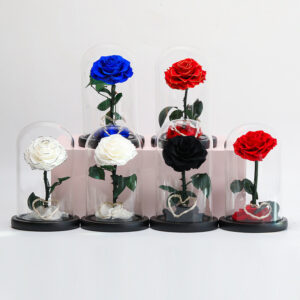
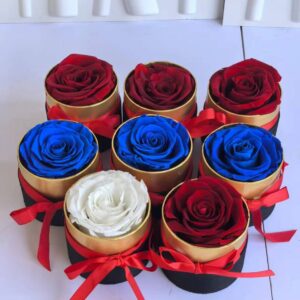
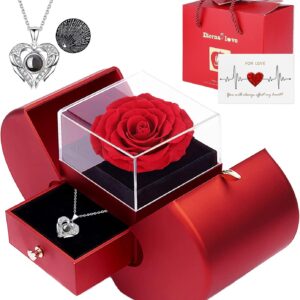
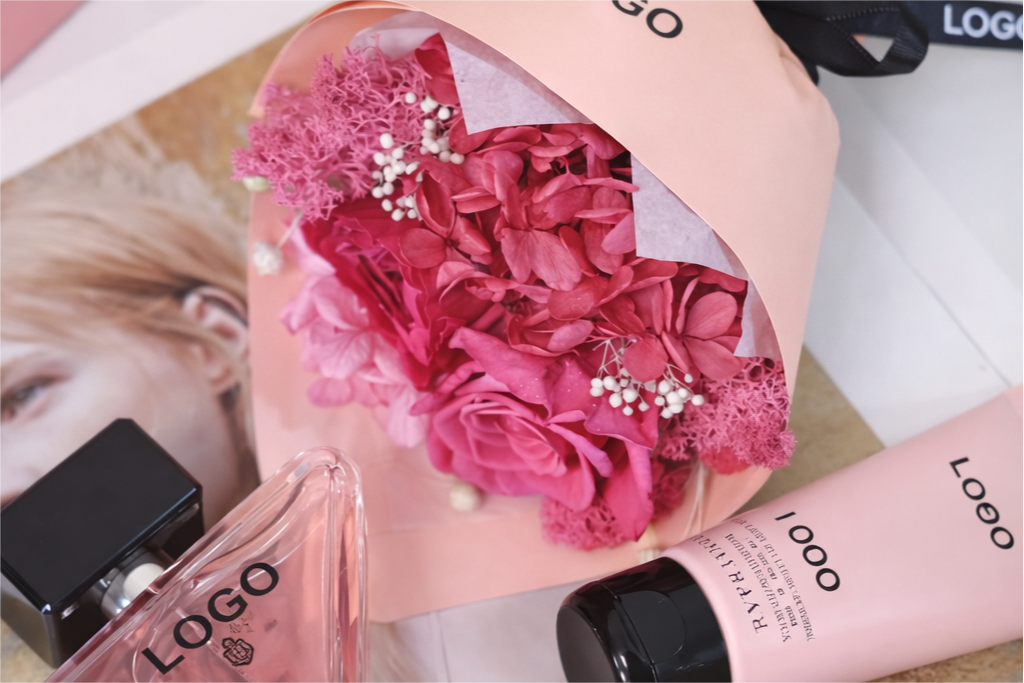
In the last few seasons, I’ve watched one tactic quietly do a lot of heavy lifting in gift-set performance, especially on fragrance-led programs: pairing beauty products with everlasting flowers (preserved bouquets or preserved floral components). When it’s done well, it doesn’t feel like a freebie. It feels like the brand designed a complete gift.
This article breaks down why the flower component works, when it makes sense, and how to execute it without creating fulfillment headaches.
Why Valentine’s Day Gift Sets Need a Different Conversion Lens
Many brands treat Valentine’s like a typical promo window: bundle products, add a discount, add a small gift. But Valentine’s buying is closer to a “high-stakes choice” than a normal replenishment purchase.
Here’s what the buyer is usually trying to solve:
- Avoiding a “generic” gift that looks last-minute
- Reducing the risk of choosing the wrong item (especially for color cosmetics)
- Delivering an unboxing moment that feels thoughtful and premium
- Making the gift easy to explain: “I picked this because…”
A gift set that converts on Valentine’s is less about the bill of materials and more about a fast, visual promise: this will land well.
That’s exactly where preserved florals can help.
Everlasting Flowers Are Not Decoration. They Are a “Gift Signal.”
In beauty, the product experience is often intangible at first touch. Scent has to be sprayed. Texture has to be applied. Results take time. Valentine’s shoppers don’t want to wait for the payoff. They need an instant “yes.”
Everlasting flowers create that instant yes in three ways.
1) They make the set look like a real gift before it’s opened
A bouquet silhouette, a floral insert, or a preserved rose presentation communicates “gift” faster than most visual cues in beauty.
2) They provide a physical proof of effort
Even when the buyer purchases online, the recipient sees something tangible that implies intention. It reduces the perception that the gift was “quick.”
3) They extend memory beyond usage
A fragrance gets used up. A lip product finishes. Preserved florals stay on a desk or shelf and keep the brand present.
When brands use everlasting flowers successfully, the flowers are not competing with the product. They are reinforcing the product’s emotional territory.

A Practical Framework: When Flowers Improve Performance (and When They Don’t)
Not every program needs florals. The key is alignment with product category, positioning, and channel economics.
Flowers tend to work best when:
- The hero SKU is fragrance or a fragrance-led set
- The brand story leans into romance, confidence, intimacy, or celebration
- The set is built for gifting-first customers (not just existing loyalists)
- The channel benefits from visual persuasion (e-commerce, livestream, social retail)
Flowers are often a poor fit when:
- The set’s main message is clinical performance and the brand avoids decorative cues
- Box volume and shipping cost are the primary constraints and cannot move
- The color palette requires ultra-precise matching but the program timeline is too tight
If you’re unsure whether a flower component will lift perceived value without inflating cost and damage risk, email inquiry@sweetie-group.com and tell me your hero product, target price, and channel. I’ll suggest a format that fits.
How Brands Translate Product Story Into a Flower Concept
The best executions don’t add “a random bouquet.” They translate the product story into something visual.
Here are three concept routes brand teams use most often:
Route A: Scent-to-Flower Mapping (best for fragrance)
You take the fragrance character (fresh, warm, clean, creamy, spicy) and match it to:
- color temperature
- flower density
- textures (airy vs. plush vs. crisp)
- wrapping materials (matte vs. translucent vs. satin)
The floral component becomes a physical interpretation of the fragrance mood.
Route B: Hero Ingredient Externalization (best for skincare)
Similar to what some prestige brands do in exhibitions or pop-ups: an ingredient becomes a visual symbol. For a gift set, the symbol needs to be smaller and shippable, but the logic holds.
Route C: “Moment Design” (best for channels that sell unboxing)
Here the flower is less about the formula and more about the moment. The goal is to create a set that is instantly photo-worthy and easy to share.
Choosing the Right Flower Format for Your Channel
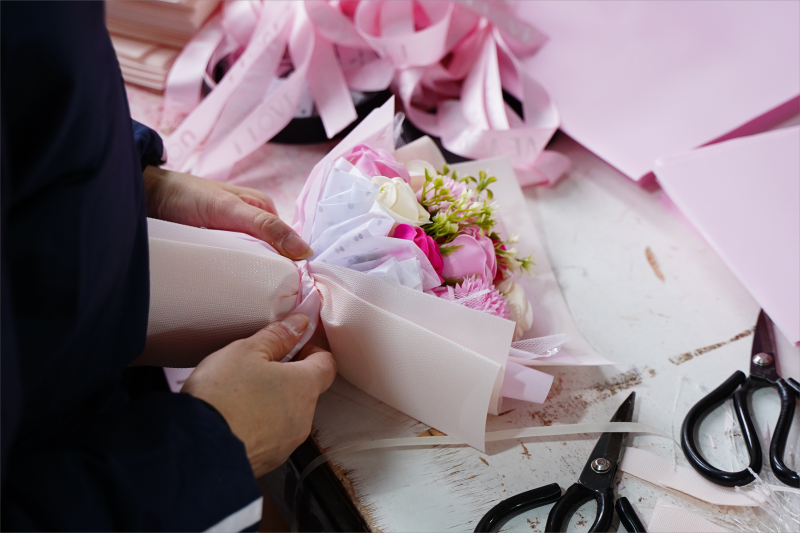
From a brand marketing perspective, the best format is the one that achieves “gift signal” with minimal operational risk.
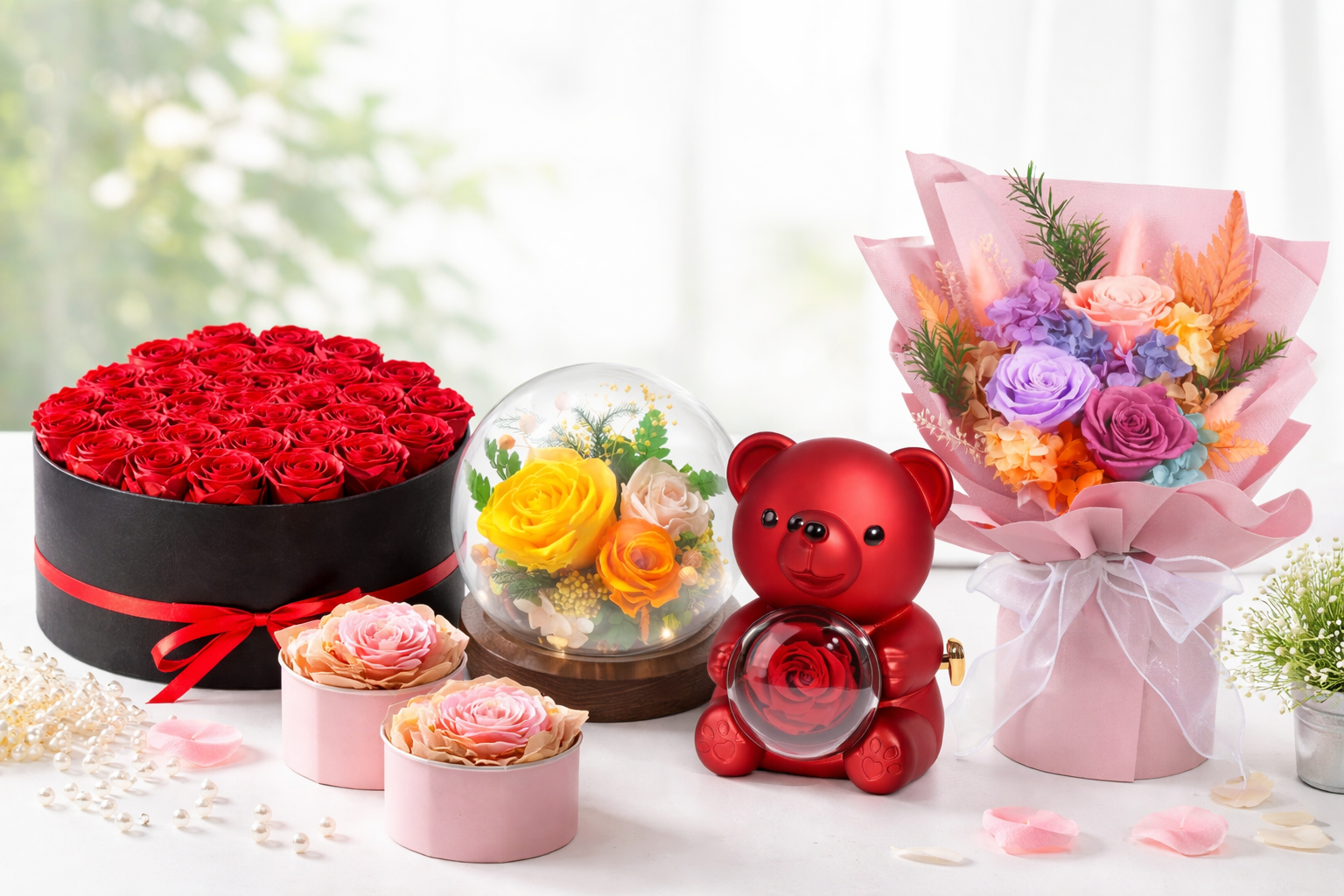
Mini bouquet (handheld)
- Strongest photo moment
- Easy for recipients to hold in a “gift shot”
- Needs internal fixation to avoid compression
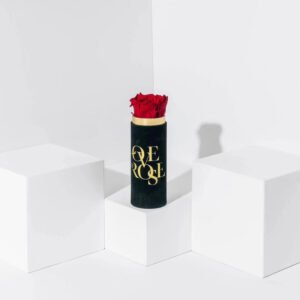
Preserved rose box (structured)
- Strong shelf presence
- Premium feel and controlled shape
- Typically heavier and may raise shipping cost
Single-stem or floral insert (minimalist)
- Best for tight box constraints
- Lower damage risk
- Works well for understated luxury positioning
A helpful rule: let the channel choose the format.
E-commerce often rewards handheld visuals. Retail counters often reward structured displays. Membership gifts may prefer minimal inserts.
Execution Details That Protect Brand Experience
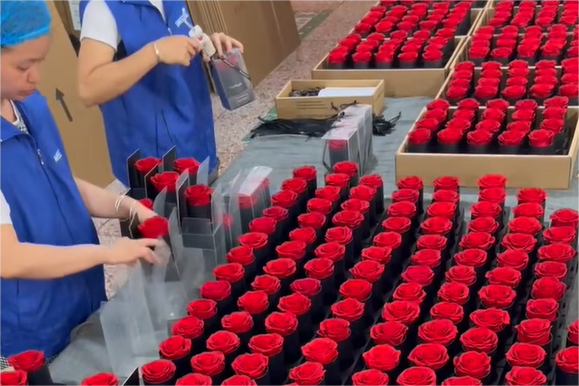
Everlasting flowers can elevate a gift set, but only if they arrive looking as intended. The most common failure points aren’t creative. They’re operational.
1) Color consistency
For Valentine’s palettes, pinks and reds can shift under different lighting. Brands should define acceptable color ranges early and validate with photography, not only physical samples.
2) Damage in transit
Flowers are lightweight but fragile. A premium result usually comes from:
- a defined cavity or support structure
- controlled “head space” so petals don’t rub the carton
- protective inner packaging that still looks elegant
3) Cleanliness and sensory interference
Preserved florals must be selected and processed to minimize debris and avoid any scent conflict with fragrance programs.
This is where supplier process control matters more than decoration.
At Sweetie-Gifts, we focus on flower formats designed for gifting programs that need stable quality at scale, including e-commerce packaging solutions and brandable wraps and ribbons. If you want to explore options for a seasonal set, reach me at inquiry@sweetie-group.com.
Measuring Success Without Needing Internal Sales Numbers
Many brands won’t publicly share SKU-level Valentine’s performance. You can still evaluate whether a flower-integrated set is working using observable signals:
- Higher volume of customer photos that include the full set (product + flower)
- More “gift language” in reviews: “looks premium,” “ready to gift,” “saved me time”
- Lower return reasons related to “not as expected” when packaging is done correctly
- Better merchandising flexibility: the set can live on a counter, in a window, or online without extra explanation
These signals matter because they map directly to the real Valentine’s barriers: uncertainty and perceived effort.
A Simple Valentine’s Planning Checklist for Brand Teams
If you’re planning next season, here’s a practical way to structure the program:
- Define the gift promise in one sentence (not the product claims)
- Choose a hero pairing that reduces risk (fragrance + lip is common for a reason)
- Select a flower format that fits your channel constraints
- Create a visual mapping between product story and floral design
- Test packaging early for compression and appearance after transit simulation
- Brief the content team to shoot the “gift signal” clearly (handheld shot, box shot, unboxing shot)
This approach keeps the marketing idea connected to deliverable reality.
Closing Thoughts
Everlasting flowers are not a gimmick. In the right Valentine’s program, they function as a conversion tool because they solve the buyer’s real problem: gifting confidence.
They make the set feel complete, they elevate the unboxing, and they turn an invisible benefit like mood or scent into a physical memory that stays visible long after the products are used.
If you’re exploring a Valentine’s Day gift set concept, or building a year-round gifting strategy for fragrance and beauty, contact me at inquiry@sweetie-group.com. I’ll share format suggestions and packaging approaches that are designed for scalable retail and e-commerce fulfillment.
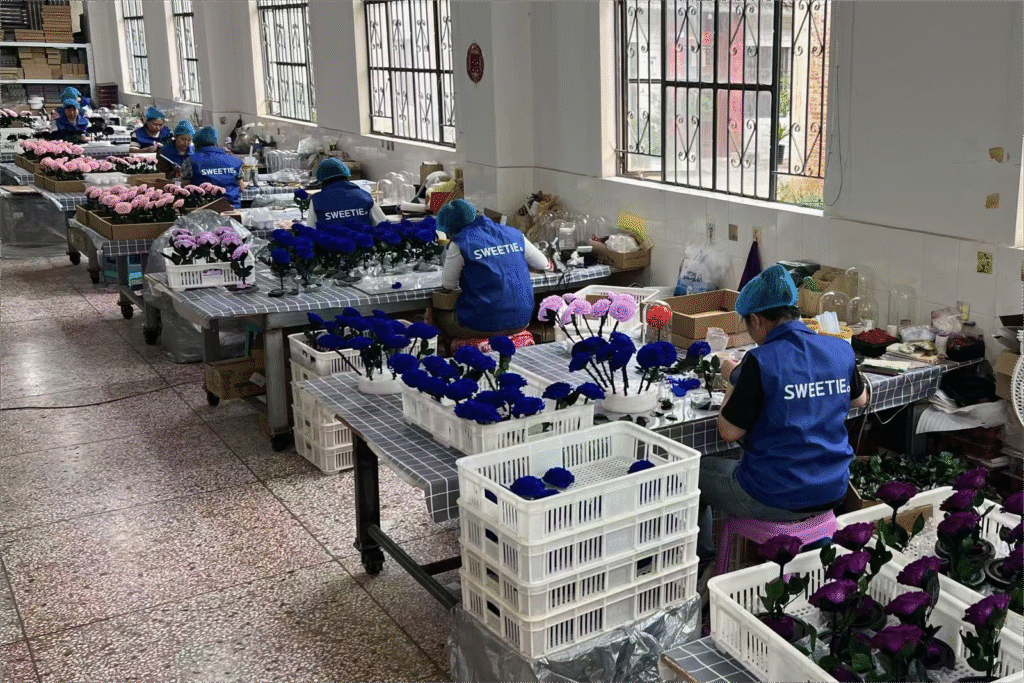
Annie Zhang, CEO of Sweetie Group