Ordering PE rose bears in bulk often looks simple on the surface. You review photos, approve a sample, confirm pricing, and move forward with production. Yet many buyers discover that the real challenge begins only after mass production starts.
The most common concern we hear is not about price or delivery time. It is about consistency. Buyers want to know whether the quality they approved can be delivered again and again, across hundreds or thousands of units.
This article looks at PE rose bears from a production and quality control perspective, explains why samples alone are not enough, and outlines how buyers can reduce risk when sourcing at scale.
Why samples alone do not guarantee bulk quality
A PE rose bear sample shows what a product can look like. It does not automatically prove how stable that product will be during real production.
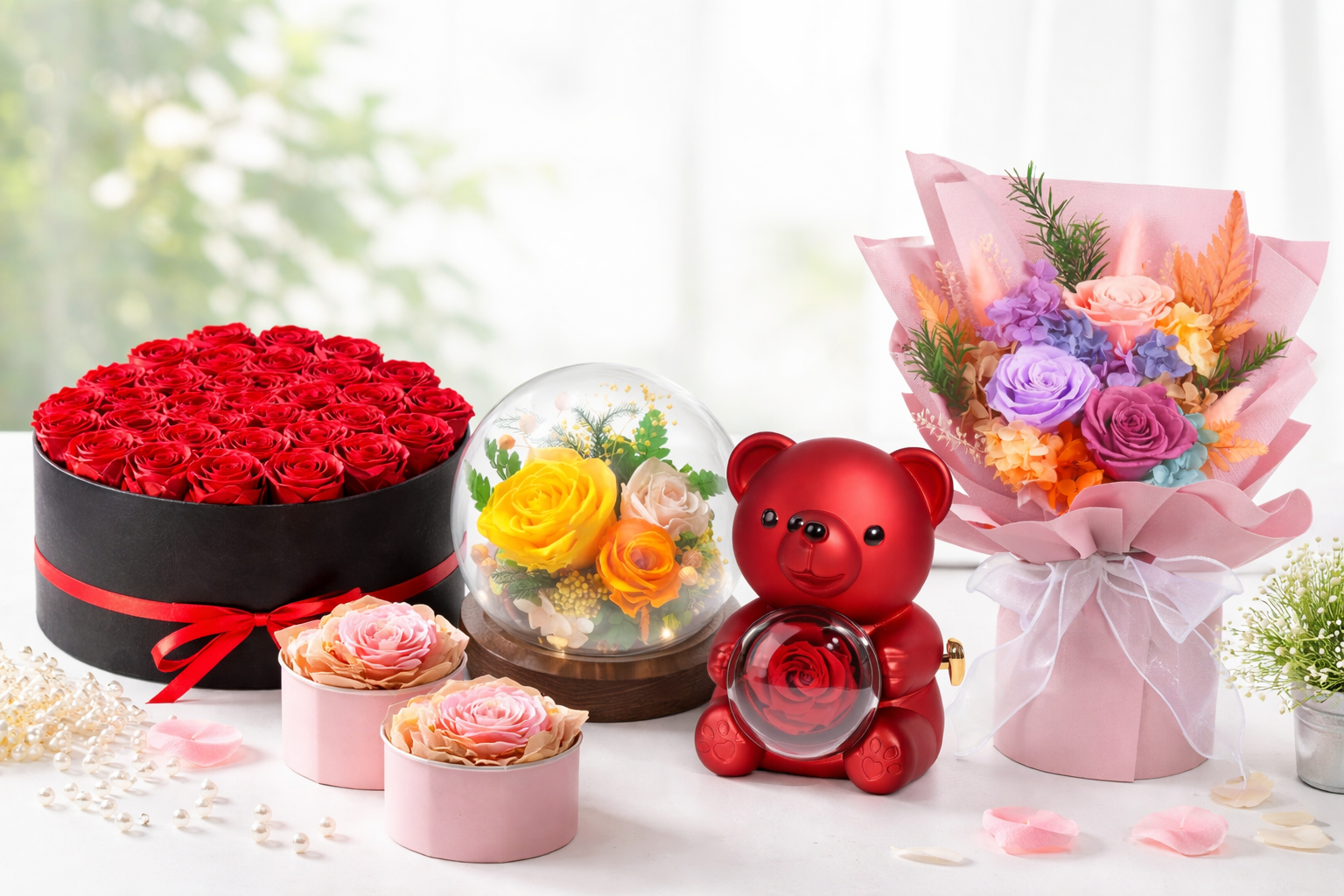
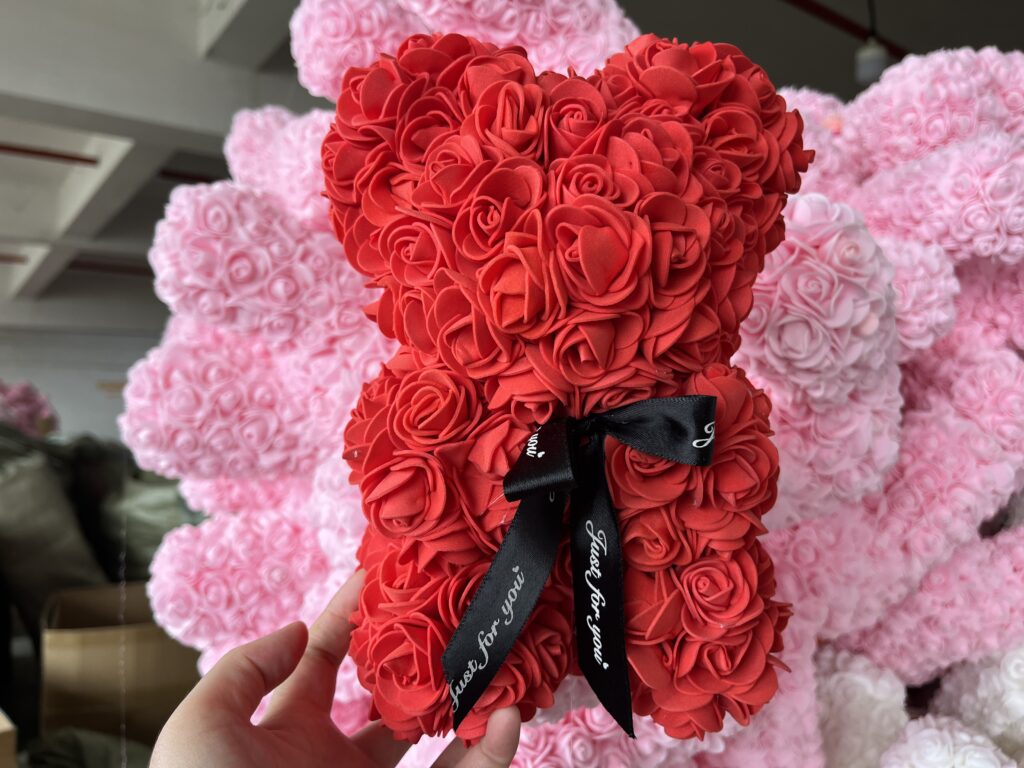
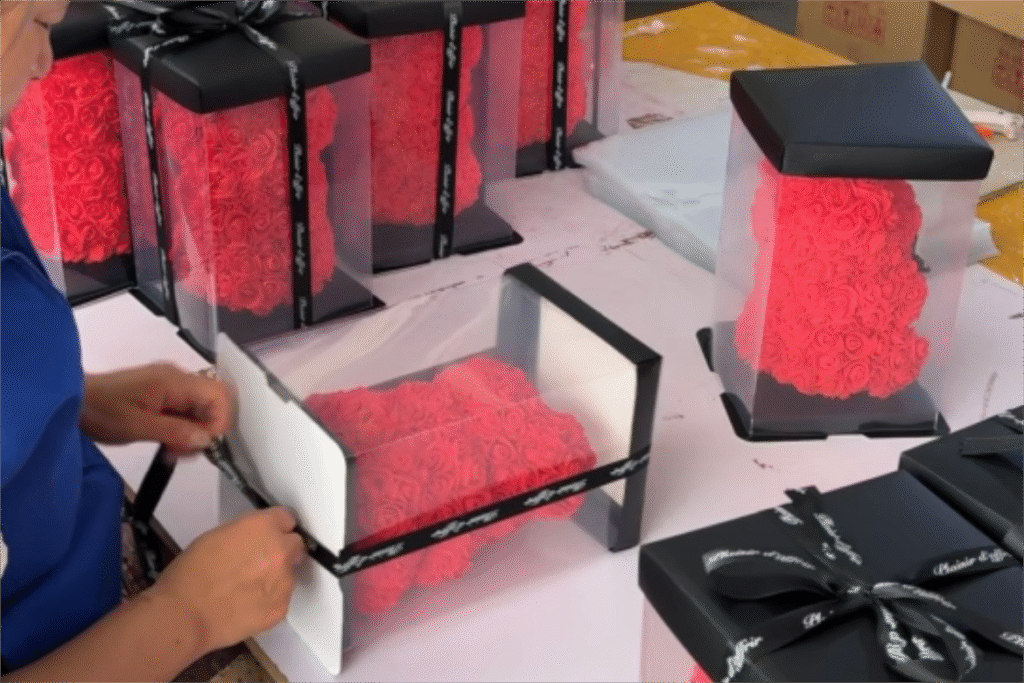
PE rose bears sit in a gray area between handmade craft and standardized gift item. The bears are assembled by hand, but expected to look uniform enough for retail shelves, online listings, and branded campaigns. This tension is where most problems originate.
During sampling, suppliers usually focus on achieving the best possible visual result. During bulk production, the focus shifts to speed, labor coordination, and material availability. Without additional controls, the final outcome can drift away from the approved reference.
Buyers who rely only on sample approval often underestimate this gap.
The hidden production variables buyers rarely see
From the buyer’s side, PE rose bears may appear straightforward. Internally, several variables influence the final result.
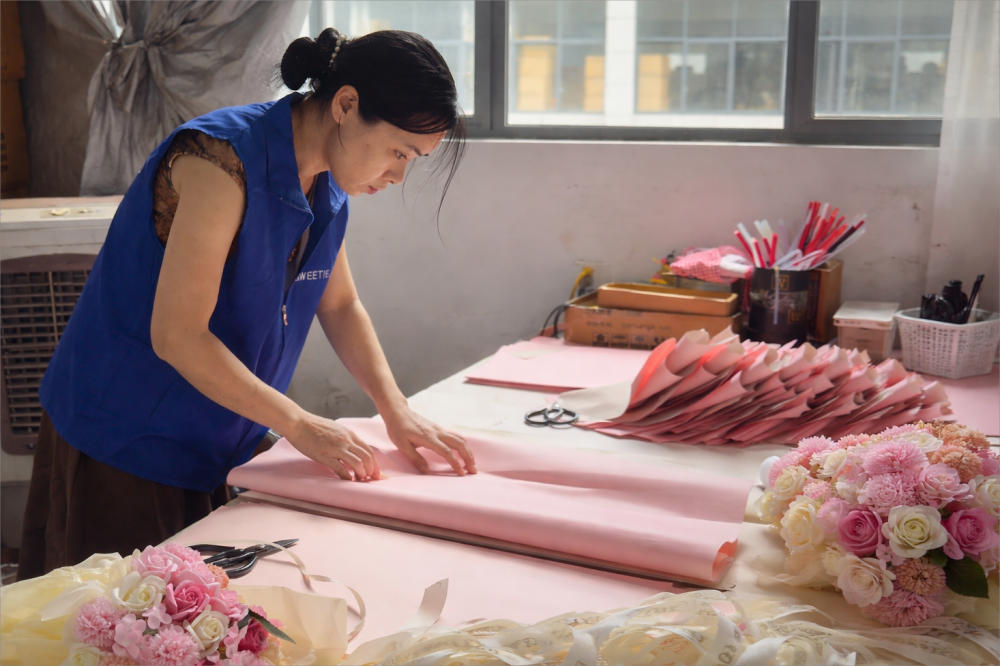
Worker consistency is one of the most overlooked factors. A sample is often assembled by one skilled worker, while bulk orders are produced by many hands. Even with training, differences in flower placement, pressure, and spacing can affect appearance.
Material variation is another common issue. PE roses from different production batches may vary slightly in color tone, softness, or thickness. These differences are subtle individually but become visible when many units are displayed together.
Production tools also matter. Bear bases and molds used repeatedly over time can experience small changes that influence shape and alignment, especially in facial and chest areas where buyers focus most.
These are not defects by default. They are realities of how this category is produced.
If you are unsure how to translate visual preferences into production standards, you can contact us at inquiry@sweetie-group.com. These discussions are often most valuable before a purchase order is issued.
What professional buyers evaluate beyond the sample
Experienced buyers do not stop at “Does the sample look good?” They ask different questions.
They evaluate whether the sample is repeatable, not just attractive. They want to know if the same materials will be used, whether the same construction logic can be applied by multiple workers, and how deviations will be managed during production.
Instead of relying on subjective descriptions like “full” or “nice finish,” professional buyers push for clearer definitions. This includes expected density levels, acceptable color ranges, and which areas of the bear must remain visually consistent.
The role of pre-production samples in bulk control
One of the most effective tools in PE rose bear sourcing is the pre-production sample, often called a PPS.
A PPS is not an improved version of the original sample. It is a reality check. It is produced using bulk materials, real production workers, and standard processes. Its purpose is to show what mass production will actually look like, not what is theoretically possible.
Buyers who approve a PPS gain two advantages. First, they see realistic output before committing to volume. Second, they create a shared reference point that both sides can use during quality inspection.
Skipping this step may save time initially, but it often increases the risk of disputes later.
How Sweetie approaches PE rose bear consistency
At Sweetie, we treat PE rose bears as a controlled production project, not an individual handmade item.
Our approach focuses on stabilizing key variables early. We work with fixed teams, align material sourcing with production schedules, and require pre-production samples for bulk orders where consistency is critical. The goal is not perfection in one unit, but reliable replication across the entire order.
With more than 16 years of experience supplying floral and gift products to international buyers, we have learned that most quality issues can be prevented long before final inspection, if expectations and processes are aligned early.
If you are evaluating suppliers or planning a PE rose bear program for retail or e-commerce, we are always open to discussing feasibility and risk points at inquiry@sweetie-group.com.
Who should pay special attention to this topic
This approach is especially relevant for buyers managing:
- E-commerce listings where customer reviews amplify small inconsistencies
- Supermarket or chain-store programs with large seasonal volumes
- Brand or promotional campaigns where visual uniformity affects brand perception
In these cases, consistency is not just a quality issue. It is a commercial one.
Closing perspective
A PE rose bear sample is a starting point, not a guarantee.
Buyers who succeed in this category are those who look beyond surface appearance and focus on whether a supplier can manage production variables at scale. When consistency is treated as a system rather than an assumption, most problems disappear before they begin.
If you would like to discuss how to structure your next PE rose bear order with fewer risks and clearer expectations, you are welcome to reach out to inquiry@sweetie-group.com.
Annie Zhang, CEO of Sweetie Group